

Every day you wake up, you face a choice between convenience and conviction. Between blending in and standing out. Between silence and speaking up. Most of us choose the easier path without realising we are choosing it. But tucked away in ancient scripture is a verse that disrupts our calculus of safety and redefines what it means to fight with heaven on your side.
You have probably felt it before. That moment when you know what is true, what is right, what needs to be said, but the words catch in your throat because the cost seems too high. What if I told you that the reason truth feels so heavy on your shoulders is because you were never meant to carry it alone? One verse changes everything about how we understand courage.
If you have ever felt your voice shake when speaking truth, if you have ever chosen silence because courage seemed impossible, if you have ever wondered whether standing firm is worth the price, then this reflection is for you. Because buried in an ancient text is a promise so audacious, so empowering, that it has the power to transform how you approach every moment of moral choice for the rest of your life.
Daily Biblical Reflection
Verse for Today (10th January 2026)
Today’s Scripture, prayerfully shared with blessings from His Excellency, Rt—Rev. Dr Selvister Ponnumuthan, and enriched with reflective insights by Johnbritto Kurusumuthu.
“Fight to the death for truth, and the Lord God will fight for you.”
Ecclesiasticus 4:28
Today the 10th day of 2026
This is the 10th reflection on Rise&Inspire in 2026 under the category/series: Wake-up calls
Dear friends in Christ,
What a powerful invitation we receive today from the Book of Ecclesiasticus. In a world where truth is often negotiated, diluted, or abandoned for convenience, these ancient words ring out with urgent clarity: “Fight to the death for truth, and the Lord God will fight for you.”
Notice the remarkable promise embedded in this verse. We are not called to fight alone. The God who is Truth itself becomes our champion, our defender, our strength when we take our stand for what is right and true. This is not a call to human aggression or pride, but to holy courage rooted in divine partnership.
But what does it mean to “fight to the death” for truth? It means refusing to compromise our integrity when pressured by the crowd. It means speaking up when silence would be easier. It means living authentically according to God’s Word even when the cost is high. The martyrs throughout Christian history understood this call literally, but for most of us, it means a daily dying to self, a thousand small deaths to our comfort, reputation, and ease.
In our age of information overload, where facts are disputed and reality itself seems negotiable, this verse reminds us that truth is not relative. God’s truth stands firm. It demands our allegiance, our defence, our very lives. Yet how often do we remain silent when truth is attacked? How often do we bend with the cultural winds rather than stand firm on the solid rock of God’s eternal Word?
The beauty of this promise is that when we fight for truth, we discover we are not fighting in our own strength. The Lord God himself enters the battle on our behalf. What liberation this brings. We need not fear the outcome when the Almighty is our ally. We need not calculate the odds when the Creator of heaven and earth has pledged to fight alongside us.
This morning, as we begin this 10th day of the new year, let us examine our hearts. Where have we been silent when we should have spoken? Where have we compromised when we should have stood firm? Where have we chosen comfort over conviction?
The call today is clear: be people of truth. Live truthfully. Speak truthfully. Love truthfully. And when the cost of truth seems too high, remember the divine promise: the Lord God will fight for you.
May we have the courage to answer this wake-up call with renewed commitment to truth, knowing that we never stand alone in the battle.
In Christ’s truth and love,
Johnbritto Kurusumuthu
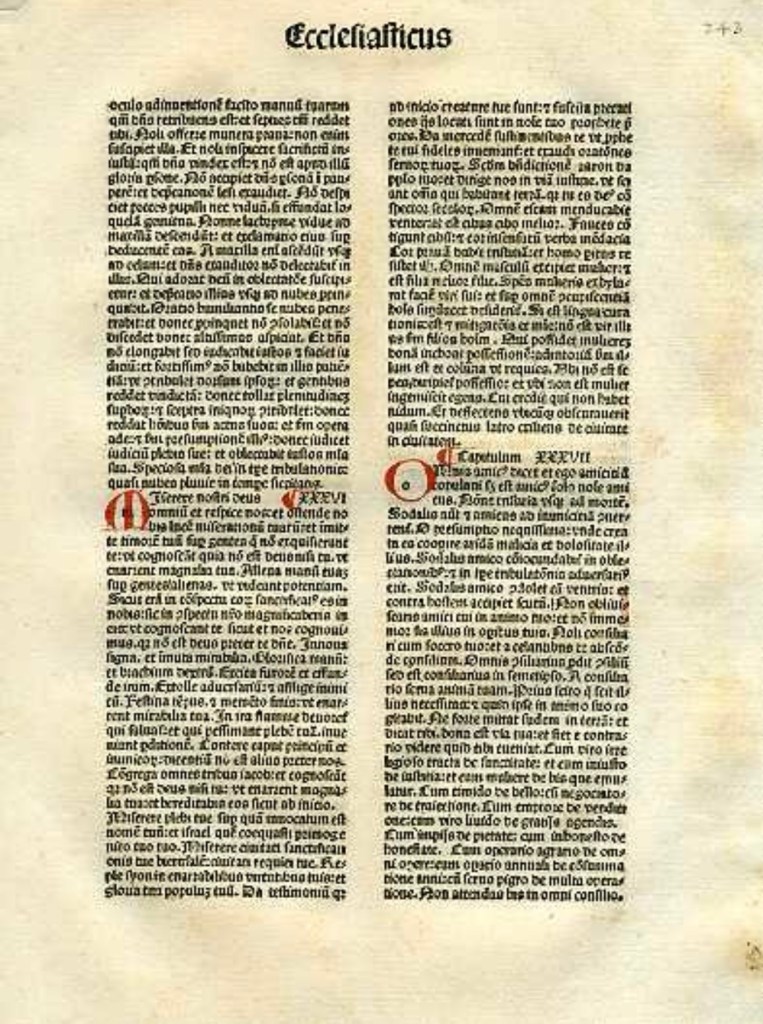
Catechism-Style Explainer:
The Book of Sirach (Ecclesiasticus)
1. What is the Book of Sirach?
The Book of Sirach, also called Ecclesiasticus, is a book of biblical wisdom that teaches how to live a faithful, moral, and God-centered life. It belongs to the Deuterocanonical Scriptures, fully accepted by the Catholic and Orthodox Churches as inspired by the Holy Spirit.
2. Who wrote Sirach?
Sirach was written by Jesus ben Sira, a Jewish scribe and teacher living in Jerusalem in the early 2nd century BCE. Unlike most biblical authors, he names himself (Sirach 50:27), presenting his work as the fruit of prayer, study, and lived experience rooted in the Law of Moses.
3. When and where was it written?
Originally composed in Hebrew around 180–175 BCE
Written in Jerusalem, during the time of the Second Temple
Translated into Greek by the author’s grandson in Egypt around 132 BCE, so that Greek-speaking Jews could learn God’s wisdom
This Greek translation became part of the Septuagint, the Bible widely used by the early Church.
4. Why is Sirach included in the Catholic Bible?
The Church received Sirach as Sacred Scripture through:
Apostolic usage (it was read and cited in early Christian communities)
Church Fathers, who quoted it as authoritative
Ecclesial councils (Hippo, Carthage, Florence, Trent), which affirmed it as canonical
Because of this living Tradition, Sirach is proclaimed in the liturgy and used for teaching and spiritual formation.
5. What does Sirach teach about wisdom?
Sirach teaches that true wisdom comes from God and is lived out through:
✔️Fear of the Lord
✔️Obedience to the Law
✔️Humility and self-discipline
✔️Justice, charity, and care for the poor
Wisdom is not merely knowledge, but a way of life shaped by reverence for God.
6. How does Sirach guide moral living?
Sirach gives practical instruction on:
• Speech and silence
• Friendship and family life
• Wealth, poverty, and generosity
• Worship, prayer, and reverence for God
It shows that everyday choices—words spoken, actions taken, attitudes held—are acts of faith.
7. What does Sirach teach about courage and truth?
Sirach calls believers to moral courage, especially in times of pressure or fear.
A key verse states:
“Fight to the death for truth, and the Lord God will fight for you.” (Sirach 4:28)
This teaches that faithfulness to truth may demand sacrifice, but God stands with those who remain loyal to Him.
8. How does Sirach prepare for the New Testament?
Sirach serves as a bridge between the Old and New Testaments by:
Emphasizing humility, mercy, and almsgiving
Upholding interior righteousness, not mere outward observance
Shaping moral themes later echoed in the teachings of Jesus and the Apostles
It reflects a faith that trusts God’s justice and providence, even before the coming of Christ.
9. Why is Sirach important for Christians today?
For Catholics and Orthodox believers, Sirach:
Strengthens conscience in a morally complex world
Encourages fidelity amid cultural pressure
Forms character rooted in prayer, obedience, and trust in God
Its wisdom reminds the faithful that holiness is lived daily, through faithfulness in ordinary life.
10. What is the central message of Sirach?
Wisdom is friendship with God.
Those who fear the Lord, love truth, practice justice, and persevere in faith will find that God Himself becomes their defender and guide.
2025 Johnbritto Kurusumuthu | Rise & Inspire Devotional Series
Word count:1285
Discover more from Rise & Inspire
Subscribe to get the latest posts sent to your email.

Amen 🙌 A needed reminder, stand for truth, God stands with us.
🤲🙏🌷🎉