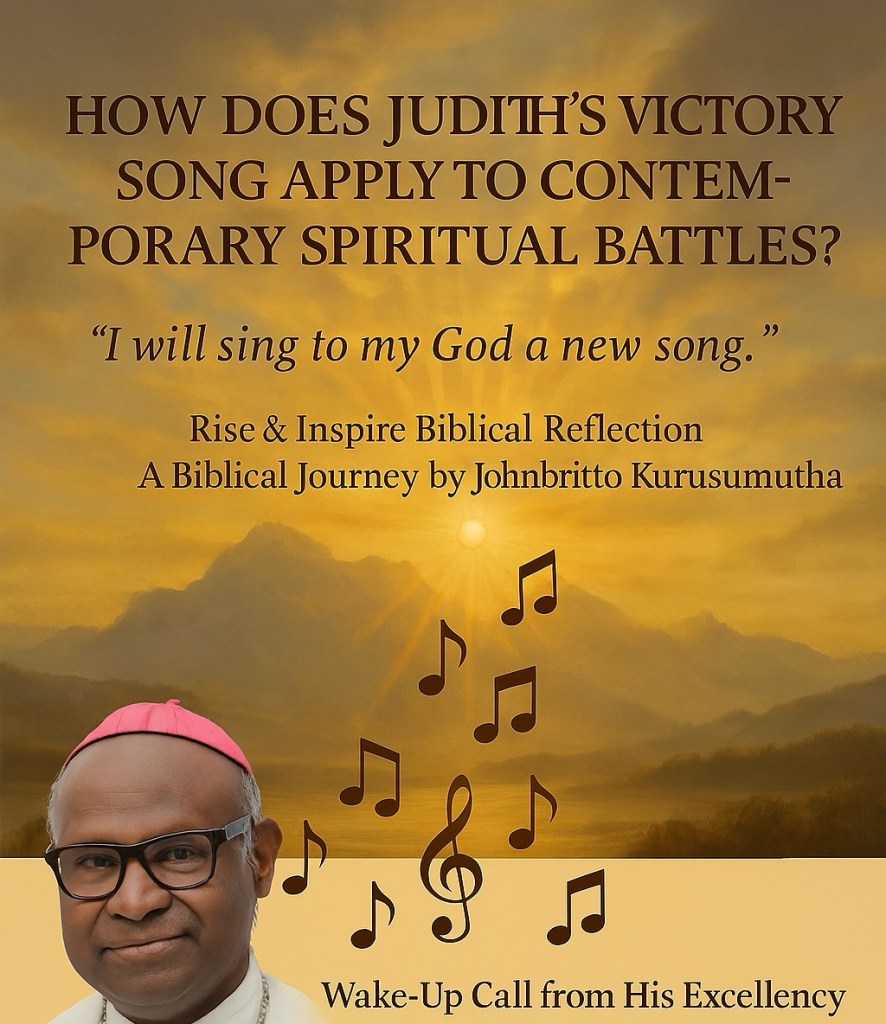
If God is all-knowing, why does He conceal things at all? It is one of the oldest questions in theology. But Proverbs 25:2 answers it not with doctrine alone, but with a declaration about who you are and what you were made to do.
The God who conceals things is the same God who placed eternity in your heart. And today, through one verse in Proverbs, He is asking a pointed question: Have you stopped searching? This reflection is for every believer who has confused comfort with arrival.
Reflection #67. Here is a summary of what is in the document:
Title: “The Glory of Seeking — When God Hides, Kings Search”
Verse: Proverbs 25:2 (ESV)
The reflection is structured in four pastoral movements:
1. The Mystery That Moves Us — opening that reframes divine concealment as invitation rather than absence
2. God Conceals — And That Is His Glory — draws on Romans 11:33 to present hiddenness as the shape revelation takes when infinite meets finite
3. Kings Search — And That Is Their Glory — a bold declaration of royal identity and active faith, grounded in Ecclesiastes 3:11
4. The Tension That Sanctifies — uses the Emmaus road (Luke 24) to show that the journey of seeking is itself the gift
Followed by a closing call to action, a prayer, four reflection questions, and the YouTube video link.
| RISE & INSPIREWake-Up Calls | Reflection #6709 March 2026 | Biblical Reflection | Faith |
The Glory of Seeking
When God Hides, Kings Search
| VERSE FOR TODAY — 09 MARCH 2026“It is the glory of God to conceal things, but the glory of kings is to search things out.”Proverbs 25 : 2 (ESV)Verse shared by His Excellency, Rt. Rev. Dr. Selvister Ponnumuthan |
The Mystery That Moves Us
There is a particular kind of wonder that stirs in the human heart when it stands before a locked door. Not the panic of being shut out, but the quiet, burning pull of what might lie just beyond. That pull, that sacred restlessness, is precisely what Proverbs 25:2 is speaking into.
This verse arrives in two magnificent halves, and together they form one of the most profound statements about the nature of God, the calling of humanity, and the dignity built into the act of seeking. King Solomon, the wisest man who ever lived, lays before us a theology of holy hiddenness and royal pursuit.
God Conceals — And That Is His Glory
The first half of the verse unsettles us in the best possible way. God conceals things. Deliberately. Purposefully. And Scripture calls this His glory.
We live in an age that despises mystery. We want algorithms that explain everything, podcasts that unpack every complexity, and search engines that surface every answer in under a second. So when we read that God intentionally hides things, our first instinct can be discomfort.
But Solomon is not describing a God who is distant or evasive. He is describing a God who is infinite. A God whose wisdom is so vast, whose ways are so deep, that concealment is not an absence of revelation — it is the shape revelation takes when it encounters the finite. The Apostle Paul echoed this centuries later: “O the depth of the riches both of the wisdom and knowledge of God! How unsearchable are his judgments, and his ways past finding out!” (Romans 11:33).
When God conceals, He is not playing games. He is inviting relationship. A God who gave you every answer at once would leave nothing for you to discover, nothing to draw you closer, nothing to make the journey your own. His hiddenness is an act of profound love — it is how He keeps calling your name.
Kings Search — And That Is Their Glory
The second half of the verse makes a declaration over you that you may not have heard recently: you are royalty. Not metaphorically. Spiritually and scripturally, you carry the standing of a king.
The verse does not say it is the glory of kings to receive things, to be handed things, or to sit passively and wait for things to fall into their lap. The glory of kings is to search things out. To pursue. To investigate. To press in.
This is deeply counter-cultural in a faith environment that sometimes confuses surrender with passivity. True surrender to God does not make you inert; it makes you alive. It sets you on fire with holy curiosity. The one who has truly tasted the goodness of God does not sit back satisfied — they lean forward, hungry for more.
You were made to seek. That hunger in you for meaning, for purpose, for the “more” that you cannot quite name — it is not a sign that something is wrong. It is a sign that you were made by Someone who placed eternity in your heart (Ecclesiastes 3:11).
The Tension That Sanctifies
What makes this verse so extraordinarily rich is the tension it holds without resolving. God conceals. King’s search. These two truths do not cancel each other — they create each other. The concealment is what makes the search glorious.
Think of the disciples on the road to Emmaus. The risen Christ walked beside them, and “their eyes were kept from recognising him” (Luke 24:16). Why would the Lord do that? Because the journey of conversation, of scripture being opened, of hearts burning within them — that journey was the gift. The revelation at the breaking of bread was sweeter because it had been walked toward.
God does not withhold good things to frustrate you. He conceals them to form you. Every question you wrestle with in prayer, every passage of scripture you sit with until the light breaks through, every season of darkness that eventually yields a dawn — in every one of those moments, you are doing what kings do. You are searching things out.
Rise and Search
This Wake-Up Call is not a gentle suggestion. It is a summons. You are being called today to stop treating your faith like a finished puzzle and start treating it like a living pursuit.
Have you grown comfortable with the surface of scripture? Go deeper. Has your prayer become a monologue of requests? Begin to sit in the silence and listen. Have you stopped asking God the hard questions because you are afraid of what the silence might mean? Ask them. Kings are not afraid of the hidden — they are drawn to it.
The great men and women of faith who shaped the Church did not have fewer questions than you. They had greater hunger. They searched with everything they had, and in the searching, they were transformed. St. Augustine wrestled for years before he found rest in God. St. Thomas Aquinas wrote that the more he came to know God, the more he understood how little he knew — and that awareness deepened, not diminished, his love.
The concealed things of God are not obstacles on the road to faith. They are on the road. And you, beloved, are a king. Start searching.
| 🙏 A Prayer for the Seeking HeartLord God, You are infinite and I am finite, and in that vast difference You have placed a gift: the hunger to seek You. Forgive me for the times I have settled for half-answers and shallow waters. Today I rise as one who was made to search. Open my eyes to what You are concealing for me, not from me. Grant me the courage of a king and the wonder of a child, and let the glory of seeking lead me always deeper into You. Amen. |
Reflection Questions
1. Where in your spiritual life have you stopped searching? What familiar territory have you mistaken for the fullness of God?
2. In what area of your life right now is God concealing something? How might He be using that hiddenness to draw you closer rather than to hold you back?
3. What does it mean to you personally that seeking is described as the glory of kings? How does that reframe the questions and doubts you carry?
4. Who in your faith community models what it looks like to search with holy hunger? What can you learn from their example this week?
Watch Today’s Verse Reflection
Verse for Today — 09 March 2026 | Proverbs 25:2
| RISE & INSPIRECompanion Study | Wake-Up Call #67Proverbs 25:2 | 09 March 2026 | Scholarly Supplement |
The Scholar-Kings Behind Proverbs 25
A Companion Study to Wake-Up Call #67
Exegesis • Translation Comparison • Historical Background • Commentary Synthesis
This companion study is designed for readers who have finished Wake-Up Call #67 and want to go deeper. It does not replace the pastoral reflection; it supports it. Here you will find the scholarly and historical scaffolding behind Proverbs 25:2, a comparison of major translations, summaries of key commentaries, and a closing bridge that returns you to the devotional core of the reflection.
The verse in focus is Proverbs 25:2. In the ESV: “It is the glory of God to conceal things, but the glory of kings is to search things out.”
Part 1 — Core Meaning and Hebrew Background
The Hebrew Word Kabōd
The word translated glory in both halves of the verse is the Hebrew kabōd, one of the richest words in the Old Testament. Its root carries the sense of weight, heaviness, and substance. When something or someone has kabōd, they carry a kind of moral and ontological density that commands recognition. It is used for the glory of God revealed at Sinai (Exodus 24:16), for the honour due to parents (Exodus 20:12), and for the prestige of rulers.
That the verse assigns kabōd to both God and kings is deliberate and striking. It is not an equivalence of persons but a parallelism of roles: each is most fully themselves, most fully glorious, when doing the thing the verse describes. God is most God-like when concealing; kings are most kingly when searching.
The Structure: Antithetical Parallelism
Proverbs 25:2 is a classic example of antithetical parallelism, a poetic device prevalent in Hebrew wisdom literature where two contrasting ideas are placed in structural tension to illuminate both. The contrast here is not adversarial but complementary: God’s concealment creates the very conditions that make the king’s searching meaningful. Without hiddenness, there is nothing to seek. Without seeking, the hiddenness is never honoured.
This is the dynamic the verse is designed to hold. It is not a problem to be resolved but a tension to be inhabited. The wisest readers of Proverbs have always understood that the unresolved quality of this parallelism is itself the teaching.
Concealment as Theological Statement
The first half of the verse, stating that it is the glory of God to conceal things, draws on a broader theology of divine incomprehensibility. Deuteronomy 29:29 provides the clearest parallel: “The secret things belong to the Lord our God, but the things that are revealed belong to us and to our children forever.” God is not obligated to disclose. His self-sufficiency means He does not require human understanding to validate His actions.
This concealment is not deception. It is transcendence made visible in the only way transcendence can be made visible to finite minds: through the awareness of limit. When a believer reaches the edge of what can be known about God and stands there in reverence rather than frustration, they are touching the hem of divine glory.

The Royal Duty to Search
The second half of the verse situates the glory of kings specifically in the act of searching out. In the ancient Near East, the king was the supreme judge and the final arbiter of disputed matters. His glory was not merely ceremonial; it was judicial and investigative. A king who rendered verdicts without careful inquiry dishonoured his office. The great kings of Israel and surrounding nations were praised precisely for their diligence in uncovering truth before pronouncing judgment.
The verb translated search out carries the sense of thorough investigation, not casual enquiry. It is the same posture the Bereans were later praised for in Acts 17:11, searching the Scriptures daily to see whether Paul’s teaching was true. In both cases, the searching is an act of honour, not suspicion.
Part 2 — Translation Comparison
The following table surveys six major English translations of Proverbs 25:2 and notes the key choices each makes in rendering the original Hebrew. These differences are not errors; they reflect legitimate interpretive decisions about how to carry the verse into English while preserving its meaning.
| Translation | Rendering of Proverbs 25:2 | Key Phrase Notes |
| ESV | It is the glory of God to conceal things, but the glory of kings is to search things out. | Uses conceal / search out. Strong chiastic structure between divine and royal roles. |
| NIV | It is the glory of God to conceal a matter; to search out a matter is the glory of kings. | Conceal a matter / search out a matter. Parallel structure made explicit with repetition of matter. |
| NASB | It is the glory of God to conceal a matter, but the glory of kings is to search out a matter. | Closest to ESV; retains formal equivalence. Matter appears twice, reinforcing parallel. |
| KJV | It is the glory of God to conceal a thing: but the honour of kings is to search out a matter. | Uses honour rather than glory for kings, softening the parallel contrast. Thing vs. matter shifts nuance slightly. |
| NLT | It is God’s privilege to conceal things and the king’s privilege to discover them. | Privilege replaces glory entirely, shifting from honour language to rights/prerogative. Most interpretive rendering. |
| MSG | God delights in concealing things; scientists delight in discovering things. | Paraphrase replaces kings with scientists, reflecting modern application. Loses the royal-judicial context of the original. |
The most significant translational divergence is between the formal equivalence versions (ESV, NASB, NIV) and the dynamic equivalence versions (NLT, MSG). The formal translations preserve glory as the governing concept in both halves, maintaining the verse’s theological weight. The NLT’s use of privilege and the MSG’s replacement of kings with scientists both domesticate the verse in ways that soften its original force. For devotional and homiletical purposes, the ESV, NASB, or NIV are generally preferred because they hold the glory-of-God and glory-of-kings parallelism intact.
| A Note on the KJV RenderingThe KJV uses honour rather than glory for the second half (the honour of kings is to search out a matter). While this may seem a minor variation, it introduces a subtle hierarchy: glory belongs to God, honour belongs to kings. Some expositors prefer this rendering because it avoids any appearance of equating divine and royal dignity. Others argue it weakens the symmetry Solomon intended. Both readings are defensible from the Hebrew. |
Part 3 — Hezekiah and the Historical Context of Proverbs 25
The Superscription: Proverbs 25:1
Proverbs 25 opens with an editorial note that is unique in the entire book: “These also are proverbs of Solomon, which the men of Hezekiah king of Judah copied.” This single verse is the only place in Proverbs where a named king other than Solomon is associated with the text, and the role attributed to Hezekiah is not authorship but stewardship.
Hezekiah did not write these proverbs. Solomon, who reigned approximately 970 to 930 BC, composed them. What Hezekiah’s scribes did, sometime between 715 and 686 BC, was collect, transcribe, and organise material that had existed in some form for over two centuries. The Hebrew verb translated copied carries the sense of careful, deliberate transmission, not mere mechanical reproduction. It implies editorial discernment: choosing what to preserve, arranging what to include, and presenting it in a form that would serve the next generation.
Who Was Hezekiah?
Hezekiah is one of the most thoroughly documented kings in the Old Testament record. The accounts in 2 Kings 18 to 20 and 2 Chronicles 29 to 32, along with significant attention in the book of Isaiah, present a portrait of a reforming king who took the spiritual state of Judah with extraordinary seriousness.
His reign began in a context of deep religious compromise. His father Ahaz had closed the temple, introduced foreign altars into Jerusalem, and led the nation into widespread idolatry. Hezekiah’s first act upon taking the throne was to reopen and purify the temple (2 Chronicles 29:3), a renovation completed in just sixteen days. He reinstated the Levitical priesthood, restored the Passover observance (inviting even the northern tribes to participate), and dismantled the high places and Asherah poles that had accumulated across the land.
When Sennacherib of Assyria besieged Jerusalem in 701 BC, Hezekiah responded not with political capitulation but with prayer, spreading the Assyrian king’s threatening letter before the Lord in the temple and asking God to act. Isaiah’s prophecy that the city would not fall was fulfilled: 185,000 Assyrian soldiers died in a single night, and Sennacherib withdrew (2 Kings 19:35 to 36).
2 Kings 18:5 offers a sweeping evaluation: “He trusted in the Lord, the God of Israel, so that there was none like him among all the kings of Judah after him, nor among those who were before him.” This is the context in which the scholarly and literary work of preserving Solomon’s proverbs took place.
The Men of Hezekiah
The scribes referred to as the men of Hezekiah were almost certainly members of the royal court: trained scholars, administrators, and custodians of ancient texts. Courts in the ancient Near East maintained scribal schools, and the preservation of wisdom literature was considered a significant part of governance. A king who neglected the accumulated wisdom of his ancestors was not merely culturally negligent; he was administratively reckless.
Solomon is credited in 1 Kings 4:32 with composing 3,000 proverbs. The canonical book of Proverbs preserves far fewer, which indicates that what survives is a selection, not a comprehensive record. Hezekiah’s scribes appear to have recovered or prioritised a body of Solomonic material that had not yet been incorporated into the earlier collections of Proverbs 10 to 22. Chapters 25 to 29 represent the product of their work.
Proverbs 25 to 29: Hezekiah’s Collection
| Key Facts About the CollectionChapters: Proverbs 25 to 29 (five chapters)Approximate proverb count: 137, depending on versification methodPrimary attribution: Solomon (c. 970 to 930 BC)Editorial custodians: The men of Hezekiah (c. 715 to 686 BC)Time gap: Approximately 250 years between composition and preservationOpening focus: Royal conduct and wisdom (25:2 to 7), possibly a dedication to both Solomon and Hezekiah as scholar-kingsRecurring themes: Justice, humility before authority, wise governance, patience, integrity in administration |
The opening verses of chapter 25 (verses 2 to 7) are particularly significant because they deal directly with the relationship between divine mystery and royal wisdom. Some scholars have proposed that Proverbs 25:2 functions as a kind of epigraph for the entire collection, framing what follows as the product of kingly inquiry. If concealment is God’s glory, and searching is the king’s glory, then this collection is itself a monument to the searching that Hezekiah’s court undertook.
The structural features of these chapters also reflect editorial care. Chapters 25 and 26 tend toward comparisons and metaphors, while chapters 27 to 29 move toward more direct moral instruction. This shift in style may reflect different source documents assembled by the scribes, or deliberate arrangement to create a progression from the illustrative to the prescriptive.
Hezekiah as Scholar-King: A Tribute in the Text?
Several commentators, including David Guzik and others working within the Hezekiah’s Collection tradition, have noted that the placement of Proverbs 25:2 at the very head of this editorial section is unlikely to be accidental. By opening his collection with a proverb about the glory of kings who search things out, Hezekiah’s scribes may have been offering a quiet tribute to their patron. Hezekiah was himself a king who searched: he searched the scriptures, searched the ancient wisdom of Solomon, and searched out justice for his people.
In this reading, the collection is not merely a preservation project. It is a declaration of identity. Hezekiah positions himself in the lineage of Solomon not through blood alone but through the same posture of wisdom-seeking that made Solomon great.
Part 4 — Commentary Source Summaries
The following summaries draw on major exegetical and devotional commentaries. Each represents a distinct tradition of interpretation and together they provide a layered picture of how the church and academy have understood this verse across centuries.
| Enduring Word — David Guzik — Evangelical / Pastoral |
| Guzik views this verse as a tribute to what he calls the scholar-king tradition, exemplified by both Solomon and Hezekiah. He notes the historical context of the Hezekiah Collection (Proverbs 25 to 29) as essential for interpreting the verse: the very act of compiling these proverbs was itself an exercise in the glory described. God’s concealment is not capricious but rooted in His infinite nature; no finite mind can demand full access to divine counsel. The king’s searching, by contrast, is a moral obligation, not merely an intellectual luxury. Guzik applies this to the Christian life by connecting the king’s role to the believer’s identity as kings and priests in Revelation 1:6, making active pursuit of wisdom both a right and a responsibility. |
| Key Insight: Every believer participates in the royal dignity of seeking when they press into Scripture, prayer, and holy curiosity rather than settling for surface-level faith. |
| Gill’s Exposition of the Entire Bible — John Gill — Reformed Baptist / 18th Century |
| Gill provides the most exhaustive list of what God conceals: the specific details of predestination, the timing of final judgment, the reasons behind particular providential dispensations, the full nature of the Trinity, and the mechanics of the incarnation. His point is that the concealed things are not peripheral mysteries but the very centre of Christian theology. God’s decision not to disclose these matters fully is not a withholding of what humanity deserves but an expression of His absolute sovereignty and self-sufficiency. For kings and rulers, Gill’s application is specifically judicial: the glory of good governance lies in thorough investigation before verdict. He cites examples from ancient judicial practice and connects this to Proverbs’ broader concern for righteous administration. |
| Key Insight: The things God conceals are not the small print of theology; they are its most profound substance. The appropriate response is reverent acknowledgment of limit, not frustrated demand for clarity. |
| Pulpit Commentary — Multiple Authors — Victorian Anglican / Homiletical |
| The Pulpit Commentary treats this verse primarily as a homiletical resource and develops it along two parallel tracks. The first is apologetic: God’s concealment defends His independence and vindicates His transcendence. He does not owe humanity an explanation of His ways, and the recognition of this is the beginning of true worship. The second track is ethical and political: the honour of earthly rulers depends on their willingness to do the hard work of investigation. A king who decides without searching is not exercising authority; he is abusing it. The commentary draws connections to the Wisdom literature tradition more broadly, situating this verse within Proverbs’ consistent concern for rulers who govern with discernment rather than assumption. |
| Key Insight: Divine concealment and royal inquiry are not in tension; they are in partnership. God hides so that His creatures may be ennobled by the act of seeking. |
| Benson Commentary — Joseph Benson — Wesleyan Methodist / Early 19th Century |
| Benson emphasises the relational dimension of divine concealment in a way that distinguishes his reading from purely sovereignty-focused interpretations. For Benson, God conceals not only to demonstrate His transcendence but to cultivate a seeking posture in His people. Concealment is pedagogical: it teaches dependence, humility, and the discipline of patient inquiry. He cites Isaiah 45:15, God is a God who hides himself, and argues that this hiddenness is precisely what makes the revelation of grace so profound when it comes. The searching of kings is therefore analogous to the seeking of every soul that refuses to be satisfied with easy answers and presses deeper into relationship with God. |
| Key Insight: God hides not to frustrate us but to form us. The space between concealment and discovery is the classroom of the soul. |
| Ellicott’s Commentary for English Readers — Charles Ellicott — Anglican / 19th Century Academic |
| Ellicott takes a more restrained exegetical approach, resisting allegorical extension and staying close to the verse’s original judicial context. His interpretation focuses on the kingly duty to investigate: wise rulers do not assume, presuppose, or accept surface appearances. They probe, inquire, and refuse to let complexity obscure justice. Ellicott connects this to the specific historical setting of the Hezekiah Collection, noting that the verse’s placement at the head of a section assembled by royal scribes is itself a demonstration of the principle it states. He also notes the contrast with false or lazy kings throughout Proverbs who accept bribes, pervert justice, and issue verdicts without genuine investigation. |
| Key Insight: The glory of rulers is inseparable from the rigour of their inquiry. A searching king and a just king are, in the wisdom tradition, the same king. |
| BibleRef.com / Knowing Jesus Synthesis — Contemporary Evangelical / Devotional |
| These contemporary sources bring the verse into direct dialogue with the New Testament and the Christian life. They note the connection to Isaiah 55:8 to 9, where God declares that His thoughts and ways are higher than human ones, and to Acts 17:11, where the Bereans are commended for their daily searching of Scripture. For these commentators, the verse is both a caution and a commission: a caution against presuming to fully comprehend divine action, and a commission to pursue understanding with everything available. The Berean model becomes a template for how the royal searching of Proverbs 25:2 looks in the life of a believer: not passive reception but active, rigorous, joyful investigation. |
| Key Insight: Searching the Scriptures is not an academic exercise. It is a royal act. Every time a believer opens the Bible with genuine inquiry, they are doing what kings do. |
Part 5 — A Devotional Bridge Back to Wake-Up Call #67
Scholarship serves devotion best when it leads back to it. Everything covered in this companion study, the Hebrew weight of kabōd, the editorial courage of Hezekiah’s scribes, the centuries of commentary wrestling with divine concealment, points toward a single practical truth: the life of faith is a life of active, honoured, royal seeking.
Wake-Up Call #67 opened with the image of a locked door and the pull of what lies beyond. This companion post has now supplied the historical and exegetical walls of that same room. The door is still there. The invitation to press through it is still standing.
What Hezekiah’s men did in assembling these proverbs was itself an act of worship. They did not sit and wait for wisdom to be handed to them. They searched out what had been concealed in the archives and gave it to the next generation. That is the same movement this reflection series is part of: finding the buried things, bringing them into the light, and offering them to readers who are hungry for more than the surface of their faith.
| A Closing Word“It is the glory of God to conceal things, but the glory of kings is to search things out.”Proverbs 25:2 (ESV)You have now searched further into this verse than most readers ever will. That is not self-congratulation. It is exactly what Solomon was praising. The glory is not in arriving at a final answer. The glory is in the searching itself, conducted with reverence toward the One who conceals and gratitude for the royal dignity He has placed in every soul who refuses to stop asking. |
Rise & Inspire • Companion Study • Wake-Up Call #67 • 09 March 2026
Biblical Reflection / Faith • Scholarly Supplement • Proverbs 25:2

Rise & Inspire • Wake-Up Calls • Reflection #67
Series Category: Biblical Reflection / Faith • 09 March 2026
Copyright © 2026 Rise&Inspire
Website: Home | Blog | About Us | Contact| Resources
Word Count:4666