What Does It Mean to Be a Divine Shelter in Today’s World?

What Does It Mean to Be a Divine Shelter in Today’s World?

Discover how Isaiah 25:4 transforms us into divine shelters for others. Explore deep biblical insights, scholarly wisdom, and practical applications for becoming God’s refuge in a storm-tossed world.

Rise & Inspire Biblical Reflection

July 9, 2025

A Rise & Inspire Biblical Reflection By Johnbritto Kurusumuthu

The Entrance (Wake-up call) – Setting the spiritual tone

Wake-Up Call from His Excellency

A Message from the Rt. Rev. Dr. Selvister Ponnumuthan

“Beloved in Christ, as we step into this new day, let us remember that we are called to be living sanctuaries for those around us. In a world that often feels harsh and unforgiving, we must embody the very refuge that God provides. Today’s reflection invites us to move beyond mere sympathy to become actual shelters of hope, strength, and divine love for all who cross our path.”

The Foundation (Sacred text) – Establishing biblical ground

The Sacred Text

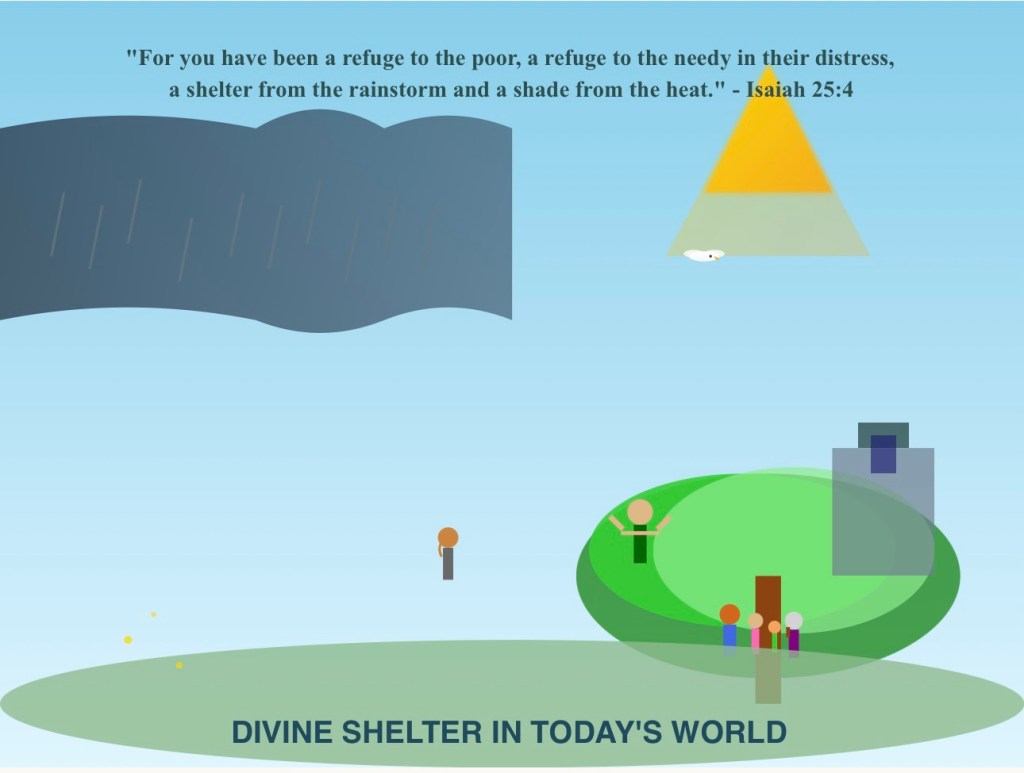
“For you have been a refuge to the poor, a refuge to the needy in their distress, a shelter from the rainstorm and a shade from the heat.”

Isaiah 25:4

The Walls (Historical context) – Providing protection through understanding

The Unveiling: Understanding the Divine Blueprint

The Historical Canvas

Isaiah 25:4 emerges from what biblical scholars call the “Isaiah Apocalypse” (chapters 24-27), a prophetic vision of God’s ultimate triumph over chaos and suffering. Written during a period of political upheaval and social injustice, this verse serves as a beacon of hope, promising divine intervention for the marginalised and oppressed.

The prophet Isaiah, writing in the 8th century BCE, witnessed the brutal realities of ancient Near Eastern politics where the poor and vulnerable were often trampled by the powerful. Against this backdrop, he proclaims God’s character as fundamentally protective and nurturing toward those society has forgotten.

The Metaphorical Landscape

The verse employs four powerful metaphors that paint a complete picture of divine protection:

Refuge – The Hebrew word “maoz” suggests a fortress or stronghold, implying not just temporary safety but strategic security. God becomes the impenetrable fortress where the vulnerable can find lasting protection.

Shelter from the Rainstorm – In the ancient world, sudden storms could be life-threatening. This metaphor speaks to God’s provision during life’s unexpected crises and overwhelming circumstances.

Shade from the Heat – In the desert climate of the Middle East, shade was literally life-saving. This represents God’s relief from the scorching trials and pressures of existence.

For the Poor and Needy – The Hebrew terms “dal” and “ebyon” refer not just to material poverty but to those who are powerless, oppressed, and without advocates in society.

The Roof (Scholarly insights) – Covering with wisdom

Scholarly Illumination: Wisdom from the Ages

Dr. John N. Oswalt’s Perspective

“Isaiah presents God not as distant and indifferent, but as intimately involved in the struggles of the marginalised. This verse reveals that divine strength is most perfectly demonstrated in the protection of the vulnerable.”

Matthew Henry’s Commentary

“God’s people, however poor and despised they may be in the world, are safe under his protection. He is to them what a strong city is to the inhabitant, what a shelter is to the traveller in a storm.”

Contemporary Insight from Dr. Brueggemann

“The promise of refuge is not passive comfort but active intervention. God’s sheltering presence transforms not just individual circumstances but the very structures that create vulnerability.”

Video Reflection Moment

At this point in our reflection, I invite you to pause and immerse yourself in this beautiful musical meditation that captures the essence of God’s protective love:

Divine Refuge – A Musical Reflection

Allow the melody to wash over you as you contemplate how God has been your refuge in times of storm and your shade in seasons of scorching trial.

The Windows (Modern application) – Letting light illuminate current relevance

Modern Application: Living as Divine Shelters

In Personal Relationships

Just as God provides refuge, we’re called to be safe harbours for our family members, friends, and colleagues. This means creating spaces where people can be vulnerable without fear of judgment, where they can find emotional safety during their storms.

In Professional Settings

Our workplaces become opportunities to extend divine shelter through mentorship, advocacy for fair treatment, and creating inclusive environments where everyone can thrive regardless of their background or circumstances.

In Community Engagement

Isaiah’s vision challenges us to identify the “poor and needy” in our communities – not just those lacking material resources, but those lacking voice, opportunity, or hope. We become God’s hands and feet in providing practical refuge.

In Social Justice

This verse calls us to examine systems and structures that create vulnerability and to actively work toward their transformation. Being a refuge means both caring for victims and addressing the root causes of oppression.
The Hearth (Prayer and meditation) – Warming the heart

A Heart’s Prayer

Gracious Father, You who are the eternal refuge of the vulnerable and the shade for the weary, we come before You with humble hearts. Help us to recognise that we have been recipients of Your divine shelter countless times, often without even realising it.

Transform our hearts to mirror Your protective love. Make us sensitive to the storms raging in others’ lives and quick to offer the shelter of Your presence through our actions, words, and advocacy.

Grant us wisdom to see beyond surface needs to deeper wounds that require Your healing touch. May we never be so consumed with our own comfort that we fail to notice those seeking refuge around us.

Lord, use us as instruments of Your peace, channels of Your protection, and embodiments of Your sheltering love. Let our lives become living testimonies to Your faithfulness as refuge and shade.

In Jesus’ mighty name, we pray. Amen.

Soulful Meditation: The Sanctuary Within

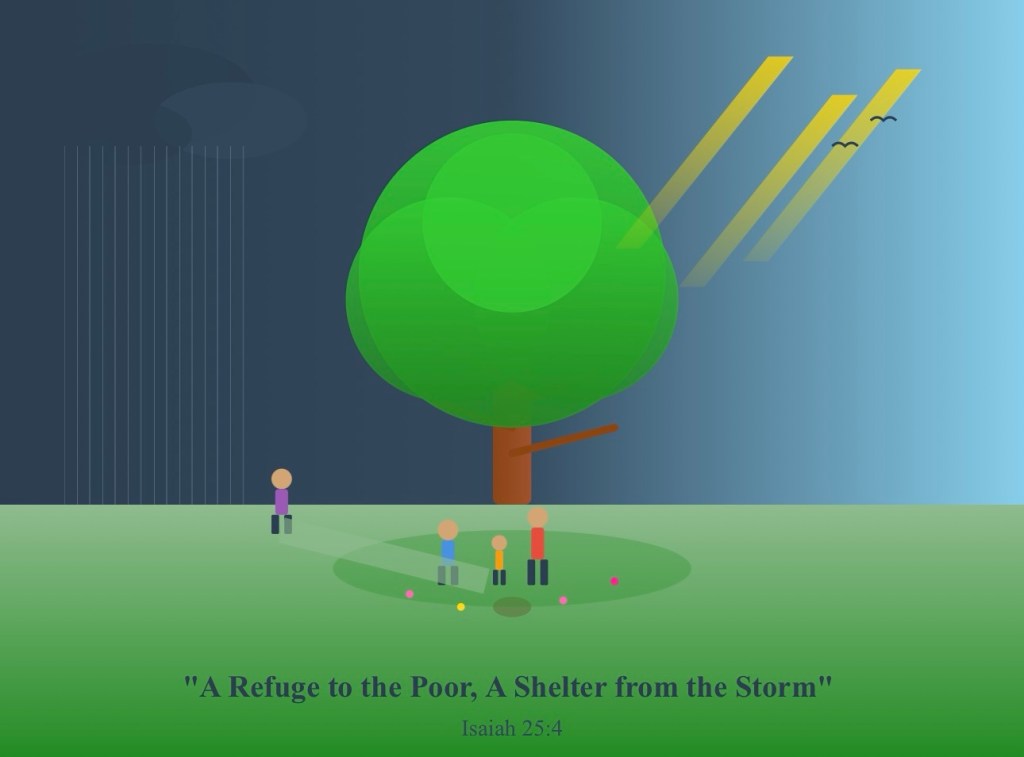
Find a quiet space and close your eyes. Breathe deeply and imagine yourself as a weary traveller in an ancient desert. The sun is merciless, the heat overwhelming. Suddenly, you spot a large tree with expansive branches casting cool shade. Feel the relief as you step into that shelter.

Now, visualise the faces of people in your life who need refuge. See them as fellow travellers seeking shelter from their own storms. Feel God’s love flowing through you, transforming you into that tree of refuge.

Spend a few moments asking God to reveal specific ways you can be a shelter for others today. Listen for His gentle guidance and commit to one concrete action that will extend His protective love to someone in need.

The Living Room (FAQ) – Making space for real questions

Frequently Asked Questions

Q: How can I be a refuge for others when I’m struggling myself?

A: Being a refuge doesn’t require perfection or the absence of personal struggles. Often, our own experiences of needing shelter make us more compassionate and effective in helping others. God’s strength is made perfect in our weakness.

Q: What if I don’t have material resources to help the poor?

A: Being a refuge includes far more than material provision. Listening ears, encouraging words, advocacy, time, and emotional support are all forms of shelter. Sometimes presence is more powerful than presents.

Q: How do I know if I’m truly helping or just enabling dependency?

A: True refuge empowers people toward wholeness and independence. Ask yourself: “Am I helping this person discover their own strength and dignity, or am I making them more dependent?” Healthy refuge builds up rather than tears down.

Q: Can this verse apply to emotional and spiritual needs, not just physical ones?

A: Absolutely. Many people today face storms of anxiety, depression, loneliness, and spiritual emptiness. Being a refuge means offering emotional safety, spiritual encouragement, and the hope that comes from knowing God’s love.

Q: How do I balance being a refuge with healthy boundaries?

A: Jesus himself withdrew to pray and rest. Being a refuge doesn’t mean being available for everyone all the time. Healthy boundaries actually make us more effective helpers because they prevent burnout and resentment.

The Doorway (Challenge) – Sending forth with purpose

Your Rise & Inspire Challenge

Reflection Question: Think about a time when someone served as a “refuge” for you during a difficult season. How did their support change your perspective or circumstances? Now consider: Who in your circle of influence might be seeking refuge from their own storms today?

Action Step: This week, identify one person who could use a “shelter” in their current circumstances. Choose one specific way you can provide refuge – whether through practical help, emotional support, advocacy, or simply being a consistent presence. Take that first step today, and journal about the experience.

Weekly Commitment: Create a “refuge routine” – set aside time each week specifically for reaching out to someone who might need encouragement, support, or simply to know they’re not alone in their struggles.

Blog Post Structure Innovation: “The Sanctuary Method”

Today’s reflection(blog post) follows the Sanctuary Method – a structure that mirrors the very refuge described in Isaiah 25:4:

Explore more at the Rise & Inspire archive | Wake-Up Calls

Categories: Astrology & Numerology | Daily Prompts | Law | Motivational Blogs | Motivational Quotes | Others(Health tips included) | Personal Development | Tech Insights | Wake-Up Calls

© 2025 Rise & Inspire. All Rights Reserved.
Follow our journey of reflection, renewal, and relevance at @RiseNinspireHub
Website: Home | Blog | About Us | Contact| Resources

Word Count:1533

WHY DOES GOD’S JUSTICE MATTER MORE THAN EVER IN TODAY’S CORRUPT WORLD?


A RISE & INSPIRE BIBLICAL REFLECTION
By Johnbritto Kurusumuthu

Discover the profound meaning of 2 Chronicles 19:7 and how God’s perfect justice—free from partiality and corruption—speaks directly into your life today. You’ll explore how this ancient truth applies to your leadership, workplace decisions, personal integrity, and spiritual journey. Step into biblical wisdom that empowers you to live righteously in a world that desperately needs divine justice.

CORE MESSAGE CONVEYED THROUGH THIS REFLECTION

God’s justice is absolute, impartial, and incorruptible—and it’s the standard He calls you to follow. Rooted in 2 Chronicles 19:7, this reflection invites you to live in reverence of the Lord and align every decision with His perfect nature. In a world where corruption and favouritism often reign, you’re called to be different. Whether you’re leading others, building relationships, or confronting societal issues, your integrity and fairness can become a living testimony of God’s righteousness. As you walk in His justice, one decision at a time, you become an instrument of transformation in the world around you.

A WAKE-UP CALL MESSAGE
From His Excellency, the Rt. Rev. Dr. Selvister Ponnumuthan

In today’s world—where integrity is often sacrificed for gain, and justice is selectively applied—you are called to a higher standard. God’s justice never bends to pressure or influence. As you begin this day, examine your heart. Are your decisions marked by fairness, or by convenience? Are your relationships shaped by integrity, or by partiality? The world is watching. Will you reflect the righteousness of the God you serve?

TODAY’S VERSE FOR REFLECTION

Now, let the fear of the Lord be upon you; take care what you do, for there is no perversion of justice with the Lord our God, or partiality, or taking of bribes.”
2 Chronicles 19:7 (ESV)

THE HEART OF THE MATTER

Every time you read a headline about corruption or bias, this ancient verse cuts through the noise with divine clarity. When King Jehoshaphat gave this command to the judges of Judah, it wasn’t just political reform—it was a call to reflect God’s holy justice. And that same call is upon your life today. If you claim to represent God’s kingdom, your decisions must reflect His standards.

HISTORICAL CONTEXT: A KING’S REVOLUTIONARY VISION

Picture yourself in the Southern Kingdom of Judah around 870 BC. King Jehoshaphat had narrowly escaped death, been rebuked by a prophet, and had seen firsthand the dangers of aligning with corrupt leaders. Now, he was reforming the nation’s justice system—not for political survival, but to honour God’s righteousness. He wasn’t just appointing officials. He was reorienting a nation’s conscience toward heaven’s standards.

As a believer today, you stand in the same role. God is asking you: Will your actions reflect the values of the world—or of His kingdom?

DEEP DIVE: UNPACKING THE DIVINE STANDARD

The Fear of the Lord
The Hebrew word yirah speaks of reverence and awe—not fear that paralyses, but fear that realigns. When you truly grasp God’s holiness and authority, your decisions naturally flow from that understanding.

No Perversion of Justice
God doesn’t twist justice. The Hebrew word ’awlah means distortion—and God allows none of it. Are you willing to stand firm even when compromise feels easier?

No Partiality
Do you treat people differently based on their status, wealth, or what they can offer you? God doesn’t. He sees the heart. You’re called to do the same.

No Taking of Bribes
Whether it’s money, recognition, or comfort—anything that skews your decisions is a bribe. Even seemingly harmless rewards can corrupt your integrity if you’re not vigilant.

BIBLICAL JUSTICE IN ACTION

SCHOLARLY INSIGHTS: WISDOM FROM THE AGES

Matthew Henry reminds you that when you judge for God, you must not be swayed by emotion or self-interest. Charles Spurgeon echoes that justice starts with fearing the Lord. Christopher Wright challenges you to let your life reflect what divine governance looks like—fair, uncorrupted, and righteous. These voices from different centuries agree: You are accountable to a higher justice.

MODERN APPLICATIONS: LIVING THE PRINCIPLE TODAY

In Leadership Positions
You are responsible for those you lead—whether as a manager, parent, teacher, or pastor. Are your decisions grounded in truth, or influenced by favouritism? Are you resisting the subtle bribes of popularity or gain?

In the Workplace
Do you treat every coworker with the same dignity? Do you stand up against injustice, or stay silent to protect your comfort? Your workplace is a platform for God’s justice—use it well.

In Personal Relationships,
It’s easy to favour those who benefit you, but true love shows no partiality. Do you gossip about some and shield others? Do you give people a fair hearing, or jump to conclusions?

In Social Issues
Justice isn’t only for the powerful—it’s for the voiceless. Are you advocating for the marginalised? Are you using your voice to promote fairness and equity?

A PRAYER FOR DIVINE JUSTICE

Heavenly Father,
In this world of broken systems and compromised values, You alone remain perfectly just. Teach me to fear You—not out of dread, but out of awe and love.
Purify my heart, so I may lead, speak, and act without bias.
Give me the courage to stand for righteousness, even when it’s uncomfortable.
Help me see every person through Your eyes—not by their power, status, or benefit to me, but by their worth in You.
Let integrity define my life. Let fairness mark my actions.
Make me a vessel of Your justice in my home, workplace, and community.
In Jesus’ name, Amen.

MEDITATION: A MOMENT WITH THE DIVINE

Close your eyes.
Picture yourself standing before the throne of God—the Judge who never errs.
Feel the weight of His fairness: no preferences, no shortcuts.
Now, imagine carrying that same spirit of justice into your day.
How would it change the way you speak, decide, and relate?
What relationships would be healed? What compromises would you reject?
Breathe in God’s peace.
Breathe out every trace of partiality.
Align yourself with His justice.

FREQUENTLY ASKED QUESTIONS

How do I balance mercy and justice in my decisions?
God’s justice always includes mercy. Justice isn’t about punishment—it’s about restoration. Ask God to help you discern what leads to healing, not just fairness.

What if standing for justice puts my job or relationships at risk?
Jesus never promised the easy road. He did promise to honour those who stand for truth. Trust that God sees your sacrifice and will provide for you.

How can I develop a fear of the Lord practically?
Start your day by acknowledging God’s presence in all your choices. Read Scripture, reflect on His character, and remember—you live every moment before Him.

What about different cultures and justice?
God’s justice transcends cultural customs. The core is always the same: truth, impartiality, integrity. Let God shape your standard, not your culture alone.

How do I recognise unconscious partiality?
Ask yourself, “Would I decide differently if roles were reversed?” Invite trusted people to challenge your blind spots. Ask God to search your heart and expose hidden bias.

RISE & INSPIRE CHALLENGE

This Week’s Reflection Question
Where in your life are you tempted to show partiality? What would it look like to bring God’s justice into that space?

Action Step
Pick one relationship or responsibility where your standard has been inconsistent. This week, treat everyone with equal integrity. Journal what changes in your peace, clarity, and relationships.

Share Your Journey
Talk about it with someone you trust. Or post your reflections to encourage others. Your honesty could inspire someone else’s transformation.

FINAL REFLECTION

You are living in a world that’s hungry for real justice—not slogans or politics, but righteousness that flows from the heart of God. You have the privilege to reflect that justice in your everyday life.

Choose truth over popularity. Choose fairness over comfort. Choose integrity over gain.

When you fear the Lord, partiality becomes impossible, and justice becomes your nature.

So rise today in righteousness. Inspire others through your integrity. Transform your world, one just decision at a time.

Where is God calling you to walk in greater fairness? Let Him examine your heart—and then act.

Explore additional inspiration from the blog’s archive. | Wake-Up Calls

Categories: Astrology & Numerology | Daily Prompts | Law | Motivational Blogs | Motivational Quotes | Others | Personal Development | Tech Insights | Wake-Up Calls

🌐 Home | Blog | About Us | Contact| Resources

📱 Follow us: @RiseNinspireHub

© 2025 Rise&Inspire. All Rights Reserved.

Word Count:1419

Is a New Era Beginning for the Catholic Church Under Pope Leo XIV?

Pope Leo XIV, the first American pontiff, ushers in a new era for the Catholic Church. Discover how his leadership may shape debates on women, LGBTQ inclusion, and church accountability.

A New Chapter for the Catholic Church:

 Pope Leo XIV Takes the Helm

The world’s 1.4 billion Roman Catholics have a new leader. Robert Francis Prevost, a 69-year-old cardinal from Chicago, has been elected pope, taking the name Leo XIV. This historic moment marks the first time a pope has hailed from the United States.

Who Is Pope Leo XIV?

Born in Chicago, Prevost served for two decades in Peru, where he became a bishop and a naturalised citizen. He later rose to lead his international religious order and held a key Vatican post overseeing the selection and management of bishops worldwide. As a member of the Order of St. Augustine, Prevost is widely known for his deep commitment to the poor and migrants.

Key Issues Facing the Catholic Church

The church stands at a crossroads, grappling with several pressing challenges:

  • The Role of Women: Ongoing questions surround the role of women in church leadership and the possibility of female ordination.
  • LGBTQ Inclusion: Divisions persist over the church’s stance on LGBTQ issues, with calls for greater inclusion alongside adherence to traditional teachings.
  • Accountability for Sexual Abuse: Addressing sexual abuse scandals remains a priority, with ongoing demands for transparency and accountability.

A New Direction?

As pope, Prevost will be tasked with navigating these complex matters and setting the church’s future course. While his positions on some issues are not fully clear, his strong advocacy for the marginalized and migrants is unmistakable. Will he continue the consultative approach introduced by Pope Francis, encouraging dialogue between laypeople and bishops? Time will reveal his path.

A Global Perspective

As the first American pope, Prevost brings a unique global perspective shaped by his years of service in Latin America. He has consistently spoken out on issues of immigration and social justice, reflecting a deep sensitivity to global inequality.

Conclusion

The election of Pope Leo XIV marks a pivotal moment in the Catholic Church’s history. His leadership will be key as the church confronts the complex moral and social questions of our era. We extend our best wishes to him as he embarks on his papal journey.

Explore additional inspiration from the blog’s archive. | Wake-Up Calls

Categories: Astrology & Numerology | Daily Prompts | Law | Motivational Blogs | Motivational Quotes | Others | Personal Development | Tech Insights | Wake-Up Calls

🌐 Home | Blog | About Us | Contact| Resources

📱 Follow us: @RiseNinspireHub

© 2025 Rise&Inspire. All Rights Reserved.

Word Count:439

How Do Fundamental Rights Shape a Just Society?

In every thriving democracy, fundamental rights act as the foundation for justice, equality, and freedom. These rights empower individuals, protect against exploitation, and ensure that every citizen has the opportunity to live with dignity. 

The Indian Constitution, inspired by the values of liberty, justice, and fraternity, enshrines these fundamental rights to safeguard the interests of all people.

Let’s explore these rights and understand their significance in shaping a fair and just society.

What Does the Right to Equality Guarantee?

The right to equality ensures that no individual faces discrimination based on religion, caste, gender, birth, or place of origin. It guarantees equality before the law, meaning no one is above it, and all citizens are treated equally (Article 14). Discrimination based on caste, religion, sex, or place of birth is prohibited (Article 15). In matters of public employment, all individuals have an equal opportunity (Article 16). Untouchability has been abolished and is considered a punishable offence (Article 17). Additionally, hereditary titles of nobility are not permitted (Article 18).

Why Is This Right Crucial?

Imagine a world where opportunities are reserved only for the privileged. Without equality, progress remains confined to a select few. This right ensures a level playing field for all.

Why Is the Right to Freedom Essential?

Freedom is the soul of democracy. This right allows individuals to express their thoughts and ideas freely through speech and expression (Article 19). It also guarantees protection of life and personal liberty, ensuring that no person can be deprived of these without due process (Article 21). Furthermore, it protects individuals from arbitrary arrests and detentions, ensuring that no one is detained without legal justification (Article 22).

Why Does This Matter to You?

Imagine a world where speaking your mind could land you in jail. This right ensures that every citizen can express themselves freely and live without fear.

How Does the Right Against Exploitation Protect You?

Exploitation has no place in a just society. The Constitution ensures that human trafficking and forced labour are prohibited (Article 23). It also prevents children below the age of 14 from being employed in hazardous work environments (Article 24).

Why Is This Right Essential?

A society that allows exploitation deprives people of dignity. This right ensures protection for vulnerable individuals, especially children and marginalized communities.

What Does the Right to Freedom of Religion Mean for You?

India, known for its diverse faiths, upholds secularism through the freedom to practice, profess, and propagate any religion (Article 25). Religious communities have the right to manage their affairs (Article 26). Educational institutions funded by the state are not permitted to impart religious instruction (Article 28). Additionally, no individual can be forced to pay taxes for the promotion of any particular religion (Article 27).

Why Is This Right Significant?

Faith is personal, and no one should be forced to follow or renounce a belief. This right ensures that everyone can follow their faith freely.

How Do Cultural and Educational Rights Preserve Diversity?

To preserve cultural heritage and ensure education for all, the Constitution guarantees the protection of minority rights (Article 29). It also grants the right to establish and administer educational institutions of their choice (Article 30).

Why Do These Rights Matter?

Imagine if cultural diversity was erased or if minorities had no right to education. This right safeguards traditions, knowledge, and progress.

What Makes the Right to Constitutional Remedies So Powerful?

This is the most powerful right because it allows individuals to seek justice if any fundamental right is violated (Article 32). The Supreme Court and High Courts have the authority to protect and enforce these rights.

Why Does This Right Empower You?

Rights without remedies are meaningless. If someone’s rights are violated, they must have the power to fight for justice.

How Can Knowing Your Rights Change Your Life?

Fundamental rights are not just words in the Constitution; they shape our daily lives, ensuring justice and dignity for all. However, rights also come with responsibilities—respecting others’ freedoms, following the law, and upholding the spirit of democracy.

Let’s celebrate our rights and use them wisely to create a society that is fair, inclusive, and progressive!

Join the Conversation


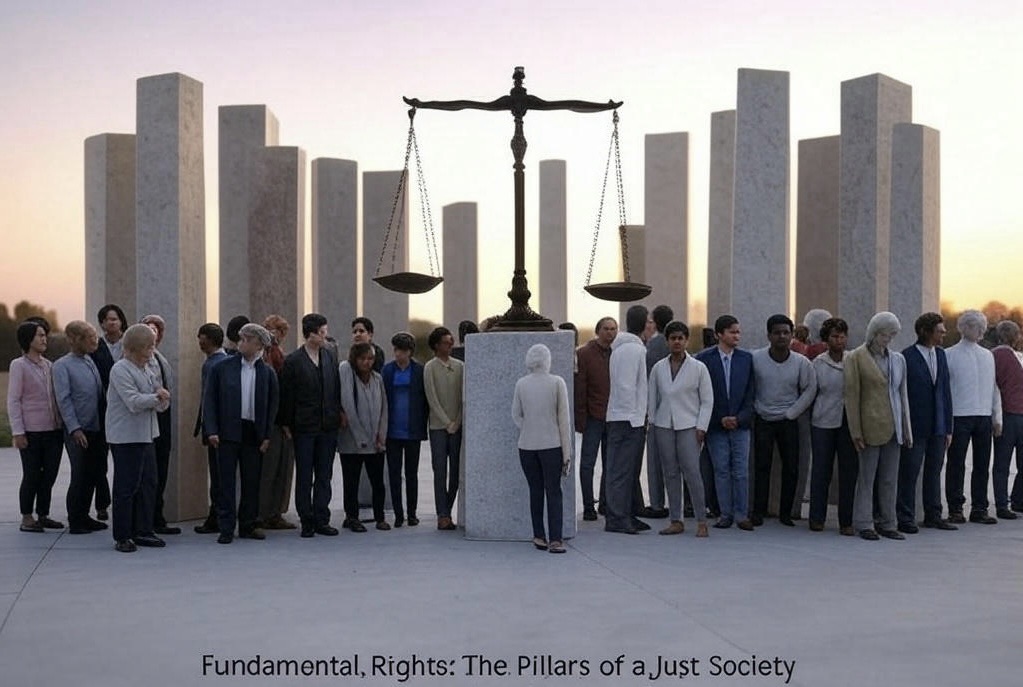
AI-generated digital artwork representing the fundamental rights of a just society.

Which fundamental right do you think is the most important? Share your thoughts in the comments below!

🌐 Home | Blog | About Us | Contact| Resources

📱 Follow us: @RiseNinspireHub

© 2025 Rise&Inspire. All Rights Reserved.

Word Count:735

Remembering Gustavo Gutiérrez

The Legacy of a Theological Pioneer and Advocate for Justice

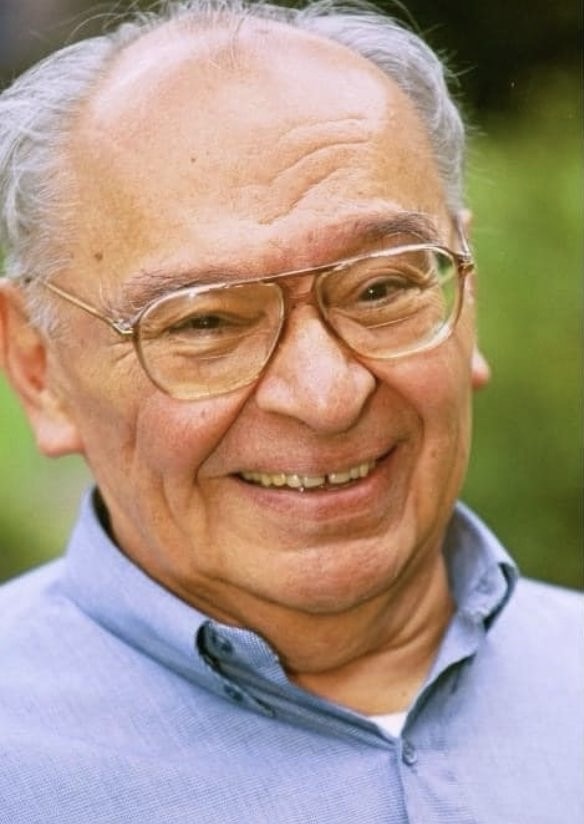
Gustavo Gutiérrez, a prominent Peruvian theologian and priest, passed away on 22 October 2024 at the age of 96. He is best known as a founding figure of liberation theology, a movement that emerged in the Latin American context during the 1960s and 1970s. Liberation theology combines Christian theology with socio-political analysis, focusing on the plight of the poor and marginalized, advocating for social justice, and critiquing structures of oppression.

Early Life and Background

Born on June 8, 1928, in Lima, Peru, Gutiérrez pursued his studies in theology and philosophy at the Pontifical Catholic University of Peru and later in France. His experiences of poverty and social injustice in Latin America significantly shaped his theological outlook. After ordination as a priest, he began to engage deeply with the challenges facing the impoverished communities around him.

Liberation Theology

Gutiérrez’s seminal work, “A Theology of Liberation,” published in 1971, laid the groundwork for liberation theology. In this book, he argued that theology should address the material conditions of the oppressed and stressed the importance of social justice in the Christian faith. He emphasized that God’s preferential option for the poor is a central theme in Scripture, urging the Church to take an active role in advocating for the marginalized.

Key Concepts in Gutiérrez’s Theology:

  1. Preferential Option for the Poor: Gutiérrez posited that the Church must prioritize the needs of the poor and oppressed, aligning with the biblical vision of justice.
  2. Structural Sin: He introduced the idea that sin is not only individual but also structural, arising from systemic injustices and socio-economic conditions.
  3. Salvation and Liberation: Gutiérrez linked salvation to liberation, suggesting that spiritual redemption is intertwined with social and political emancipation.

Impact and Legacy

Gutiérrez’s theology resonated widely, especially among Latin American Christians who sought to reconcile their faith with the struggles for social change. His work inspired many clergy and laypeople to engage in social justice initiatives and advocacy. The movement also faced criticism from some within the Church, particularly from conservative elements that viewed liberation theology as too politicized.

Despite opposition, Gutiérrez’s ideas continued to gain traction globally, influencing various social justice movements and theological reflections in different contexts. He participated in numerous international conferences and dialogues, promoting the themes of justice and solidarity.

Later Life and Recognition

Throughout his life, Gutiérrez remained active in academia, teaching and writing extensively. He served as a professor at various institutions, sharing his insights on theology, ethics, and social justice. He received numerous awards and honours for his contributions to theology and human rights, including recognition from the United Nations and various academic institutions.

In his later years, Gutiérrez continued to advocate for the poor and marginalized, emphasizing that the Church must remain a voice for justice. His work has been foundational in the development of liberation theology and has left an indelible mark on both theology and social activism.

Conclusion

Gustavo Gutiérrez’s life and work reflect a deep commitment to integrating faith with action for social justice. His theological insights challenge the Church to confront systemic injustices and advocate for the poor, encouraging a holistic understanding of salvation that includes both spiritual and material liberation. His legacy endures through the ongoing struggles for justice and the continued relevance of his theological contributions in contemporary discussions about faith, ethics, and social change.

Home | Blog | About Us | Contact | Resources
Rise&Inspire
Social Media: @RiseNinspireHub
For inquiries or collaborations, contact us at: kjbtrs@riseandinspire.co.in

© 2024 Rise&Inspire. All Rights Reserved.

The Bread of the Needy

A child holding a loaf of 🍞
A Reflection on Sirach 34:25-27 in Today’s World

Introduction:

The Bible is a rich source of wisdom and guidance for ethical living. One passage that stands out in its relevance to today’s world is Sirach 34:25-27, which warns against the grave sin of depriving the needy of their due.

Context of Sirach 34:25-27:

Sirach is a book of the Old Testament that is part of the Apocrypha, a collection of books that are not included in the Jewish canon but are considered to be valuable for their moral and spiritual teachings. Sirach was written in the second century BC and is attributed to a wise man named Ben Sira.

The passage in Sirach 34:25-27 is part of a larger section that offers guidance on ethical living. Ben Sira emphasizes the importance of compassion and social justice, and he warns against the dangers of greed and exploitation.

Significance of Sirach 34:25-27:

The passage in Sirach 34:25-27 is significant because it highlights the importance of caring for the needy. Ben Sira compares depriving the poor of their due to shedding blood. This powerful metaphor underscores the gravity of this sin and its devastating consequences.

Biblical Corroboration:

The theme of caring for the needy is not exclusive to Sirach. Throughout the Bible, numerous passages emphasize the importance of charity and empathy. In Matthew 25:35-36, Jesus himself exhorts us to feed the hungry and clothe the naked, for in doing so, we serve Him. This echoes the sentiments expressed in Sirach, reinforcing the enduring message of social responsibility.

Literary Echoes:

Great works of literature beyond the Bible have also explored the ethical implications of neglecting the needs of the impoverished. Charles Dickens’s “Oliver Twist” vividly portrays the struggles of an orphan in 19th-century England, shedding light on the harsh realities faced by the poor and the dire consequences of indifference. Dickens’ work, like Sirach’s, urges us to recognize the humanity in all people, regardless of their circumstances.

Relevance in Today’s World:

The message of Sirach 34:25-27 remains profoundly relevant in the contemporary world. Despite advances in society, poverty and inequality persist. Depriving the needy of their necessities, be it food, shelter, or fair wages, has real-life consequences. It perpetuates cycles of suffering, robbing people of their dignity and potential.

In an era marked by global challenges, such as economic disparities, climate change, and the ongoing refugee crisis, Sirach’s call to compassion takes on added urgency. As humans and as a society, we are called upon to reflect on our actions and policies, ensuring that we do not, in any way, deprive our neighbours and employees of their livelihood.

Specific Examples of the Relevance of Sirach 34:25-27 in Today’s World:

The global hunger crisis: According to the World Food Programme, over 800 million people do not have enough to eat. This includes millions of children who are at risk of malnutrition and stunting.

The exploitation of workers in developing countries: Many workers in developing countries are forced to work long hours for low wages in unsafe conditions. This includes child labour and forced labour.

The plight of refugees and displaced people: Millions of people around the world have been forced to flee their homes due to war, violence, and persecution. These refugees and displaced people often live in poverty and lack access to necessities such as food, water, and shelter.

Conclusion:

Sirach 34:25-27 offers a timeless reminder of our moral obligation to care for the needy and justly compensate the labourer. This message finds resonance not only in the Bible but also in the works of renowned authors like Charles Dickens.

In today’s world, where social issues persist, this verse calls us to examine our actions and policies, fostering a more compassionate and equitable society.

Call to Action:

What can we do to respond to the call of Sirach 34:25-27?

Donate to charities that are working to help the poor and needy.

Volunteer your time to serve those in need.

Advocate for policies that promote social justice and economic equality.

Educate yourself and others about the global hunger crisis, the exploitation of workers, and the plight of refugees and displaced people.

Citations:

Sirach 34:25-27, New Revised Standard Version (NRSV)

Matthew 25:35-36, New International Version (NIV)

Charles Dickens, “Oliver Twist,” 1837

The Holy Bible, various translations

🌹Each morning, I receive an inspiring wake-up call from His Excellency, the Rt. Rev. Dr. Selvister Ponnumuthan, the Bishop of Punalur in Kerala, India. Today’s blog post draws inspiration from the verses he shared in his morning message.

Explore more insights from Rise&Inspire