How Can You Trust God When Life Feels Completely Out of Control?

Forty percent of young adults now experience chronic anxiety. Depression rates have doubled in a decade. Suicide has become a leading cause of death. Mental health professionals are overwhelmed, medication prescriptions are skyrocketing, and despite our unprecedented access to information, therapy, and wellness resources, we’re somehow more fragile than generations who faced far worse circumstances with far fewer resources. What did they have that we’ve lost? The answer isn’t romantic nostalgia or anti-modern sentiment. It’s something specific, nameable, and recoverable—something a father named Mattathias articulated perfectly in 166 BCE while dying in a cave, surrounded by sons who were about to risk everything for what they believed. His final words contain a promise that sustained believers through Roman persecution, medieval plagues, religious wars, concentration camps, and every form of human suffering imaginable. That same promise is available to you today, right now, in whatever you’re facing. But first, you need to understand what it actually means.

Divine Strength Through Trust: Daily Biblical Reflection on 1 Maccabees 2:61 | October 14, 2025

By Johnbritto Kurusumuthu | Tuesday of Week 28 in Ordinary Time | Saint Callistus, Pope, Martyr

Opening Prayer for Divine Strength

The morning light filtered through my window this Tuesday, casting gentle shadows across the worn pages of my Bible. In this quiet moment, I found myself drawn to a profound promise from ancient Scripture:

And so observe, from generation to generation, that none of those who put their trust in him will lack strength.” — 1 Maccabees 2:61

Let me begin with a simple yet profound prayer:

Lord, as we open Your Word today, open also our hearts. Let us not merely read about strength, but receive it. Let us not just understand trust, but practice it. Be present with us now, in this sacred conversation between Your ancient promise and our modern needs. Amen.

What Does 1 Maccabees 2:61 Mean? Understanding the Biblical Context

The Historical Setting: Mattathias and the Maccabean Revolt

To understand the power of this verse about trusting God, we must journey back to approximately 166 BCE. Picture this scene: An old man lies dying—not in comfort, but on a rough mat in a cave, surrounded by his sons. This is “Mattathias, the father of the Maccabees”, and his final words would become a testament of faith that echoes through generations.

The “Seleucid Empire under Antiochus IV Epiphanes” had launched a systematic campaign to eradicate Jewish faith and practice. Imagine:

– Your beliefs declared illegal

– Teaching children about God punishable by execution

– The Jerusalem Temple desecrated with pagan sacrifices

– Torah scrolls burned in public squares

In this context of religious persecution, Mattathias and his sons chose resistance, beginning what history calls the “Maccabean Revolt”—one of history’s most remarkable stories of religious freedom and courage.

A Dying Father’s Spiritual Legacy

As Mattathias felt his life ebbing away, he gathered his sons and reminded them of faith heroes:

– “Abraham”, who trusted God completely

– “Joseph”, who maintained integrity in slavery

– “Joshua”, who led with unwavering courage

– “Daniel”, who refused to compromise

– “David”, who remained faithful through trials

Then came the culmination of his wisdom: “None of those who put their trust in him will lack strength.”

This wasn’t a magic formula or guarantee of easy victory—it was a pattern woven through human history, revealing “divine faithfulness that outlasts empires” and remains constant when everything crumbles.

The Biblical Definition of Trust: More Than Positive Thinking

Understanding Hebrew Concepts of Trust in God

The word “trust” has become sanitised in modern vocabulary. We talk about trust falls at corporate retreats or trusting our GPS. But “biblical trust” is something entirely different.

The Hebrew concept carries the sense of:

– “Leaning your full weight” on something

– “Staking your very existence” on its reliability

– The trust of a child falling backward, certain their father will catch them

– A rock climber whose life depends on a single anchoring point

This is “radical, vulnerable, all-in trust”—not passive hope, but active dependence on God’s faithfulness.

Real-Life Example: Finding Strength Through Faith

I think of a young woman—Maria—who faced an aggressive cancer diagnosis at twenty-eight. Doctors gave statistics and survival rates. But Maria found herself returning repeatedly to this verse from Maccabees. She told me, tears streaming, “I don’t know if I’ll survive this. But I know I won’t lack strength to face it.”

That’s the trust Mattathias describes: “not trust that God will give us what we want, but trust that God will always give us what we need—especially strength for the journey”.

How to Trust God When Life Is Hard: Scientific and Spiritual Perspectives

Psychology of Spiritual Resilience

Research on resilience supports this ancient biblical wisdom in fascinating ways. Studies consistently show that “people with strong spiritual foundations demonstrate greater resilience” in facing trauma, illness, and loss.

Dr. Viktor Frankl, Holocaust survivor and psychiatrist, observed in concentration camps that those who maintained trust—in God, in meaning, in purpose larger than survival—were more likely to endure the unendurable. In “Man’s Search for Meaning”, he documented how some prisoners maintained inner freedom and “spiritual autonomy that couldn’t be taken from them”.

This is the “strength that Mattathias promises will never be lacking”—not freedom from suffering, but strength within suffering.

Divine Strength vs. Human Willpower

Biblical trust provides:

– “Existential stability” that willpower cannot manufacture

– An internal anchor when everything else shakes

– “Resilience” rooted in something larger than ourselves

– The ability to experience pain deeply yet remain grounded

Faith Across Generations: The Multigenerational Promise of God’s Strength

Standing in a River of Faith

Notice the phrase “from generation to generation.” This isn’t about individual piety alone. Mattathias speaks of “divine faithfulness that transcends individual lifetimes” and weaves through history itself.

When you trust God today, you’re:

– Joining a “vast communion of believers” stretching back millennia

– Standing in a river of faith that carried countless others through dark valleys

– Accessing the “collective wisdom of all who’ve gone before”

“Abraham trusted four thousand years ago. Ruth trusted. David trusted. Mary trusted. Francis of Assisi trusted. Teresa of Ávila trusted. Your grandmother probably trusted. And now, you.”

A Priest’s Testimony: 40 Years of Proven Faithfulness

I remember Father Thomas, an elderly priest who served in challenging global missions. During a particularly dark period when violence erupted and friends were killed, he wanted to give up.

But he remembered his spiritual director’s words: “You’re not the first to face this, and you won’t be the last. Everyone who trusted before you found strength. The promise holds.”

Father Thomas showed me a worn card he’d carried for forty years, inscribed with our verse: “None of those who put their trust in him will lack strength.”

“I’ve never seen it proven false,” he said quietly.

That’s “generational faith”—the kind that builds cathedrals knowing you won’t see them finished, that plants trees in whose shade you’ll never sit.

Finding Strength in Weakness: The Paradox of Christian Faith

The Cross: Greatest Strength in Apparent Defeat

Here’s something paradoxical: “the strength God promises often looks like weakness by worldly standards”.

Consider the cross. By human measure, Jesus dying on Calvary looked like utter defeat—humiliation, suffering, apparent failure. But Christian faith recognizes this moment as “the greatest demonstration of divine strength in human history”.

As St. Paul wrote: “God’s weakness is stronger than human strength” (1 Corinthians 1:25).

St. Augustine on Strength Through Dependence

The fourth-century Church Father St. Augustine described his journey from pride to radical dependence on God. He realized his greatest moments of strength came precisely when “most aware of his weakness”, most conscious of his need for divine grace.

“Our strength is made perfect not in our accomplishments but in our trust.”

This is profoundly countercultural. We’re taught to project confidence, never show weakness, “fake it till you make it.” But biblical wisdom suggests a different path:

1. Acknowledge your weakness

2. Lean into your dependence on God

3. Discover where divine strength flows most freely

The Twelve Step Connection

The “Twelve Step tradition”, which has helped millions overcome addiction, embodies this biblical logic. The very first step? “Admit powerlessness”—acknowledge that by your own strength, you cannot overcome the problem.

This admission of weakness becomes the “gateway to accessing a Higher Power’s strength”.

Trusting God in the Digital Age: Modern Applications of Ancient Wisdom

The Trust Crisis in Modern Society

What does it mean to trust God in the age of smartphones, social media, 24-hour news cycles, and artificial intelligence?

We’re facing a “trust crisis in modern society”:

– More information than any generation, yet we trust less

– Can fact-check anything instantly, yet more confused about truth

– More digitally connected, yet more emotionally isolated

– “Anxiety has become the background noise of modern existence”

Recent studies show nearly 40% of young adults experience significant anxiety regularly. Depression and suicide rates continue climbing. Mental health has become a defining crisis of our generation.

I wonder if part of the problem is we’ve “lost the art of trust”—not naïve, blind trust, but the deep, rooted trust that Mattathias describes.

The Control Illusion and Digital Anxiety

We’ve become accustomed to trying to control everything:

– Optimize our schedules

– Curate our social media presence

– Track every health metric

– Plan careers with precision

When things don’t go according to plan—algorithm changes, job losses, relationship endings, diagnoses—”we fall apart because we’ve forgotten how to trust something beyond ourselves”.

Practical Ways to Trust God Daily in Modern Life

The verse from Maccabees offers an “alternative operating system for life”:

Instead of controlling everything through information and willpower, what if we anchored ourselves in trust?

Practically, this means:

– ✓ “Choosing gratitude over anxiety”when facing uncertainty

– ✓ “Practicing presence” instead of constantly planning and worrying

– ✓ “Cultivating community” rather than trying to be self-sufficient

– ✓ “Bringing concerns to prayer” before bringing them to Google

– ✓ “Making space for silence” and contemplation in a noisy world

– ✓ “Remembering God’s timeline” differs from ours

– ✓ “Trusting suffering can have meaning” even when we can’t see it yet

How to Cultivate Trust in God: 7 Spiritual Practices

Daily Spiritual Disciplines for Building Faith

Let me offer practical spiritual practices that can help “cultivate deeper trust in God”:

1. Morning Offering

Begin each day by consciously placing it in God’s hands. Before checking your phone, say: “Lord, I trust you with this day. Whatever comes, you will give me the strength I need.”

2. Breath Prayer for Trusting God

Throughout the day, use a simple breath prayer:

– “Inhale”: “I trust in you, Lord”

– “Exhale”: “You are my strength”

This creates a “rhythm of trust” that anchors you through busy, stressful moments.

3. Examination of Consciousness

Each evening, review the day for:

– Moments of trust vs. moments of anxiety

– When did you trust today?

– When did you try to control everything yourself?

– What would deeper trust look like tomorrow?

4. Scripture Memorisation

Commit 1 Maccabees 2:61 to memory. Write it on a card and carry it. Let it become part of your internal soundtrack, available in moments of fear or uncertainty.

5. Community Accountability

Share your struggles with trust with:

– A trusted friend

– A spiritual director

– A small group

Ask them to pray for you and “gently remind you of God’s faithfulness” when you forget.

6. Gratitude Practice

Keep a “journal of times when you trusted God and found strength”. This creates personal testimony to God’s faithfulness you can return to in future struggles.

7. Sabbath Rest

Practice regular rest as an “act of trust”—trusting that:

– The world doesn’t depend on your constant productivity

– God can sustain things without your anxious striving

– Rest is not weakness but faithful obedience

The Communion of Saints: You’re Not Alone in Your Struggle

Surrounded by a Cloud of Witnesses

The Letter to the Hebrews speaks of being surrounded by “a great cloud of witnesses”(Hebrews 12:1)—all those who’ve gone before us in faith, whose lives testify to God’s faithfulness.

Every person who ever trusted God and found strength is “part of your spiritual family”:

– You’re not alone in your struggles

– You stand with martyrs and mystics

– Their witness encourages you

– Their example guides you

– Their prayers support you still

Saint Callistus: A Model of Trust Under Persecution

Today’s optional memorial honours “Saint Callistus, Pope and Martyr”, who lived in the third century. Callistus faced immense challenges:

– Born a slave

– Experienced imprisonment

– Eventually became pope during severe persecution

– Died a martyr’s death, faithful to the end

His life embodied exactly what Mattathias promised: “despite lacking worldly power, he never lacked the strength that comes from trusting God”.

When we remember saints like Callistus, we’re not rehearsing history—”we’re reminding ourselves that the promise holds”, generation after generation.

God’s Strength for Your Specific Struggle: Personalising the Promise

This Promise Is For YOU

This promise isn’t abstract or generic. It’s personal. God knows exactly what you’re facing right now:

– The specific fear keeping you awake at night

– The particular weakness you try to hide

– The unique burden you carry

Applying 1 Maccabees 2:61 to Real-Life Challenges

If you’re facing financial uncertainty and don’t know how you’ll make ends meet:

→ The promise applies to you: “You will not lack strength.”

If you’re navigating a painful relationship breakdown and feel emotionally depleted:

→ The promise applies to you: “You will not lack strength.”

“If you’re fighting an addiction” and terrified you’ll fail again:

→ The promise applies to you: “You will not lack strength.”

If you’re caring for aging parents or a chronically ill child and running on empty:

→ The promise applies to you: “You will not lack strength.”

If you’re questioning your faith itself, wrestling with doubts that scare you:

→ The promise applies even here: “You will not lack strength for the journey.”

St. Paul’s Thorn: Strength Within Weakness

“St. Paul” prayed repeatedly for God to remove his “thorn in the flesh.” God’s answer wasn’t removal but sufficiency:

“My grace is sufficient for you, for my power is made perfect in weakness” (2 Corinthians 12:9)

Paul learned to trust “not for deliverance from weakness but for strength within weakness”—and that became his greatest testimony.

The strength God gives is “perfectly calibrated to your need”:

– Not always the strength to fix everything immediately

– But always strength to take the next step

– To remain faithful today

– To not give up

Reflection Questions: Opening Your Heart to God’s Strength

Personal Contemplation Prompts

Don’t rush past these questions. “Sit with them. Let them work on you.”

1. When in your life have you experienced strength that didn’t come from your own resources? What did it feel like to be carried by something beyond yourself?

2. Who in your family or community has modelled radical trust in God? What did you observe in them during difficult times?

3. What are you facing right now that requires a strength you don’t possess? Can you name it honestly before God?

4. If you truly believed that trusting God would mean never lacking strength, how would you live differently? What risks might you take? What fears might you release?

5. What’s one small step you could take this week toward deeper trust?

These aren’t rhetorical questions. They’re “invitations to genuine encounter” with the truth of this verse. I encourage you to:

– Write down your responses

– Share them with a trusted friend or spiritual director

– Bring them to prayer

Family and Community: Trust as a Shared Journey

Building Generational Faith in Families

While personal trust is essential, “the biblical vision is always communal”. Mattathias addressed all his sons and, by extension, the entire community of faith. “Trust in God is meant to be practiced together”, shared, strengthened through community.

How this works practically in families:

– When children see their mother “praying instead of panicking”

– When they watch their father “choose forgiveness over resentment”

– They’re learning the “pattern of trust”

– It becomes part of their “spiritual DNA”

A Testimony of Trust in Grief

I remember visiting a family that lost their teenage son in a tragic accident. The grief was overwhelming. But what struck me most was how “the family gathered each evening to pray”.

They didn’t:

– Pretend the pain wasn’t real

– Offer pat answers or cheap comfort

They did:

– Anchor themselves together in trust

– Trust that God was present in the darkness

– Trust that their son was held in eternal love

– Trust that somehow, impossibly, they would find strength to go on

“That family became a powerful witness” to their entire community. People who had drifted from faith found themselves drawn back, thinking, “If they can trust God through this, maybe I can trust God through my smaller struggles.”

This is how “trust multiplies and strengthens”—not just individually, but communally.

Trust and Ethical Integrity: Choosing Faithfulness Over Compromise

The Moral Dimension of Biblical Trust

There’s an ethical dimension to this trust we shouldn’t miss. Mattathias isn’t just talking about emotional or psychological strength. He’s speaking in the context of “choosing faithfulness over compromise, integrity over expedience”.

The Maccabees faced immense pressure to:

– Assimilate

– Abandon distinctive faith practices

– Blend in with dominant culture

Many contemporaries chose that path—”it was easier, safer, more practical”. But the Maccabees trusted that God would give them strength to remain faithful, even at great cost. “That trust made ethical courage possible.”

Modern Applications: Trust Enables Integrity

This remains relevant today. We all face pressures to compromise our values:

– The business deal requiring dishonesty

– The social situation where truth might cost friendships

– The career path demanding sacrifice of family or integrity

– The cultural moment that mocks traditional moral values

Trust in God’s strength makes it possible to choose the harder right over the easier wrong. When you know God will not let you lack strength, you can afford to risk worldly consequences for the sake of faithfulness.

St. John Chrysostom preached that real faith—the kind that trusts God completely—always produces moral transformation. You can’t truly trust God and remain comfortable with sin, because trust involves alignment with God’s character and purposes.

The Mystical Dimension: Trust as Union with God

Contemplative Understanding of Divine Trust

The great contemplatives of Christian tradition—Teresa of Ávila, John of the Cross, Julian of Norwich, Thomas Merton—understood that trust is ultimately about “union with God”. It’s not just about believing certain things; it’s about:

– Dwelling in God

– Resting in God

– Being held by God

Julian of Norwich: “All Shall Be Well”

Julian of Norwich, the fourteenth-century English mystic, received visions during severe illness. In these revelations, she heard God say repeatedly:

“All shall be well, and all shall be well, and all manner of thing shall be well.”

This wasn’t denial of suffering or evil. Julian lived through the Black Death, devastating loss, and profound uncertainty. But she experienced deep trust that at the most fundamental level, reality is held in divine love—and that love will not fail.

This is the mystical trust that Mattathias points toward:

– Allows you to release your grip on outcomes

– Stop trying to control everything

– Rest in the deeper reality of God’s faithful presence

– Whisper “nevertheless” even in the darkest valley

Contemplative Prayer: Where Trust Deepens

This kind of trust is “cultivated in contemplative prayer”—those times when we simply sit in God’s presence:

– Without agenda

– Without asking for anything

– Just being with the One who is our strength

In these quiet moments, “trust deepens from intellectual assent to experiential reality”. We discover:

– We can indeed cast our cares on God

– We’re genuinely held

– Divine love is more reliable than any human support system

Artistic Expressions of Faith: Trust Reflected in Culture

Visual Art: Michelangelo’s Divine Strength

Throughout history, artists have tried to capture this truth about divine strength sustaining those who trust. Consider Michelangelo’s Sistine Chapel ceiling, where God’s finger reaches toward Adam’s. The entire image pulses with divine strength flowing into human weakness—a visual representation of Mattathias’s promise.

Hymns of Trust: “Be Still My Soul”

Consider the great hymns of faith. “Be Still My Soul”—those achingly beautiful words set to the Finnish melody “Finlandia”:

“Be still, my soul: the Lord is on thy side. Bear patiently the cross of grief or pain. Leave to thy God to order and provide; in every change, He faithful will remain.”

Written in a context of suffering and uncertainty, it breathes absolute trust in God’s faithfulness across generations.

Contemporary Christian Music

Even in contemporary music, we find this theme. “Lauren Daigle” sings:

“You are for me, not against me / I am loved, I am loved.”

It’s a modern expression of the ancient promise: “those who trust will not lack strength, because divine love upholds them”.

Literature: C.S. Lewis on Trust

C.S. Lewis, writing after his wife’s death in “A Grief Observed”, honestly documents his struggle with faith. He questions, rages, doubts. But ultimately he comes back to trust—not because all questions were answered, but because he recognized that “the relationship with God runs deeper than intellectual certainty.

“I know now, Lord, why you utter no answer. You are yourself the answer.”

Kingdom Vision: Trust as Participation in God’s Future

Eschatological Trust: Living in Light of God’s Promises

When we trust God, we’re not just coping with present difficulties— “we’re participating in God’s kingdom vision for the future”. We’re living as if the ultimate promises are true, even when current circumstances seem to contradict them.

This is “eschatological trust”—trust that:

– Reaches forward into God’s promised future

– Draws strength from it into the present

– Aligns us with eternal reality

Revelation’s Promise: All Things Made New

The Book of Revelation portrays this beautifully:

God will wipe away every tear, death will be no more, mourning and crying and pain will pass away (Revelation 21:4)

When we trust God in present suffering, we’re:

– Aligning ourselves with this future reality

– Living in the light of what will be

– Giving our current struggles “cosmic significance”

Martin Luther King Jr.’s Kingdom Trust

Martin Luther King Jr. captured this beautifully in his last speech, delivered the night before his assassination:

“I’ve seen the Promised Land. I may not get there with you. But I want you to know tonight, that we, as a people, will get to the Promised Land.”

That’s kingdom trust—trust that:

– God’s purposes will prevail

– The arc of the moral universe bends toward justice

– Divine promises will be fulfilled even if we don’t live to see it

Blessing and Sending Forth: Go in Peace with Divine Strength

As we conclude this reflection, I offer you this blessing— “a word of benediction for your journey forward”:

May you know”, deep in your bones, that you are held by a love:

– Stronger than death

– Steadier than the mountains

– More faithful than the sunrise

May you trust” not because you have all the answers, but because you know the One who does.

May you find strength” for today and hope for tomorrow, not in your own capacity but in God’s inexhaustible grace.

May the testimony” of all who have trusted before you—from Abraham to Mattathias to the Maccabees to the martyrs to the saints to your own grandmothers and grandfathers in faith—encourage you and give you courage.

May you release” your grip on outcomes you cannot control and instead grip tightly the hand of the God who controls all things.

May you discover” that divine strength flows most freely precisely when you acknowledge your own weakness.

May you live with hope”, knowing that none who trust in God will lack strength—not today, not tomorrow, not in any generation to come.

And may you become” yourself a witness to this promise, so that others, watching your life, might also learn to trust.

Go in peace, dear friend.” You are stronger than you know, because you are loved by One who is strength itself.
Key Takeaway: The Promise That Never Fails

Final Clear Message

Those who trust in God do not merely survive life’s storms—they rise through them with strength not their own, becoming living testimonies to a divine faithfulness that spans all generations and never, ever fails.

This Tuesday of the Twenty-Eighth Week in Ordinary Time isn’t ordinary at all. It’s an invitation to:

– Extraordinary trust

– Radical dependence

– Discovering that the ancient promise remains true

“None of those who put their trust in him will lack strength.” — 1 Maccabees 2:61

Your Invitation to Trust Today

Will you trust today?

Will you take the leap?

Will you anchor yourself in the One who has never failed those who depend on Him?

The choice, as always, is yours. But know this: “If you choose trust, you join an unbroken chain of believers” stretching back through time, and you’ll find that the promise—tested by fire, proven through generations—”holds true for you too”.

Trust, and discover your strength.

About the Author

Johnbritto Kurusumuthu writes daily biblical reflections for the Rise & Inspire community, helping modern readers discover ancient wisdom for contemporary life. His reflections bridge the gap between Scripture and daily living, offering practical spiritual guidance rooted in Catholic tradition.

Further Reading & Resources from Rise&Inspire archive 

Related Biblical Reflections:

– [How to Develop Unshakeable Faith in Times of Crisis](#) A Call to Unshakeable Faith…”          

– [The Maccabees: Lessons in Courage and Religious Freedom](#) “The Maccabees: Lessons in Courage and Religious Freedom

– [Finding God’s Peace When Anxiety Overwhelms](#) Finding God’s Peace When Anxiety Overwhelms

– [Daily Prayers for Spiritual Strength](#)

Recommended Scripture Passages:

– Psalm 46:1-3 – “God is our refuge and strength”

– Isaiah 40:31 – “Those who hope in the Lord will renew their strength”

– Philippians 4:13 – “I can do all things through Christ who strengthens me”

– 2 Corinthians 12:9-10 – “My grace is sufficient for you”

Catholic Resources:

– United States Conference of Catholic Bishops (USCCB) Daily Readings

– Catechism of the Catholic Church on Divine Providence

– Lives of the Saints: Saint Callistus, Pope and Martyr

Frequently Asked Questions (FAQs)**

What does 1 Maccabees 2:61 teach us about trust?

1 Maccabees 2:61 teaches that God promises strength to those who trust Him across all generations. It’s not a guarantee of easy circumstances, but assurance of divine support through every trial. This verse, spoken by Mattathias to his sons during persecution, emphasizes that faith in God provides resilience that human willpower alone cannot achieve.

How can I trust God when I’m facing overwhelming challenges?

Start with small acts of trust: daily prayer, Scripture meditation, and community support. Acknowledge your weakness honestly before God, practice gratitude even in difficulty, and remember the testimony of those who’ve trusted before you. Trust grows through practice and experience of God’s faithfulness over time.

Who were the Maccabees and why are they important?

The Maccabees were a Jewish family who led a revolt against religious persecution in the 2nd century BCE. Their story, recorded in the Books of Maccabees, demonstrates extraordinary courage in defending faith and religious freedom. They’re important because they modeled unwavering trust in God even under threat of death.

What is the difference between biblical trust and positive thinking?

Biblical trust is radical dependence on God’s character and promises, acknowledging our own weakness and need. Positive thinking relies on self-confidence and mental techniques. Biblical trust accepts suffering as potentially meaningful and finds strength in relationship with God, while positive thinking often tries to eliminate or deny difficulties.

How do I practice daily trust in God in modern life?

Cultivate daily trust through: morning offering prayers, breath prayers throughout the day, Scripture memorization, gratitude journaling, Sabbath rest, examination of consciousness, and community accountability. Bring concerns to prayer before searching online, and practice choosing gratitude over anxiety.

Message from Rt. Rev. Dr. Selvister Ponnumuthan

My dear brothers and sisters in Christ,

We all experience what I call the divine wake-up call—those moments when God disturbs our comfort and invites us to a deeper, more radical trust in Him. It is easy to trust God when life is smooth and secure, but true faith is tested when we face uncertainty, suffering, and fear.

In the Book of Maccabees, Mattathias speaks not to the comfortable, but to the persecuted and uncertain. His message echoes powerfully today: “None of those who put their trust in Him will lack strength.” This is our wake-up call in a world shaken by rapid change, anxiety, and instability.

Our strength does not come from controlling outcomes or having all the answers. It comes from trusting—fully and vulnerably—in a God who has remained faithful through every generation. Let us answer this divine wake-up call with courage, faith, and complete trust in the One who never fails.

  Rt. Rev. Dr. Selvister Ponnumuthan

Call to Action: Join the Rise & Inspire Community

Ready to deepen your daily walk with God?

Subscribe to our “daily biblical reflections” and receive:

– ✓ In-depth Scripture meditations delivered to your inbox

– ✓ Practical spiritual guidance for modern life

– ✓ Community support from fellow believers

– ✓ Access to our archive of faith-building resources

[Subscribe Now][Explore Our Reflection Archive][Share This Reflection]

Share Your Testimony

“Has this reflection encouraged you?” We’d love to hear how God has shown His faithfulness in your life. Share your testimony of trusting God during difficult times in the comments below, or email us at [contact@riseandinspire.co.in].

Your story might be exactly what someone else needs to hear today.

Prayer Intentions

We invite you to share your prayer intentions with our community. Whether you’re:

– Struggling with anxiety or fear

– Facing health challenges

– Navigating relationship difficulties

– Questioning your faith

– Seeking courage for a difficult decision

”Know that you’re not alone.”Submit your prayer request, and our community will lift you up.

[Submit Prayer Request]

Rise & Inspire – Where Scripture Meets Life

Check the Rise & Inspire “Wake-Up Calls” archive at riseandinspire.co.in

© 2025 Johnbritto Kurusumuthu | Rise & Inspire Devotional Series

Word count:4949

Is This Bible Verse a Blanket Promise of Safety? A Deep Dive into Psalm 91:7

What if the Bible’s most famous promise of divine protection has been misunderstood? What if it’s not a guarantee that you’ll never see trouble, but a profound secret for standing firm when everything around you is falling apart? Journey with us into the heart of Psalm 91:7, where we’ll uncover a shelter for the soul that chaos cannot penetrate and fear cannot conquer. This is more than a verse; it’s a blueprint for unshakable peace.

Daily Biblical Reflection – Psalm 91:7

A Fortress of Faith in a World of Fear

What You’ll Discover in This Reflection:

In this blog, you will journey deep into the promise of Psalm 91:7. You will discover the powerful Hebrew meaning behind its military imagery, understand its profound connection to the life and mission of Jesus Christ, and find practical ways to let this verse become a source of unshakable peace in your daily life. We will explore its resonance across faith traditions and uncover how this ancient song of trust is a living word for our modern anxieties.

1. Opening: A Guided Meditation

Find a quiet moment. Close your eyes if you can. Take a deep, slow breath. As you exhale, release the noise of the world—the headlines of conflict, the pressures of work, the whispers of worry. With your next breath, picture a scene of chaos. A thousand fall at your side; ten thousand at your right hand. It is a landscape of turmoil and fear. Now, hear these words, not as a distant verse, but as a whisper from the heart of God to your heart: “But it will not come near you.” Let that truth settle over you. In the eye of the storm, there is a circle of peace, a divinely ordained sanctuary. Abide here for a moment, in the silence of that promise.

2. Prayer in Response

Heavenly Father, our Refuge and our Fortress, our hearts are often afraid. We see trouble on every side and feel the weight of the world’s brokenness. We confess our tendency to trust in our own fragile strength. Today, we cling to Your promise in Psalm 91. Plant this truth deep within our spirits: that when we dwell in the shadow of Your presence, we are under a divine protection that the world cannot give and chaos cannot take away. Grant us the faith to rest in You, not just for our safety, but for the courage to be Your peace-bearers in a troubled world. In Jesus’ name, Amen.

3. The Verse & Its Context

A thousand may fall at your side, ten thousand at your right hand, but it will not come near you.” (Psalms 91:7, NRSV)

This powerful declaration is part of Psalm 91, a majestic poem known as the “Song of the Secure Soul.” It sits within the Psalter, the prayer book of ancient Israel, and is traditionally attributed to Moses, a man intimately acquainted with both God’s protection and the world’s dangers. The psalm does not promise a life free from the sight of peril, but a life secure in the midst of it. The immediate context is a dialogue between a faithful person (verses 1-2) and God Himself (verses 14-16), affirming the blessings of those who make the Lord their dwelling place.

In the broader Biblical narrative, this psalm points directly to God’s ultimate plan of salvation in Jesus Christ. It is a profound foreshadowing of the deliverance God provides not just from physical enemies, but from sin, death, and the power of evil. The “you” in this verse finds its ultimate fulfilment in the obedient Son who trusted the Father completely, even unto death, and was delivered through resurrection.

4. Key Themes & Main Message

The main idea of this verse is the absolute security of the one who abides in God. It is a statement of divine shielding that transcends statistical probability and worldly logic. The key themes are Faith, Divine Protection, and Trust amid Adversity.

A word study on the term “fall” (Hebrew: naphal) is illuminating. It means to fall, to be cast down, to perish, often in a military context. The numbers “a thousand” and “ten thousand” are not literal counts but poetic expressions for overwhelming, incalculable danger. The phrase “come near” (Hebrew: qarab) means to approach, to draw near with hostile intent. The verse paints a picture of a believer surrounded by catastrophic collapse, yet personally untouched by the prevailing disaster. The message is not one of prideful exemption, but of humble reliance on a covenant-keeping God.

5. Historical & Cultural Background

To the original audience, this imagery was visceral. Israel was a small nation surrounded by warring empires. The fear of invasion, plague, and sudden disaster was a daily reality. The psalmist uses the most terrifying scenario imaginable—a battlefield where comrades fall in droves—to illustrate God’s protecting power. In ancient warfare, the “right hand” was the side of the shield, the primary defensive position. For ten thousand to fall there meant total defensive failure. Yet, God’s protection holds firm. This would have given immense courage to soldiers, kings, and common people alike, assuring them that their security lay not in the strength of their armies, but in the faithfulness of their God.

6. Liturgical & Seasonal Connection

We find ourselves in Ordinary Time, liturgically clothed in Green, the colour of growth and sustenance. This is not a “common” time, but a season for deepening the roots of our faith. Psalm 91:7 is a perfect companion for this journey. It calls us to move beyond a superficial faith that only thrives in mountaintop experiences, and to cultivate a trust that remains steadfast in the valleys, in the ordinary and often difficult landscapes of life. The Church’s prayer life is built on this trust—every Mass is a sanctuary where we are nourished by Christ, our true refuge, before being sent back into the world.

7. Faith & Daily Life Application

How does this ancient battlefield promise impact your life today? Your “thousand falling” might be a wave of layoffs at your company. Your “ten thousand” could be a tide of anxiety, illness, or relational breakdown sweeping through your community. The verse does not promise you won’t see these things. It promises that their ultimate, destructive power will not touch your core identity and peace in Christ.

Actionable Steps:

 Memorise this verse. Let it be the first thought that arises when fear knocks at your door.

 Practice the “Sanctuary of the Present Moment.” When anxiety about the future arises, breathe and declare: “Lord, You are my dwelling place in this moment. I trust Your protection here and now.”

 Shift your focus from the falling thousands to the unwavering One. Spend time in thanksgiving for God’s past faithfulness, building a reservoir of trust for present challenges.

8. Storytelling / Testimony: Corrie ten Boom

The life of Corrie ten Boom, a Dutch Christian who helped hide Jews during the Nazi occupation, is a powerful testimony to this verse. She and her family were eventually arrested and sent to Ravensbrück concentration camp, a place where “ten thousand fell at her right hand.” Her sister Betsie died there. Corrie lived in the midst of unimaginable horror. Yet, she testified to experiencing a supernatural peace and protection. She was miraculously released due to a “clerical error” just days before all women her age were executed. For Corrie, God’s protection was not freedom from the camp, but His sustaining presence within it, and His ultimate deliverance through it. Her life became a global witness to the truth that “under His wings you will find refuge” (Psalm 91:4).

9. Interfaith Resonance

 Christian Cross-reference: Jesus Himself applied the spirit of this psalm during His temptation, refusing to test God by throwing Himself from the temple pinnacle (Matthew 4:6-7, quoting Psalm 91:11-12). He demonstrated that true trust rests in the Father’s will, not in demanding spectacular rescues. The Apostle Paul echoes this confidence: “If God is for us, who can be against us?” (Romans 8:31).

 Hindu Scripture (Bhagavad Gita): In Chapter 2, Verse 47, Lord Krishna advises Arjuna: “You have a right to perform your prescribed duties, but you are not entitled to the fruits of your actions.” This teaching on surrendering outcomes to the divine (Ishvara) parallels the Psalmist’s call to focus on dwelling in God (our duty) rather than being consumed by fear of the outcomes (the “falling thousands”).

 Muslim Scripture (Qur’an): A powerful parallel is found in Surah Al-Baqarah (2:257): “Allah is the Protector of those who have faith: from the depths of darkness He will lead them forth into light.” This affirms the core theme of God as the ultimate guardian and deliverer of the faithful.

 Buddhist Scripture: While the metaphysical framework differs, the Buddhist practice of mindfulness—observing the arising and passing of fearful thoughts without being swept away by them—resonates with the call to remain centred in a place of peace (dwelling in God) while chaos unfolds around us.

10. Community & Social Dimension

This promise is not for individualistic comfort alone. When we, as a community of faith, truly live from this place of security, we are freed from self-preservation and empowered for radical love and justice. We can advocate for the marginalised, comfort the grieving, and work for peace in violent neighbourhoods, not because we are blind to the danger, but because we are convinced that the mission of God is our ultimate safety. We become a collective sanctuary, a foretaste of God’s kingdom where the weapons of hatred and despair do not have the final word.

11. Commentaries & Theological Insights

The great reformer Martin Luther, who knew well the feeling of being surrounded by enemies, wrote of this psalm: “This is a psalm of consolation, in which the prophet encourages himself and others to trust in God… He speaks of God’s guardianship as so certain that even if many others perish, yet the godly shall be preserved.”

St. Augustine, in his Confessions, reflects on finding rest in God alone, echoing the theme of dwelling in Psalm 91: “You have made us for yourself, O Lord, and our heart is restless until it rests in you.” True safety is found in this restful communion.

12. Psychological & Emotional Insight

Psychologically, this verse is an antidote to catastrophic thinking. Anxiety often magnifies potential dangers, making us feel as if “ten thousand” threats are imminent. This verse invites a cognitive reframing: acknowledge the reality of danger, but centre your identity on a greater reality—God’s presence. This practice builds resilience, reducing the cortisol of fear and activating the neural pathways associated with safety and trust. It is a divine therapy for the soul.

13. Art, Music, and Literature

This psalm has inspired countless artists. The hymn “On Eagle’s Wings” by Michael Joncas is a direct musical meditation on Psalm 91, offering a tender, melodic expression of its promise. In literature, C.S. Lewis’s The Chronicles of Narnia constantly portray Aslan as a protector. When the children are with him, even in the midst of battle, they are safe. He is their dwelling place, just as God is ours.

14. Divine Wake-up Call (Rt. Rev. Dr. Selvister Ponnumuthan)

My dear brothers and sisters, do you live as a frightened victim of the chaos you see, or as a secure child of the God you cannot see? This is your wake-up call. The falling thousands are a distraction. The enemy’s strategy is to fix your gaze on the peril until you are paralysed. But God says, “Fix your eyes on Me.” Your assignment today is not to stop the falling; it is to trust the Protector. Your calm in the crisis is your greatest testimony. Wake up to your identity as one who dwells in the Secret Place. Your peace will preach a more powerful sermon than your words ever could.

15. Common Questions & Pastoral Answers

What does this mean for me when I am diagnosed with a serious illness? It does not promise automatic healing, but it promises that the spirit of fear and despair that often accompanies illness “will not come near you.” God’s presence will be your fortress, giving you a peace that transcends physical circumstances. Your ultimate healing is secure in Christ.

How do I live this out when I feel weak? The promise is not dependent on the strength of your faith, but on the object of your faith. A weak hand can still cling to a strong rope. Your job is not to manufacture feelings of bravery, but to honestly say, “Lord, I am afraid, but I choose to place myself in Your care.” This is the essence of dwelling.

How does this connect to Jesus? Jesus is the ultimate example of one who dwelt in the Father. He faced the ultimate “ten thousand” – the full force of sin and death – and through His trust and obedience, He emerged victorious. We are now “in Christ,” meaning we are hidden in the ultimate dwelling place (Colossians 3:3).

16. Engagement with Media

To deepen your reflection, I invite you to watch this contemplative video setting of Psalm 91:7. Let the words and images wash over you as a prayer:

17. Practical Exercises / Spiritual Practices

 Journaling Prompt: Write down the “thousand and ten thousand” fears you are currently facing. Next to each one, write the declaration: “But this will not come near my soul, for I dwell in the shelter of the Most High.”

 Ignatian Contemplation: Read Psalm 91 slowly. Place yourself in the scene. See the chaos, hear the noise. Then, see yourself stepping into a quiet, strong fortress. See Jesus standing at the door. What does He say to you about your fears?

 Breath Prayer: Inhale: “You are my refuge.” Exhale: “I will not fear.”

18. Virtues & Eschatological Hope

This verse cultivates the virtue of Fortitude—courage in adversity. It points to the eschatological hope that no matter what we suffer in this life, the final victory is secure. The day is coming when “death will be no more; mourning and crying and pain will be no more” (Revelation 21:4). The promise of Psalm 91:7 is a foretaste of that eternal reality.

19. Blessing / Sending Forth

May the Lord bless you and keep you. May He make His face to shine upon you, even when the darkness gathers. May you go forth from this reflection with a quiet heart, assured that you are hemmed in behind and before by a love that no evil can penetrate. Carry this peace into your world, and be a blessing. Amen.

20. Clear Takeaway Statement

In this reflection, you have learned that Psalm 91:7 is not a promise of a trouble-free life, but a profound guarantee of God’s presence and protection in the very midst of trouble. You have discovered its deep roots in covenant faithfulness, its fulfilment in Christ, and its practical power to displace fear with fortitude. As you carry this verse into your week, may it guide your heart to dwell in God’s peace, your decisions to flow from courage, and your witness to reflect the unshakable love of your Refuge.

21.  Some Wake-Up Call posts that resonate with Psalm 91:7

  1. A Call to Unshakeable Faith in Troubled Times — Dec 3, 2023
    Link: https://riseandinspire.co.in/2023/12/03/isaiah-507-a-call-to-unshakeable-faith-in-troubled-times/
    Why it fits: Encourages steadiness of heart and trust in God when surrounding circumstances collapse — exactly the Psalm 91 posture of being untouched at the centre while danger rages. Rise&Inspire
  2. A Shield of Loyalty, A Shared Feast of Success — Dec 20, 2023
    Link: https://riseandinspire.co.in/2023/12/20/a-shield-of-loyalty-a-shared-feast-of-success/
    Why it fits: Uses the shield/loyalty motif to describe protective community and divine covering — a helpful social/corporate echo of the personal protection in Psalm 91:7. Rise&Inspire
  3. The Divine Shield — Jan 20, 2024
    Link: https://riseandinspire.co.in/2024/01/20/the-divine-shield/
    Why it fits: Explicit meditation on God as “shelter” and “shield,” teaching the reader to imagine God’s protective presence like a fortress — closely parallel to the Hebrew stronghold imagery behind Psalm 91. Rise&Inspire
  4. Finding Strength and Guidance Through Psalms 138:7 — Jun 30, 2024
    Link: https://riseandinspire.co.in/2024/06/30/finding-strength-and-guidance-through-psalms-1387/
    Why it fits: Focuses on God preserving and uplifting in trouble — framing protection as God’s active preservation (not just absence of trouble), matching the promise in Psalm 91:7. Rise&Inspire
  5. Unshaken Trust: Finding Strength in Psalms 62:5–6 — Oct 12, 2024
    Link: https://riseandinspire.co.in/2024/10/12/unshaken-trust-finding-strength-in-psalms-625-6/
    Why it fits: Centres the reader on God as rock/stronghold and cultivates the inner steadiness Psalm 91 invites — a practical, psychological companion to the verse’s promise. Rise&Inspire
  6. Finding Refuge in God’s Grace — Nov 16, 2024
    Link: https://riseandinspire.co.in/2024/11/16/finding-refuge-in-gods-grace/
    Why it fits: A pastoral reflection on taking refuge in God’s grace in hard times — language and imagery that dovetail with Psalm 91’s assurance of being kept safe though others fall. Rise&Inspire
  7. What Does It Mean to Take Refuge in the Lord? (Nahum 1:7) — Dec 16, 2024
    Link: https://riseandinspire.co.in/2024/12/16/what-does-it-mean-to-take-refuge-in-the-lord/
    Why it fits: A focused wake-up call on the “stronghold in a day of trouble” motif (Nahum), useful for readers wanting the same fortress/refuge theology that Psalm 91 uses. Rise&Inspire

Reflection by Johnbritto Kurusumuthu 

Explore more at the Rise & Inspire archive | Wake-Up Calls

© 2025 Rise & Inspire. Follow our journey of reflection, renewal, and relevance.

Website: Home | Blog | About Us | Contact| Resources

Word count: 2949

How Does God Sustain Us Through Life’s Overwhelming Challenges? | Isaiah 43:2

Discover the profound promise of divine presence in Isaiah 43:2. Learn how God’s unwavering protection carries us through life’s deepest waters and fiercest flames, with insights from spiritual leaders and practical applications for modern struggles.

A Rise & Inspire Biblical Reflection By Johnbritto Kurusumuthu

Daily Reflection for Tuesday, May 20, 2025

Today’s Verse

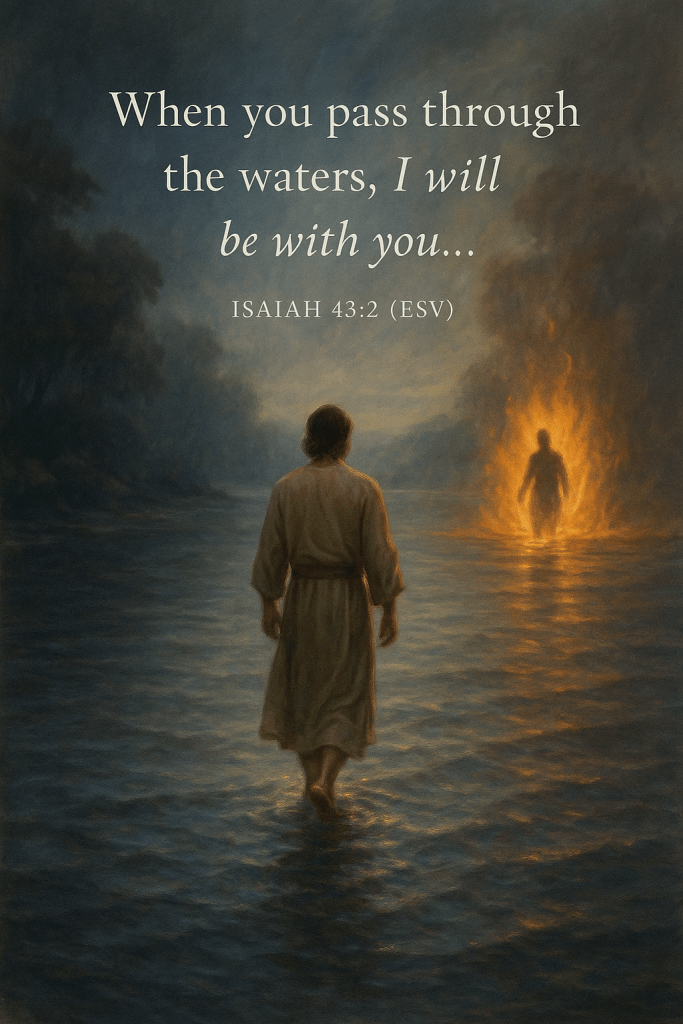
“When you pass through the waters, I will be with you, and through the rivers, they shall not overwhelm you; when you walk through fire, you shall not be burned, and the flame shall not consume you.”

— Isaiah 43:2 (ESV)

Summary:

This powerful biblical reflection unpacks Isaiah 43:2 as a message of hope, endurance, and divine presence in the face of life’s most daunting trials.

Key Insights

  1. God’s Central Promise
    The verse doesn’t promise a life free from hardship. Instead, it guarantees God’s steadfast presence through every trial. Believers aren’t spared from “waters” and “fires,” but they are sustained in and through them.
  2. Historical Context
    Addressed to Israel during the Babylonian exile, this passage offered reassurance amid profound national and personal loss. The imagery of water and fire recalls past acts of divine deliverance, anchoring present hope in historical faithfulness.
  3. Theology of Accompaniment
    The reflection presents a theology where God walks with people through their suffering rather than simply removing it. This perspective challenges both the prosperity gospel (which overemphasizes blessing) and fatalism (which denies divine help).
  4. Modern-Day Applications
    Contemporary “waters” include financial stress, relationship conflicts, mental health struggles, and information overload. “Fires” may represent chronic illness, burnout, addiction, and grief. God’s sustaining presence remains relevant in all of these.
  5. Clarifying Divine Protection
    Divine protection isn’t immunity from pain but includes:
    • God’s presence
    • Transformation of perspective
    • Formation of character
      It’s not a spiritual force field but a sustaining presence that empowers endurance and growth.
  6. Historical Testimonies of Faith
    Real-life examples—Corrie ten Boom, Martin Luther King Jr., and Dietrich Bonhoeffer—illustrate how God’s presence sustained individuals through profound suffering and injustice.
  7. Practical Strategies for Application
    The blog offers concrete ways to live out Isaiah 43:2 amid personal challenges, such as:
    • Financial pressure
    • Health issues
    • Relationship strain
    • Workplace stress
  8. A Seven-Day Growth Challenge
    Readers are invited to a weeklong journey to internalize this promise through:
    • Identifying personal struggles
    • Memorizing Isaiah 43:2
    • Visualizing God’s presence
    • Gathering testimonies
    • Journaling experiences
    • Taking faithful action
    • Sharing stories of encouragement

Conclusion

The blog calls readers to move beyond intellectual understanding and into experiential faith. While suffering is part of life, Isaiah 43:2 reminds us that God’s presence transforms how we endure it—offering strength, purpose, and hope.

In-Depth Exploration:

Wake-Up Call from His Excellency, the Rt. Rev. Dr. Selvister Ponnumuthan

My beloved brothers and sisters in Christ,

Today, I invite you to awaken to the magnificent promise contained in Isaiah 43:2. In a world that often seems to be drowning in turmoil and burning with conflict, God’s voice rings clear: “I will be with you.” This is not a distant theological concept but a lived reality that awaits your recognition and embrace.

Many of you arise each morning carrying burdens that feel too heavy to bear—financial pressures, health concerns, relationship fractures, or profound uncertainties about the future. Yet the Lord speaks directly to these overwhelming circumstances, assuring us that waters will not drown us and flames will not consume us when we walk with Him.

As you begin this day, I invite you to shift your focus from the height of the waves to the strength of the One who commands them. Remember that divine protection doesn’t always mean the absence of trials, but rather the presence of God in their midst.

Rise today with the confidence that you are never alone in your struggles. Be inspired by the God who parts waters and quenches flames for those He loves.

With pastoral blessing,

His Excellency, the Rt. Rev. Dr. Selvister Ponnumuthan

Unpacking the Verse: The Promise of Divine Presence

Isaiah 43:2 stands as one of Scripture’s most profound promises of divine protection and presence. 

Let us break down this verse to understand its extraordinary depth:

The Structure of the Promise

1. “When you pass through the waters” – Note the word “when,” not “if.” Difficulties are presented as certainties in our journey.

2. “I will be with you” – The central promise that anchors everything else.

3. “Through the rivers, they shall not overwhelm you” – An extension of the water metaphor, specifically addressing overwhelming circumstances.

4. “When you walk through fire” – A second certainty of trial, using the contrasting element of fire.

5. “You shall not be burned, and the flame shall not consume you” – The completion of the divine protection promise.

The verse employs powerful elemental imagery—water and fire—representing the extremes of human suffering. Water can overwhelm and drown; fire can burn and consume. Yet in both cases, God’s promise remains consistent: His presence ensures our preservation.

The Hebrew Insights

In the original Hebrew text, the phrase “I will be with you” (ittekha ani) places the pronoun “I” in an emphatic position, highlighting God’s personal involvement. The Hebrew word for “pass through” (avar) implies movement and transition, not permanent residence in difficulty. This subtle linguistic detail reminds us that trials are passages, not destinations.

The promise is not that we will avoid waters and fires, but that we will successfully navigate through them with divine accompaniment. This is not prosperity theology promising the absence of suffering, but rather resilience theology promising presence in suffering.

Historical and Biblical Context: Israel in Exile

To fully appreciate Isaiah 43:2, we must understand its historical context. This passage was delivered during one of Israel’s darkest periods—the Babylonian exile. The nation had lost everything: their land, temple, political sovereignty, and seemingly their identity as God’s chosen people.

Isaiah 43 forms part of what scholars call the “Book of Comfort” (chapters 40-55), written to encourage the exiled Israelites. The passage begins with God’s declaration: “But now, this is what the LORD says—he who created you, Jacob, he who formed you, Israel: ‘Do not fear, for I have redeemed you; I have summoned you by name; you are mine’” (Isaiah 43:1).

This backdrop of national trauma gives verse 2 its profound significance. God wasn’t speaking platitudes to people experiencing minor inconveniences; He was reassuring a decimated nation that their story wasn’t over, that His presence would sustain them through their collective tragedy.

The water imagery would have resonated deeply with the Israelites, recalling:

1. The Exodus, where God parted the Red Sea

2. The Jordan River crossing into the Promised Land

3. The primordial waters of creation over which God’s Spirit hovered

Similarly, the fire imagery evoked:

1. The burning bush where Moses encountered God

2. The pillar of fire guiding Israel through the wilderness

3. The fiery furnace where Shadrach, Meshach, and Abednego were preserved

Through these historical references, God reminded Israel that their present suffering was not unprecedented, and neither was His power to deliver them.

The Theological Significance: Presence, Not Exemption

What makes Isaiah 43:2 so theologically rich is its honest approach to suffering. Unlike superficial readings of faith that promise exemption from difficulties, this verse acknowledges the reality of life’s waters and fires while promising something far more substantial: divine presence in the midst of them.

This theological framework challenges both extremes of modern religious thinking:

1. The Prosperity Gospel, which often suggests that faith should eliminate suffering

2. Fatalistic Resignation – Which views suffering as punishment without purpose

Instead, Isaiah 43:2 offers what we might call a “theology of accompaniment”—God walks with us through trials rather than simply removing them. This aligns with the incarnational nature of Christianity, where God in Christ entered human suffering rather than abolishing it from a distance.

The promise is not “I will keep you from the waters” but “I will be with you when you pass through them.” This subtle distinction makes all the difference in developing a mature faith that can withstand life’s harshest realities.

Insights from C.S. Lewis: Finding God in the Depths

C.S. Lewis, the renowned author and theologian who experienced profound personal suffering, offers particularly relevant insights on Isaiah 43:2. In his work “A Grief Observed,” written after the death of his wife, Lewis writes:

“We were promised sufferings. They were part of the program. We were even told, ‘Blessed are they that mourn,’ and I accept it. I’ve got nothing that I hadn’t bargained for. Of course it is different when the thing happens to oneself, not to others, and in reality, not in imagination.”

Lewis understood what Isaiah was communicating—that God’s presence doesn’t eliminate suffering but transforms our experience of it. In “The Problem of Pain,” he further observed:

“God whispers to us in our pleasures, speaks in our consciences, but shouts in our pains. It is His megaphone to rouse a deaf world.”

For Lewis, the waters and fires of Isaiah 43:2 became channels through which God’s presence became more, not less, perceptible. His perspective helps us understand that divine protection isn’t about preventing difficulties but about providing companionship and purpose within them.

Lewis’s own journey through grief—his personal “waters” and “fires”—demonstrated that God’s promise in Isaiah 43:2 isn’t that we won’t feel the heat or the wet, but that we won’t be ultimately destroyed by them. This distinction provides a framework for understanding suffering that honours both the reality of pain and the reliability of God’s presence.

The Waters and Fires of Modern Life

While Isaiah spoke to ancient Israel, the metaphors of overwhelming waters and consuming fires remain profoundly relevant to our 21st-century experience. Today’s “waters” and “fires” may take different forms, but they threaten to overwhelm and consume us just the same:

Modern “Waters” That Threaten to Overwhelm:

1. Information Overload – The constant deluge of news, social media, and content that can drown our attention and peace

2. Financial Pressures – Debt, economic uncertainty, and the pressure to maintain certain lifestyles

3. Relationship Breakdowns – The flooding of emotions that accompanies divorce, estrangement, or betrayal

4. Mental Health Challenges – The rising tide of anxiety, depression, and loneliness in our society

5. Global Crises – Climate change, pandemics, and political instability that create collective uncertainty

Modern “Fires” That Threaten to Consume:

1. Burnout – The occupational flame that consumes passion, purpose, and wellbeing

2. Addiction – The consuming nature of dependencies that destroy from within

3. Chronic Illness – The slow burn of physical suffering that tests endurance

4. Grief – The searing pain of loss that transforms life’s landscape

5. Spiritual Warfare – The fiery trials of faith in an increasingly secular world

In each of these modern contexts, Isaiah 43:2 speaks with renewed relevance. The promise isn’t that we’ll avoid these waters and fires—indeed, Jesus himself said, “In this world you will have trouble” (John 16:33). Rather, the promise is that God’s presence will prevent these forces from having the final word in our lives.

Divine Protection: What It Is and What It Isn’t

To properly apply Isaiah 43:2 to our lives, we must understand what divine protection actually means in biblical terms. Many misunderstandings arise from false expectations about how God protects His people.

What Divine Protection Is NOT:

1. An Immunity Shield – God’s protection doesn’t make us immune to difficulty or suffering

2. A Guarantee of Comfort – The verse promises preservation, not comfort or ease

3. A Reward for Perfect Faith – God’s presence isn’t earned through flawless belief

4. A Spiritual Force Field – Protection works through relationship, not magical intervention

5. A Promise of Quick Deliverance – The verse speaks of passing “through” waters and fires, which implies process and duration

What Divine Protection IS:

1. Sustained Presence – God’s unwavering companionship in difficulty

2. Perspective Transformation – Seeing trials through the lens of divine purpose

3. Character Formation – Waters and fires become instruments of spiritual growth

4. Ultimate Preservation – While we may be touched by suffering, we are not destroyed by it

5. Testimony Creation – Our passage through difficulty becomes witness to God’s faithfulness

This understanding helps us avoid the disillusionment that comes when we expect God to shield us from all harm, while embracing the deeper protection He actually offers—the kind that preserves what matters most in us even as external circumstances challenge us.

Watch: Finding Peace in the Storm

Take a moment to watch this powerful testimony of God’s presence in life’s storms:

Divine Protection Through Life’s Storms

This video beautifully illustrates how God’s promise in Isaiah 43:2 continues to sustain His people through modern waters and fires. As you watch, consider how the testimonies shared connect with your own journey through difficult seasons.

A Meditation Practice: Experiencing God’s Presence in Your Waters and Fires

Let us now move from intellectual understanding to experiential knowledge through meditation on Isaiah 43:2. Find a quiet space, settle your body and mind, and follow these steps:

1. Begin with Breath Awareness (2 minutes)Breathe deeply, imagining God’s presence entering with each inhale and your fears releasing with each exhale.

2. Scripture Repetition (3 minutes)Slowly repeat Isaiah 43:2, emphasizing different words each time:

“When you pass through the waters, I will be with you…”

“When you pass through the waters, I will be with you…”

“When you pass through the waters, I will be with you…”

3. Visualisation (5 minutes)Imagine yourself in your current “waters” or “fires”—the specific challenge you’re facing. Now, visualise God’s presence with you, not removing the difficulty but standing beside you in it. How does His presence change your perception of the challenge?

4. Listening Prayer (5 minutes)Ask God: “How are you with me in this specific situation?” Then quiet your mind and listen for impressions, thoughts, or scriptures that arise.

5. Gratitude Closing (2 minutes)Thank God for specific ways you’ve experienced His presence in past difficulties, acknowledging that the same presence accompanies you now.

This meditation practice helps transform Isaiah 43:2 from a distant theological concept into a lived reality, training our spiritual senses to detect God’s presence even when our physical circumstances remain challenging.

A Comprehensive Prayer Based on Isaiah 43:2

Sovereign Lord, Creator of waters and Sustainer through fires,

I come before You today, standing amid my waters and fires—those circumstances that threaten to overwhelm and consume me. I acknowledge that in my human limitation, I cannot part these waters or quench these flames through my strength or wisdom.

Thank you for your promise in Isaiah 43:2, spoken first to Israel in exile but extending through time to reach me today. I embrace the reality that you never promised a journey without waters or a path without fires. Instead, you promised something far greater—your abiding presence that transforms how I experience these trials.

For the waters in my life right now—[name specific overwhelming circumstances]—I claim Your promise to be with me. Help me feel Your presence not just as a theological truth but as an experiential reality. When these waters rise, teach me to rise higher in faith. When currents pull me under, be my spiritual buoyancy.

For the fires I’m walking through—[name specific consuming challenges]—I claim Your promise of preservation. Though I feel the heat of these flames, protect what matters most in me: my faith, my hope, my capacity to love. Let these fires refine rather than destroy me.

I confess the times I’ve doubted Your presence because I misunderstood Your protection. Forgive me for expecting immunity rather than companionship, for demanding removal of trials rather than transformation through them. Realign my expectations with your actual promises.

Strengthen me to become a witness to others passing through their own waters and fires. Let my testimony of Your presence in difficulty become a beacon that draws others to trust You with their own overwhelming circumstances.

As Israel looked back to the Red Sea and forward to their restoration, help me recognise both Your faithfulness in my past and Your promises for my future. In doing so, grant me courage for my present passage through difficulty.

I pray this not for comfort alone, but for the glory of Your name and the advancement of Your kingdom, through Jesus Christ, who Himself passed through the ultimate waters and fires on my behalf.

Amen.

Testimonies Across the Ages: Divine Presence in Human Suffering

Throughout history, men and women have experienced the truth of Isaiah 43:2 in their darkest moments. Their testimonies reinforce that God’s promise is not theoretical but practical, not historical but ongoing:

Corrie ten Boom (1892-1983)

Holocaust survivor and Christian author Corrie ten Boom experienced the literal “waters” and “fires” of Nazi concentration camps. In her memoir “The Hiding Place,” she writes:

“There is no pit so deep that God’s love is not deeper still.”

Ten Boom’s experience demonstrates that God’s presence can be real even in humanity’s darkest moments. Despite losing her family and enduring unspeakable suffering, she testified to God’s faithfulness in preserving her faith and purpose, precisely what Isaiah 43:2 promises.

Martin Luther King Jr. (1929-1968)

Civil rights leader Dr. King faced constant threats, imprisonment, and eventually assassination. Yet he spoke frequently of God’s sustaining presence:

“Lord, I’m down here trying to do what’s right. I think I’m right. I think the cause that we represent is right. But Lord, I must confess that I’m weak now. I’m faltering. I’m losing my courage… But I can’t let the people see me like this because if they see me weak and losing my courage, they will begin to get weak.”

King’s honest prayer reveals how God’s presence in Isaiah 43:2 works—not by removing the waters and fires of racial injustice, but by preserving King’s courage and resolve as he passed through them.

Dietrich Bonhoeffer (1906-1945)

German theologian and anti-Nazi dissident Bonhoeffer was executed for his resistance to Hitler’s regime. From prison, he wrote:

“I believe that God can and will bring good out of evil, even out of the greatest evil. For that purpose, he needs men who make the best use of everything.”

Bonhoeffer’s words reflect the preservation promised in Isaiah 43:2—not that evil would be prevented, but that God would bring good through it and that Bonhoeffer himself would not be spiritually consumed by the fires of Nazi persecution.

These testimonies demonstrate that Isaiah 43:2 is not a promise confined to ancient Israel but continues to be fulfilled in the lives of faithful people across generations and circumstances.

Practical Application: Living Isaiah 43:2 in Daily Life

How do we translate this powerful promise into practical living? Here are specific ways to apply Isaiah 43:2 to various life situations:

For Times of Financial Strain

1. Practice Presence-Centred Budgeting – When reviewing finances, begin by acknowledging God’s presence in your situation before making decisions

2. Develop “Non-Overwhelming” Language – Replace phrases like “I’m drowning in debt” with “I’m passing through financial waters with God”

3. Create a “Preservation Journal” – Document specific ways your core needs have been met even in financial difficulty

For Relationship Challenges

1. Silent Presence Prayer – Before difficult conversations, quietly affirm God’s presence with both parties

2. Boundary Setting Based on Preservation – Establish relationship boundaries that protect your core identity from being “consumed”

3. Water-Walking Partnerships – Intentionally invite spiritually mature friends to walk alongside you through relational turbulence

For Health Crises

1. Body-Present Meditation – Practice being fully present to physical pain while simultaneously aware of God’s presence

2. Treatment-Time Scripture – Read Isaiah 43:2 during medical treatments as a tangible reminder of divine accompaniment

3. Testimony Preparation – Even before healing or resolution, prepare how you’ll share God’s preserving presence with others

For Workplace Challenges

1. Desk/Office Reminders – Place subtle symbols of water and fire (perhaps a small artwork) to trigger awareness of God’s presence

2. Overwhelming-Task Prayer – Before beginning daunting projects, specifically invite God’s presence into that work

3. “I will be with you” Breathing – During stressful meetings or interactions, synchronise breath with mental repetition of “I will be with you”

For Spiritual Dryness

1. Presence Over Feeling – Affirm God’s objective presence regardless of subjective feelings

2. Communal Affirmation – When unable to sense God yourself, let others hold this truth for you temporarily

3. Backwards-Looking Faith – Recall specific past experiences of God’s presence as anchors for current drought

These practical applications help transform Isaiah 43:2 from an abstract promise to a lived reality, training us to detect and depend on God’s presence in increasingly intuitive ways.

Questions for Deeper Trust About Isaiah 43:2

1. Does Isaiah 43:2 promise that Christians won’t suffer?

No. The verse explicitly acknowledges that believers will pass through waters and walk through fire. The promise is not exemption from difficulty but divine presence within it. Jesus himself said, “In this world you will have trouble” (John 16:33), confirming that suffering is part of the Christian journey.

2. Why does God allow the waters and fires in the first place?

Scripture reveals multiple purposes for suffering, including character development (Romans 5:3-5), deepened dependence on God (2 Corinthians 1:8-9), increased empathy for others (2 Corinthians 1:3-4), and testimony creation (Acts 9:16). The waters and fires, while not caused by God, are permitted and then repurposed for spiritual formation.

3. How do I know if I’m experiencing God’s presence in my difficulty?

God’s presence is often experienced through:

Unexpected peace despite circumstances (Philippians 4:7)

Courage that exceeds your natural capacity (Joshua 1:9)

Insights or scripture that precisely address your situation

Community members who embody Christ’s presence to you

Retrospective recognition of guidance and protection

4. What if I feel overwhelmed or consumed despite this promise?

Feeling overwhelmed doesn’t contradict the promise. Isaiah 43:2 doesn’t guarantee we won’t feel the water or heat, but that they won’t ultimately destroy us. Sometimes God’s preserving work is only visible in retrospect. During overwhelming moments, simple prayers like “Lord, I believe; help my unbelief” (Mark 9:24) acknowledge both our faith and our struggle.

5. How is this promise connected to Jesus Christ?

Jesus is the ultimate fulfilment of Isaiah 43:2. In His incarnation, He literally entered the waters and fires of human existence. At the cross, He was “overwhelmed” and “consumed” so that we might be preserved. His resurrection proves that even death, the ultimate “water” and “fire”, cannot ultimately destroy those who are His.

6. Does this promise apply to non-believers?

Isaiah 43:2 was specifically addressed to Israel as God’s covenant people. In the New Testament era, those who have entered a covenant relationship with God through Christ can claim this promise with confidence. However, God’s common grace extends to all humanity, and many outside explicit faith report experiences of divine help in crisis. The promise finds its fullest expression within a faith relationship.

7. How does this verse relate to the Holy Spirit?

The indwelling Holy Spirit is the primary way God fulfils His promise to “be with you” in New Testament believers. Romans 8:11 describes the Spirit as living within believers, while John 14:16-17 presents Him as the “Counsellor” who remains with us forever. The Spirit’s presence is the practical manifestation of Isaiah 43:2 in believers’ lives.

Historical and Cultural Context: Water and Fire in the Ancient Near East

To fully appreciate Isaiah 43:2, we must understand the profound significance of water and fire in ancient Near Eastern culture:

Water Symbolism

In the arid landscape of the ancient Near East, water represented both life and death. Rivers like the Nile, Tigris, and Euphrates were sources of sustenance but also unpredictable forces of destruction through flooding. The Mediterranean Sea represented a boundary and potential danger, as most Israelites were not seafarers.

Water in ancient cosmology often symbolised chaos and the unknown. Creation accounts, including Genesis, frequently depict creation as the ordering of primordial waters. The Flood narrative reinforces water’s destructive potential when outside divine control.

For Israel specifically, water carried additional significance through:

The Red Sea crossing (deliverance from Egypt)

The Jordan River crossing (entry to the Promised Land)

Ritual purification practices

Agricultural dependence on seasonal rains

Fire Symbolism

Fire likewise represented both blessing and danger. As a source of light, warmth, and cooking, fire was essential for survival. Yet its destructive potential was well understood, particularly in a culture where most structures were flammable.

In religious contexts, fire often symbolised:

Divine presence (burning bush, pillar of fire)

Purification (sacrificial system)

Judgment (Sodom and Gomorrah)

Testing (refiner’s fire metaphors)

When Isaiah employs these dual elemental metaphors, he taps into deeply embedded cultural understandings that would have resonated powerfully with his audience. The promise that these primal forces—so necessary yet so dangerous—would not overcome God’s people would have provided profound reassurance to the exiled community.

Linguistic Analysis: The Hebrew Text

A deeper examination of the Hebrew text reveals nuances that enrich our understanding of Isaiah 43:2:

Key Hebrew Terms

1. “Pass through” (עָבַר, ’avar) – This verb connotes movement and transition, not permanent residence. It appears throughout the Old Testament in contexts of crossing boundaries or moving through spaces.

2. “Waters” (מַיִם, mayim) – The plural form is used, suggesting multiple or overwhelming waters rather than a simple, contained body of water.

3. “Rivers” (נְהָרוֹת, neharot) – From the root meaning “to flow,” this term specifically denotes flowing waters with current and force.

4. “I will be with you” (אִתְּךָ־אָנִי, ittekha-ani) – The word order in Hebrew places emphasis on the divine “I” (ani), highlighting God’s involvement.

5. “Overwhelm” (שָׁטַף, shataf) – This verb carries connotations of washing away or sweeping away, suggesting complete loss of control.

6. “Fire” (אֵשׁ, ’esh) – The basic term for fire, used throughout Scripture for both literal flames and metaphorical burning.

7. “Burned” (כָּוָה, kavah) – This term specifically refers to being scorched or branded, suggesting lasting damage.

8. “Consume” (בָּעַר, ba’ar) – Beyond mere burning, this verb suggests complete destruction or devouring.

Poetic Structure

The verse employs parallelism, a common Hebrew poetic device:

1. First parallel pair:

“When you pass through the waters, I will be with you”

“And through the rivers, they shall not overwhelm you”

2. Second parallel pair:

“When you walk through fire, you shall not be burned”

“And the flame shall not consume you”

This parallelism reinforces the comprehensive nature of God’s protection, covering both drowning threats (waters/rivers) and burning threats (fire/flame), the two most primal dangers in ancient understanding.

The progression from “waters” to “rivers” and from “fire” to “flame” represents intensification, suggesting that God’s presence remains effective even as dangers escalate.

Theological Connections: Isaiah 43:2 in the Broader Biblical Narrative

Isaiah 43:2 doesn’t stand alone but connects to key theological themes woven throughout Scripture:

Connection to the Exodus

The imagery of passing through waters directly evokes Israel’s defining salvation event—the Exodus through the Red Sea. Exodus 14:21-22 describes how “the Israelites went through the sea on dry ground, with a wall of water on their right and their left.” Isaiah draws on this collective memory to assure exiled Israel that the God who delivered them from Egypt can deliver them from Babylon.

Connection to the Messiah

Christians see in Isaiah 43:2 a foreshadowing of Christ’s work. Jesus himself would:

Pass through the waters of baptism (Matthew 3:13-17)

Walk through the fire of temptation (Matthew 4:1-11)

Experience the overwhelming waters of Gethsemane and Calvary (Mark 14:34-36)

Ultimately be preserved through resurrection (Acts 2:24)

Connection to Spiritual Formation

The New Testament develops the water and fire imagery as metaphors for spiritual development:

Believers “pass through waters” in baptism (Romans 6:3-4)

The Holy Spirit comes as “fire” at Pentecost (Acts 2:3)

Faith is refined like gold through fire (1 Peter 1:7)

Salvation itself is described as passing “through water” (1 Peter 3:20-21)

Connection to Final Redemption

Revelation, the Bible’s concluding book, returns to these elemental images:

The sea (threatening waters) will be no more (Revelation 21:1)

The lake of fire will be contained and ultimately overcome (Revelation 20:14)

The river of life will flow freely (Revelation 22:1)

God will dwell with His people forever (Revelation 21:3)—the ultimate fulfilment of “I will be with you”

These connections position Isaiah 43:2 not as an isolated promise but as one thread in the grand tapestry of redemptive history, finding its complete fulfilment in Christ and the eventual restoration of all things.

Personal Testimony: Finding God in the Depths

[Note: This section provides a framework for readers to reflect on their own experience of Isaiah 43:2. As the author, you may wish to substitute your testimony here.]

My journey with Isaiah 43:2 began during what I can only describe as a perfect storm of circumstances. Within six months, I experienced the loss of a job I loved, a serious health diagnosis, and the fracturing of a relationship I had thought would last a lifetime. The waters rose quickly, and the flames burned hot.

Initially, I questioned where God was in these circumstances. If He had promised that waters wouldn’t overwhelm and fires wouldn’t consume, why did I feel so completely submerged and scorched? It was during this season that I discovered what Isaiah 43:2 actually promises—not immunity from suffering but intimate presence within it.

The transformation came not when my circumstances changed, but when my perception of God’s presence changed. Through consistent meditation on this verse, I began to recognise subtle evidence of divine companionship:

• Financial provision that arrived just when needed

• Unexpected words of encouragement from others

• Moments of inexplicable peace amidst turmoil

• Insights that came precisely when direction was needed

None of these removed my waters or extinguished my fires, but they confirmed I wasn’t facing them alone. Gradually, I realised that God’s presence was not just a theological concept but a practical reality that could be experienced even in life’s deepest waters and hottest flames.

Today, I can testify that while those circumstances left their mark on me, they did not define or destroy me. The promise held true—not that I wouldn’t feel the wet or the heat, but that I would emerge from them with my essential self preserved and my faith deepened.

A Challenge for Today: Practising the Presence

As we conclude our reflection on Isaiah 43:2, I invite you to move from understanding to application through a specific challenge:

The Isaiah 43:2 Seven-Day Practice

For the next week, commit to these daily practices that will help you experience God’s presence in your current waters and fires:

Day 1: IdentificationPrayerfully identify the specific “waters” and “fires” in your life right now. Write them down, acknowledging both their reality and God’s promised presence within them.

Day 2: MemorizationCommit Isaiah 43:2 to memory, perhaps writing it on cards placed in strategic locations where you’ll encounter your identified challenges.

Day 3: Visualisation Spend 10 minutes visualising God’s presence with you in your most difficult circumstance. What does His presence look like, feel like, and change?

Day 4: Testimony CollectionReach out to a mature believer and ask them to share how they’ve experienced God’s presence in their waters and fires.

Day 5: Presence Journaling day’s end, record specific moments when you sensed God’s presence throughout the day, even in subtle ways.

Day 6: Presence-Centred Action Take one concrete action step related to your challenging circumstance that you wouldn’t take without the confidence of God’s presence.

Day 7: Testimony Sharing Share with at least one other person how you’ve experienced God’s presence this week, focusing not on your circumstances but on His faithfulness within them.

This practice won’t necessarily change your external reality, but it will transform your experience of that reality by heightening your awareness of divine presence, precisely what Isaiah 43:2 promises.

Questions for Reflection

1. What are the specific “waters” and “fires” you’re currently facing in your life?

2. When have you experienced God’s presence most tangibly in past difficulties? What made that presence recognisable?

3. How does understanding the original context of Isaiah 43:2 (Israel in exile) change your perception of the promise?

4. In what ways might God be using your current challenges to shape your character or prepare you for future ministry?

5. How can you become more attentive to God’s presence even when it doesn’t manifest in the ways you expect?

6. What would change in your approach to difficulties if you truly believed God was with you in them?

7. Who in your life needs to hear the promise of Isaiah 43:2 right now, and how might you share it with them?

A Call to Action: From Reader to Witness

Dear Rise & Inspire reader, today’s reflection challenges you to move beyond passive consumption to active embodiment of Isaiah 43:2. Will you:

1. Identify one person currently passing through waters or walking through fire who needs to hear this promise.

2. Create a tangible reminder of God’s presence for yourself—a simple symbol, artwork, or object that will trigger awareness of divine accompaniment.

3. Share your testimony

Explore additional inspiration from the blog’s archive. | Wake-Up Calls

Categories: Astrology & Numerology | Daily Prompts | Law | Motivational Blogs | Motivational Quotes | Others | Personal Development | Tech Insights | Wake-Up Calls

🌐 Home | Blog | About Us | Contact| Resources

📱 Follow us: @RiseNinspireHub

© 2025 Rise&Inspire. All Rights Reserved.

Word Count:5568

Why Is God Called an “Everlasting Rock” in Isaiah 26:4?

Trusting in the everlasting rock means choosing peace over panic, stability over stress, and hope over fear.

“Discover the profound wisdom in Isaiah 26:4 about finding unshakeable strength in God as your everlasting rock. This reflection explores how trusting in the Lord provides stability in life’s uncertainties, featuring insights from Mother Teresa, a meditation guide, and practical applications for modern believers.”

A Rise & Inspire Biblical Reflection By Johnbritto Kurusumuthu

Wake-Up Call from His Excellency, the Rt. Rev. Dr. Selvister Ponnumuthan

Beloved in Christ, as dawn breaks on this blessed Sunday, remember that your faith must be built not on shifting sands but on the eternal rock of God’s presence. In a world of temporary solutions and fleeting securities, Isaiah 26:4 calls us to anchor ourselves to the only foundation that will never crumble beneath our feet. Today, choose to build your life, decisions, and hopes upon this divine rock. Rise with intention and inspire with faith!

Today’s Verse for Reflection (18th May 2025)

“Trust in the Lord forever, for in the Lord God you have an everlasting rock.” — Isaiah 26:4

The Treasure Within the Words

Isaiah 26:4 presents one of Scripture’s most reassuring metaphors—God as our “everlasting rock.” This verse encapsulates a profound spiritual truth that has comforted believers across millennia. The Hebrew word for “rock” here is tsur, denoting not just any stone but a massive cliff or mountain—immovable, permanent, and protective.

The verse begins with a command: “Trust in the Lord forever.” This trust is not optional but the natural response to recognising God’s rock-like nature. The preposition “in” suggests full immersion, not partial reliance, but complete dependence.

Isaiah’s imagery would have resonated deeply with his audience. In ancient Israel, rocks provided shelter, protection from enemies, and safety during storms. They were literal lifesavers—and spiritual symbols of unshakable security.

Historical and Biblical Context

Isaiah 26 comes from a section known as the “Isaiah Apocalypse” (chapters 24–27), likely written during a time of great national upheaval. The people of Judah faced threats from empires, political turmoil, and spiritual drift.

This chapter is a celebration of God’s deliverance and protection. It contrasts those who rely on human strength with those who are dependent on God. Earthly cities will crumble (Isaiah 26:5-6), but those who trust in the everlasting rock will remain secure.

Throughout Scripture, the rock metaphor recurs: Moses struck the rock for water (Exodus 17:6), David called God “my rock and my fortress” (Psalm 18:2), and Jesus taught about building our house on rock, not sand (Matthew 7:24-27). Isaiah’s words belong to this rich tradition, reminding us that God is the one sure foundation.

Wisdom from Mother Teresa

Mother Teresa, who lived with unwavering trust in God amid deep suffering, once said:

“I know God will not give me anything I can’t handle. I just wish He didn’t trust me so much.”

This simple yet profound statement shows the paradox of divine trust: God’s strength, not our own, carries us. Despite serving in heartbreaking conditions, Mother Teresa found power not in her resources but in God’s presence.

In her journals, she admitted enduring long periods of spiritual dryness. Still, she chose to trust, saying:

“If I ever become a saint, I will surely be one of darkness. I will continually be absent from Heaven—to light the light of those in darkness on earth.”

Her example shows that trusting God doesn’t eliminate hardship—it empowers us to endure it. Like Isaiah’s audience, she knew human strength would fail, but God would not.

The Video Message: Finding Strength in the Rock

Take a moment to reflect with this powerful worship video that embodies Isaiah 26:4:

Trust in the Lord Forever – Worship Reflection

The imagery and music remind us that we trust not in something lifeless, but in a living, present God who strengthens us.

Modern Application: Finding Stability in Shifting Times

How does Isaiah 26:4 speak into today’s chaotic world?

  1. Financial Insecurity: When markets crash and jobs disappear, our ultimate provider is not the economy but God.
  2. Relationship Challenges: When human connections falter, God remains faithful and unchanging.
  3. Health Crises: Even when our bodies weaken, God is our eternal strength.
  4. Technological Disruption: Amid rapid change, God is our constant anchor.
  5. Environmental Uncertainty: As we face climate anxiety, God’s permanence calls us to trust and to steward creation well.

Trusting in the everlasting rock means choosing peace over panic, stability over stress, and hope over fear.

Guided Prayer and Meditation

Prayer:

Eternal God, my Everlasting Rock,

I acknowledge the places where I have trusted in shifting sands—my own plans, temporary security, fleeting success. Forgive me. Today, I choose to trust You. I build my life, my hopes, my identity on You, the unchanging rock.

When storms come, remind me that You will not be moved. In areas where I feel weak, I place my trust in You. Help me live with courage, generosity, peace, and love, showing others the strength found in trusting You.

Thank you for being faithful across generations. I stand with Isaiah and believers throughout time who declare: You are trustworthy.

In Jesus’ name,
Amen.

Meditation Exercise:

  1. Find Stillness: Sit quietly. Take three deep breaths.
  2. Visualise: Imagine standing on a solid rock during a storm. The wind howls, but the rock beneath you is unmoved.
  3. Repeat the Verse: “Trust in the Lord forever, for in the Lord God you have an everlasting rock.”
  4. Apply: Bring to mind a specific worry. Picture yourself lying at the foot of the rock.
  5. Conclude: Say, “Lord, you are my everlasting rock. I place my trust in you.”

Your Questions, God’s Answers

What does “forever” mean in Isaiah 26:4?
The Hebrew term implies eternal, unceasing trust. It’s not just for hard times, but a daily posture of faith.

How is God as a “rock” different from other metaphors?
A rock emphasises strength, permanence, and safety, whereas a shepherd or light emphasises guidance and nurture. The rock is where we are anchored.

Does trusting God mean doing nothing?
No. Biblical trust works hand-in-hand with wise action. Trust means peace in the process, not passivity.

What if I don’t feel God is answering me?
Even when we feel silence, the rock does not move. Like Mother Teresa, we are called to trust beyond what we feel.

Is trusting God a one-time decision?
It starts with a decision, but it must be renewed daily. “Trust in the Lord forever” means lifelong reliance, not occasional belief.

Your Reflection Point

Where have you built on sand instead of the rock? In your job, health, relationships, or dreams, have you placed full trust in God?

Action Step: Identify one anxiety you face. Write Isaiah 26:4 on a card and place it where you’ll see it. When worry arises, say, “Lord, You are my everlasting rock.”

Remember: The depth of your peace reflects the strength of your foundation. Build your life on the everlasting rock.

How is today’s reflection speaking to your heart? Share your thoughts in the comments or forward this message to someone who might need a reminder of God’s unchanging presence in their life.

Explore additional inspiration from the blog’s archive. | Wake-Up Calls

Categories: Astrology & Numerology | Daily Prompts | Law | Motivational Blogs | Motivational Quotes | Others | Personal Development | Tech Insights | Wake-Up Calls

🌐 Home | Blog | About Us | Contact| Resources

📱 Follow us: @RiseNinspireHub

© 2025 Rise&Inspire. All Rights Reserved.

Word Count:1250

Can Righteousness Truly Prevail in an Unjust World? | Ecclesiastes 8:12 Reflection

Explore the profound wisdom of Ecclesiastes 8:12 in this reflective blog post that examines how divine justice prevails despite worldly imbalances. Discover timeless insights from Abraham Lincoln, practical applications for modern challenges, and a spiritual framework for maintaining faith in seemingly unjust circumstances.

A Rise & Inspire Biblical Reflection By Johnbritto Kurusumuthu

May 13, 2025

“Though sinners do evil a hundred times and prolong their lives, yet I know that it will be well with those who fear God, because they stand in fear before him.”

— Ecclesiastes 8:12

THE DIVINE PARADOX: JUSTICE IN AN UNJUST WORLD

Have you ever wondered why those who disregard moral principles seem to prosper? Perhaps you’ve observed individuals cutting corners, stepping on others, and still achieving success that appears to last. This apparent contradiction between wrongdoing and prosperity has troubled the faithful for millennia.

Today’s verse from Ecclesiastes addresses this exact paradox—a timeless struggle that resonates deeply with our modern experience. The Teacher of Ecclesiastes doesn’t shy away from life’s harsh realities but instead offers a perspective that transcends our limited view.

UNDERSTANDING THE SCRIPTURAL LANDSCAPE

Historical Context

Ecclesiastes was likely written during Israel’s post-exilic period, when the nation was under foreign rule. The author, traditionally identified as King Solomon in his later years, had witnessed the full spectrum of human behaviour and outcomes. He had seen wealth and power, justice and injustice, virtue and vice, and through it all developed a nuanced understanding of life’s seeming contradictions.

In this particular chapter, the Teacher explores the limitations of human wisdom and the apparent inconsistencies in how justice unfolds in the world. Just before our verse, he acknowledges that evil people are often buried with honour while the righteous are forgotten (Ecclesiastes 8:10)—a troubling observation that makes our verse all the more powerful as a response.

Linguistic Insights

The phrase “it will be well” in Hebrew carries connotations beyond mere comfort—it suggests authentic flourishing and rightness. Similarly, the concept of “fearing God” isn’t about terror but rather reverent awe and proper alignment with divine principles. This fear produces a moral compass that guides behaviour regardless of immediate consequences.

WISDOM FROM THE PAST: ABRAHAM LINCOLN’S PERSPECTIVE

Abraham Lincoln, whose moral convictions were shaped through immense personal and national trials, once remarked: “I have been driven many times upon my knees by the overwhelming conviction that I had nowhere else to go. My own wisdom and that of all about me seemed insufficient for that day.”

Lincoln’s journey reflects the wisdom of Ecclesiastes profoundly. During the Civil War, Lincoln witnessed evil seemingly prevailing—yet maintained faith that righteousness would ultimately triumph. Like the Teacher of Ecclesiastes, Lincoln understood that immediate outcomes don’t always reflect ultimate justice.

In an address to the New Jersey Senate in 1861, Lincoln said, “I shall be most happy indeed if I shall be a humble instrument in the hands of the Almighty, and of this, his almost chosen people, for perpetuating the object of that great struggle.” This reflects the humility of one who stands “in fear before God” as our verse describes—recognising divine authority while courageously pursuing justice.

THE SPIRITUAL EQUATION: FEAR + FAITHFULNESS = FLOURISHING

Our verse presents a spiritual equation that challenges conventional wisdom:

1. The Reality: Evil appears to go unpunished (“sinners do evil a hundred times and prolong their lives”)

2. The Divine Promise: “It will be well with those who fear God”

3. The Foundation: “Because they stand in fear before him”

This equation doesn’t promise immediate rewards or instant karma. Instead, it offers something more profound—the assurance that aligning with divine principles creates a foundation for genuine flourishing beyond superficial metrics of success.

AWAKENING CALL FROM HIS EXCELLENCY, THE RT. REV. DR. SELVISTER PONNUMUTHAN

“Beloved in Christ,

The appearance of evil’s triumph is among the greatest tests of our faith. When we see wrongdoing rewarded and virtue overlooked, we face a pivotal choice: to abandon our principles for worldly gain or to stand firm in righteous fear of God.

Remember that God’s timeline is not our timeline. His justice may not operate according to our schedule, but it operates with perfect precision according to His divine plan. Today, I urge you to renew your commitment to living with integrity, not because it guarantees immediate rewards, but because it aligns you with eternal truths that transcend our limited perspective.

Stand before God with reverent fear, knowing that in His perfect time, He brings all things to their proper conclusion.

May the wisdom of Ecclesiastes guide your steps today and always.”

MODERN APPLICATION: NAVIGATING LIFE’S INJUSTICES

How does this ancient wisdom speak to our 2025 realities?

In Professional Environments

We often witness unethical practices leading to short-term gains. The pressure to compromise can be overwhelming when we see others “getting ahead” through questionable means. Ecclesiastes reminds us that authentic success isn’t measured by quarterly reports but by alignment with timeless principles.

In Social Dynamics

Social media amplifies the appearance of “the good life” among those who disregard moral considerations. The Teacher’s wisdom invites us to look beyond curated appearances to the substance of character and the peace that comes from integrity.

In Personal Ethics

When faced with ethical dilemmas, remembering that we “stand in fear before God” provides a north star for decision-making that transcends situational ethics.

MEDITATION: CULTIVATING THE FEAR OF GOD

Watch this powerful meditation video to deepen your reflection on today’s verse:

“https://youtu.be/48VvH8oJRyU?si=jqhL0oIeUxYMPkh8”

Take five minutes today to reflect on these questions:

1. Where in my life am I tempted to believe that wrongdoing leads to better outcomes?

2. What would it look like to make decisions based on “standing in fear before God” rather than immediate results?

3. How can I cultivate patience when justice seems delayed?

A PRAYER FOR DIVINE PERSPECTIVE

Sovereign Lord,

When my eyes see injustice thriving and wrongdoing rewarded,

Remind me of your perfect vision that spans beyond my limited sight.

When my heart grows weary watching those who disregard Your ways prosper,

Strengthen my resolve to stand in reverent fear before You.

Grant me the wisdom to recognise true flourishing beyond material measures,

The patience to trust your perfect timing,

And the courage to walk in integrity when easier paths beckon.

Let me be counted among those who fear You—

Not out of terror, but out of profound reverence

For Your holiness, Your justice, and Your unfailing love.

May my life reflect this truth from Ecclesiastes:

That standing before You in righteous fear

It is the surest foundation for genuine wellbeing.

In Your holy name I pray,

Amen.

FREQUENTLY ASKED QUESTIONS

Q: Does “fear of God” mean I should be afraid of God?

A: The biblical concept of “fear of God” refers primarily to reverent awe and respect rather than terror. It encompasses recognising God’s authority, understanding His holiness, and aligning your life with His wisdom. Think of it as the healthy respect you might have for the ocean’s power—not paralysing fear, but proper regard for something greater than yourself.

Q: How can we reconcile the apparent prosperity of evildoers with belief in divine justice?

A: Ecclesiastes acknowledges this tension without offering simplistic answers. The book suggests several perspectives: (1) appearances can be deceiving—what looks like prosperity may mask inner turmoil; (2) divine justice operates on an eternal timeline, not our limited human schedule; (3) true flourishing encompasses more than material success; and (4) living in alignment with divine principles creates its own reward through integrity and peace.

Q: What does Ecclesiastes mean by “it will be well” with those who fear God?

A: The Hebrew concept here points to wholeness, completeness, and rightness—a comprehensive wellbeing that transcends circumstantial happiness. It suggests that those who align with divine principles experience life as it was meant to be lived, even amid difficulties. This “wellness” includes a clear conscience, purpose, and the peace that comes from living in harmony with created order.

YOUR RISE & INSPIRE CHALLENGE

Reflection Question: Where in your life have you been measuring success by worldly standards rather than by alignment with divine principles?

Action Step: This week, identify one situation where you’re tempted to compromise your integrity for apparent gain. Write down how “standing in fear before God” might change your approach, and commit to making one concrete decision based on this perspective rather than immediate outcomes.

“The arc of the moral universe is long, but it bends toward justice.” — Martin Luther King Jr. (echoing the wisdom of Ecclesiastes)

How has today’s reflection touched your heart? Share your thoughts in the comments below!

Explore additional inspiration from the blog’s archive. | Wake-Up Calls

Categories: Astrology & Numerology | Daily Prompts | Law | Motivational Blogs | Motivational Quotes | Others | Personal Development | Tech Insights | Wake-Up Calls

🌐 Home | Blog | About Us | Contact| Resources

📱 Follow us: @RiseNinspireHub

© 2025 Rise&Inspire. All Rights Reserved.

Word Count:1486

How Can We Find Hope in God’s Justice?


Hope in God’s Justice – Biblical Reflection…

A Rise & Inspire Biblical Reflection By  Johnbritto Kurusumuthu,

The Verse:

English:
“Then the Lord knows how to rescue the godly from trial, and to keep the unrighteous under punishment until the day of judgment.”
— 2 Peter 2:9

Malayalam:
“ദൈവഭയമുള്ളവരെ പരീക്ഷകളിൽ നിന്ന് എങ്ങനെ രക്ഷിക്കണമെന്നും, അനീതി പ്രവർത്തിക്കുന്നവരെ വിധിദിനം വരെ എങ്ങനെ ശിക്ഷാവിധേയരാക്കി സൂക്ഷിക്കണമെന്നും കര്‍ത്താവ്

 അറിയുന്നു.”
— 2 പത്രോസ് 2:9

Tamil:
“ஆண்டவர் இறைபக்தியுள்ளவர்களை சோதனைகளிலிருந்து எப்படித் தப்புவிக்க வேண்டும் என்றும், அநியாயக்காரர்களை தீர்ப்பு நாள்வரை தண்டனையில் வைத்திருக்க வேண்டும் என்றும் அறிந்திருக்கிறார்.”
— 2 பேதுரு 2:9

Divine Rescue & Justice: 

Finding Hope in 2 Peter 2:9

Introduction: A Promise of Rescue and Justice

In a world brimming with uncertainty, 2 Peter 2:9 offers a profound anchor: “The Lord knows how to rescue the godly from trials and to keep the unrighteous under punishment until the day of judgment.” This verse highlights God’s dual roles as Deliverer and Judge, inviting believers to trust His sovereignty.

 Let’s explore its depths and discover how it speaks to our modern struggles.

Historical & Literary Context

Author & Audience: The apostle Peter wrote this letter to early Christians facing persecution and false teachings. His urgent message: Stand firm—God sees your faithfulness and will judge evil.
Theological Theme: Chapter 2 warns against false prophets, using examples like Noah and Lot (2 Peter 2:5-7) to highlight God’s pattern of rescuing the faithful while holding the wicked accountable.

Verse Breakdown: Keywords & Cross-References

“Rescue the godly” (ദൈവഭയമുള്ളവരെ രക്ഷിക്കുക)

  • Rescue (Greek: ῥύομαι) implies snatching from danger. Cross-reference: Psalm 34:17 (“The Lord delivers the righteous from all their troubles”).
  • Trials (Malayalam: പരീക്ഷകൾ) are tests of faith, not punishments (James 1:2-4).

“Keep the unrighteous under punishment”

  • God’s justice is patient but certain (2 Peter 3:9). Evil may thrive now, but judgment is inevitable.

Theology Meets Reality: Connecting to Modern Life

God’s Character

  • Rescuer: Like Jesus calming storms (Mark 4:39), He intervenes in our crises.
  • Just Judge: Modern injustices—oppression, corruption—will not escape His gaze.

Modern Struggles

  • Personal trials (illness, grief) and societal evils (inequality, violence). Yet, believers are called to “hope in what we do not yet see” (Romans 8:25).

Actionable Steps for Spiritual Growth

  1. Trust in Rescue: Journal moments God has delivered you.
  2. Advocate for Justice: Support ministries fighting oppression.
  3. Reflect Daily: Use the video “Finding Hope in Divine Justice” to meditate on God’s faithfulness.

Reflection Questions

  • When have you felt God’s rescue in your life?
  • How can you embody His justice in your community?

Clarifying Misinterpretations

Myth: “God’s rescue means no suffering.”

Truth: Rescue may come through trials, not from them (Daniel 3:25 – Shadrach in the fire).

Myth: “Judgment is vindictive.”

Truth: God’s judgment is rooted in holiness and love (Revelation 21:4).

Guided Meditation & Prayer

Meditation

Close your eyes. Breathe deeply. Imagine handing your fears to God. Hear Him whisper: “I am with you.” Visualize His light dispelling darkness.

Prayer

“Father, in trials, remind us of Your rescue. In injustice, strengthen our trust in Your justice. Help us live as lights in darkness. Amen.”

Hopeful Takeaway & Call to Action

Hope

No trial is wasted; no evil is overlooked. God’s timing is perfect.

Call to Action

Share your story of rescue using #DivineRescue. Join our Bible study on “Trusting God in Turbulent Times.”

Recommended Reads

Message from His Excellency, the Rt. Rev. Dr. Selvister Ponnumuthan:

“Let us walk as rescued people, radiating hope in a broken world.”

🌐 Home | Blog | About Us | Contact| Resources

📱 Follow us: @RiseNinspireHub

© 2025 Rise&Inspire. All Rights Reserved.

Word Count:599

Is Stability Possible Through Wicked Means?

How Can Righteousness Be Our Strongest Foundation?

The Unshakable Foundation: Exploring Proverbs 12:3

The main point of the blog post is that genuine and long-lasting security cannot be attained through wicked or unethical methods. Instead, it is found in leading a righteous life based on integrity, honesty, and moral principles. This strong foundation offers enduring stability and resilience in dealing with life’s challenges.

Proverbs is a collection of practical insights for living a righteous and fulfilling life.

One valuable piece of wisdom is found in Proverbs 12:3:

“No one finds security by wickedness, but the root of the righteous will never be moved.”

This verse captures a deep truth about the essence of genuine security and stability.

Understanding the Verse

To grasp the full meaning of Proverbs 12:3, we must look into its two contrasting parts. The first part, “No one finds security by wickedness,” asserts a fundamental principle: seeking stability through unethical means is inherently flawed. Wickedness, by its very nature, is unstable and self-destructive. Those who rely on deceit, corruption, or immoral actions may achieve temporary success, but they ultimately sow the seeds of their own downfall. Their security is like a house built on sand, vulnerable to the slightest storm.

In contrast, the second part of the verse, “but the root of the righteous will never be moved,” offers a powerful image of resilience and permanence. The “root” symbolizes the foundation of one’s life. Just as a tree with deep roots remains steadfast against winds and storms, a life grounded in righteousness is unshakable. Righteousness, characterized by integrity, honesty, and moral uprightness, provides a stable foundation that endures through life’s trials and tribulations.

The Teachings of Proverbs 12:3

1. The Illusion of Wicked Security:

This verse teaches us that security obtained through wicked means is an illusion. It may appear solid on the surface, but it lacks the depth and strength to withstand challenges. Ethical shortcuts and dishonest gains might offer immediate rewards, but they are fleeting and fraught with peril. The ultimate cost of such security is much higher than its initial allure.

2. The Power of Righteousness:

Righteousness, in contrast, is depicted as a root that provides unwavering support. This teaches us the value of building our lives on principles of truth, justice, and morality. When our actions are aligned with these values, we cultivate a foundation that not only supports us but also nourishes those around us. Such a life stands firm in the face of adversity, providing peace and stability.

3. Long-Term Perspective:

Proverbs 12:3 teaches us to consider the long-term perspective.

It reminds us that the benefits of righteousness may not be immediate, but they are enduring. While wickedness may yield quick results, righteousness ensures lasting security. This verse calls for patience and faith in the enduring power of good over evil.

Applying the Wisdom of Proverbs 12:3

To apply the wisdom of this verse in our daily lives, we should:

1. Evaluate Our Foundations:

Reflect on what we base our security upon. Are we relying on transient, unethical means, or are we grounded in righteousness? This self-assessment helps us align our lives with enduring principles.

2. Cultivate Integrity:

Embrace integrity in all our actions. Whether in personal relationships, business dealings, or community interactions, let honesty and ethical behavior guide our choices. This creates a strong, unshakable foundation.

3. Seek Long-Term Gains:

Focus on long-term gains rather than immediate gratification. Understand that true security and success come from persistent adherence to righteousness, even when it seems slower or more challenging.

4. Trust in Stability:

Have faith that a righteous life will yield stability. In times of trouble or uncertainty, remember that the deep roots of righteousness will hold us firm, providing strength and resilience.

Conclusion

Proverbs 12:3 offers timeless wisdom that resonates with the universal quest for security and stability.

It teaches that true security cannot be found in wickedness but only through a life rooted in righteousness.

By embracing integrity, focusing on long-term gains, and trusting in the stability of moral principles, we can build a life that withstands the storms of existence.

In a world often tempted by shortcuts and quick fixes, this verse stands as a beacon, guiding us toward a foundation that will never be moved.

🌷Every morning, I am blessed with an inspiring wake-up call from His Excellency, the Rt. Rev. Dr. Selvister Ponnumuthan, the Bishop of Punalur in Kerala, India.

Today’s blog post draws inspiration from the beautiful verses he shared in his morning message.

Explore Deeper Insights at Rise&Inspire

Expand your spiritual horizons and deepen your understanding with our collection of thought-provoking articles and reflections.

Visit: RiseNinspireHub

View All My Posts

For further inquiries or to share your thoughts, please feel free to contact us:

Email: kjbtrs@riseandinspire.co.in