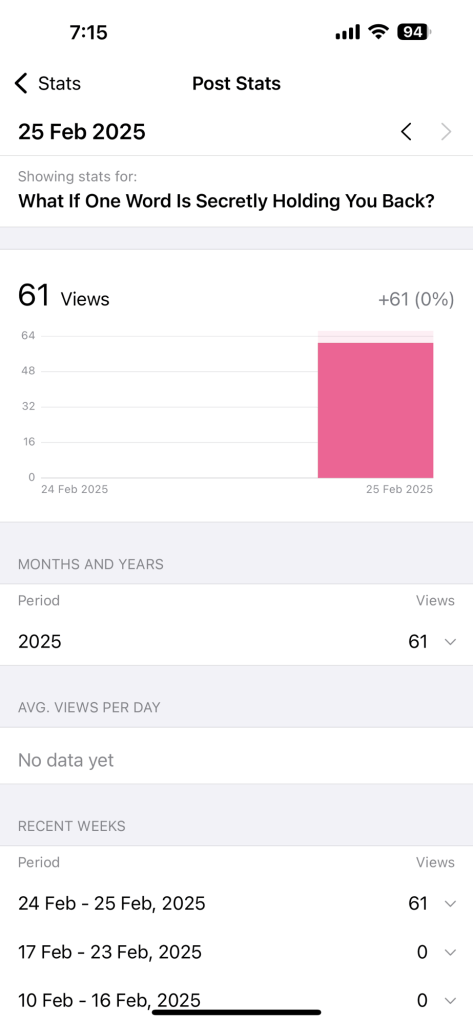
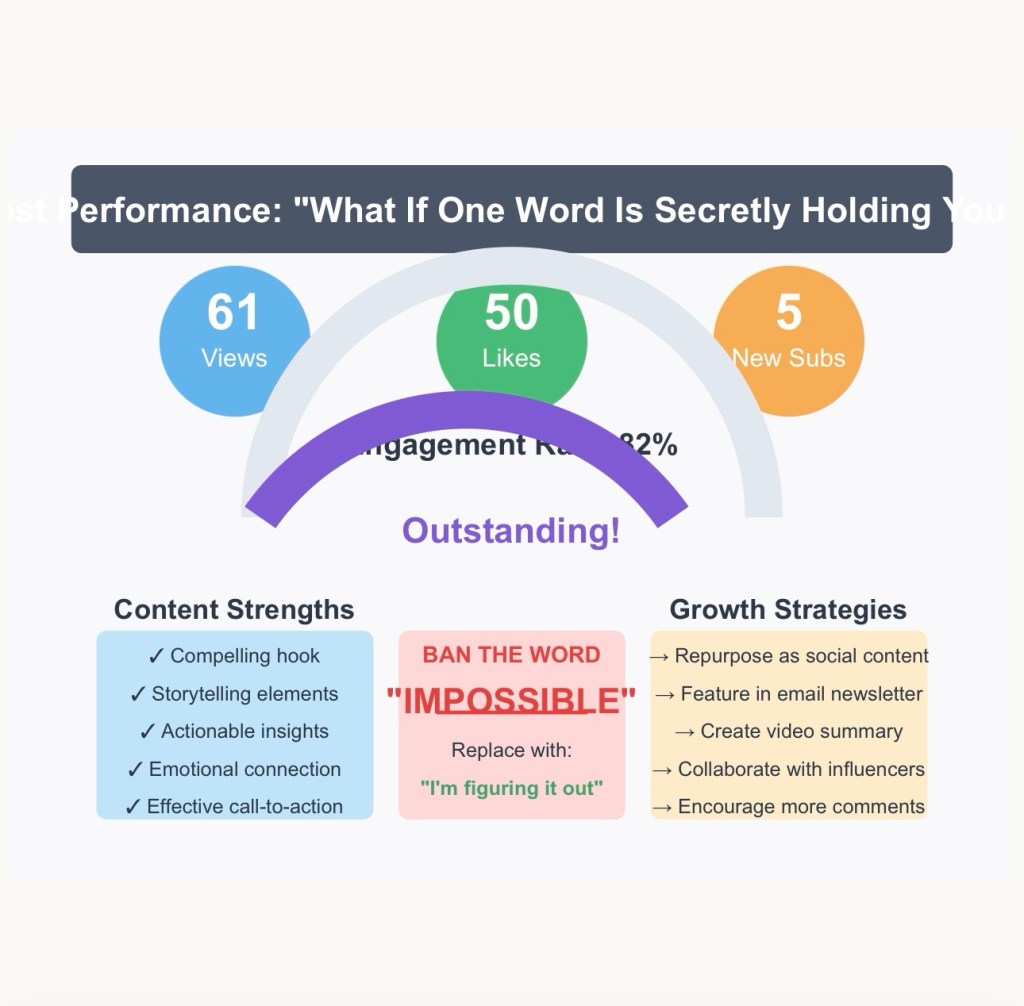
Your blog’s success isn’t just about traffic spikes or the occasional viral post—it’s about building sustainable growth. Three key metrics—session duration, bounce rate, and conversion rate—help you understand how well your blog engages readers, retains them, and converts them into loyal followers.
In this guide, you’ll learn why these metrics matter, how they connect, and what you can do to optimize them for long-term success.
1. Session Duration: How Engaged Are Your Readers?
Session duration measures how long visitors stay on your blog. A higher session duration means your content is keeping them engaged—whether through compelling storytelling, interactive elements, or deep insights.
Session Duration Chart
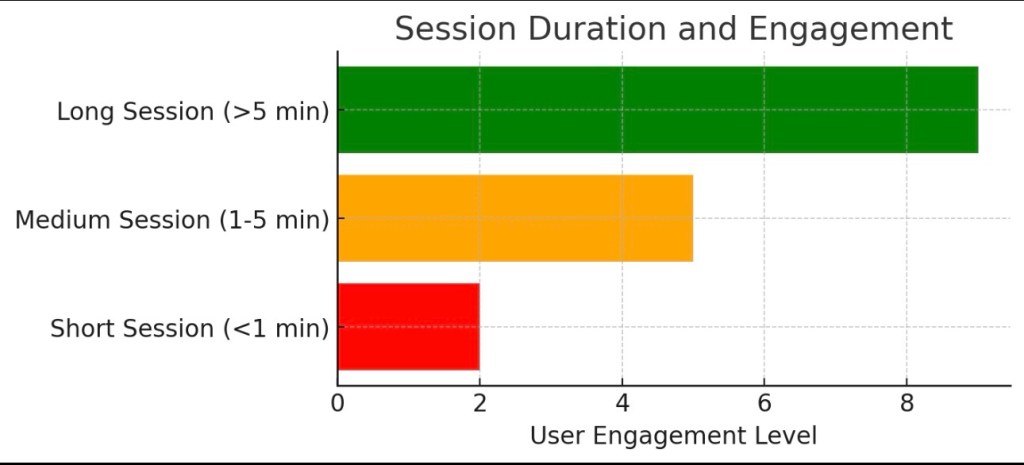
What This Means for You:
A healthy blog will have more visitors in the “Long Session” category, meaning your audience is sticking around and exploring your content.
How to Keep Readers on Your Blog Longer
- Write long-form content (1,500+ words) that fully answers their questions.
- Embed videos or audio clips to add multimedia engagement.
- Use relevant infographics to make complex topics visually appealing.
- Include internal links to guide visitors to more of your content.
- Add interactive elements like quizzes or polls to encourage participation.
Why This Matters
Google considers engagement a ranking factor. If visitors spend more time on your blog, it signals to search engines that your content is valuable, helping improve your SEO rankings.
How You Can Improve It
- Write content that fully addresses a topic instead of just scratching the surface.
- Format your posts with headings, bullet points, and images to make them easier to read.
- Use storytelling techniques to create an emotional connection with your audience.
2. Bounce Rate: Are Visitors Staying or Leaving?
Your blog’s bounce rate tells you how many visitors leave after viewing just one page. A high bounce rate could mean they didn’t find what they were looking for—or that something on your blog is pushing them away.
Bounce Rate Chart

What This Means for You:
If too many visitors “bounce,” it could be a sign that your site isn’t delivering the experience they expect. Ideally, you want the “Bounced” segment to be smaller, indicating that visitors are exploring multiple pages.
What Makes Readers Leave?
- Slow page load speed → Visitors won’t wait more than a few seconds.
- Clickbait headlines → If your content doesn’t match the title, they’ll leave.
- Poor navigation → If your blog is hard to explore, people won’t stay.
- Unrelated content → If visitors land on your page expecting one thing but find another, they’ll exit.
Why This Matters
If your bounce rate is over 70%, you may be losing potential long-term readers. According to SEMrush, an ideal bounce rate for blogs is between 40-60%.
How You Can Reduce Your Bounce Rate
- Speed up your site using tools like Google PageSpeed Insights.
- Use internal links to guide visitors to related articles.
- Match your content to search intent—don’t mislead readers with clickbait.
- Improve readability with clear formatting, images, and engaging subheadings.
3. Conversion Rate: Are Visitors Taking Action?
Your conversion rate measures how many visitors subscribe, download resources, or make a purchase. A high conversion rate means your blog isn’t just attracting readers—it’s turning them into engaged followers.
Conversion Funnel Chart
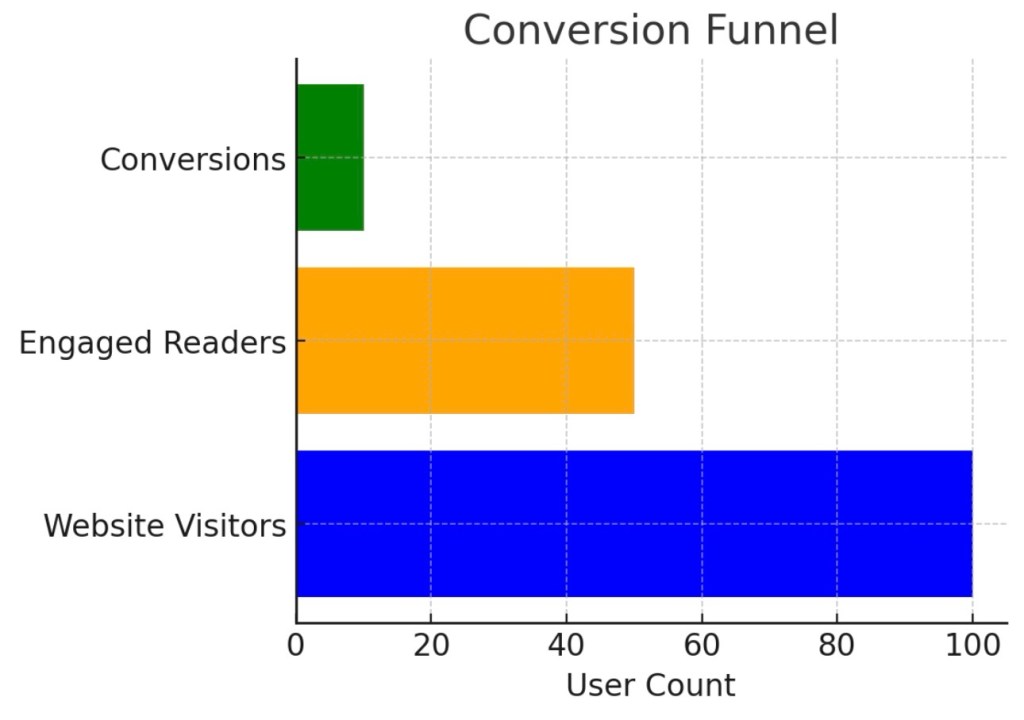
What This Means for You:
Your blog’s success isn’t just about traffic—it’s about what visitors do after arriving. If you’re not seeing conversions, you might need stronger calls to action (CTAs).
How to Encourage Visitors to Take Action
- Offer a valuable lead magnet, like a free eBook, checklist, or webinar.
- Use persuasive CTAs, like:
- Button: Subscribe for Weekly Insights!
- Banner: Download Your FREE Blogging Guide!
- Text Link: Learn how to boost your SEO in 5 steps.
- Make signup forms simple—the fewer fields, the better.
- A/B test different CTAs and landing pages to see what works best.
Why This Matters
According to HubSpot’s 2024 Marketing Report, blogs with clear and well-placed CTAs convert 3x better than those without.
How You Can Improve Your Conversion Rate
- Make sure your CTAs are clear and visible.
- Offer something valuable in exchange for a subscription.
- Create urgency—“Sign up now for exclusive early access!”
The Flywheel Effect: How These Metrics Work Together
Your session duration, bounce rate, and conversion rate aren’t isolated—they work as part of a bigger system. When you improve one, the others benefit too.
Flywheel Effect Diagram
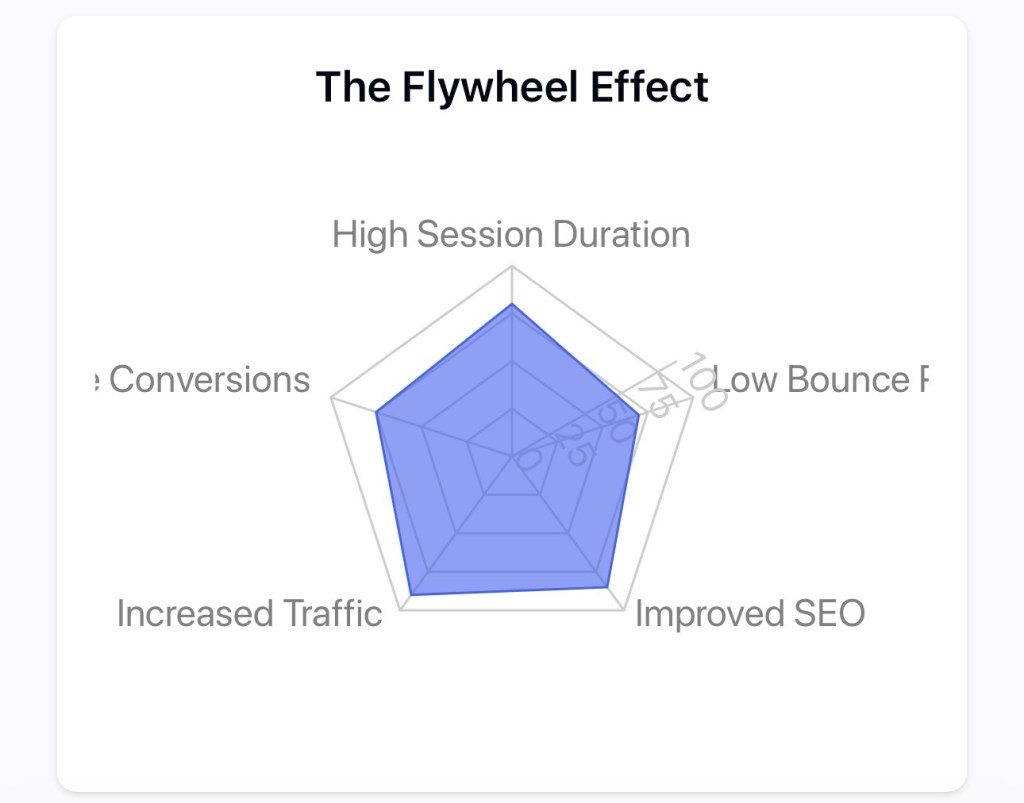
What This Means for You:
When you create high-quality content (session duration), visitors stay longer and explore more (lower bounce rate), leading to higher trust and conversions. The cycle continues, boosting your blog’s overall performance.
How You Can Keep the Momentum Going
- Regularly audit your blog with tools like Google Analytics 4 to spot weak points.
- Focus on search intent—deliver what readers are looking for.
- Use email marketing to stay connected with your audience beyond a single visit.
Tools to Help You Track & Improve Your Blog Performance
To make these improvements, you need the right tools. Here are some essentials:
- Google Analytics 4 → Track session duration, bounce rate, and conversions.
- Google PageSpeed Insights → Identify and fix slow-loading pages.
- Keyword Research Tools (Ahrefs, Google Keyword Planner) → Discover what your audience is searching for.
- ConvertKit (or Mailchimp) → Build an email list and keep readers engaged.
- A/B Testing Tools → Optimize your CTAs and landing pages.
Final Thoughts: Small Changes, Big Results
Long-term blog success isn’t about quick wins—it’s about consistent improvement.
By keeping readers engaged (session duration), reducing unnecessary exits (bounce rate), and encouraging action (conversion rate), you set your blog up for sustainable growth.
As marketing expert Neil Patel says, “Consistency compounds.” Focus on these key areas, and your blog will thrive for years to come.
Want to Learn More?
🌐 Home | Blog | About Us | Contact| Resources
Categories: Astrology & Numerology | Daily Prompts | Law | Motivational Blogs | Motivational Quotes | Others | Personal Development | Tech Insights | Wake-Up Calls
📱 Follow us: @RiseNinspireHub
© 2025 Rise&Inspire. All Rights Reserved.
Word Count:997