
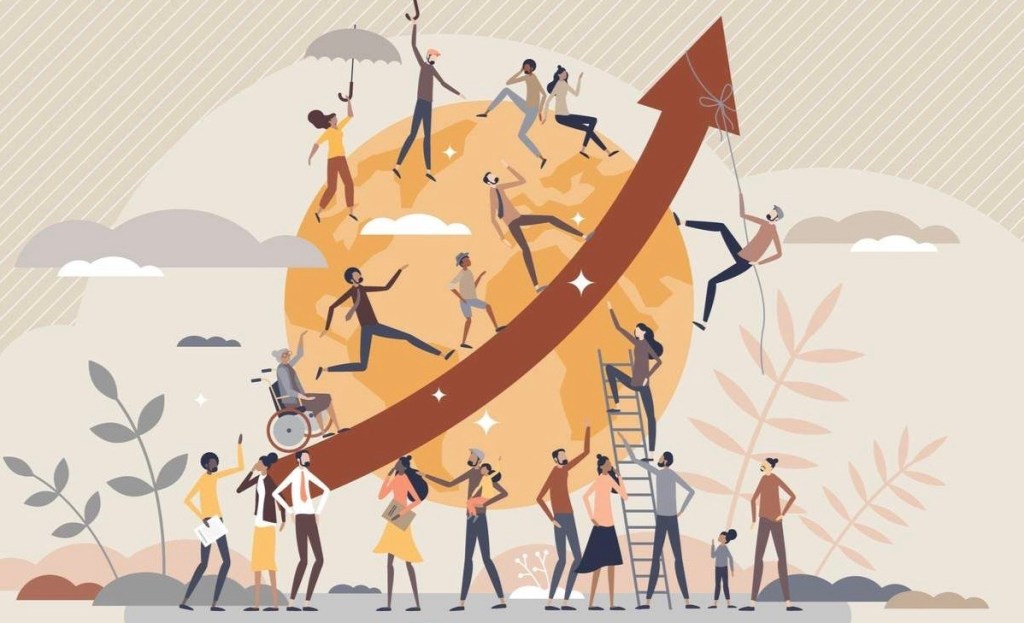
Imagine Earth, where more than 8.1 billion people live and each person adds a unique thread to the incredible story of our species. As of today, January 10, 2024, let’s explore the world’s population journey, looking at some key aspects in a way everyone can understand.
Our Growing Numbers
In just a few decades, the number of people on Earth has exploded. The United Nations tells us that the world’s population has doubled since 1959 and is expected to reach 9 billion by 2037, possibly hitting 10 billion by 2058. This speedy growth is due to better healthcare, fewer people dying early, and more people living longer.
Where We Live
If you look at a big world map, you’ll notice that people aren’t spread out evenly. Asia has the most people, followed by Africa and Europe. Countries like India and China have over a billion people, while places like Greenland and Vatican City have fewer than a million.
Changes in Age
It’s not about how many people there are; it’s also about how old they are. More older folks are around than younger ones in many places, leading to older populations. This shift affects things like social security and healthcare needs.
What the Experts Say
Hans Rosling, a health expert, reminds us that despite more people, things are getting better. He says, “The world isn’t getting worse. Poverty is going down, child deaths are decreasing, and fewer people are extremely poor.” This positive view shows progress amid a growing population.
On the other hand, Paul Ehrlich, a scientist, gives a serious warning. He says, “Our planet can only support so many people. If we don’t change how we live, we’re in for a global environmental crisis.” Ehrlich urges us to use resources responsibly and adopt sustainable practices.
What Studies Tell Us
A recent study in Nature suggests that global population growth is slowing down. This is mainly because fewer babies are being born in many places. It challenges what we thought before, hinting that we might not reach the predicted 10 billion people as quickly.
The World Bank’s info tells a good story too. Extreme poverty has gone down a lot from 1990 to 2017. The number of people living on less than $1.90 per day dropped from 1.9 billion to 736 million. This shows that even with more people, we can make life better for those who need it most.
In Conclusion
The world’s population is like a dance of growth, challenges, and progress. Understanding where we are now and where we’re headed, and listening to what experts and studies tell us, are important for creating a shared future. We can make the most of our growing population by building a world that works for everyone. As we journey through this ever-growing tapestry of humanity, let’s grab the opportunities to make a brighter tomorrow.
Sources
United Nations
Nature
World Bank World Development Indicators
Transform Your Life with Rise&Inspire
Believe in Your Spark, Ignite Your Success.
Discover more from Rise & Inspire
Subscribe to get the latest posts sent to your email.

😊
🤝👏