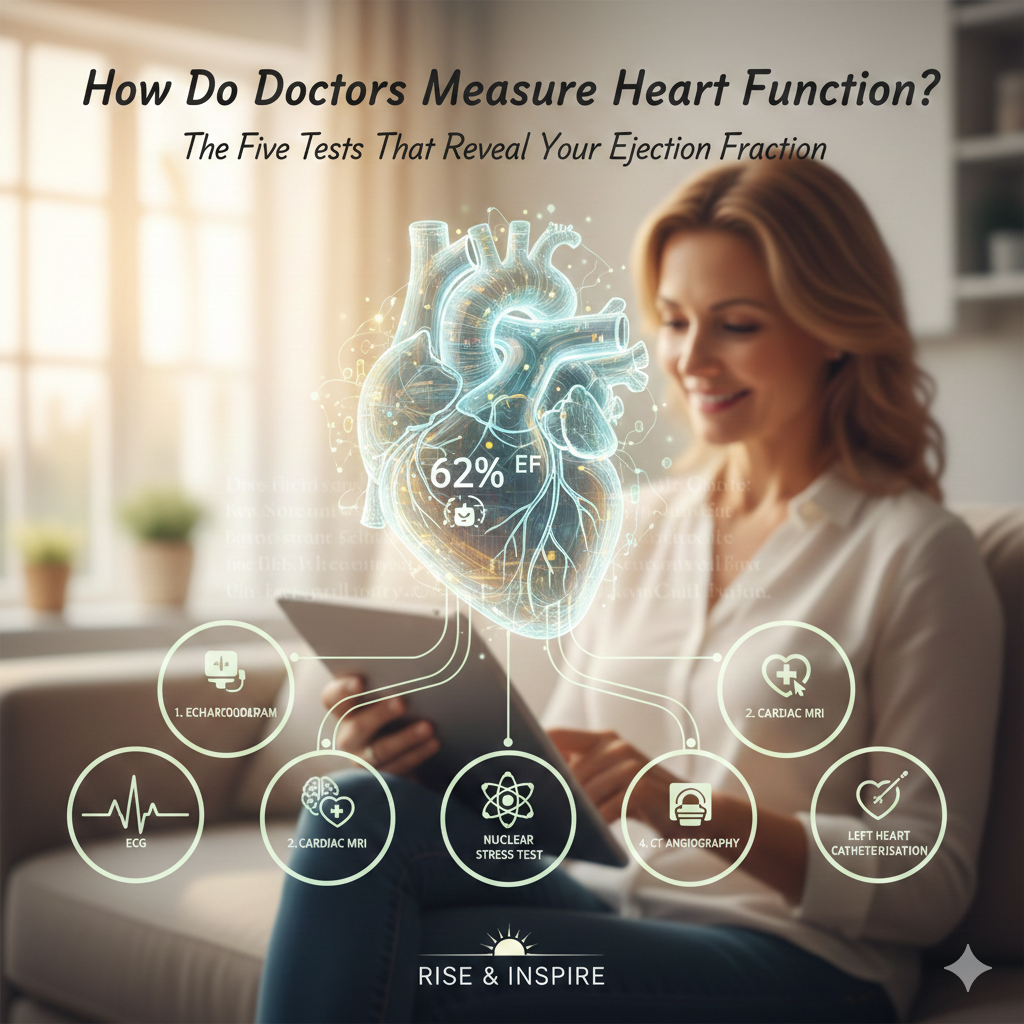
How Do Doctors Measure Heart Function? The Five Tests That Reveal Your Ejection Fraction

Every day, your heart contracts roughly 100,000 times, and every single one of those beats has a measurable efficiency rating. That rating is called ejection fraction — and for millions of people, it is quietly sitting below the danger threshold without a single obvious symptom to show for it. Heart disease does not always arrive with a warning. Sometimes it whispers through a little fatigue, a slightly swollen ankle, a breathlessness you blamed on the stairs. This guide will show you what your heart is actually trying to tell you, how doctors measure it, and what you can do with that knowledge starting today.

Know Your Heart: Understanding Ejection Fraction & Why It Matters

Your heart beats around 100,000 times a day. Are you listening to what it’s telling you?

At Rise & Inspire, we believe that true empowerment begins with knowledge — especially when it comes to your health.

 Today, we’re taking a closer look at one of the most important yet often overlooked metrics in heart health: the Ejection Fraction (EF). Understanding this number could literally save your life.

💓  What Is Ejection Fraction?

Ejection Fraction is a measurement — expressed as a percentage — of how much blood your left ventricle pumps out with each heartbeat. Think of your heart as a powerful pump. EF tells you how efficiently that pump is working.

A normal EF ranges between 50% and 70%. This means a healthy heart pumps out more than half its blood volume with every beat — consistently, reliably, powerfully.

Understanding the EF Ranges:

• 50–70% — Normal. Your heart is pumping efficiently.

• 40–49% — Mildly Reduced (HFmrEF). A borderline zone that warrants close monitoring.

• Below 40% — Reduced EF (HFrEF). Often associated with heart failure or cardiomyopathy — a condition where the heart muscle is weakened.

Important Note: Heart failure isn’t limited to low EF. Heart Failure with Preserved Ejection Fraction (HFpEF) can occur even when EF appears normal, if the heart muscle is too stiff to fill properly. This is why regular check-ups are so critical — numbers alone don’t always tell the full story.

🔬  How Is EF Measured? Your Testing Options Explained

The good news? Measuring your EF is more accessible than ever. There are multiple safe, effective tests your doctor can recommend based on your personal health needs. Most cardiac evaluations begin with one simple, painless test — the ECG — before moving into the specific tools that measure EF directly.

The Starting Point: ECG (Electrocardiogram)

Before measuring ejection fraction, doctors often begin with an ECG — a quick, non-invasive test that records the electrical activity of your heart. It detects rhythm irregularities, signs of a previous heart attack, or an enlarged heart. While an ECG does not measure EF directly, it is frequently the first diagnostic step that signals a doctor to look deeper.

Think of the ECG as checking the wiring of the heart. The tests below measure how much blood the pump actually delivers. Both matter — and one often leads to the other.

1. Echocardiogram (Echo) — The Go-To Test

The most widely used test for EF measurement. It uses ultrasound to create real-time images of your heart in motion — non-invasive, radiation-free, and highly accessible. If you’ve never had one, ask your doctor about it today.

2. Cardiac MRI — The Gold Standard of Accuracy

When pinpoint accuracy is needed, Cardiac MRI delivers the most detailed images of heart structure and function. It’s more expensive and less common, but offers unparalleled clarity.

3. Nuclear Stress Test (MUGA Scan)

Using a small amount of radioactive tracer to track blood flow, this test is highly accurate and especially useful when the echo results are unclear or inconclusive.

4. CT Angiography (Cardiac CT)

This test uses X-rays and contrast dye to image the heart, measure EF, and check for arterial blockages simultaneously — a powerful diagnostic tool.

5. Left Heart Catheterisation — The Invasive Expert

Reserved for specific cases, this procedure involves threading a catheter into the heart. It’s the most direct method and also evaluates coronary artery blockages at the same time.

🌟  Rise Up: Why This Knowledge Is Your Superpower

Here’s the truth that Rise & Inspire stands by: you cannot change what you don’t measure. Too many people wait until something feels wrong before they seek answers. But heart disease is often silent — developing quietly over years before making itself known in a crisis.

Knowing your Ejection Fraction is an act of self-love and self-advocacy. It puts the power back in your hands. Whether your results come back normal or reveal something that needs attention, either way you win — because now you know, and knowledge is where healing begins.

If your EF comes back low, remember: it’s not a death sentence — it’s a starting point. With the right medical support, lifestyle changes, and a determined spirit, people improve their heart function every single day.

  Your Next Steps

✔️ Schedule a check-up with your cardiologist or primary care physician.

✔️ Ask specifically about having an Echocardiogram if you haven’t had one.

✔️ Share this article with someone you love — heart health is a family conversation.

✔️ Don’t wait for symptoms. Be proactive. Be empowered.

“Take care of your heart — it’s the only engine you’ve got.”

RISE & INSPIRE

Health & Wellness | Heart Health Edition

This article is for informational purposes only. Always consult a qualified cardiologist or medical professional for personal health advice.

Explore more at the Rise & Inspire archive |  Motivational Blogs 

© 2025 Rise & Inspire. Follow our journey of reflection, renewal, and relevance.

Website: Home | Blog | About Us | Contact| Resources

Word Count:923

What Is the ApoB Test and Why Are Cardiologists Talking About It?

Could “Normal” Cholesterol Still Put You at Risk?

Your cholesterol numbers might look perfectly fine on paper — yet hidden artery-clogging particles could still be quietly raising your risk of a heart attack. The ApoB blood test may reveal what a standard lipid profile misses.

What Is the ApoB Blood Test?

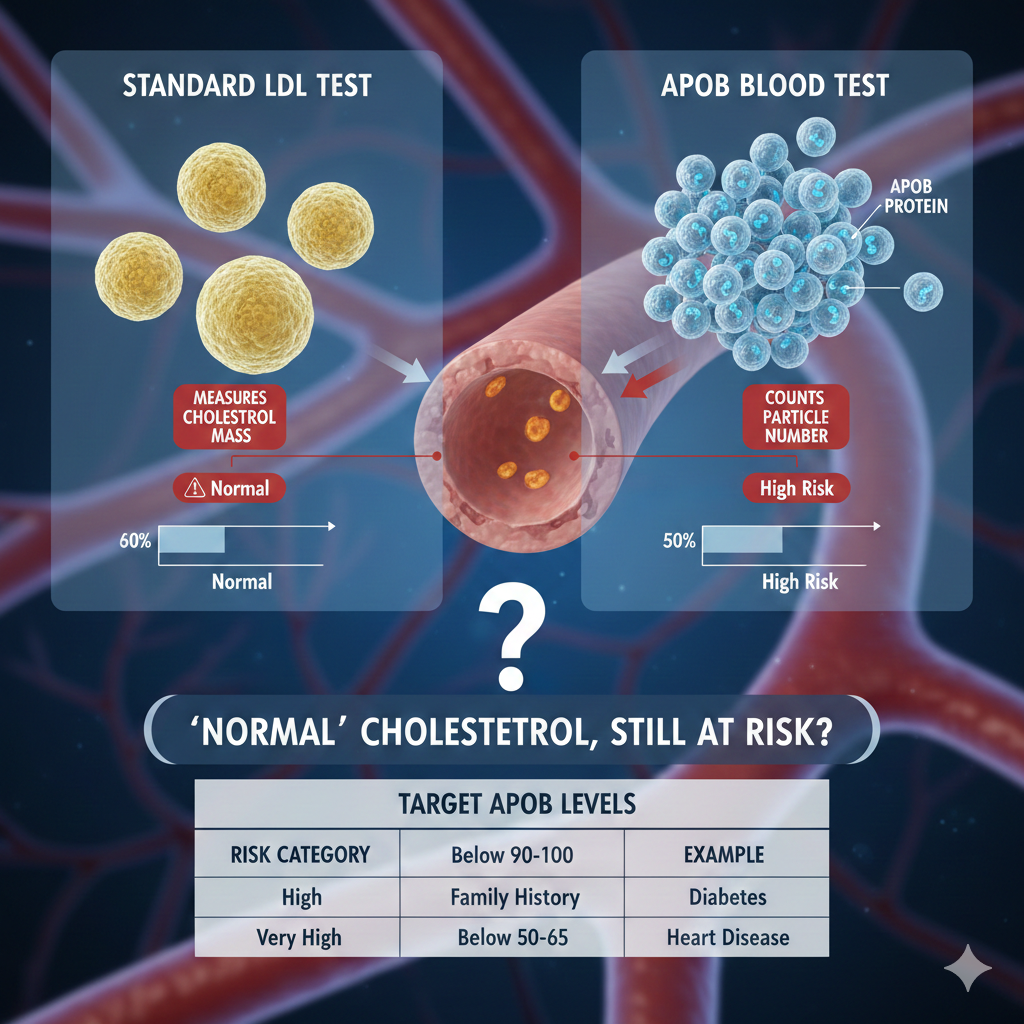
ApoB (Apolipoprotein B) is a blood test that measures the number of harmful cholesterol particles circulating in your blood. Every atherogenic (artery-clogging) lipoprotein particle — including LDL, VLDL, IDL, and Lp(a) — carries exactly one ApoB protein. By counting ApoB proteins, the test tells your doctor how many of these particles are present, not merely how much cholesterol they contain.

How Is ApoB Different from Standard LDL Testing?

A traditional LDL test measures the amount of cholesterol packed inside LDL particles. ApoB measures how many particles exist in the first place. This distinction matters because you can have a normal LDL cholesterol reading while still carrying a dangerously high number of particles. Since each particle carries one ApoB protein, ApoB provides a more direct and precise estimate of cardiovascular risk than LDL alone — particularly in people with high triglycerides, insulin resistance, or metabolic syndrome.

Why Is Particle Count So Important?

Heart disease develops when cholesterol particles penetrate and accumulate inside artery walls, forming plaques. The number of particles — not just their cholesterol content — determines how aggressively this process occurs. ApoB directly reflects total atherogenic particle count, plaque-forming potential, and residual risk in patients already receiving treatment. For these reasons, many preventive cardiologists now consider ApoB a superior risk stratification tool.

Who Should Consider Getting an ApoB Test?

A physician may recommend an ApoB test for individuals who have a family history of early heart disease, diabetes, or metabolic syndrome, or who are overweight or have high triglycerides. It is also valuable for people whose standard LDL results do not fully explain their apparent cardiovascular risk, and for those already on statins who need more precise monitoring of residual risk.

How Is the Test Performed?

A small blood sample is drawn from a vein in the arm. Fasting is generally not required when ApoB is tested in isolation. If it is ordered alongside a full lipid panel, your doctor may ask you to fast for 10 to 14 hours beforehand. Always follow your physician’s specific instructions.

Understanding Your Results

Higher ApoB levels indicate a greater number of artery-clogging particles and a correspondingly higher risk of heart attack and stroke. Lower levels suggest better cardiovascular protection. General target thresholds — which vary according to individual risk — are outlined below. Your doctor will always interpret results within the context of your overall health profile.

Target ApoB Levels by Risk Category

The following targets reflect current guidance from leading cardiovascular societies. Individual recommendations may differ based on your clinical situation.

Moderate risk: below 90–100 mg/dL

High risk (for example, diabetes or known heart disease): below 65–80 mg/dL

Very high risk or secondary prevention: below 50–65 mg/dL

How Is ApoB Used in Treatment?

The test helps physicians estimate cardiovascular risk more accurately, determine whether treatment is warranted, and monitor how effectively medications such as statins, ezetimibe, PCSK9 inhibitors, and bempedoic acid are lowering particle burden. Because LDL levels can appear well controlled while particle counts remain elevated, ApoB is especially useful for identifying residual risk in patients already on therapy.

Can ApoB Levels Be Reduced?

Yes. Both lifestyle changes and medications can meaningfully lower ApoB.

On the lifestyle side, weight reduction, regular physical activity, lower intake of refined carbohydrates, and reduced saturated fat consumption have all been shown to decrease particle counts.

On the medication side, statins, ezetimibe, PCSK9 inhibitors, and bempedoic acid are the most commonly used agents. Lowering ApoB reduces cardiovascular risk regardless of which approach is used.

Is ApoB Better Than Non-HDL Cholesterol?

Both measures are clinically useful. Non-HDL cholesterol estimates the total cholesterol content across all atherogenic particles. ApoB goes a step further by directly counting those particles, which can provide more precise risk assessment — particularly in patients with elevated triglycerides or metabolic syndrome. In most situations, ApoB offers the more granular picture.

Common Questions

Does a high ApoB guarantee a heart attack? No. ApoB is a risk marker, not a diagnosis. Risk assessment is always multifactorial and must account for blood pressure, blood sugar, family history, smoking status, and imaging findings where appropriate.

Is ApoB included in a routine cholesterol test? No. It must be ordered separately, though more laboratories now include it as part of advanced lipid panels.

Should everyone get an ApoB test? Not necessarily. For low-risk individuals with normal lipid profiles and no significant risk factors, a standard lipid panel may be sufficient. ApoB testing is most valuable in intermediate- to high-risk patients, those with diabetes or metabolic syndrome, and anyone with unexplained cardiovascular risk. Discuss with your physician whether it is appropriate for you.

Recent ApoB Research (2025-Early 2026): What We Know

Aortic Stenosis & ApoB: A January 2026 JACC: Advances study confirms that elevated ApoB levels are associated with worse outcomes in patients with aortic stenosis, supporting ApoB’s prognostic role beyond traditional lipid markers.  

ApoB/ApoA-I Ratio: A large December 2025 case-control study found the ApoB/ApoA-I ratio to be the strongest independent lipid predictor of coronary heart disease (CHD), acute myocardial infarction (AMI), multivessel disease, and need for PCI — with predictive strength especially high in males, older adults, and hypertensive patients, and attenuated among diabetics.  

Guidelines (2025–Early 2026): No major global guideline revisions have fundamentally altered ApoB’s established role. ESC/EAS, ACC/AHA, and expert bodies still position ApoB as an informative marker — especially in selected high-risk patients, metabolic syndrome, or where LDL-C does not fully capture risk. Expert lipid societies continue to emphasize ApoB’s value in tailored risk assessment and treatment monitoring.

What the Major Clinical Guidelines Say

The table below summarizes how leading cardiovascular organizations position ApoB in clinical practice.

Organization — ACC / AHA (2018 Guideline)

Position: Recognized as a risk-enhancing factor

When recommended: Elevated triglycerides (200 mg/dL or above), intermediate-risk patients

Key threshold: ApoB at or above 130 mg/dL is considered a risk-enhancing level

Organization — ACC Expert Consensus (2022)

Position: Useful for residual risk assessment and therapy monitoring

When recommended: Patients on statins, or those with discordant LDL and triglyceride results

Key threshold: No universal target; used to guide intensification of therapy

Organization — ESC / EAS (2019 Guideline)

Position: An alternative and sometimes preferred risk marker

When recommended: Diabetes, metabolic syndrome, obesity, high triglycerides

Key thresholds: Below 100 mg/dL for moderate risk; below 80 mg/dL for high risk; below 65 mg/dL for very high risk

Organization — Canadian Cardiovascular Society (2021 Guideline)

Position: Recommended as a primary treatment target

When recommended: High-risk and secondary prevention patients

Key threshold: Below 80 mg/dL for high-risk patients

ApoB/ApoA-I Ratio: A Simple Guide for Patients

What Is the ApoB/ApoA-I Ratio?

The ApoB/ApoA-I ratio is a blood test that helps measure your risk of heart disease.

It compares:

ApoB – a marker of “bad” cholesterol particles that can clog your arteries

ApoA-I – a marker of “good” cholesterol particles that help remove cholesterol from your arteries

Think of it as a balance test:

ApoB = particles that can cause plaque buildup

ApoA-I = particles that help clean up cholesterol

The ratio shows which side is winning.

Why Does This Ratio Matter?

Heart disease develops when too many harmful cholesterol particles enter artery walls and form plaque.

If your:

ApoB is high → more plaque-forming particles

ApoA-I is low → less protection

higher ratio means more risk.

lower ratio means better protection.

Why Not Just Check LDL (“Bad” Cholesterol)?

Traditional cholesterol tests measure how much cholesterol is in your blood.

The ApoB/ApoA-I ratio looks deeper:

It counts the number of harmful particles (not just the cholesterol amount)

It compares them to protective particles

It may detect hidden risk even when LDL looks “normal”

This is especially helpful if you have:

• Diabetes

• High triglycerides

• Metabolic syndrome

• Family history of heart disease

• “Normal” cholesterol but ongoing concern

What Is a Good ApoB/ApoA-I Ratio?

There are no strict universal cutoffs, but generally:

Below 0.50–0.60 → Lower risk

Around 0.70–0.90 → Moderate risk

Above 0.90 (men) or 0.80 (women) → Higher risk

Lower is better.

Your doctor will interpret your result along with:

• Blood pressure

• Blood sugar

• Family history

• Other cholesterol numbers

• Imaging tests (if needed)

Can You Improve the Ratio?

Yes. The main goal is to lower ApoB, because ApoB particles cause artery damage.

Ways to improve it:

Lifestyle:

• Maintain healthy weight

• Exercise regularly

• Reduce refined carbohydrates

• Eat less saturated fat

• Stop smoking

Medications (if needed):

• Statins

• Ezetimibe

• PCSK9 inhibitors

• Bempedoic acid

Lowering ApoB reduces heart risk.

Raising ApoA-I through lifestyle (exercise, healthy diet) helps — but lowering ApoB is more important.

Is This Test Routine?

No. It is not included in most standard cholesterol panels. Your doctor must order it separately.

It may be useful if:

Your risk seems unclear

You are already on cholesterol medication

Your LDL looks normal but concern remains

Important to Know

This test does not diagnose heart disease by itself.

It is one piece of your overall risk picture.

Risk is continuous — there is no single “magic number.”

Always discuss results with your healthcare provider.

In Simple Terms

The ApoB/ApoA-I ratio shows the battle between harmful and protective cholesterol particles in your blood.

If harmful particles outnumber protective ones, your risk rises.

If protective forces are stronger, your arteries are better defended.

If you have risk factors or borderline cholesterol, this test can provide clearer insight into your true heart risk.

Quick FAQ: ApoB/ApoA-I Ratio

1. Is this test better than a regular cholesterol test?

It’s not a replacement — it’s an upgrade in certain situations.

A regular lipid panel measures cholesterol amounts.

The ApoB/ApoA-I ratio looks at the balance between harmful and protective particles, which can sometimes reveal hidden risk.

2. If my LDL is normal, do I still need this test?

Maybe. Some people have normal LDL but still carry a high number of harmful particles.

If you have diabetes, high triglycerides, family history, or unexplained risk, your doctor may consider this test.

3. Does a high ratio mean I will definitely have a heart attack?

No. It means your risk is higher — not that an event will definitely happen.

Heart disease depends on many factors, including blood pressure, smoking, blood sugar, genetics, and lifestyle.

4. Can I lower my ApoB/ApoA-I ratio naturally?

Yes. Healthy habits can improve it:

• Regular exercise

• Weight control

• Balanced diet with fewer refined carbs and saturated fats

• Avoiding tobacco

If needed, medications can further lower ApoB and reduce risk.

5. Is this test routinely done?

No. It is not included in most standard cholesterol panels.

It must usually be ordered separately, often by a cardiologist or lipid specialist.

6. What matters more — ApoB or the ratio?

Most experts agree that lowering ApoB (harmful particle number) is the main goal.

The ratio provides helpful context but treatment usually focuses on reducing ApoB.

Authoritative Resources for Further Reading

Full guideline in the Journal of the American College of Cardiology:

https://www.jacc.org/doi/10.1016/j.jacc.2018.11.003

ESC / EAS 2019 Dyslipidaemia Guidelines:

Canadian Cardiovascular Society 2021 Dyslipidemia Guideline:

National Lipid Association:

These recommendations reflect guidance from the ACC/AHA, the European Society of Cardiology, and the Canadian Cardiovascular Society, representing current global standards in preventive cardiology. Individual clinical decisions should always be made in consultation with a qualified physician.​​​​​​​​​​​​​​​​

Medical & Educational Disclaimer

This content is provided for general educational purposes only and is not intended as medical advice, diagnosis, or treatment. Cardiovascular risk assessment is complex and individualised. Laboratory values such as ApoB or the ApoB/ApoA-I ratio should be interpreted by a licensed healthcare provider within the context of your overall health profile. Never delay or disregard professional medical advice because of information you have read here.

Explore more at the Rise & Inspire archive |  Motivational Blogs 

© 2025 Rise & Inspire. Follow our journey of reflection, renewal, and relevance.

Website: Home | Blog | About Us | Contact| Resources

Word Count:2089

Is Insulin Resistance a Disease—or a Warning Signal?

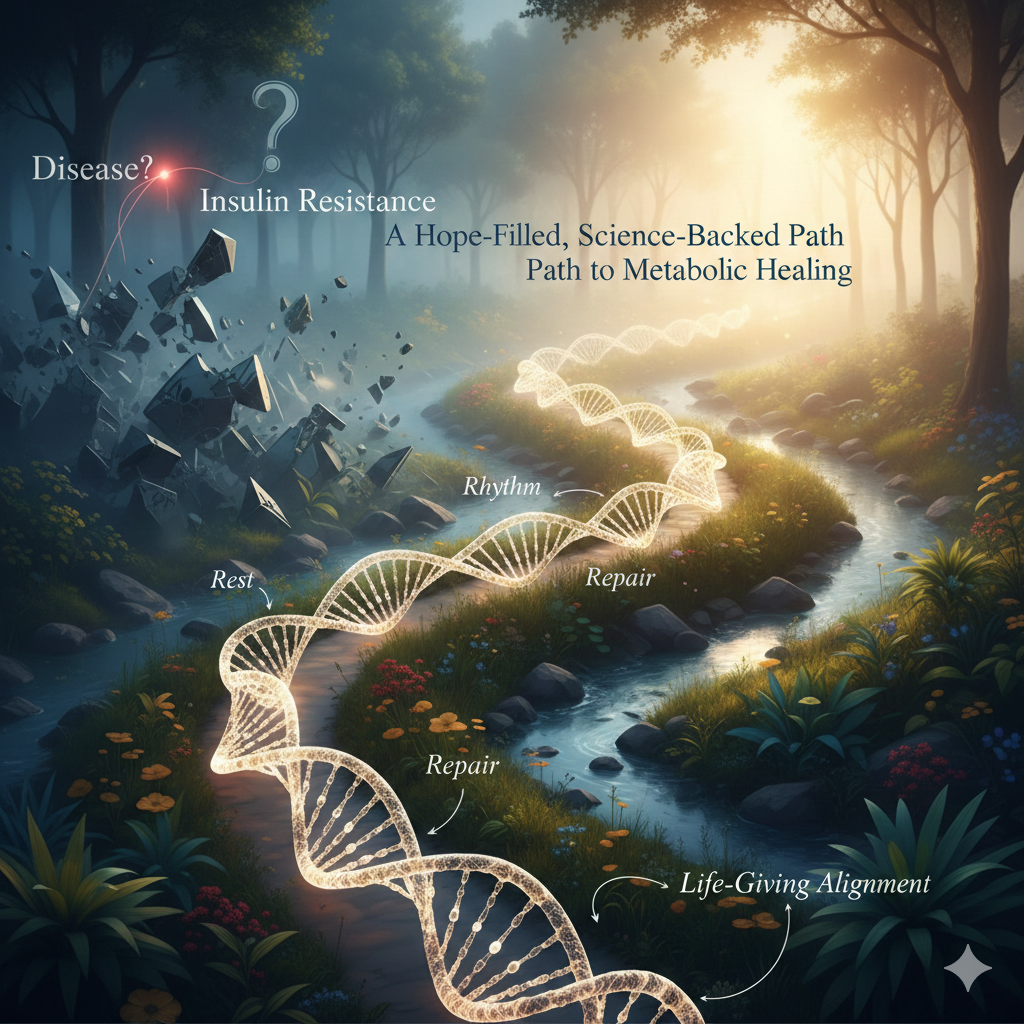
Insulin resistance doesn’t appear overnight—and it doesn’t disappear by accident either. What if the body isn’t broken at all, but simply asking for rest, rhythm, and repair? 

This article explores how insulin resistance can be reversed—not through extremes, but through steady, life-giving alignment.

Can Significant Insulin Resistance Be Reversed?

A Hope-Filled, Science-Backed Path to Metabolic Healing

Insulin resistance is often spoken of in anxious whispers, as though it were a final verdict. The phrase itself carries weight—clinical, intimidating, and seemingly permanent. Yet the body tells a quieter, truer story. Insulin resistance is not a sentence; it is a signal. A warning light that turns on not to frighten us, but to invite attention, care, and change.

And the most hopeful truth of all is this: significant insulin resistance can often be reversed. Not through harsh discipline or extreme interventions, but through steady, life-giving choices made with patience and clarity.

At its core, insulin resistance develops when the body is asked to do too much, too often. Repeated exposure to high insulin demand—usually driven by frequent eating, refined carbohydrates, chronic stress, and poor sleep—gradually dulls the cells’ responsiveness. The pancreas compensates by producing more insulin, and for a while, blood sugar numbers may even appear “normal.” But beneath the surface, strain is building.

True reversal, therefore, is not about chasing sugar readings or obsessing over numbers. It is about lowering the constant demand placed on insulin and giving the body space to remember its natural balance.

This is where nourishment becomes an act of care rather than restriction. Healing does not require starvation or complicated dietary rules. It begins with choosing foods that cooperate with the body instead of overwhelming it. A simple, balanced plate—rich in vegetables, supported by adequate protein, and grounded with whole carbohydrates—can gently steady blood sugar and calm insulin spikes. Meals that are rich in fiber and protein slow digestion, extend satiety, and restore metabolic rhythm. Highly refined and ultra-processed foods, even when marketed as “light” or “low-fat,” quietly work against this repair.

Movement, too, plays a role far greater than we often imagine. When muscles move, they absorb glucose without needing insulin at all. This simple physiological truth makes physical activity one of the most powerful tools for restoring insulin sensitivity. It does not require intense workouts or exhausting routines. A walk after meals, consistent daily movement, and modest strength training create meaningful internal change. Over time, the body responds—not dramatically, but steadily.

As these habits take root, another transformation often follows: a gradual reduction in visceral fat. This deep abdominal fat is not passive storage; it is metabolically active tissue that fuels inflammation and worsens insulin resistance. When the waistline slowly reduces, insulin sensitivity often improves alongside it. Sustainable weight loss, not rapid dieting, becomes a natural outcome rather than a forced goal.

Yet even the best nutrition and movement cannot fully heal a body that is exhausted. Sleep and stress quietly influence every metabolic process. Chronic stress and insufficient sleep raise cortisol levels, which directly interfere with insulin’s work. Rest, therefore, is not a luxury. It is therapy. When sleep becomes consistent and restorative—seven to eight hours of true rest—the body’s hormonal systems begin to rebalance. Prayer, meditation, reflective writing, and stillness are not just spiritual practices; they are biological allies.

Sometimes, the body also reveals hidden needs. Deficiencies in nutrients such as vitamin D, magnesium, and omega-3 fatty acids can quietly worsen insulin resistance. Identifying and correcting these gaps, under medical guidance, often supports deeper recovery.

There are moments when lifestyle changes alone are not enough at the beginning. Temporary medical support may be required to stabilise insulin levels and reduce metabolic strain. When used wisely, medication serves as a bridge—not a destination—supporting the body while long-term habits take root.

Progress, however, is not always immediately visible. Reversal unfolds slowly, often first felt as increased energy, fewer cravings, or better sleep before numbers begin to shift. Over weeks, fasting insulin may begin to fall. Over months, markers like HOMA-IR improve. Over time, the body demonstrates what it has quietly been capable of all along—healing.

This journey requires patience. Within weeks, change begins. By three months, improvement becomes measurable. By six to twelve months, many experience significant or even complete reversal. Not through perfection, but through consistency.

Insulin resistance, then, is not a failure of discipline. It is the body’s way of asking for care, balance, and wisdom. When that message is answered with attentiveness rather than fear, healing follows—not only in lab reports, but in clarity, vitality, and hope.

The same truth applies to sleep, which is often overlooked but deeply intertwined with metabolic healing. Quality sleep is not simply time spent in bed. It is the ability to fall asleep gently, stay asleep deeply, and awaken restored. When sleep feels elusive, the issue is rarely willpower. More often, it is rhythm, light, environment, or unspoken mental load.

The body thrives on consistency. Waking and sleeping at the same time each day anchors the circadian rhythm and strengthens nighttime rest. Sleep does not switch on suddenly; it arrives gradually. A familiar wind-down ritual—dimmed lights, quiet reading, gentle prayer, reflective writing—teaches the brain when it is safe to rest.

Light, too, speaks powerfully to the body. Soft evenings and bright mornings restore natural sleep signals. Meals taken earlier in the evening, limited caffeine, and a calm digestive system further support rest. The bedroom itself becomes a sanctuary when it is dark, cool, quiet, and free from constant digital stimulation.

Many people are physically tired yet mentally restless. Calming the mind often requires intentional release—writing worries down, breathing slowly, or entrusting the day to God before sleep. Rest begins when we stop carrying tomorrow into tonight.

Sleep, like metabolic healing, improves in stages. First comes easier sleep onset. Then fewer awakenings. Finally, deep, restorative rest. Chasing sleep creates anxiety; inviting it creates peace.

In the end, healing metabolic health is not about harsh discipline or relentless control. It is about listening wisely to the body’s signals and responding with nourishment, movement, rest, and patience. When these elements work together, the body often responds with remarkable resilience—quietly, faithfully, and over time.

And that is where hope lives.

Common Clinical Queries(CCQ)

1. Can insulin resistance really be reversed, or only managed?

In many cases, insulin resistance can be significantly improved or even reversed, especially when addressed early. Lifestyle changes that lower chronic insulin levels—such as improved diet, regular movement, quality sleep, and stress reduction—allow cells to regain insulin sensitivity over time.

2. How long does it take to see improvement in insulin resistance?

Some improvements begin within 2–4 weeks, particularly in fasting insulin levels. Measurable changes in markers like HOMA-IR are often seen within 3 months, while deeper metabolic restoration may take 6–12 months, depending on consistency and individual factors.

3. Is weight loss necessary to reverse insulin resistance?

Weight loss—especially reduction in visceral (abdominal) fat—often helps, but it is not the only factor. Improved insulin sensitivity can occur even before major weight changes, particularly through better sleep, movement, and reduced insulin spikes.

4. Can insulin resistance return after reversal?

Yes, if old habits return. Insulin sensitivity is maintained through ongoing lifestyle alignment, not a one-time fix. However, once restored, the body often responds more quickly to healthy routines.

5. Why is sleep so important for insulin sensitivity?

Poor sleep raises cortisol, disrupts glucose metabolism, and increases insulin resistance. Consistent, quality sleep helps rebalance hormones and improves the body’s response to insulin—often amplifying the benefits of diet and exercise.

6. Do I need medication to reverse insulin resistance?

Not always. Many people improve through lifestyle changes alone. In some cases, medication may be used temporarily to stabilise insulin levels while habits are being established. This decision should always be made with medical guidance.

7. Is HOMA-IR better than fasting glucose for tracking progress?

Yes. Fasting glucose can remain normal even when insulin resistance is advanced. HOMA-IR, which includes fasting insulin, provides a more sensitive picture of early metabolic improvement.

8. What if I am doing everything right but still not sleeping well?

Sleep restoration is often the slowest system to heal. Consistency, light exposure control, stress reduction, and patience matter more than perfection. If sleep remains poor, medical evaluation for conditions like sleep apnea or nutrient deficiencies may be helpful.

📚 Scientific References & Further Reading

1. Insulin Resistance as a Metabolic Syndrome

DeFronzo RA, Ferrannini E.

Insulin resistance: a multifaceted syndrome responsible for NIDDM, obesity, hypertension, dyslipidemia.

Diabetes Care. 1991.

🔗 PubMed (Abstract & DOI):

📄 Hosted Full Text (PDF):

2. Insulin Resistance & Cardiovascular Disease

Reaven GM.

Insulin resistance: the link between obesity and cardiovascular disease.

Medical Clinics of North America. 2011;95(5):875–892.

🔗 PubMed (Abstract & DOI):

📄 ScienceDirect (Full Text – may require access):

3. Dietary Intervention & Type 2 Diabetes Reversal

Hallberg SJ et al.

Reversal of type 2 diabetes and insulin resistance through dietary intervention.

Diabetes Therapy. 2018.

🔗 Open-Access Narrative Review (PMC):

🔗 Primary Study (PubMed):

📄 Full Text via PMC (Open Access):

4. Sleep Debt & Metabolic Function

Spiegel K, Leproult R, Van Cauter E.

Impact of sleep debt on metabolic and endocrine function.

The Lancet. 1999.

🔗 PubMed (Abstract & DOI):

📄 Journal Abstract:

5. Sleep Restriction & Insulin Resistance

Buxton OM, et al.

Sleep restriction for 1 week reduces insulin sensitivity in healthy men.

Science Translational Medicine. 2010.

🔗 PubMed:

📄 Full Text via PMC (Open Access):

6. American Diabetes Association (ADA)

Standards of Medical Care in Diabetes – Lifestyle Management (Updated Annually)

📘 Full Standards of Care in Diabetes—2026:

🌐 ADA Professional Site:

7. WHO & NIH Reports on Physical Activity, Sleep & Metabolic Health

World Health Organization (WHO)

🌍 Physical Activity Fact Sheet:

📘 Full 2020 Guidelines:

National Institutes of Health (NIH)

📰 Irregular Sleep & Metabolic Disorders (NIH News Release):

🔎 Access Note

For paywalled articles, consider:

University or institutional library access

Google Scholar (for author-hosted PDFs)

ResearchGate

PubMed Central (PMC)

🔬 Why These Studies Matter

These landmark studies collectively show that insulin resistance is not merely a blood sugar issue — it is a whole-body metabolic condition affecting cardiovascular health, hormonal balance, inflammation, and long-term disease risk.

✔️ DeFronzo & Ferrannini and Reaven established insulin resistance as a central driver of obesity, hypertension, dyslipidemia, and type 2 diabetes — reshaping modern metabolic medicine.

✔️ Hallberg et al. demonstrated that structured dietary intervention can significantly improve — and in some cases reverse — type 2 diabetes and insulin resistance.

✔️ Spiegel et al. and Buxton et al. revealed that sleep deprivation alone can reduce insulin sensitivity, proving that metabolic health is deeply tied to circadian rhythm and recovery.

✔️ ADA, WHO, and NIH guidelines reinforce that lifestyle — nutrition, movement, sleep, and behavioral patterns — remains foundational in both prevention and treatment.

The Big Picture

Together, this body of research supports a hopeful, science-backed conclusion:

Metabolic dysfunction is dynamic — and therefore modifiable.

Insulin resistance develops over time through disrupted rhythm, excess energy intake, inactivity, and sleep disturbance. But the same systems — when realigned — can restore metabolic flexibility, improve insulin sensitivity, and reduce disease risk.

This is why rest, rhythm, repair, and lifestyle alignment are not alternative ideas — they are evidence-based pillars of metabolic healing.

Closing Note for Readers

Healing metabolic health is not about harsh discipline—it is about listening wisely to the body’s signals. When nourishment, movement, rest, and patience work together, the body often responds with remarkable resilience.

✍️ Editor’s Note

I personally experienced insulin resistance and began searching for ways to reverse it. That journey led me deep into scientific research, clinical guidelines, and evidence-based lifestyle interventions.

What I discovered was both sobering and hopeful: insulin resistance is serious — but it is also modifiable.

The studies referenced in this article were not gathered casually. They were part of my own effort to understand what was happening in my body and how I could restore metabolic health. The knowledge I gained has been transformative for me.

I believe that information backed by sound science should not remain private. If it has helped me, it may help others — especially readers who are silently struggling with fatigue, weight gain, prediabetes, or metabolic concerns.

This article is my attempt to share what I have learned, in the hope that it may inform, encourage, and empower others on their own journey toward healing.

Explore more at the Rise & Inspire archive |  Motivational Blogs

© 2025 Rise & Inspire. Follow our journey of reflection, renewal, and relevance.

Website: Home | Blog | About Us | Contact| Resources

Word Count:2235

Why Do We Fear Death but Neglect Happiness?

We fear death. We worry about illness. Yet we rarely ask the deeper question: why don’t we invest the same energy in cultivating happiness?

This reflection explores what is beyond our control, what demands responsibility, and what truly deserves our attention.

Death, Illness, Worry, and Happiness

A Philosophical Reflection on Control, Acceptance, and Joy

Human life unfolds between certainty and uncertainty. Some realities are inevitable, others are possible, and still others depend largely on how we choose to live. A brief handwritten meditation — reflecting on death, illness, worry, and happiness — opens into a profound philosophical inquiry:

What truly deserves our anxiety?

And what deserves our effort?

I. Death: The Inevitable Horizon

Death is the most certain event in human existence — yet the least predictable in timing. We do not know when it will come. When it does come, we cannot reverse it. This simple observation has shaped philosophical thought for centuries.

The Stoic philosopher Epictetus taught that wisdom begins by distinguishing what is within our control from what is not. Death clearly belongs to the latter. To worry about what lies entirely outside our agency is to surrender peace for illusion.

Similarly, Martin Heidegger described human beings as “beings-toward-death,” suggesting that awareness of mortality should not paralyze us but awaken authenticity. Death, properly understood, clarifies life’s urgency.

Thus, worry about death is unproductive because:

• It does not delay death.

• It does not prepare us for death.

• It robs the present moment of vitality.

Acceptance, not anxiety, is the rational response to inevitability.

II. Illness: The Realm of Partial Control

Illness differs from death. It is possible but not always certain; serious but often treatable. Unlike death, illness frequently invites response.

We cannot guarantee immunity, but we can:

• Seek medical care.

• Practice preventive health.

• Cultivate resilience.

Here lies an important philosophical distinction: worry and responsibility are not the same.

Worry is emotional rumination without productive movement. Responsibility is intentional action within our capacity.

Aristotle, in his ethics, emphasized practical wisdom (phronesis) — the ability to discern appropriate action in given circumstances. Illness belongs to this realm. It demands thoughtful engagement, not helpless anxiety.

The wise response to illness is not denial, nor panic — but measured action.

III. Worry: A Misplaced Expenditure of Energy

If death is inevitable and illness is manageable, what role does worry play?

Worry often arises from a mistaken belief that emotional agitation equals control. Yet anxiety rarely produces clarity; it drains cognitive and spiritual resources.

The Stoics argued that emotional disturbance arises not from events themselves but from our judgments about them. Cognitive-behavioral psychology, centuries later, would echo this insight.

Jesus’ teaching in the Sermon on the Mount similarly addresses anxiety: “Do not worry about tomorrow.” The philosophical principle is universal — worry neither adds a day to life nor solves the problem it anticipates.

Thus we may distinguish three responses:

✔️ Acceptance for what we cannot change.

✔️ Action for what we can influence.

✔️ Detachment from unproductive worry.

IV. Happiness: Does It Come Spontaneously?

The most subtle question in the reflection is this:

Will happiness come spontaneously?

Unlike death, happiness is not inevitable.

Unlike illness, it does not simply “happen” to us.

Aristotle defined happiness (eudaimonia) not as fleeting pleasure but as flourishing — the result of cultivated virtue. Modern positive psychology likewise suggests that sustained well-being arises from intentional habits: gratitude, meaning, relationships, purpose.

Happiness rarely arrives accidentally. It grows where:

• Perspective is disciplined.

• Gratitude is practiced.

• Relationships are nurtured.

• Purpose is embraced.

In this sense, happiness is not passive reception but active cultivation.

V. The Architecture of Wisdom

When we place these reflections together, a structure emerges:

Reality Nature of Control Proper Response

Death None Acceptance

Illness Partial Responsibility

Worry Misguided energy Detachment

Happiness Cultivable Intentional living

The philosophical lesson is clear:

Life becomes lighter when we:

• Accept the inevitable.

• Act within our sphere of influence.

• Release unproductive anxiety.

• Intentionally cultivate joy.

This movement from fear to freedom is not naïve optimism. It is disciplined realism.

VI. A Concluding Reflection

Death need not dominate our thoughts.

Illness calls for care, not panic.

Worry wastes the energy required for living.

Happiness grows where wisdom guides effort.

The deepest philosophical maturity lies in discerning where to surrender and where to strive.

In this balance, serenity is born.

The Architecture of Wisdom: 

What to Accept, What to Act On, and What to Cultivate

Frankl, Stoicism, and Buddhist Mindfulness in Conversation

Why do we spend so much energy fearing death, illness, and uncertainty—yet so little cultivating joy, meaning, and inner freedom?

Across cultures and centuries, three powerful traditions offer converging answers: the existential psychology of Viktor Frankl, the disciplined realism of Epictetus, and the meditative wisdom of Thich Nhat Hanh and the Buddhist mindfulness tradition.

Though emerging from different metaphysical backgrounds, they converge on a striking insight: suffering is inevitable—but despair is not. Freedom lies not in controlling circumstances, but in transforming our response to them.

I. Frankl: The Will to Meaning

In Man’s Search for Meaning, Frankl argues that the primary human drive is not pleasure (Freud) nor power (Adler), but meaning. Having survived Nazi concentration camps, he observed that those who endured unimaginable suffering were often those who retained a sense of purpose.

Logotherapy rests on three foundational pillars:

1. Freedom of Will – Even within biological and situational limits, we retain the “last of the human freedoms”: the freedom to choose our attitude.

2. Will to Meaning – The central motivation in life is the search for purpose.

3. Meaning in Life – Meaning can be discovered in all circumstances, even suffering.

When meaning is absent, we fall into what Frankl calls the existential vacuum—a state of boredom, apathy, and inner emptiness. Modern culture often attempts to fill this vacuum with distraction. But distraction is not destiny. Meaning must be discovered, not consumed.

Frankl identified three pathways to meaning:

• Through creative contribution

• Through love and encounter

• Through the attitude we take toward unavoidable suffering

This final path is transformative: when pain cannot be removed, dignity becomes the site of freedom.

II. Stoicism: Control, Acceptance, and Flourishing

Stoicism begins with a deceptively simple distinction:

Some things are within our control; others are not.

For Epictetus, anxiety arises when we confuse the two. Death, illness, reputation, and external events lie outside our command. Our judgments, choices, and actions remain ours.

This dichotomy of control yields a disciplined realism:

Death is inevitable → therefore not to be feared.

Illness is partially controllable → act wisely, but do not panic.

Worry changes nothing → detach from unproductive rumination.

Happiness must be cultivated intentionally through virtue.

Unlike passive optimism, Stoic flourishing (eudaimonia) requires effort. It is not emotional excitement but rational alignment with reality. We suffer less when we stop demanding that life obey us.

Yet here lies a paradox: we often obsess over death—an inevitability—while neglecting the deliberate cultivation of joy, gratitude, and virtue—areas where we have agency.

III. Buddhist Mindfulness: Insight into Impermanence

Buddhist mindfulness deepens the inquiry. It teaches that suffering (dukkha) arises from clinging—to permanence, to identity, to certainty.

Three foundational insights frame this view:

Impermanence (anicca) – All conditioned things change.

Suffering (dukkha) – Clinging to what changes produces distress.

Non-self (anatta) – What we call “self” is a fluid process, not a fixed entity.

Mindfulness (sati) trains the practitioner to observe thoughts, sensations, and fears without identification. Anxiety about death is seen as a mental formation arising and passing. Illness becomes sensation without narrative panic. Worry is revealed as repetitive mental projection.

Unlike Stoicism’s rational reframing, Buddhism emphasizes direct experiential insight. Through sustained awareness, fear dissolves—not because we argue against it, but because we see through its impermanent nature.

Happiness, in this tradition, is not the pursuit of pleasure but the cultivation of equanimity, compassion, and clarity. Practices such as loving-kindness meditation (metta) actively build joy and connection.

IV. Convergence: Freedom Within Limits

Despite differences in metaphysics, these traditions converge on a shared architecture of inner freedom:

Theme

Frankl; Stoicism;Buddhism

Death

Frankl

Even when death cannot be avoided, we retain freedom in how we face it. Meaning is found in the attitude we choose toward mortality and suffering.

Stoicism

Death is outside our control. The wise response is calm acceptance of its inevitability. Fear adds nothing; understanding clarifies life.

Buddhism

Death reflects impermanence (anicca). Regular contemplation of mortality reduces attachment and fear, awakening urgency and presence.

Illness

Frankl

Illness can become a context for dignity. Even when the body weakens, one can respond with courage and inner purpose.

Stoicism

Illness lies partly within our influence. We act responsibly—seeking treatment and practicing care—while accepting what cannot be changed.

Buddhism

Illness is part of dukkha (the reality of suffering). Mindfulness observes bodily sensations without clinging or aversion, cultivating equanimity.

Worry

Frankl

Anxiety often signals a loss of meaning. Redirect attention toward purpose and self-transcendence rather than self-absorption.

Stoicism

Worry arises from mistaken judgments about events. Reframe your interpretation; suffering is amplified by belief, not circumstance.

Buddhism

Worry is a mental formation arising from craving and fear. Observe it mindfully; as it is seen clearly, it loosens and passes.

Happiness

Frankl

Happiness cannot be pursued directly; it emerges as a byproduct of meaningful living.

Stoicism

True happiness (eudaimonia) is flourishing through virtue—living in harmony with reason and nature.

Buddhism

Lasting peace (sukha) arises from insight, compassion, and freedom from attachment—not from chasing pleasure.

The Unifying Insight

Across all three traditions:

✔️Accept what is inevitable.

✔️Act wisely where influence exists.

✔️Release unproductive mental agitation.

✔️Cultivate inner freedom intentionally.

Different languages.

Different metaphysics.

One shared discipline of wisdom.

Each tradition insists:

The decisive arena is interior.

Frankl speaks of responsibility.

Epictetus of rational choice.

Buddhism of mindful awareness.

Different languages, same core insight: freedom survives constraint.

V. Why the Imbalance Persists

Why, then, do we fear death so intensely while neglecting happiness?

Stoicism would say we misjudge externals as ultimate goods.

Frankl would say we have fallen into an existential vacuum.

Buddhism would say we cling to illusions of permanence and self.

All three diagnose a misplacement of attention.

We worry about what cannot be controlled and neglect the deliberate cultivation of meaning, virtue, and awareness—precisely where transformation is possible.

VI. A Practical Synthesis

A life informed by these traditions might look like this:

Contemplate death regularly—not morbidly, but to clarify priorities.

Act responsibly where influence exists.

Interrupt rumination through reframing or mindful observation.

Cultivate happiness intentionally—through gratitude, service, love, and presence.

Two minutes of mindful breathing.

One deliberate act of virtue.

One meaningful contribution.

One moment of gratitude.

Small disciplines reshape consciousness over time.

VII. The Quiet Conclusion

We cannot prevent death.

We cannot eliminate all suffering.

We cannot control the unfolding of history.

But we can choose our attitude.

We can discover meaning.

We can cultivate awareness.

We can practice joy.

The real tragedy is not mortality.

It is living without intention while fearing the inevitable.

If we shifted even half the energy spent worrying about death into cultivating meaning and happiness, we might discover what Frankl, the Stoics, and the Buddha all suggest:

Freedom was never outside us to begin with.

Key Takeaway

Wisdom begins by distinguishing between what we cannot control, what we can influence, and what we must intentionally cultivate.

Resources for Further Research

For deeper exploration of these themes, consider:

Classical Philosophy

• Epictetus, Enchiridion (Stoicism and control)

• Marcus Aurelius, Meditations (mortality and acceptance)

• Aristotle, Nicomachean Ethics (happiness and virtue)

Existential Philosophy

• Martin Heidegger, Being and Time (being-toward-death)

• Søren Kierkegaard, The Sickness Unto Death (anxiety and despair)

Theology and Spiritual Thought

• Augustine, Confessions (restlessness and divine rest)

• Thomas Aquinas, Summa Theologica (ultimate happiness)

• N. T. Wright, Surprised by Hope (Christian view of death)

Modern Psychology

• Viktor Frankl, Man’s Search for Meaning (suffering and purpose)

• Martin Seligman, Flourish (positive psychology)

• Irvin Yalom, Staring at the Sun (death anxiety)

Explore more at the Rise & Inspire archive |  Motivational Blogs 

© 2025 Rise & Inspire. Follow our journey of reflection, renewal, and relevance.

Website: Home | Blog | About Us | Contact| Resources

Word Count:2005

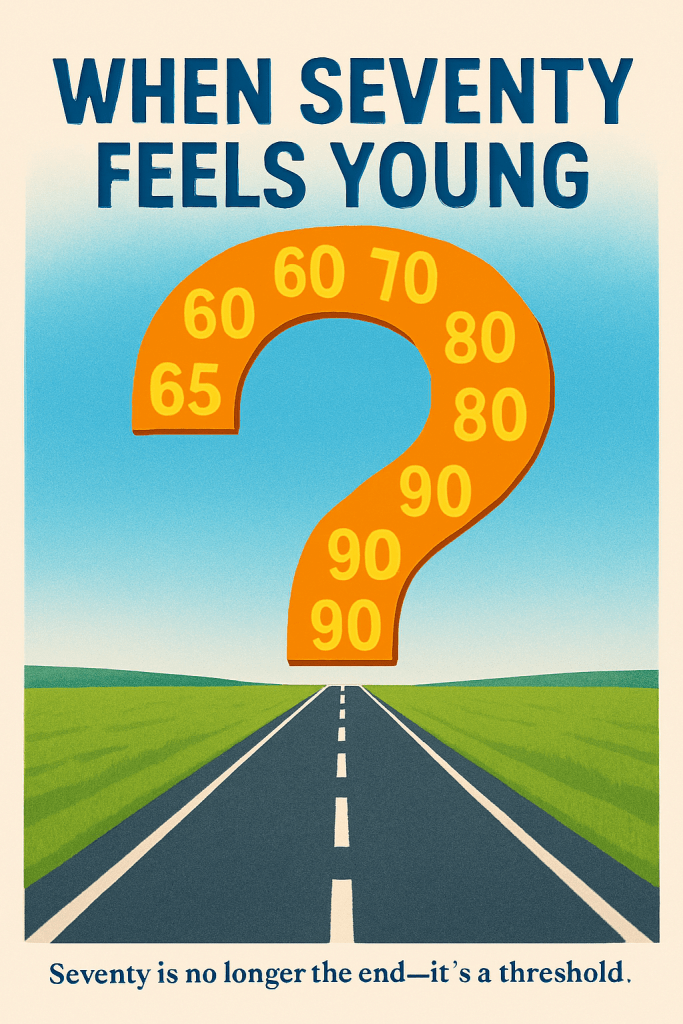
Does Turning 70 Today Mean You’re Just Getting Started?

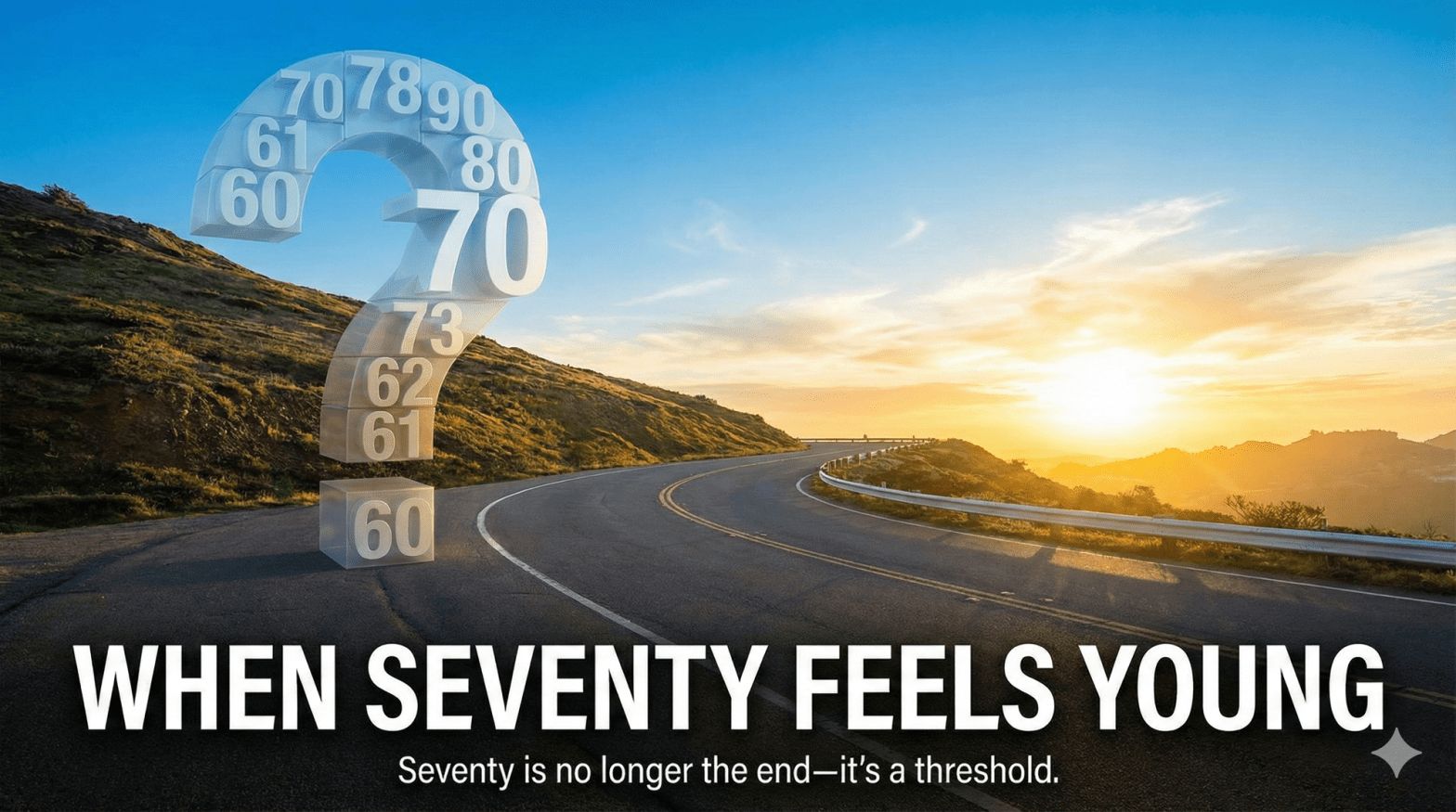
Seventy no longer means standing at life’s edge — it often marks a doorway. As human longevity stretches, a deeper question emerges: if we are likely to live longer, how should we live better? This reflection explores what the numbers reveal — and what they never can.

When Seventy Feels Young: 

A Philosophical Reflection on Longevity, Chance, and Choice

There’s a beautiful paradox in the way we think about age. Once, a century ago, saying “I am seventy” might have implied you had already walked most of life’s road. Today, seventy often feels less like a finish line and more like the doorway to a richly lived second half. This shift is not merely sentimental — it is measured in numbers, witnessed in hospitals and homes, and written into the archives of public health. But numbers alone cannot carry the whole story. They invite a deeper question: if modern life makes long life likelier, what does that change mean for how we live now?

From averages to individuals: the statistical ladder

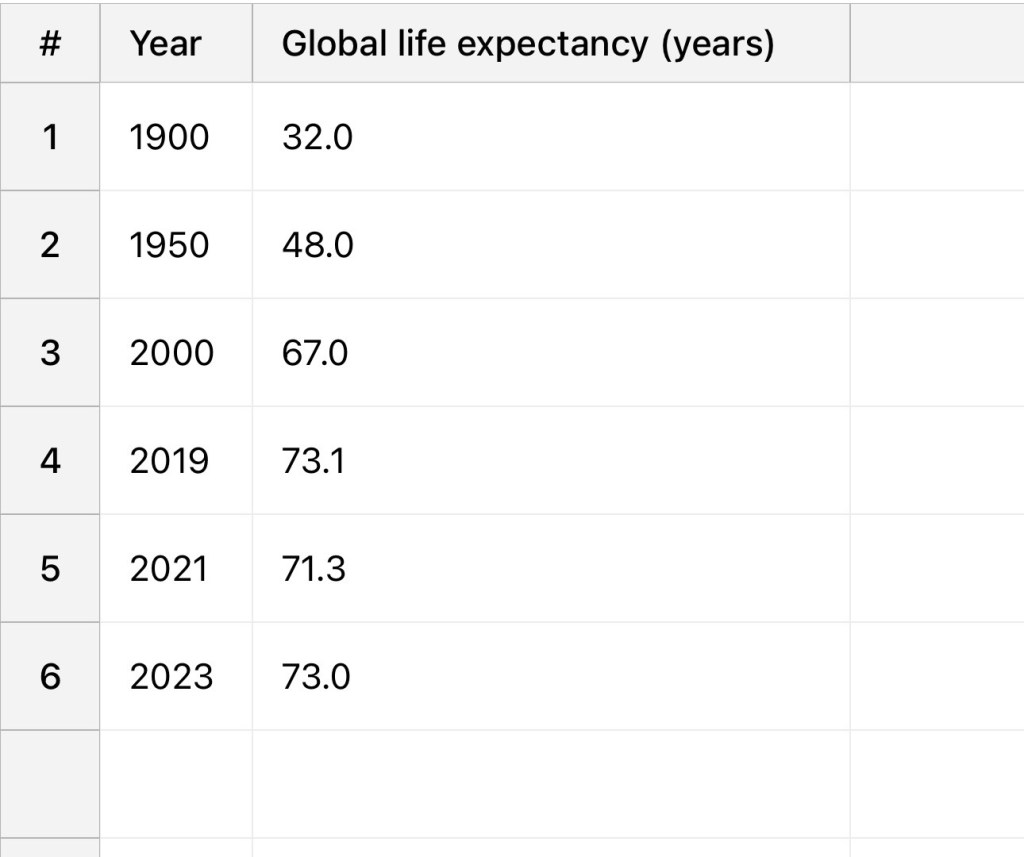
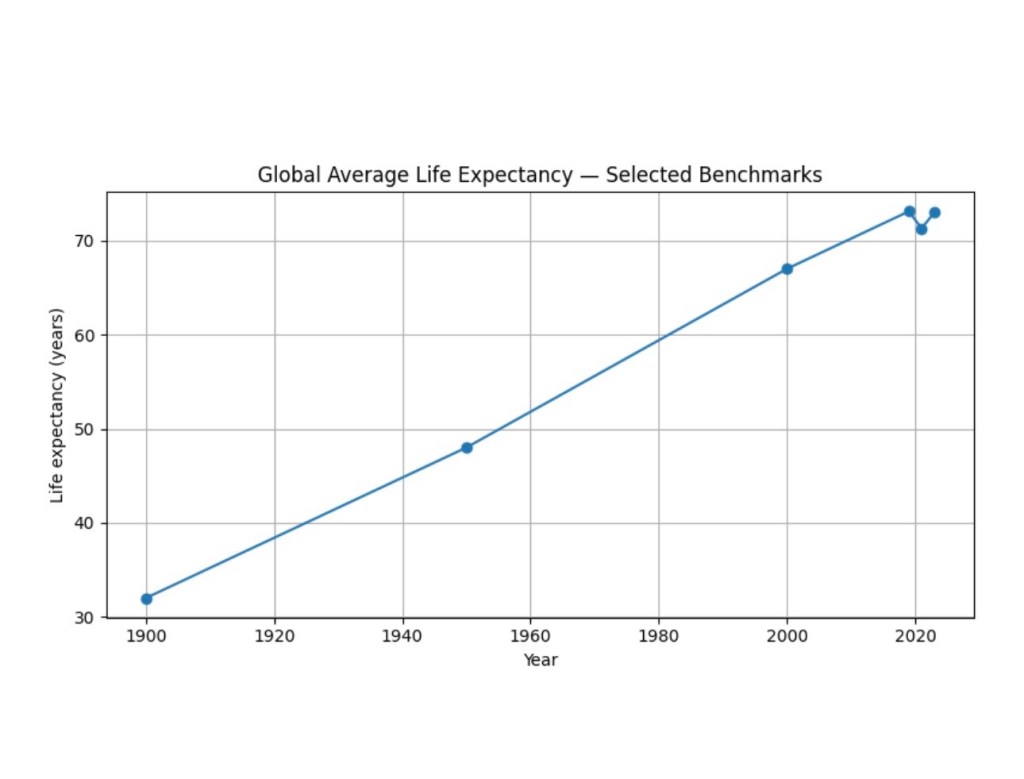
Public-health progress has been dramatic. Global average life expectancy has climbed from roughly 32 years in 1900 to the low-70s in the early 2020s — a more-than-doubling made possible by sanitation, vaccines, antibiotics, better nutrition, and broader access to healthcare.  

Yet averages are blunt tools. Saying the average life expectance rose from 32 to 73 does not mean everyone suddenly gained 40 years. Averages compress many histories into a single number. A hundred years ago, high infant and child mortality pushed the average down; those who survived childhood often lived into their 60s or 70s. Today’s gains come from improvements at every age: fewer early deaths, better chronic-disease treatment, and safer later-life care. The result is a changed probability landscape rather than an ironclad guarantee for individuals.  

What the odds tell us — and what they don’t

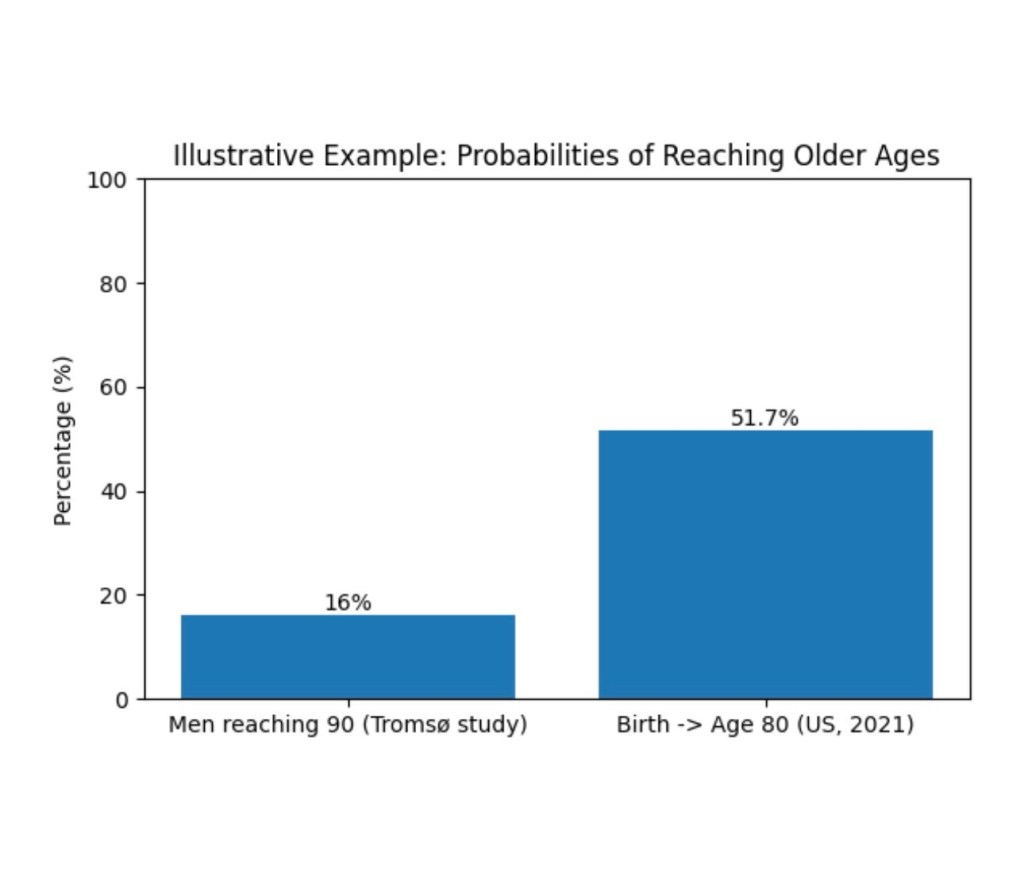
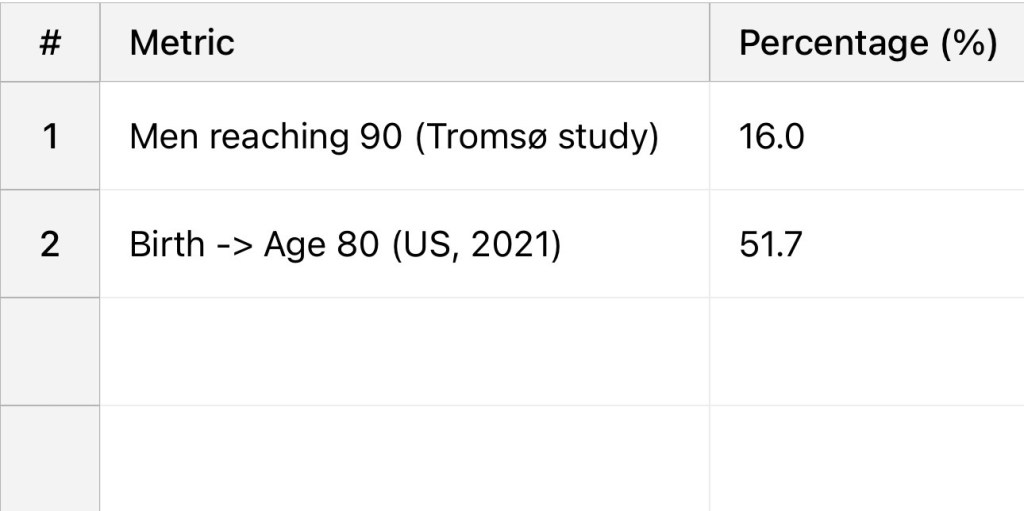
A practical way to think about this is through survival probabilities. Studies and life tables show that the chance of reaching milestone ages has risen, but it still varies greatly by sex, country, lifestyle, and socioeconomic factors. For example, a long-running Norwegian cohort study found that in a particular male cohort about 16% reached age 90; risk factors such as smoking, inactivity, and high blood pressure strongly affected those odds.  

Similarly, national life tables and vital-statistics reports (for example, U.S. life tables) show that survival probabilities increase and shift over time: many people today have better-than-ever chances of reaching ages that were once rare. But the probabilities remain conditional — they depend on which chronological and biological path you’ve followed up to your current age. A 70-year-old has cleared many of the mortality hazards that shorten average life, and so statistically their remaining life expectancy is higher than someone younger — but conditional chance is not a promise.  

Why the philosophical shift matters

This probabilistic change invites philosophical reflection. If reaching seventy now more often correlates with reaching eighty or ninety than it did a century ago, how should that alter our values, priorities, and relationships?

1. Time is both more and less precious. On one hand, longer life offers more seasons to savor — relationship repair, creativity, new careers, travel, mentorship. On the other, a sense of abundance can tempt postponement: I’ll write the book later, I’ll reconcile later, I’ll take the leap later. The ethical insight here is old: abundance can become an excuse for procrastination. The remedy is intentionality. If longevity becomes probable, make it meaningful by choosing how to spend the extra years.

2. Responsibility widens. Medical and social progress are communal achievements. Longer lives create intergenerational responsibilities: for caregivers, public policy, and how societies structure work and retirement. Economists and global institutions now note both the challenges and the opportunities of “silver economies” — older adults remaining active, productive, and socially engaged. But that participation must be enabled by policies, design, and imagination.  

3. Meaning is not automatic. More time does not guarantee more meaning. What matters is how that time is framed: service, relationships, curiosity, and small daily practices. Philosophers from Aristotle to modern existentialists remind us: the good life is an activity aligned with purpose and virtue, not merely longevity.

Practical lessons for the seventy-year-old (and for everyone)

If you find yourself at seventy today or advising someone who is, here are practical lessons grounded in evidence and human wisdom.

Invest in health as agency, not just insurance. Lifestyle choices — not smoking, staying physically active, managing blood pressure — measurably affect odds of long, functional life. Cohort studies repeatedly highlight these modifiable risks.  

Cultivate purpose. Studies from longevity hot spots (and large demographic reports) show that social bonds, community, and a sense of purpose are associated with healthier, longer lives. Japan’s long-lived communities, for instance, combine diet, movement, social cohesion, and meaning into everyday life (cultural context matters, but the principle of purposeful connection is universal).  

Plan economically and socially. Longer lives mean rethinking retirement, work, and savings. Policy discussions emphasize lifelong learning and flexibility to keep older adults engaged and secure.  

Practice gratitude and acceptance. Philosophically, longer life invites both gratitude for the gift of more time and acceptance of mortality’s certainty. These twin attitudes help convert more years into deeper living.

Two charts to hold in your hands

1. Global life expectancy — benchmarks: a simple visual of how the global average has climbed from about 32 years in 1900 to the low 70s in the 2020s, showing how extraordinary the change has been.  

2. Illustrative survival probabilities: two example numbers to remind us that probability is conditional — a Norwegian cohort observed ~16% of men reaching 90, while national life tables show improving probabilities of survival to older ages. These figures are illustrative and country- and cohort-specific.  

A closing reflection

Numbers can correct our illusions — they remind us that seventy is, in our time, often a threshold of possibility. But they cannot tell us what to do with possibility. That task belongs to moral imagination: to decide how to spend the years we are given, to care for one another, and to make time not merely longer but fuller.

So if you are seventy, or you love someone who is, hear both messages: statistically, your odds for more years are better than they used to be; philosophically, each year asks to be lived with intention. The best use of longer life is not to chase immortality, but to enlarge the meaning of the life you have — with curiosity, courage, and care.

Appendix: 

Data & Methods

Understanding Longevity, Life Expectancy, and Survival Probabilities

Purpose of This Appendix

This appendix explains the statistical foundations behind the reflections in this article. While the main essay explores longevity philosophically and motivationally, the data below clarifies what the numbers actually mean—and what they do not mean.

1. Key Definitions (Essential for Correct Interpretation)

Life Expectancy at Birth

Life expectancy at birth is the average number of years a newborn is expected to live, assuming current age-specific mortality rates remain constant throughout their life.

⚠️ Important clarification:

This is not a prediction for individuals. It is a population-level average heavily influenced by early-life mortality.

Conditional Life Expectancy

Conditional life expectancy refers to the expected remaining years of life once a person has already reached a certain age (e.g., 60 or 70).

Example:

If life expectancy at birth is 70 years, a person who has already reached 70 does not have zero years left; their remaining life expectancy may still be 12–16 years, depending on sex and health.

Survival Probability

Survival probability answers questions such as:

• “What percentage of people who reach age 60 will reach age 80?”

• “What fraction of those aged 70 today will live to 90?”

These probabilities vary by country, cohort, sex, and lifestyle.

2. Primary Data Sources Used

The statistical interpretations in this article rely on consolidated findings from the following authoritative sources:

World Health Organization (WHO)

– Global Health Estimates, Healthy Life Expectancy (HALE), and longevity trends.

Registrar General of India (RGI)

– Sample Registration System (SRS) Life Tables for India.

United Nations (UN DESA)

– World Population Prospects and cohort survival analysis.

Our World in Data

– Long-term historical life expectancy datasets.

These datasets are widely cited in demographic, economic, and public-health research.

3. Life Expectancy in India: A Historical Perspective

India – Life Expectancy at Birth (Approximate)

Year Life Expectancy (Years)

1950 ~36

1970 ~49

1990 ~58

2000 ~63

2010 ~67

2019 ~69.7

2021 (pandemic dip) ~67

2023 (recovery estimate) ~70

Interpretation:

India has gained over 30 years of average life expectancy in roughly seven decades. This gain is driven primarily by:

• Reduced infant and maternal mortality

• Expanded vaccination coverage

• Control of infectious diseases

• Improved food security and sanitation

4. Conditional Life Expectancy in India (Crucial Insight)

Life tables published by the Registrar General of India show that remaining life expectancy increases once early-life risks are passed.

Approximate Remaining Life Expectancy (India)

Age Reached Remaining Years (Men) Remaining Years (Women)

60 17–18 19–21

70 12–13 14–16

80 7–8 8–9

📌 Key takeaway:

A person who reaches 70 years in India today can statistically expect another 12–16 years of life, depending on sex and health conditions.

This directly supports—but also limits—the idea that “living to 70 means living to 90.”

The probability improves, but certainty does not exist.

5. Probability of Reaching Advanced Ages (India)

Using cohort survival patterns derived from SRS life tables:

Estimated Survival Probabilities (Illustrative)

Starting Age Probability of Reaching 80 Probability of Reaching 90

Birth ~30–35% ~8–10%

Age 60 ~55–60% ~15–18%

Age 70 ~35–40% ~10–14%

These probabilities:

Are higher for women

Improve with non-smoking status, physical activity, and chronic disease management

Decline sharply with untreated hypertension, diabetes, or cardiovascular disease

6. Comparison with High-Income Countries (Context Only)

For perspective (not equivalence):

Country Life Expectancy at Birth Probability of Reaching 90 (Men)

India ~70 ~10–14%

Japan ~85 ~25–30%

France ~83 ~22–26%

Norway ~83 ~20–25%

This comparison highlights:

✔️ The role of health systems and lifestyle

✔️ The growing but uneven global convergence in longevity

7. Healthy Life Expectancy (HALE): The Quality Dimension

Longevity without health can be misleading.

India’s Healthy Life Expectancy (HALE) is approximately 60–62 years

This implies 8–10 years of later life may involve reduced functional health

👉 Motivational implication:

Longevity gains must be paired with health-span investments, not merely lifespan optimism.

8. Methodological Limitations (Transparency Matters)

• Life tables assume current mortality rates, not future medical breakthroughs

• National averages mask state, rural–urban, and socioeconomic disparities

• Individual outcomes vary widely due to genetics, behavior, and environment

This article therefore treats statistics as guides, not guarantees.

9. Why This Data Supports the Article’s Core Message

Statistically:

Living to 70 today is a strong survival milestone

The odds of reaching 80 or even 90 are far higher than a century ago

Philosophically:

Probability is not destiny

Extended years invite intentional living, not complacency

References (selected)

Our World in Data — Life Expectancy (global trends, benchmark data).  

World Health Organization — Global Health Estimates: Life expectancy and Healthy Life Expectancy (HALE).  

Social Security Administration — Period Life Table (2022).  

National Center for Health Statistics (CDC) — National Vital Statistics Reports (life table examples and survival probability calculations).  

Brenn, T. et al., Tromsø Study (survival to age 90 in men — cohort study).  

International Monetary Fund analysis on aging and the “silver economy.”  

Reports on longevity practices and cultural examples (e.g., Japanese longevity reporting).  

Summary:

When Seventy Feels Young: A Philosophical Reflection on Longevity, Chance, and Choice

There’s a beautiful paradox in how we view age. A century ago, “I am seventy” often meant life’s road was mostly traveled. Today, seventy frequently marks the start of a richly lived second half. This shift is rooted in data, not just sentiment.

From Averages to Individuals: The Statistical Landscape

Global life expectancy at birth has more than doubled since 1900—from ~32 years to over 70 in recent decades—thanks to sanitation, vaccines, antibiotics, nutrition, and healthcare advances.

Averages, however, mask nuances. Early gains came from reducing infant/child mortality; later gains from better chronic-disease management and safer aging. Today’s higher probabilities of reaching 70+ are conditional on surviving earlier risks.

What the Odds Reveal

Survival probabilities have improved dramatically, varying by sex, country, lifestyle, and socioeconomic factors. A Norwegian cohort study (Tromsø Study) found ~16% of men reached age 90. National life tables show rising chances of advanced ages, though these remain probabilistic, not guaranteed.

Why the Philosophical Shift Matters

Longer probable lifespans reshape values and priorities:

  1. Time becomes more precious yet abundant — inviting intentional use rather than procrastination.
  2. Responsibility expands — to caregivers, policy, and “silver economies” where older adults stay engaged.
  3. Meaning requires effort — more years don’t guarantee purpose; virtue, service, and relationships do.

Practical Lessons

For those at seventy (or approaching it):

  • Invest in modifiable health factors (e.g., no smoking, activity, blood pressure control) to boost functional longevity.
  • Cultivate purpose through social bonds and daily practices.
  • Plan financially and socially for extended life.
  • Balance gratitude for extra time with acceptance of mortality.

Two Key Visuals

  1. Global life expectancy trend — from ~32 in 1900 to low-70s today.
  2. Illustrative survival probabilities — conditional odds improve sharply after age 70, with ~10–14% reaching 90 in India (higher in high-income countries like Japan ~25–30%).

Closing Reflection

Statistics show seventy is now often a threshold of possibility, not an endpoint. Yet numbers alone don’t dictate meaning. Moral imagination does: live each added year with curiosity, courage, and care.

Appendix: Data & Methods (Concise Summary)

Key Definitions

  • Life expectancy at birth: Hypothetical average years for a newborn under current mortality rates.
  • Conditional life expectancy: Remaining years after reaching a certain age (e.g., 70).
  • Survival probability: Chance of reaching a milestone age (conditional).

India-Specific Trends (SRS, UN, WHO data)

  • At birth: Rose from ~36 (1950) to ~70–72 (recent years).
  • Remaining at age 70: ~12–16 years (men 12–13; women 14–16).
  • Survival from age 70: ~35–40% to 80; ~10–14% to 90 (higher for women, improved by healthy behaviors).

Healthy Life Expectancy (HALE): ~60–62 years at birth — emphasizing quality over mere quantity.

High-Income Comparison (e.g., Japan ~85 at birth, ~25–30% men to 90; Norway ~20–25%).

Limitations: Estimates assume current rates; vary by region, lifestyle, and future advances. Data sources include WHO, UN, SRS (India), and cohort studies like Tromsø.

Index 

1. Introduction: When Seventy Feels Young

2. From Averages to Individuals

3. Understanding Survival Probabilities

4. Why Longevity Changes Philosophy

5. Practical Lessons for Intentional Aging

6. Visualizing Longevity Trends

7. Data & Methods Appendix

8. Healthy Life Expectancy vs Lifespan

9. Limitations of Longevity Statistics

10. Closing Reflection: Meaning Beyond Numbers

Explore more at the Rise & Inspire archive | Motivational Blogs 

© 2025 Rise & Inspire. Follow our journey of reflection, renewal, and relevance.

Website: Home | Blog | About Us | Contact| Resources

Word Count:2474

Are Life’s Greatest Gifts Too Familiar to Be Valued?

We marvel at technology, worship efficiency, and chase breakthroughs—yet overlook the most extraordinary system we’ll ever live inside. Before the first complaint today, take a moment and consider this: your body has been performing silent miracles for you since birth, without ever asking for recognition.

When Did You Last Thank Your Body for Simply Keeping You Alive?

Reflections on the Quiet Miracles We Live With Every Day

We often rush through life focused on what is missing—what aches, what fails, what could be better. Yet, beneath every ordinary moment lies a quiet miracle we rarely notice: our own existence.

Consider this for a moment.

When we drive a vehicle, its tyres wear out with use. But even after a lifetime of walking—through joy, struggle, heat, rain, and time—the soles of our feet continue to carry us forward, adapting and renewing themselves in silence.

Our body is made up of nearly 75% water. It contains millions of pores, yet not a single drop leaks out. What greater lesson in balance and design could there be?

Nothing in this world can stand without support. Buildings need pillars. Machines need frames. Yet the human body maintains its balance on its own—adjusting, correcting, and steadying itself every second, without conscious effort.

No battery works without recharging, but the heart never asks for a power source. From the moment we are born until our final breath, it keeps beating—faithful, tireless, and unseen.

No mechanical pump can function endlessly. Still, blood flows through our entire body day and night, carrying life to every cell, never resting, never complaining.

The world boasts cameras worth millions, yet even they have limits. Our eyes, however, capture colours, depth, motion, and emotion with a clarity no lens can fully replicate.

No laboratory can test every taste known to humankind. Yet the tongue—without instruments, screens, or software—can identify thousands of flavours, instantly and effortlessly.

The most advanced sensors struggle with precision, but the skin can feel the gentlest touch, the slightest change in temperature, the faintest signal of pain or comfort.

No instrument can create every sound imaginable. Still, the human throat produces thousands of tones and frequencies—laughter, prayer, song, whispers, cries, and words that can heal or hurt.

And while no device can perfectly decode every sound, our ears listen, understand, interpret, and respond—turning vibrations into meaning, memory, and connection.

A Gentle Wake-Up Call

These are not dramatic miracles that shake the earth. They are everyday wonders, so constant that we forget how extraordinary they are.

Perhaps gratitude is not about denying hardship or pain. Perhaps it is about remembering that even in difficulty, we are already entrusted with immeasurable gifts.

When we take a moment and truly reflect, complaints begin to lose their grip. Not because life is perfect—but because we realise how deeply supported we already are.

Today, take a moment to honour the quiet miracles within you.

Breathe. Walk. Listen. Taste. Feel.

And be grateful—for you are far more wonderfully made than you often remember.

Rise&Inspire Editorial Positioning

Core Message:

Before questioning life, learn to notice life.

Rise&Inspire Editorial Signature Line 

Rise not by complaint. Inspire by awareness.

Brand Lens:

Quiet reflection • inner awakening • everyday wisdom • gratitude rooted in awareness

Not motivational hype — transformational insight

Explore more at the Rise & Inspire archive | 

Motivational Blogs 

© 2025 Rise&Inspire

Reflections that grow with time.

Website: Home | Blog | About Us | Contact| Resources

Word Count:587

Are we placing too much value on formal education when self-taught innovators are leading the world?

We’ve been conditioned to believe that more degrees mean more intelligence but reality (and history) tells a different story. Some of the most groundbreaking minds didn’t succeed because of credentials. They succeeded because they were relentlessly curious, self-driven, and unafraid to learn on their own terms. This isn’t a rejection of education, it’s a declaration that knowledge isn’t owned by institutions.

Degrees Don’t Define Intelligence — Curiosity Does

We live in a world that loves certificates. Diplomas get framed, titles get displayed, and credentials often become social currency. Collect enough degrees, and society assumes you’re knowledgeable, even wise.

But here’s the truth:

Having many degrees proves you can navigate academic systems.
It shows you can follow rules, pass exams, write papers, and endure years of structured instruction. It means you learned how to succeed within a framework someone else designed.

Useful? Yes.

But does it automatically mean deep or meaningful knowledge?

No. Not even close.

Degrees Measure Curriculum — Not Capacity

A diploma represents credentialed knowledge: a narrow, institutionally defined slice of understanding in a specific field.

But real knowledge? The kind that moves the world forward?

That comes from curiosity, exploration, experimentation, and the courage to think for yourself.

It’s the mechanic who never went to college yet instantly diagnoses a problem that baffles degreed engineers.
It’s the self-taught coder who builds software used by millions before ever stepping into a classroom.
It’s the elder who understands human nature more deeply than any psychology textbook ever could.

Some of the Greatest Minds Weren’t “Qualified” — They Were Relentlessly Curious

History is full of brilliant individuals who changed the world without formal credentials:

  • Michael Faraday — bookbinder’s apprentice turned father of electromagnetism.
  • Srinivasa Ramanujan — failed student, legendary mathematician.
  • Thomas Edison — three months of schooling, over 1,000 patents.
  • The Wright Brothers — no degrees, but they built the first powered airplane.
  • Steve Wozniak — college dropout who engineered Apple’s earliest computers.

None of them waited for permission to learn.
None of them needed a classroom to spark genius.
None of them let lack of credentials define their ceiling.

The Pattern Is Powerful

Across history and into modern life  from Ramanujan to Vitalik Buterin the greatest breakthroughs come from those who:

🔥 Ask questions
🔥 Teach themselves
🔥 Experiment fearlessly
🔥 Think differently
🔥 Persist beyond failure

Because while degrees may validate knowledge, curiosity creates it.

Credentials Are Optional — Curiosity Is Essential

Degrees are signals — helpful, respected, sometimes necessary.

But they’re not proof of intelligence.

They’re not proof of creativity.

They’re not proof of capability.

True knowledge is what you can think, what you can apply, and what you can create.

It’s not the parchment on your wall…

It’s the power in your mind.

So If You Don’t Have Degrees?

You’re not behind.

You’re not less worthy.

You’re not excluded.

You’re free — free to learn in the wild, to explore without boundaries, to follow your curiosity wherever it leads.

Because the world’s greatest innovators weren’t the most credentialed.

They were the most unstoppable.

Keep learning. Keep questioning. Keep building.

Your mind — not your résumé — is your greatest asset.

© 2025 Rise & Inspire. Follow our journey of reflection, renewal, and relevance.

Website: Home | Blog | About Us | Contact| Resources

Word Count:546

What Blog Categories Define Rise and Inspire’s Unique Voice?

What Rise & Inspire Truly Offers

If you are demotivated, come to Rise&Inspire—you will find motivation.

If you are weighed down by life’s pain, come to Rise&Inspire—you will find relief.

If you are seeking inspiration, come to Rise&Inspire—you will rise again.

This platform was created to be more than a blog—it’s a companion for life’s journey. Recently, a reader wrote to me saying she used to make it a habit to read a Bible verse daily, but now she has started reading the daily Bible reflections from Rise&Inspire. That simple message confirmed for me what this space was meant to achieve: to guide, to comfort, and to inspire.

And the most humbling part? It has only been two short years since Rise&Inspire began, yet the impact is already visible. What started as words on a page has become a lifeline for many, and that is the true reward.

Before you dive into the story of Rise and Inspire, Hold for a moment. Imagine a space where motivation meets reflection, where personal growth is celebrated daily, and where community thrives. That’s what this blog was built to create—and it’s only the beginning.

Welcome to Rise and Inspire: My Journey

When Rise and Inspire began, it was just a spark—a daily practice, a reflection, and a vision for a corner of the internet dedicated to growth and possibility. Today, it has evolved into a vibrant hub with over 1.5 million monthly views on Pinterest and thousands of daily blog visitors actively reading, reflecting, and sharing their journeys.

As both the creator and the community manager, every post is a doorway and every category a chapter in the ongoing story of collective and personal transformation.

Who Visits This Hub?

I see my audience as fellow seekers—each with their own questions and ambitions:

  • Motivation seekers immerse themselves in daily quotes and practical tips to enrich their lives.
  • Personal development enthusiasts pursue strategies and stories for productivity, habits, and mindset.
  • Spiritual explorers join in mindfulness reflections and meditative practices inspired by daily messages and wise guides.
  • Creative thinkers engage with writing prompts, reflective exercises, and interactive content, sparking their own creativity and community dialogue.
  • Curious learners explore everything from wellness advice to lifestyle discoveries and niche knowledge, building a tapestry of insights through regular reading and subscribing to our newsletter.

This ever-growing group is not just an audience—they are partners in growth, inspiration, and meaningful connection.

Why Partner With Rise and Inspire?

Brands trust us because our platform offers:

  • Unmatched reach: Millions of Pinterest impressions and robust social sharing ensure your brand’s message finds its ideal audience.
  • Authentic engagement: Our recommendations are valued; readers frequently interact with posts, share insights, and join direct campaigns via email and blog subscriptions.

Exploring Rise and Inspire: Blog Categories

Curious to see what’s inside? Here’s how the blog unfolds, with direct links to each category:

From tech to spirituality, each section shares not only researched insights, but also personal journeys—serving readers with encouragement, expert advice, and community connection.

Recent and Featured Posts

For direct exploration, visit the blog archive—here are a few highlighted examples:

Feel free to dive deeper through each hyperlink—because navigation at Rise and Inspire means new discoveries every click.

Join the Journey—Let’s Work Together

Rise and Inspire isn’t just a personal blog—it’s a growing movement. Whether a reader, learner, or brand partner, joining this journey means tapping into a trusted space for growth, inspiration, and community. Explore the homepage, check out the about page, or connect directly through our contact form—your story matters here.

Every post is original, every link leads to new insights, and every collaboration invites meaningful impact. Welcome to Rise and Inspire, where inspiration truly rises, and everyone is invited to participate.

Explore more at the Rise & Inspire archive | Motivational Blogs

Archives: Astrology & Numerology | Daily Prompts | Law | Motivational Blogs | Motivational Quotes | Personal Development | Tech Insights | Wake-Up Calls

Visit Rise&Inspire to explore more on faith, law, technology, and the pursuit of purposeful living.

© 2025 Rise & Inspire. Follow our journey of reflection, renewal, and relevance.

Website: Home | Blog | About Us | Contact| Resources

Word Count:828

How Do Numbers, Law, and Technology Secretly Shape Our Lives?

Imagine if the digits in your mobile number, the date of your birth, or even the zeros in a billion weren’t just random—they were a hidden code, a blueprint of your destiny. What if your love life, career, and deepest challenges were already written in the numbers you see every day? From ancient numerology to cutting-edge technology, the secrets are waiting to be unlocked. The question is: Are you ready to decode yours?

The Hidden Language of Numbers, Law, and Technology: Stories from Rise & Inspire

Have you ever wondered if numbers, laws, and technology are more than just everyday tools? At Rise & Inspire, I’ve discovered that they are hidden languages shaping our choices, relationships, and even our destiny. From the mysterious energy of mobile numbers to the living force of law and the mirror of modern technology, each carries stories that reveal who we are—and who we can become. This is not just about information; it’s about transformation.

Introduction: The Threads That Connect Us

In a world where technology and tradition often seem at odds, there exists a quiet harmony—a language spoken not in words, but in numbers, laws, and the invisible threads that connect our lives. At Rise & Inspire, I’ve spent years exploring these intersections, weaving stories that bridge the mystical with the modern, the legal with the personal, and the digital with the divine.

This is a journey through some of those stories—tales of how a simple mobile number can shape destiny, how the law is not just a set of rules but a living force, and how technology, far from being cold and impersonal, can be a mirror to our deepest selves.

Chapter 1: The Secret Life of Numbers

A Mobile Number’s Hidden Power

It was a rainy afternoon in Chennai when I first heard the question: “Can a mobile number really influence your life?” At first, it sounded like superstition, but as I delved into the ancient art of numerology, I realised that numbers are more than digits—they are vibrations, energies that resonate with our very being.

In this post, I explored how the numbers in your mobile phone—something so mundane, so modern—can hold clues to your love life, career, and even your destiny. The idea is simple: every digit carries a unique frequency. Your birthdate, your life path number, and even your mobile number are not random. They are part of a cosmic code, a language written in numbers.

But it doesn’t stop there. Can Your Mobile Number Affect Your Love Life and Marriage? takes this a step further, asking if the digits you dial every day could be the key to harmony—or discord—in your relationships. It’s a question that blends technology with tradition, reminding us that even in our hyper-connected world, there’s room for mystery.

Beyond the Basics: Numerology’s Deeper Secrets

Numerology is often dismissed as mere fortune-telling, but Discover the Secrets of Numerology: Insights Beyond the Basics reveals its true depth. It’s not just about predicting the future; it’s about understanding the patterns that shape our lives. From the Pythagorean system to the ancient Chaldean method, numerology offers a lens to see ourselves—and the world—differently.

Chapter 2: The Law as a Living Force

Where Justice Meets Inspiration

Law is often seen as rigid, a system of black-and-white rules. But in my journey as a lawyer, teacher, and writer, I’ve come to see it as something far more dynamic. The Law category on Rise & Inspire is a space where legal wisdom intersects with motivation, technology, and spirituality. Here, the law is not just a profession—it’s a calling, a way to uphold justice and inspire change.

Whether it’s breaking down complex legal concepts or exploring how technology is reshaping the legal landscape, the goal is the same: to make the law accessible, relevant, and empowering.

Chapter 3: Technology as a Mirror

The Digital Age’s Big Questions

Technology is the defining force of our era, but its impact is more than just practical—it’s deeply personal. In Tech Insights, I explore how AI, big data, and digital innovation are not just tools, but mirrors reflecting our values, fears, and aspirations.

From the ethical dilemmas of artificial intelligence to the sheer scale of numbers in the digital universe (ever wondered how many zeros are in a million, billion, and beyond?), technology is a story of human ingenuity—and human responsibility.

Epilogue: Weaving the Threads Together

At Rise & Inspire, the mission has always been to help people rise above challenges, strengthen their faith, and live with purpose. Whether through the lens of numerology, the clarity of the law, or the promise of technology, the stories we tell are ultimately about connection—between past and present, tradition and innovation, self and universe.

So, what’s your story? How do numbers, laws, and technology shape your world? Join the conversation and let’s rise—and inspire—together.

Call to Action:

  • Explore the posts: Dive deeper into the stories that resonate with you.
  • Share your thoughts: What connections have you discovered in your own life?
  • Subscribe: Stay updated with the latest insights from Rise & Inspire.

Johnbritto Kurusumuthu
Founder, Rise & Inspire

Explore more at the Rise & Inspire archive | Motivational Blogs

Archives: Astrology & Numerology | Daily Prompts | Law | Motivational Blogs | Motivational Quotes | Personal Development | Tech Insights | Wake-Up Calls

Visit Rise&Inspire to explore more on faith, law, technology, and the pursuit of purposeful living.

© 2025 Rise & Inspire. Follow our journey of reflection, renewal, and relevance.

Website: Home | Blog | About Us | Contact| Resources

Word Count:930

What Strategies Actually Maintain Long-Term Health?

Most people wait until a health crisis to pay attention—but your body has been leaving clues all along. From hidden toxins in your food to subtle signals in your skin and sleep, these posts uncover the journey of health—before it’s too late.

Health Is a Journey: Lessons from the Rise&Inspire Archives

Table of Contents

  • Habits: The Foundation of Health
  • Nutrition: Fuel or Poison
  • Listening to the Body’s Signals
  • Aging and Shifts in Health
  • Lifestyle: The Ongoing Journey

As I explored the Rise&Inspire archives, I realized these posts aren’t just scattered health tips—they form a journey. A journey that begins with our daily habits, moves through the foods we eat, teaches us to pay attention to our body’s warning signs, and finally reminds us of the lifestyle choices that sustain our well-being over the long run.

Habits: The Foundation of Health

It all starts with the choices we make every day.
How Are Your Habits Harming Your Organs? (June 13, 2025) paints a clear picture of how stress, smoking, poor diet, or even lack of sleep slowly wear down vital organs like the heart, stomach, and brain. The lesson here is simple: habits shape health. And as another post—Why Do We Wait for a Crisis Before We Care About Our Health?—reminds us, it’s often only when something breaks down that we begin to take notice. But waiting until crisis strikes costs us far more than acting early.

Nutrition: Fuel or Poison

From there, the focus shifts to what we put on our plates.
Which Common Foods Contain Hidden Toxins You Didn’t Know About? (June 6, 2025) challenges us to look twice at everyday items we assume are harmless. Meanwhile, Are You Eating These Organ-Cleansing Foods Every Day? (May 31, 2025) takes the opposite angle—showing how simple, wholesome foods can support our liver, kidneys, and overall vitality. Together, these articles remind us that food can either quietly harm or steadily heal, depending on the choices we make.

Listening to the Body’s Signals

Our bodies are constantly speaking, but are we listening?
What Organs Do Common Diseases Attack First? (June 5, 2025) maps out how illnesses like malaria, diabetes, and tuberculosis target specific organs. While Could Your Skin Be Warning You About Diabetes? (June 3, 2025)highlights how subtle skin changes can act as early warning signs. Then there’s the candid but crucial What Does Your Poop Say About Your Health? (April 8, 2025), which reframes digestive health as one of the clearest mirrors of overall well-being. Add to this Is Your Body Trying to Tell You Something? (April 5, 2025), and the message is clear: the signals are there, but we must learn to read them.

Aging and Shifts in Health

Of course, health changes with age.
Is Male Menopause Real? (April 4, 2025) sheds light on andropause, the often-overlooked hormonal changes men face as they grow older. It’s a reminder that health isn’t static—it evolves with us, and acknowledging these shifts helps us navigate them with wisdom rather than fear.

Lifestyle: The Ongoing Journey

Finally, there’s the matter of how we live day to day. Sleep, for example, is foundational, and How Can a Simple Daily Routine Transform Your Sleep? (June 1, 2025) offers a 24-hour roadmap to better rest, from morning choices to nighttime rituals. Then What Strategies Do You Use to Maintain Your Health and Well-Being? (July 24, 2025)takes a more personal approach, sharing practices like breathwork, mindful nutrition, and daily rituals that keep balance intact.

Taken together, these posts tell a story: that health isn’t a single decision, nor a one-time effort. It’s a lifelong conversation between our bodies, our choices, and the way we live each day. Rise&Inspire’s archives remind us that if we begin listening and caring now—before the crisis comes—we not only prevent harm, but also build stronger, wiser, and more resilient lives.

So let me turn the question to you: which signals has your body been sending lately? What daily choices—big or small—have helped you feel stronger, healthier, or more at peace? Share your strategies and stories. You never know who might be inspired by them.

Explore more at the Rise & Inspire archive |  Motivational Blogs 

Visit Rise&Inspire to explore more on faith, law, technology, and the pursuit of purposeful living.

© 2025 Rise & Inspire. Follow our journey of reflection, renewal, and relevance.

Website: Home | Blog | About Us | Contact| Resources

Word Count:739

What Organs Do Common Diseases Attack First?

Before the first symptom, before the diagnosis, your body is already speaking. Subtle changes in energy, skin, digestion, or sleep can reveal more than you think. The real question is: are you paying attention?

As I explored the Rise&Inspire archives, I realized these posts aren’t just scattered health tips—they form a journey. A journey that begins with our daily habits, moves through the foods we eat, teaches us to pay attention to our body’s warning signs, and finally reminds us of the lifestyle choices that sustain our well-being over the long run.

Habits: The Foundation of Health
It all starts with the choices we make every day. How Are Your Habits Harming Your Organs? (June 13, 2025) paints a clear picture of how stress, smoking, poor diet, or even lack of sleep slowly wear down vital organs like the heart, stomach, and brain. The lesson here is simple: habits shape health. And as another post—Why Do We Wait for a Crisis Before We Care About Our Health?—reminds us, it’s often only when something breaks down that we begin to take notice. But waiting until crisis strikes costs us far more than acting early.

Nutrition: Fuel or Poison
From there, the focus shifts to what we put on our plates. Which Common Foods Contain Hidden Toxins You Didn’t Know About? (June 6, 2025) challenges us to look twice at everyday items we assume are harmless. Meanwhile, Are You Eating These Organ-Cleansing Foods Every Day? (May 31, 2025) takes the opposite angle—showing how simple, wholesome foods can support our liver, kidneys, and overall vitality. Together, these articles remind us that food can either quietly harm or steadily heal, depending on the choices we make.

Listening to the Body’s Signals
Our bodies are constantly speaking, but are we listening? What Body Parts Do Common Diseases Affect? A Guide to Staying Healthy (June 5, 2025) maps out how illnesses like malaria, diabetes, and tuberculosis target specific organs, while Could Your Skin Be Warning You About Diabetes? (June 3, 2025) highlights how subtle skin changes can be early warning signs. Then there’s the candid but crucial What Does Your Poop Say About Your Health? (April 8, 2025), which reframes digestive health as one of the clearest mirrors of overall well-being. Add to this Is Your Body Trying to Tell You Something? (April 5, 2025), and the message is clear: the signals are there, but we must learn to read them.

Aging and Shifts in Health
Of course, health changes with age. Is Male Menopause Real? (April 4, 2025) sheds light on andropause, the often-overlooked hormonal changes men face as they grow older. It’s a reminder that health isn’t static—it evolves with us, and acknowledging these shifts helps us navigate them with wisdom rather than fear.

Lifestyle: The Ongoing Journey
Finally, there’s the matter of how we live day to day. Sleep, for example, is foundational, and How Can a Simple Daily Routine Transform Your Sleep? (June 1, 2025) offers a 24-hour roadmap to better rest, from morning choices to nighttime rituals. Then What Strategies Do You Use to Maintain Your Health and Well-Being? (July 24, 2025) takes a more personal approach, sharing practices like breathwork, mindful nutrition, and daily rituals that keep balance intact.

Taken together, these posts tell a story: that health isn’t a single decision, nor a one-time effort. It’s a lifelong conversation between our bodies, our choices, and the way we live each day. Rise&Inspire’s archives remind us that if we begin listening and caring now—before the crisis comes—we not only prevent harm, but also build stronger, wiser, and more resilient lives.

So let me turn the question to you: which signals has your body been sending lately? What daily choices—big or small—have helped you feel stronger, healthier, or more at peace? Share your strategies and stories. You never know who might be inspired by them.

Explore more at the Rise & Inspire archive |  | Motivational Blogs

Categories: Astrology & Numerology | Daily Prompts | Law | Motivational Blogs | Motivational Quotes | Personal Development | Tech Insights | Wake-Up Calls

Visit Rise&Inspire to explore more on faith, law, technology, and the pursuit of purposeful living.

© 2025 Rise & Inspire. Follow our journey of reflection, renewal, and relevance.

Website: Home | Blog | About Us | Contact| Resources

Word Count:723

Why Do Bloggers Miss Noga Noga’s Presence So Much?

Some voices linger long after they stop speaking. Noga Noga was one such voice in the blogosphere—a beacon of kindness, encouragement, and inspiration. Her words didn’t just comment on posts—they touched hearts. Here’s why her presence still matters today.

Remembering Noga Noga: A Precious Voice in the Blogosphere

Blogging is more than writing; it’s about the connections we make, the kindness we receive, and the voices that stay with us long after they leave. Among those voices, Noga Noga was one of the brightest.

She recently left the blogosphere after selling her travel blog. Even today, I feel a heaviness in my heart — as do many others — because she was not just a reader or fellow blogger, but a companion whose words carried kindness, wisdom, and warmth. She was not that old, and she surely had more years of sharing left in her. Still, her legacy shines through the thoughtful comments she left behind.

The Words She Shared

Here are some of the posts where Noga Noga’s comments still speak to us. Click the links to read them in full — they reveal not just her support, but the depth of her heart:

💔 A Heavy Loss

Her words remind us that blogging is not just about publishing posts; it’s about companionship, encouragement, and shared humanity. Even now, I find it hard to accept that her voice is no longer present in the blogosphere. She should have stayed longer.

I know many of you, my fellow bloggers, feel the same. She was kind, thoughtful, and always supportive — the kind of reader and friend every writer hopes for.

🌍 Carrying Her Legacy Forward

Noga Noga’s legacy is not just in the words she wrote but in the way she made others feel. Her encouragement lifted us. Her blessings gave us strength. And her kindness reminded us that behind every comment is a heart reaching out across the world.

Though she has moved on, we carry her memory with us. Her presence will always be part of Rise&Inspire and the broader blogging family.

Farewell, With Gratitude

Dear Noga Noga,
Thank you for your words, your kindness, and your presence. The blogosphere is quieter without you, but your spirit remains alive in the comments you left us — small treasures we will hold onto.

May your journey beyond blogging bring you joy, peace, and fulfilment. You will always be remembered.

✍️ With love and remembrance,
Johnbritto Kurusumuthu — Rise&Inspire

Explore more at the Rise & Inspire archive | Motivational Blogs

Categories: Astrology & Numerology | Daily Prompts | Law | Motivational Blogs | Motivational Quotes | Personal Development | Tech Insights | Wake-Up Calls

Visit Rise&Inspire to explore more on faith, law, technology, and the pursuit of purposeful living.

© 2025 Rise & Inspire. Follow our journey of reflection, renewal, and relevance.

Website: Home | Blog | About Us | Contact| Resources

Word Count:757

What Really Happens After Death? Science, Faith, and Mystery Explored

When life ends, does something of us continue—or is that the final chapter?

This post explores humanity’s greatest mystery: what happens after death? It examines near-death experiences, reincarnation cases, and religious visions from Christianity, Islam, Hinduism, and Buddhism. It dives into neuroscience, philosophy, and quantum theories of consciousness, highlighting both skeptical arguments and spiritual perspectives. Beyond facts, it considers the psychological role of afterlife beliefs, their influence on culture, morality, and art, and the rise of technological immortality. Ultimately, it argues that while the mystery remains unresolved, contemplating it deepens our appreciation of life, compassion, and meaning in the present.

Beyond the Final Breath: What Awaits Us After Death?

A journey through humanity’s most enduring question

Death. It’s the one certainty we all share, yet the one experience none of us can truly describe. For millennia, humans have gazed into this ultimate unknown and wondered: Is this really the end? Does something of us—our consciousness, our soul, our essence—continue beyond the grave?

This isn’t just philosophical curiosity. The question of life after death shapes how we live, love, and find meaning in our brief time here. It influences our moral choices, comforts us in grief, and drives some of humanity’s greatest achievements in art, literature, and spiritual inquiry.

The Evidence That Won’t Go Away

When Death Wasn’t Final: Near-Death Experiences

In 1975, Dr. Raymond Moody’s groundbreaking book “Life After Life” introduced the world to near-death experiences (NDEs). Since then, researchers have documented thousands of cases where clinically dead patients report remarkably consistent experiences:

Out-of-body sensations – Floating above their bodies, watching medical procedures

Tunnel of light – Moving through darkness toward an brilliant, welcoming illumination

Life reviews – Experiencing their entire life in moments, often from others’ perspectives

Encounters with deceased loved ones – Reunions with family members and friends who had died

Overwhelming love and peace – Feelings of unconditional acceptance and divine presence

What makes these accounts compelling isn’t just their consistency, but their transformational power. People return from NDEs fundamentally changed—less afraid of death, more compassionate, and often with enhanced psychic abilities.

Dr. Pim van Lommel’s landmark study in The Lancet followed cardiac arrest survivors and found that those with NDEs showed significant positive personality changes years later. Meanwhile, Dr. Eben Alexander, a Harvard neurosurgeon and former skeptic, became a believer after his own profound NDE during a coma caused by bacterial meningitis.

The Skeptical Challenge: Critics argue NDEs result from oxygen-starved brains producing hallucinations. But this doesn’t explain how patients accurately describe events that occurred while they were clinically dead, sometimes in other rooms entirely.

Children Who Remember Other Lives

Perhaps even more intriguing is the research into young children who claim to remember previous lives. Dr. Ian Stevenson of the University of Virginia spent decades investigating over 3,000 such cases, focusing on children who provided specific, verifiable details about deceased persons they claimed to have been.

His successor, Dr. Jim Tucker, continues this work with increasingly sophisticated methods. Some cases are remarkably compelling:

James Leininger, a Louisiana boy who from age two insisted he was a World War II pilot named James Huston who was shot down at Iwo Jima—details later verified through military records

Shanti Devi, an Indian girl who at age four provided accurate details about a life in another city, including the location of buried money that was found exactly where she said it would be

Ryan Hammons, who claimed to be a Hollywood agent from the 1940s and provided 55 specific details that were later verified through archives

These cases often include birthmarks or physical defects corresponding to wounds from the claimed previous life, adding another layer to the mystery.

The Great Traditions: Windows into Eternity

Christianity: Love Conquers Death

At Christianity’s heart lies perhaps history’s most audacious claim: death has been defeated. Jesus Christ’s resurrection promises that physical death is not the end but a doorway to eternal life with God.

Christian afterlife beliefs center on several key concepts:

Heaven – Not harps and clouds, but perfect communion with the divine and restoration of all things. The Book of Revelation describes it as a renewed Earth where “God will wipe every tear from their eyes” (Revelation 21:4).

Hell – Traditional Christianity teaches this as eternal separation from God, though modern theologians debate whether it’s permanent punishment or ultimate annihilation of the unrepentant soul.

Resurrection – Unlike other traditions emphasizing spiritual survival, Christianity promises bodily resurrection. As Paul writes in 1 Corinthians 15:44, believers will receive “spiritual bodies”—transformed yet recognizably themselves.

Judgment and Grace – While actions matter, salvation comes through divine grace rather than earned merit, offering hope even to those who’ve failed morally.

Islam: The Scales of Divine Justice

Islamic eschatology presents a detailed roadmap of death and beyond. The journey begins immediately at death when souls experience the grave (barzakh) as either peaceful rest or torment, depending on their faith and deeds.

On the Day of Judgment, all humanity will be resurrected and their deeds weighed on divine scales. The righteous enter Jannah (Paradise)—described in the Quran as gardens beneath which rivers flow, where believers reunite with loved ones in perfect bliss.

The Quran’s descriptions of paradise emphasize both physical and spiritual pleasures, reflecting Islam’s positive view of embodied existence. Meanwhile, Jahannam (Hell) awaits the unrepentant, though Islamic tradition emphasizes God’s mercy (Rahman) may eventually deliver even some sinners.

The Bridge of Sirat – Islamic tradition describes this razor-thin bridge over Hell that all must cross. The righteous cross easily to Paradise, while others fall based on their spiritual weight.

Hinduism: The Eternal Dance of Souls

Hinduism offers perhaps the most sophisticated afterlife framework, viewing death not as an ending but as one chapter in consciousness’s eternal journey. Central concepts include:

Atman and Brahman – The individual soul (atman) is essentially one with universal consciousness (Brahman). Realizing this unity ends the cycle of rebirth.

Karma and Dharma – Actions create consequences that shape future lives. Following one’s righteous duty (dharma) improves karmic balance.

Reincarnation – Souls take countless forms across lifetimes, potentially incarnating as humans, animals, or even divine beings based on karmic merit.

Moksha – Liberation from the rebirth cycle occurs when the soul realizes its true nature and merges with the divine.

The Bhagavad Gita beautifully illustrates this with Krishna telling Arjuna: “As a person puts on new garments, giving up old ones, the soul similarly accepts new material bodies” (2.22).

Buddhism: Beyond Self, Beyond Suffering

Buddhism shares Hinduism’s cyclical view but with crucial differences. The Buddha taught that suffering stems from attachment and the illusion of a permanent self. The goal isn’t eternal existence but liberation from existence itself.

The Four Noble Truths reveal that suffering is universal, caused by craving, can be ended, and the path to ending it is the Eightfold Path of right understanding, intention, speech, action, livelihood, effort, mindfulness, and concentration.

Rebirth Without a Soul – Buddhism uniquely teaches that while consciousness continues after death, there’s no permanent soul. Instead, a stream of ever-changing mental and physical processes carries karmic imprints to new births.

Nirvana – The ultimate goal is the “blowing out” of the fires of greed, hatred, and delusion. In Nirvana, the cycle of suffering and rebirth ends completely.

Different Buddhist traditions vary in their descriptions of intermediate states and the mechanics of rebirth, but all share the goal of ultimate liberation from the cycle entirely.

The Scientific Revolution: What Can We Know?

The Consciousness Problem

Modern neuroscience faces a fundamental puzzle: how does the three-pound lump of tissue in our skulls generate the rich inner world of consciousness? This “hard problem of consciousness,” as philosopher David Chalmers termed it, has profound implications for survival after death.

If consciousness is merely brain activity—neurons firing in complex patterns—then death of the brain means death of the mind. Period. This materialist view dominates mainstream science and explains why most scientists reject afterlife possibilities.

But consciousness remains mysterious. We can map every neuron, track every chemical reaction, yet we can’t explain why there’s an inner experience at all. Why isn’t the brain just a sophisticated computer processing information in darkness?

Quantum Consciousness Theories – Some researchers like Dr. Stuart Hameroff and Sir Roger Penrose propose that consciousness involves quantum processes in brain microtubules. If true, consciousness might have non-local properties that could theoretically survive brain death.

The Binding Problem – How does the brain integrate separate sensory inputs into unified conscious experience? Some theories suggest consciousness might be more fundamental than previously thought.

Studying the Impossible

Despite mainstream skepticism, serious researchers continue investigating survival evidence:

The AWARE Study – Dr. Sam Parnia’s ongoing research places hidden images in cardiac operating rooms, viewable only from ceiling height. If patients report seeing these images during out-of-body NDEs, it would provide strong evidence for consciousness existing independently of the brain.

Mediumship Research – Scientists like Dr. Julie Beischel at the Windbridge Research Center use rigorous protocols to test whether mediums can obtain accurate information about deceased persons unknown to them. Some results have been statistically significant, though debates continue about methodology and interpretation.

Electronic Voice Phenomena (EVP) – Researchers record unexplained voices on audio equipment that some interpret as communication from the deceased. While most scientists dismiss these as pareidolia (pattern recognition in random noise), some cases remain puzzling.

The Skeptical Position

Most scientists remain unconvinced by survival evidence, citing several powerful arguments:

Brain Dependency – Damage to specific brain regions predictably affects personality, memory, and consciousness. If the mind were independent of the brain, why would physical brain changes have such dramatic mental effects?

Lack of Mechanism – The laws of physics leave no room for souls or consciousness to exist without material support. Energy cannot be created or destroyed, but it can dissipate. When the brain stops functioning, mental energy should simply disperse.

Selection Bias – Only positive cases get publicity. For every compelling NDE or reincarnation case, thousands of people die or are born with no unusual experiences.

Evolutionary Psychology – Belief in afterlife might be an evolutionary byproduct that helped early humans cooperate in groups and cope with death anxiety, regardless of whether it’s actually true.

When Faith Meets Doubt: The Philosophical Battleground

The Problem of Personal Identity

Even if something survives death, would it really be “you”? Philosophers have long debated what makes you the same person over time. Your body completely replaces its cells every seven years. Your memories fade and change. Your personality evolves. In what sense are you the same person you were as a child?

If personal identity is already questionable in life, the challenge becomes even greater for afterlife scenarios. Which “you” would survive—the child, the adult, the elderly person? Would you retain memories, personality, or just some abstract essence?

The Soul Solution – Religious traditions often posit an eternal soul that maintains identity across time and death. But this raises questions about when souls begin, how they relate to personality changes, and why they seem so dependent on brain function.

The Pattern Solution – Some philosophers suggest identity lies in patterns of information rather than substance. Your consciousness could theoretically be “uploaded” to a new substrate while maintaining continuity of identity.

The Justice Argument

One of the strongest arguments for afterlife comes from moral intuition. This world contains profound injustices—innocent children suffer while tyrants prosper, virtuous people die young while evil individuals live long lives. If this life is all there is, then ultimate justice is impossible.

Afterlife belief provides a framework where cosmic justice can be achieved. Hitler faces consequences for his crimes. Mother Teresa receives reward for her sacrifices. The scales are finally balanced.

Critics respond that wishful thinking doesn’t make something true. Perhaps injustice is simply part of reality, and our moral intuitions evolved in small groups where reciprocity was possible, making them unreliable guides to cosmic truth.

Pascal’s Wager Revisited

Blaise Pascal famously argued that belief in God and afterlife is a rational bet. If you believe and you’re right, you gain infinite happiness. If you believe and you’re wrong, you lose little. If you don’t believe and you’re wrong, you lose everything.

Modern versions of this argument suggest that even a small probability of afterlife makes belief worthwhile given the stakes involved. But critics note several problems:

Which Religion? – Multiple traditions claim exclusive truth. Pascal’s Wager doesn’t tell us which specific afterlife beliefs to adopt.

Can We Choose Beliefs? – Genuine belief may not be subject to voluntary control. You can’t simply decide to believe something you find unconvincing.

The Costs of Belief – Religious beliefs aren’t cost-free. They may require lifestyle changes, financial contributions, and intellectual commitments that have real opportunity costs.

The Psychology of Death and Hope

Terror Management Theory

Psychologists Ernest Becker and Sheldon Solomon developed Terror Management Theory to explain how humans cope with death awareness. Unlike other animals, humans can contemplate their own mortality, creating potentially paralyzing existential terror.

Culture provides “immortality projects”—ways to transcend death symbolically through lasting achievements, identification with eternal groups, or literal afterlife beliefs. These psychological buffers allow us to function despite knowing we’ll die.

Research shows that reminders of death (mortality salience) make people cling more strongly to their cultural beliefs and show greater hostility toward different worldviews. This suggests afterlife beliefs may serve important psychological functions regardless of their truth value.

The Neuroscience of Belief

Brain imaging studies reveal that religious and spiritual beliefs activate reward centers associated with love, attachment, and safety. The “God spot” in the temporal lobe shows increased activity during spiritual experiences, though this could indicate either that brains are designed to perceive divine reality or that they generate spiritual feelings internally.

Studies of people with temporal lobe epilepsy show they often have intense spiritual experiences and afterlife beliefs, suggesting these convictions may partly result from brain chemistry rather than actual revelation.

Grief and Continuing Bonds

Modern psychology has moved away from “letting go” models of grief toward understanding how healthy people maintain ongoing relationships with deceased loved ones. People regularly report sensing the presence of dead spouses, receiving guidance in dreams, or feeling watched over by deceased parents.

Whether these experiences reflect actual communication or psychological coping mechanisms, they suggest that death doesn’t end relationships in the survivors’ experience. This continuing bond model validates afterlife beliefs as psychologically healthy whether or not they’re literally true.

Cultural Evolution: How Death Beliefs Shape Society

Moral Motivation

Afterlife beliefs powerfully influence behavior by making actions’ consequences eternal rather than temporary. Research shows that people who believe in divine judgment and afterlife punishment show lower rates of cheating, stealing, and other antisocial behaviors.

Religions with strong afterlife doctrines often develop sophisticated moral codes. The promise of reward and threat of punishment extend beyond social enforcement, creating internalized motivation for ethical behavior even when no one is watching.

Prosocial Effects – Studies show that people primed with afterlife concepts show increased generosity, honesty, and helping behavior. Even non-believers are influenced by subtle reminders of mortality and judgment.

The Dark Side – Afterlife beliefs can also motivate harmful behavior. Religious wars, persecution of heretics, and martyrdom operations all draw on convictions about eternal consequences.

Social Cohesion

Shared afterlife beliefs create powerful group bonds. The conviction that we’ll reunite with loved ones after death makes their loss more bearable and strengthens family ties across generations. Ancestor veneration in many cultures maintains connections between past, present, and future community members.

Military units often develop strong afterlife-related traditions that help soldiers face death bravely and maintain loyalty to fallen comrades. The promise of eternal honor for heroic sacrifice has motivated countless acts of valor and self-sacrifice.

Art and Achievement

The possibility of transcending death has inspired humanity’s greatest artistic and architectural achievements. The Egyptian pyramids, Gothic cathedrals, Islamic calligraphy, Hindu temple sculptures, and Buddhist mandalas all express afterlife beliefs in stone, paint, and gold.

Literature from Dante’s Divine Comedy to Tolkien’s mythology explores themes of death and transcendence. Music from Bach’s Requiem to contemporary gospel expresses longing for eternal life and reunion with the divine.

New Frontiers: Digital Souls and Quantum Consciousness

The Technological Afterlife

As digital technology advances, new forms of “immortality” become possible. Companies now offer services to preserve digital legacies, create AI chatbots based on deceased individuals’ communication patterns, and even attempt to upload consciousness to computers.

Digital Ghosts – Social media profiles of dead users sometimes become shrines where friends and family continue posting. AI systems trained on someone’s digital footprint can simulate conversations with the deceased, raising questions about identity and continuity.

Consciousness Uploading – Futurists speculate about scanning brain patterns and recreating them in computers, achieving technological immortality. Critics argue this would create copies rather than continuations, but the line between original and copy becomes blurry in digital realms.

Cryonic Preservation – Some people pay to have their bodies frozen after death, hoping future technology will enable revival. While scientifically dubious with current methods, this represents faith in technological rather than spiritual transcendence.

Quantum Theories of Consciousness

Cutting-edge physics suggests reality is far stranger than classical materialism assumed. Quantum mechanics reveals that observation affects reality, particles exist in multiple states simultaneously, and distant objects show instantaneous correlations.

Some researchers speculate that consciousness might involve quantum processes that could theoretically survive brain death:

Orchestrated Objective Reduction – Hameroff and Penrose propose that consciousness arises from quantum computations in brain microtubules. If these quantum states can exist independently, they might survive bodily death.

Quantum Information Theory – Information, unlike matter and energy, might be truly conserved in the universe. If consciousness is fundamentally informational, it might be indestructible in some form.

Many Worlds Interpretation – Some quantum theories suggest infinite parallel universes where all possible outcomes occur. Perhaps consciousness continues in alternate dimensions after death in this reality.

While these ideas remain highly speculative and controversial among mainstream scientists, they illustrate how advancing knowledge continues to raise new questions about consciousness and survival.

Living with the Mystery

The Comfort of Uncertainty

Perhaps the inability to definitively answer afterlife questions serves an important purpose. Certainty about death’s nature might fundamentally change how we approach life. The mystery preserves both hope and urgency, inspiring us to make this life meaningful while remaining open to transcendent possibilities.

Different people need different approaches to this uncertainty:

The Believer’s Path – Faith in specific afterlife traditions provides comfort, moral guidance, and community support. Even if ultimately unprovable, these beliefs create meaning and reduce death anxiety.

The Agnostic’s Journey – Acknowledging we simply don’t know can be intellectually honest and emotionally liberating. This position remains open to evidence while avoiding commitments to unprovable claims.

The Skeptic’s Courage – Accepting mortality as final can inspire appreciation for life’s preciousness and focus on creating meaning in the present rather than deferring it to an uncertain future.

Death as Teacher

Regardless of what happens after death, contemplating mortality teaches valuable lessons:

Perspective – Death awareness helps distinguish what truly matters from what’s trivial. Petty concerns fade when viewed against life’s finite nature.

Gratitude – Knowing our time is limited can increase appreciation for present experiences, relationships, and simple pleasures.

Legacy – Even skeptics about personal survival often find meaning in contributing to something that will outlast them—children, students, creative works, or positive changes in the world.

Compassion – Recognizing that everyone faces the same ultimate uncertainty can increase empathy and reduce the hostility that comes from defending our worldviews too fiercely.

The Eternal Question

As we advance in neuroscience, quantum physics, and artificial intelligence, new perspectives on consciousness and survival will undoubtedly emerge. Perhaps we’ll develop technologies to definitively prove or disprove survival. Maybe we’ll discover consciousness operates by principles we can’t currently imagine.

But some questions may remain permanently beyond human knowledge. Death is, by definition, something we can only experience once and never report back about. The boundary between life and death may be an epistemological horizon we cannot cross while remaining ourselves.

What we can do is approach this mystery with intellectual humility, emotional wisdom, and ethical commitment. Whether we believe in heaven, reincarnation, or simple extinction, we can live with compassion, courage, and curiosity. We can love deeply, create meaningfully, and face uncertainty without despair.

The question of life after death ultimately reflects deeper questions about who we are, why we exist, and what makes life worth living. These inquiries have no final answers, but they make us more fully human in the asking.

In the end, perhaps the most important afterlife is the one we create through our actions’ ongoing effects on others. The kindness we show, the truth we seek, the beauty we create, and the love we share continue rippling through time long after our bodies return to dust. In this sense, we all achieve a kind of immortality—not through supernatural intervention, but through the natural consequence of lives lived with purpose and care.

Whether consciousness continues after death remains the great unknown. But consciousness during life—our capacity for love, wonder, creativity, and growth—is a gift of incalculable value. In cherishing this gift and sharing it generously, we honor whatever mystery brought us into being and may yet await us beyond the final breath.

The conversation about life after death will continue as long as humans exist to ponder their mortality. What matters isn’t reaching final answers but remaining engaged with the questions that make us most deeply human. In exploring the mystery of death, we discover what it truly means to be alive.

Summary

This blog post investigates the enduring mystery of what happens after death, examining evidence, beliefs, and theories while acknowledging the psychological and cultural roles of afterlife concepts. It argues that contemplating death deepens our appreciation for life, compassion, and meaning, regardless of whether the mystery is resolved.

  Near-Death Experiences (NDEs): The blog highlights NDEs, popularized by Dr. Raymond Moody’s Life After Life (1975), describing consistent features like out-of-body sensations, tunnels of light, and life reviews. Studies like Dr. Pim van Lommel’s in The Lancet show NDEs lead to lasting positive personality changes, while Dr. Eben Alexander’s NDE as a neurosurgeon supports their transformative power. Skeptics attribute NDEs to brain hallucinations, but cases of accurate perceptions during clinical death challenge this view.

  Sources:

  The Lancet: Van Lommel’s NDE Study

  Scientific American: Neuroscience of NDEs

  The Atlantic: Science of NDEs

  Resuscitation: AWARE Study

  Reincarnation Research: Dr. Ian Stevenson and Dr. Jim Tucker’s work at the University of Virginia documents children recalling verifiable past-life details, such as James Leininger’s WWII pilot memories and Shanti Devi’s accurate accounts. These cases suggest consciousness may persist, though skeptics cite cultural influences or coincidence.

  Sources:

  UVA Division of Perceptual Studies

  Reincarnation Evidence

  NPR: Science of Reincarnation

  Religious Perspectives: The blog outlines afterlife beliefs in major religions:

  Christianity: Emphasizes resurrection, heaven, and divine grace (Revelation 21:4).

  Islam: Details the barzakh, Jannah, Jahannam, and the Bridge of Sirat, with God’s mercy central.

  Hinduism: Describes reincarnation, karma, and moksha, with the soul’s unity with Brahman (Bhagavad Gita 2.22).

  Buddhism: Focuses on rebirth without a permanent soul, aiming for Nirvana via the Eightfold Path.

  Sources:

  Encyclopedia Britannica: Christian Eschatology

  Tricycle: Buddhist Rebirth

  Quantum Theories: Hameroff and Penrose’s Orch-OR theory suggests consciousness involves quantum processes in brain microtubules, potentially surviving death. Quantum information theory and the Many Worlds Interpretation offer speculative possibilities, though mainstream science remains skeptical.

  Sources:

  Journal of Consciousness Studies: Orch-OR

  Stanford Encyclopedia: Quantum Consciousness

  Technological Immortality: Advances in AI chatbots, digital legacies, and cryonics explore new forms of “immortality.” Consciousness uploading remains theoretical, raising questions about identity.

  Sources:

  IEEE Spectrum: Digital Immortality

  Philosophical and Psychological Insights: The blog discusses personal identity, Pascal’s Wager, and Terror Management Theory, which explains how death awareness shapes behavior. Afterlife beliefs influence morality, social cohesion, and art, from pyramids to Dante’s Divine Comedy.

  Sources:

  Philosophical Transactions: Terror Management Theory

  Scientific American: What Is Consciousness?

  Living with Uncertainty: The blog concludes that the afterlife’s mystery fosters hope and urgency, encouraging compassion, gratitude, and legacy-building. Whether through faith, agnosticism, or skepticism, contemplating death enhances life’s meaning.

  Source:

  Stanford Encyclopedia: Quantum Consciousness (for philosophical context on uncertainty and consciousness)

Explore More at Rise & Inspire archive. |  Motivational Blogs

Categories: Astrology & Numerology | Daily Prompts | Law | Motivational Blogs | Motivational Quotes | Others | Personal Development | Tech Insights | Wake-Up Calls

🌐 Home | Blog | About Us | Contact| Resources

📱 Follow us: @RiseNinspireHub

© 2025 Rise&Inspire. All Rights Reserved.

Word Count:4026

What Is the Ankle-Brachial Index Test and Why Does It Matter?

Every year, millions live with peripheral artery disease without knowing it. The Ankle-Brachial Index test is a simple way to spot the danger before it strikes.”

The Ankle-Brachial Index: A Simple Test That Could Save Your Legs (and Heart)

Imagine you’re out for a walk. At first, everything feels fine, but after a few blocks, you start to notice an ache in your calf. You brush it off—maybe it’s just tired muscles. But what if that pain is actually your body’s way of whispering that your arteries are narrowing?

That’s where the Ankle-Brachial Index (ABI) test comes in. It’s quick, painless, and can give you life-saving insight into how well blood is flowing through your legs.

What Is the ABI Test?

At its core, the ABI test compares blood pressure in two places: your ankle and your arm. Why those two spots? Because your legs and your arms should have fairly similar pressures if blood is moving the way it should.

Here’s how it works:

  • A blood pressure cuff goes on your arm, just like at the doctor’s office.
  • Another cuff goes on your ankle.
  • A small handheld Doppler ultrasound helps pick up the pulse at each spot.
  • The systolic pressure (the top number in your blood pressure) in your ankle is divided by the systolic pressure in your arm.

That’s it—you’ve got your ABI number.

Making Sense of the Numbers

The magic is in the ratio.

  • 1.0 – 1.4 → Normal, healthy blood flow
  • 0.9 – 1.0 → Borderline, keep an eye on it
  • < 0.9 → Peripheral artery disease (PAD) likely
  • > 1.4 → Arteries may be stiff or calcified (common in diabetes and older adults)

So if your ankle pressure is much lower than your arm’s, it’s a red flag that blood isn’t moving well through your leg arteries.

Why This Matters: PAD and Beyond

Peripheral artery disease (PAD) isn’t just about sore calves. It’s your body’s warning sign that arteries everywhere—including those feeding your heart and brain—could be clogged.

That means a low ABI doesn’t just predict trouble walking. It raises your risk for heart attack and stroke too.

What You Can Do If Your ABI Is Low

The test itself won’t fix anything, but it opens the door to prevention and treatment.

Here’s what usually helps:

  • Lifestyle shifts → Quitting smoking, eating more plant-based meals, getting regular movement
  • Medication → To lower blood pressure, cholesterol, or manage blood sugar
  • Medical procedures → In severe cases, doctors may recommend angioplasty or bypass surgery

The Bottom Line

The ABI test is a simple check that can reveal a lot about your vascular health. If you’re over 50, have diabetes, smoke, or notice leg pain when walking, ask your doctor about it.

Sometimes, the smallest numbers—like your ABI ratio—can tell the biggest stories about your health.

👉 Takeaway: Don’t ignore leg pain or numbness. The ABI test is quick, painless, and could uncover problems before they turn into serious heart or circulation issues.

Explore more at the Rise & Inspire archive | Motivational Blogs 

Categories: Astrology & Numerology | Daily Prompts | Law | Motivational Blogs | Motivational Quotes | Personal Development | Tech Insights | Wake-Up Calls

Leg cramps, numbness, or fatigue aren’t always about age or fitness. Sometimes, they’re signs of poor circulation. The ABI test can give you answers.

Visit Rise&Inspire to explore more on faith, law, technology, and the pursuit of purposeful living.

© 2025 Rise & Inspire. Follow our journey of reflection, renewal, and relevance.

Website: Home | Blog | About Us | Contact| Resources

Word Count:585

What do you do when the ‘fresh daily prompts’ on WordPress… aren’t so fresh after all?

What if the “new daily prompts” on WordPress aren’t really new at all? I’ve been blogging long enough to notice the repetition — but instead of quitting, I discovered something powerful: even old prompts can lead to brand-new writing when your voice evolves.

When the Prompts Begin to Repeat

Every morning, when I log into WordPress, a little message greets me: “We’ll show you a new prompt each day to help get those creative juices flowing!”

At first, I believed it. It felt like a treasure chest waiting to be opened — one surprise after another, a spark to guide my thoughts onto the page.

But here’s the twist: I’ve been blogging for two years now, and I’ve noticed that many of these so-called “new” prompts are… not so new. The same questions that nudged me to write in 2023 came back in 2024, and now in 2025 they’ve returned once more, dressed up as fresh inspiration.

I’ll admit, part of me felt cheated. If the prompts are recycled, should I still bother writing?

I wrestled with this question for days. I looked at my blog — my curated portfolio, where law meets faith, motivation walks hand in hand with technology, and the mystical arts whisper between the lines. Each post carries a piece of me, a mission to inform, inspire, and lift thought to a higher plane.

And then I remembered something important:

When readers come to my blog, they don’t come for WordPress’ prompt.
They come for my voice.

Even if the prompt is the same, I am not the same.
The me who answered a question in 2023 is not the me who sits at the keyboard today. I have changed. I have learned. My words carry new weight, new angles, new depth.

And my readers sense that.

Interestingly, the posts that draw the most readers to my blog are still the prompt-based ones in the WordPress Reader. That discovery softened my frustration. Maybe the repetition wasn’t a dead end — maybe it was a doorway.

So here’s what I decided:

I will keep writing.
I will use the prompts, recycled or not, as springboards rather than cages.
And when the topic feels stale, I’ll make it my own — weaving it into law, faith, motivation, technology, or mysticism, or even sharing how my perspective has evolved since I last wrote on the same theme.

I’ve already made my blog a clean and quiet space — no clutter, no unsolicited ads — just words and solace for those who stop by. That vision is too important to abandon.

The daily prompt may repeat, but my journey doesn’t.
And as long as I keep writing, neither will my voice.

Categories: Astrology & Numerology | Daily Prompts | Law | Motivational Blogs | Motivational Quotes | Personal Development | Tech Insights | Wake-Up Calls

The prompts may repeat, but our voices never do. Tell me — how do you keep your writing fresh when the inspiration feels recycled?

Explore more at the Rise & Inspire archive | Motivational Blogs

© 2025 Rise & Inspire. Follow our journey of reflection, renewal, and relevance.

Website: Home | Blog | About Us | Contact| Resources

Word Count:525