Exploring the Universality of Sin

This image symbolizes the sacrifice of Jesus Christ on the cross for our sins. It is a reminder that we are all sinners, but that we can be forgiven through faith in Jesus Christ.
Romans 3:10

Introduction:

Romans 3:10 is a verse from the New Testament that holds profound theological significance. It reads: “As it is written, there is no one righteous, not even one.” This verse is part of a larger passage in the book of Romans, where the Apostle Paul addresses the issue of human sinfulness.

In this blog post, we will look into the meaning and implications of Romans 3:10, supported by references from the Bible.

The Verse in Context:

To fully grasp the message of Romans 3:10, it’s important to consider its context within the broader passage. In Romans 3:9-20, Paul argues that both Jews and Gentiles are under the power of sin, concluding that no one is righteous before God solely through their efforts. He quotes several Old Testament verses to support this assertion, highlighting the universal nature of sin.

Understanding the Verse:

The universality of Sin: Romans 3:10 affirms that no human being is exempt from the condition of sin. This idea is reinforced by other passages in the Bible, such as Romans 3:23, which states, “For all have sinned and fall short of the glory of God.”

Dependence on Scripture: Paul’s use of the phrase “As it is written” underscores the importance of Scripture in shaping his theological arguments. He draws upon Old Testament verses, such as Psalm 14:1-3 and Psalm 53:1-3, to support his claim that human nature is fundamentally sinful.

Theological Implications: This verse is foundational to the Christian doctrine of original sin, which teaches that all human beings inherit a sinful nature from the first human pair, Adam and Eve. It underscores the need for salvation through faith in Jesus Christ.

References:

Romans 3:10 – New Testament (ESV)

Romans 3:9-20 – New Testament (ESV)

Psalm 14:1-3 – Old Testament (ESV)

Psalm 53:1-3 – Old Testament (ESV)

Romans 3:23 – New Testament (ESV)

Conclusion:

Romans 3:10 serves as a powerful reminder of the universal human condition of sinfulness and the need for redemption through faith in Christ.

It draws upon Old Testament scriptures to emphasize that no one can claim righteousness on their merit.

By understanding this verse in its context and concerning other biblical passages, we gain deeper insight into the theological truths it conveys.

🌹Each morning, I receive an inspiring wake-up call from His Excellency, the Rt. Rev. Dr. Selvister Ponnumuthan, the Bishop of Punalur in Kerala, India. Today’s blog post draws inspiration from the verses he shared in his morning message.

Explore more insights from Rise&Inspire
Gratitude and Blessings

Deuteronomy 8:10 Explained

In times of abundance, it’s easy to forget the source of our blessings. Deuteronomy 8:10 serves as a powerful reminder to acknowledge God’s provision and express gratitude. This verse not only calls us to thank God for our sustenance but also teaches us the importance of stewardship and spiritual nourishment.

Introduction

Deuteronomy 8:10 (which is the fifth book of the Old Testament)is a powerful verse from the Bible that emphasizes the importance of gratitude and acknowledging the blessings bestowed upon us by the Lord. Deuteronomy is a record of Moses’ farewell speeches to the Israelites before they entered the Promised Land.

In this brief blog post, we will look into the meaning of this verse, its significance, and its relevance in our lives today.

Understanding Deuteronomy 8:10

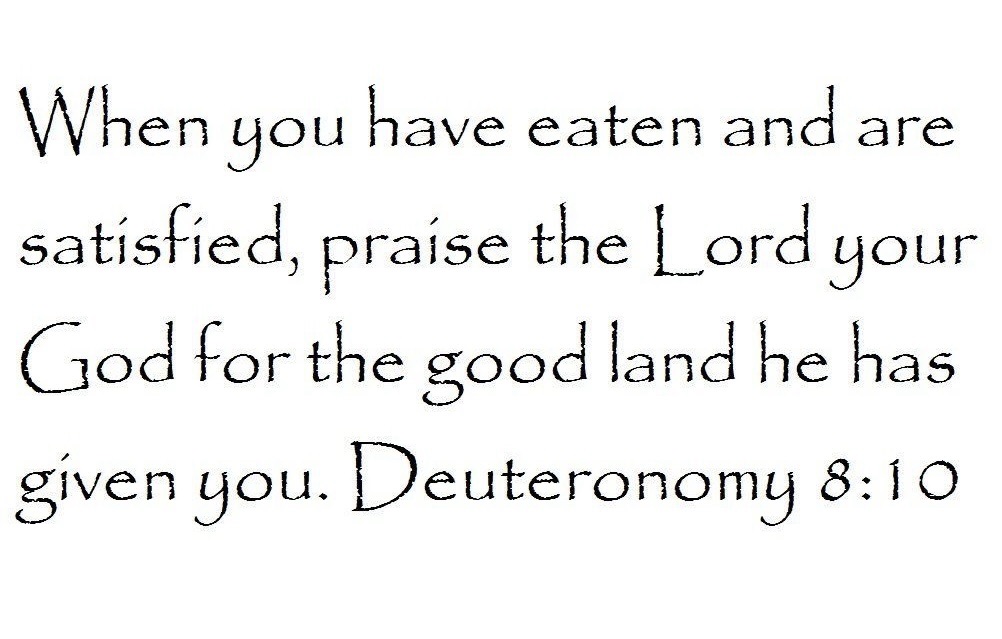
The verse reads, “You shall eat your fill and bless the Lord your God for the good land that he has given you.”

Let’s break it down

“You shall eat your fill”: This part of the verse highlights God’s provision for His people. It signifies that God provides us with sustenance and abundance, ensuring that our physical needs are met.

“Bless the Lord your God”: Here, we are reminded of the importance of acknowledging God as the source of our blessings. It’s a call to express gratitude and praise for His goodness.

“For the good land that he has given you”: This phrase underscores that everything we have, including the land we inhabit, is a gift from God. It inspires us to appreciate our surroundings and the resources we have been blessed with.

Deuteronomy 8:10 offers several significant lessons

Gratitude: Gratitude is a central theme in this verse. It teaches us to be thankful for the abundance in our lives, recognizing that every blessing comes from God.

Awareness of God’s Provision: We are reminded to be aware of God’s constant provision and not take it for granted. It reinforces us to see the hand of God in our daily lives.

Stewardship: Acknowledging that the land is a gift from God calls us to be responsible stewards of the resources He has provided. We must care for the environment and use our blessings wisely.

Spiritual Nourishment: Just as we are nourished physically, we should also nourish our spirits through prayer, worship, and praise to God.

References

The Bible, Deuteronomy 8:10 (New International Version).

The New Oxford Annotated Bible, Augmented Third Edition.

Easton’s Bible Dictionary: https://www.biblestudytools.com/dictionaries/eastons-bible-dictionary/bless.html

🌹Each morning, I receive an inspiring wake-up call from His Excellency, the Rt. Rev. Dr. Selvister Ponnumuthan, the Bishop of Punalur in Kerala, India. Today’s blog post draws inspiration from the verses he shared in his morning message.

Transform Your Life with Rise&Inspire – Be part of our community, where uplifting vibes pave the way to success.

How Can Psalm 86:7 Give You Confidence When You’re in Trouble?

This image of praying hands is a powerful symbol of faith and hope. It is used to illustrate the message of Psalm 86:7, which reminds us that God is always with us and will hear our prayers, even amid our troubles.

In the day of my trouble, I call on you, for you will answer me. (Psalm 86:7)

The Psalmist David, who wrote Psalm 86, was a man who knew a lot about trouble. He was hunted by his enemies, betrayed by his friends, and faced many difficult challenges throughout his life. But even amid his darkest moments, David always turned to God for help.

In Psalm 86:7, David expresses his confidence that God will answer his prayers, even on the day of his trouble. He says, “In the day of my trouble, I call on you, for you will answer me.”

This is a powerful verse that reminds us of God’s faithfulness and love. Even when we are going through difficult times, we can be confident that God is with us and that He will hear our prayers.

Some authentic resources from the Bible and other works that support this argument

Psalm 50:15: “Call on me in the day of trouble; I will deliver you, and you will honour me.”

Jeremiah 33:3: “Call to me and I will answer you and will tell you great and hidden things that you have not known.”

Matthew 7:7-8: “Ask, and it will be given to you; seek, and you will find; knock, and it will be opened to you. For everyone who asks receives, and the one who seeks finds, and to the one who knocks it will be opened.

1 Peter 5:7: “Cast all your anxiety on him because he cares for you.”

Conclusion

The next time you are going through a difficult time, remember Psalm 86:7. Call on God for help and be confident that He will answer your prayer. He is a faithful God who loves us and wants to help us in our time of need.

References

The Holy Bible, New International Version

Commentary on the Old Testament: Psalms, by Derek Kidner

The Message of the Psalms, by James Montgomery Boice

🌹Each morning, I receive an inspiring wake-up call from His Excellency, the Rt. Rev. Dr. Selvister Ponnumuthan, the Bishop of Punalur in Kerala, India. Today’s blog post draws inspiration from the verses he shared in his morning message.

Explore more insights from Rise&Inspire

Does Fear of Others Keep You Trapped in a Dangerous Snare?

Proverbs 29:25 says, “The fear of others lays a snare, but one who trusts in the Lord is secure.” This verse teaches us that when we live in fear of others, we are setting ourselves up for trouble. We are tempted to make decisions that we know are wrong, or we avoid doing the right things because we are afraid of what others will think. But when we trust in the Lord, we are free from this fear. We are confident that He is with us and that He will lead us in the right way.

How fear traps us

Fear traps us in several ways. For example, we are afraid of being rejected, ridiculed, or persecuted by others. This fear leads us to compromise our beliefs and values or to avoid taking risks. We also are afraid of failure, or of not being good enough. This fear paralyzes us and prevents us from reaching our full potential.

How trusting in God sets us free

When we trust in God, we are free from the fear of others. We know that He loves us and that He has a good plan for our lives. We are also confident that He is powerful enough to protect us from harm. This confidence gives us the courage to stand up for what is right, even when it is difficult. It also enables us to take risks and pursue our dreams.

Examples from the Bible

The Bible is full of examples of people who trusted God and overcame their fears. Moses was afraid to lead the Israelites out of Egypt, but God assured him that He would be with him (Exodus 3:12). David was afraid to fight Goliath, but he knew that God was greater than the giant (1 Samuel 17:45-47). Daniel was afraid of being thrown into the lions’ den, but he trusted that God would protect him (Daniel 6:23).

Examples from great books

There are also many examples of people in great books who overcame their fears by trusting in God. In the novel The Chronicles of Narnia: The Lion, the Witch and the Wardrobe, the four Pevensie children are afraid of the White Witch, but they learn to trust Aslan, the lion who represents God. In the novel The Lord of the Rings, Frodo Baggins is afraid of carrying the One Ring to Mordor, but he trusts in the guidance and strength of the fellowship.

Conclusion

Proverbs 29:25 is a timely indication that we should not live in fear of others. When we trust in the Lord, we are free from this fear and we can live our lives to the fullest.

Citations:

Bible: Proverbs 29:25; Exodus 3:12; 1 Samuel 17:45-47; Daniel 6:23

Great books: The Chronicles of Narnia: The Lion, the Witch and the Wardrobe by C.S. Lewis; The Lord of the Rings by J.R.R. Tolkien

Personal reflection

I have experienced the truth of Proverbs 29:25 in my own life. There have been times when I have been afraid of what others will think of me, or of making mistakes. But when I have chosen to trust in God, He has given me the courage to face my fears and to step outside of my comfort zone.

I have also learned that when I make mistakes, God is always there to forgive me and to help me learn from them.

I encourage you to choose to trust in God today. He is faithful and He will always be with you.

🌹Each morning, I receive an inspiring wake-up call from His Excellency, the Rt. Rev. Dr. Selvister Ponnumuthan, the Bishop of Punalur in Kerala, India. Today’s blog post draws inspiration from the verses he shared in his morning message.

Explore more insights at Rise&Inspire

The Wisdom of Ecclesiastes

This image depicts a shepherd leading his flock of sheep. It is a powerful symbol of guidance and protection, which is relevant to the theme of wisdom in Ecclesiastes 12:11. The image also evokes a sense of peace and tranquility, which is something that wisdom can bring to our lives.
Exploring the Meaning of Ecclesiastes 12:11

Introduction

Ecclesiastes, a book in the Old Testament of the Bible, is a treasure trove of philosophical musings and reflections on life, wisdom, and the human experience. Among its verses, Ecclesiastes 12:11 stands out, offering profound insights into the power of wise sayings and the value of collected wisdom.

In this blog post, we will discuss the meaning of this verse, drawing from both biblical resources and great works of literature to explore the significance it holds for our lives today.

Ecclesiastes 12:11 – A Closer Look

Let’s begin by examining the verse itself: “The sayings of the wise are like goads and like nails firmly fixed are the collected sayings that are given by one Shepherd.” What does this cryptic statement mean, and how can we unpack its wisdom?

“The Sayings of the Wise are Like Goads”

The comparison of wise sayings to “goads” is a powerful one. Goads were sharp sticks used by shepherds to prod and guide their sheep. Similarly, the sayings of the wise serve as instruments that nudge us in the right direction, providing guidance, correction, and motivation in our lives. They inspire us to make thoughtful choices and navigate the complexities of life with wisdom.

“Collected Sayings Given by One Shepherd”

The latter part of the verse speaks of “collected sayings” provided by “one Shepherd.” This alludes to the idea that wisdom is often gathered and passed down through generations.

In a broader biblical context, the “Shepherd” can be seen as a metaphor for God or a divine source of wisdom, emphasizing the divine guidance inherent in these collected sayings.

Biblical References

To gain a deeper understanding of the verse, we can look to other passages in the Bible that emphasize the value of wisdom and guidance. Proverbs, in particular, is a book that is rich in wisdom literature and complements the teachings found in Ecclesiastes.

Proverbs 4:7 advises, “The beginning of wisdom is this: Get wisdom, and whatever you get, get insight.” This aligns with the idea that wisdom is a valuable pursuit, and it often comes in the form of sayings or teachings.

Literary Connections

Beyond the Bible, numerous great works of literature echo the sentiments expressed in Ecclesiastes 12:11. For example, the writings of ancient philosophers like Socrates, Plato, and Aristotle contain timeless wisdom that continues to inspire and guide us.

Citations

Ecclesiastes 12:11 (Bible, ESV)

Proverbs 4:7 (Bible, ESV)

The Dialogues of Plato (Selected passages)

The Meditations of Marcus Aurelius (Selected passages)

Conclusion

Ecclesiastes 12:11 reminds us of the enduring value of wise sayings and collected wisdom. Like goads that steer us in the right direction and nails that firmly anchor us, these teachings provide necessary guidance for navigating the complexities of life.

Drawing from biblical and literary sources, we find that the pursuit of wisdom and the appreciation of collected sayings are timeless endeavours that enrich our lives and lead us toward a path of enlightenment and fulfilment.

In our quest for wisdom, let us heed the wisdom of Ecclesiastes and adopt the profound teachings of both the Bible and great literary works, for they offer invaluable insights that stand the test of time.

🌹Each morning, I receive an inspiring wake-up call from His Excellency, the Rt. Rev. Dr. Selvister Ponnumuthan, the Bishop of Punalur in Kerala, India. Today’s blog post draws inspiration from the verses he shared in his morning message.

Explore more insights from Rise&Inspire

Does God Lie — Or Is God Always Truthful?

Does God lie?

The Bible is clear that God does not lie.

In Numbers 23:19, God says through the prophet Balaam, “God is not a human being, that he should lie, or a mortal, that he should change his mind. Has he promised, and will he not do it? Has he spoken, and will he not fulfil it?”

This verse is a powerful indication of God’s trustworthiness. He is not like us, who are often fickle and unreliable. When God makes a promise, he keeps it. When he speaks, he acts.

Other Bible verses that support the truth that God does not lie:

✔️Psalm 31:5: “Into your hands, I commit my spirit; deliver me, Lord, my faithful God.”

✔️Titus 1:2: “In the hope of eternal life, which God, who cannot lie, promised before the beginning of time.”

✔️Hebrews 6:18: “God can’t lie. Because of two unchangeable things in which God can’t lie, we who have fled to him for refuge can have great confidence as we hold fast to the hope that is set before us.”

These verses show us that God is a God of truth and faithfulness. We can trust him to keep his promises, no matter what.

Why is it important that God does not lie?

God’s trustworthiness is important to our relationship with him. If we cannot trust that God will keep his promises, then we cannot have a true and lasting relationship with him.

God’s trustworthiness also gives us hope. When we are facing difficult times, we can know that God is with us and that he will help us through. We can also trust that he will keep his promise of eternal life for those who believe in him.

Conclusion

The Bible is clear that God does not lie. He is a God of truth and faithfulness. We can trust him to keep his promises, no matter what.

🌹Each morning, I receive an inspiring wake-up call from His Excellency, the Rt. Rev. Dr. Selvister Ponnumuthan, the Bishop of Punalur in Kerala, India. Today’s blog post draws inspiration from the verses he shared in his morning message.

Website: Home | Blog | About Us | Contact| Resources

What Does It Really Mean to Pursue Righteousness and Kindness?

Finding Life and Honour

Introduction

Proverbs 21:21 is a timeless verse that holds profound wisdom for us today.

Proverbs 21:21 says, “Whoever pursues righteousness and kindness will find life and honour.”

In this blog post, we will go deep into the meaning of this verse, drawing insights from the Bible and other literary works. We will explore its relevance in our modern world and how it guides us towards a life filled with purpose, honour, and happiness.

The Biblical Perspective

Proverbs, a book of wisdom in the Bible, is attributed to King Solomon. In Proverbs 21:21, Solomon reinforces us to pursue righteousness and kindness. Righteousness, in a biblical context, means living by God’s laws and principles. Kindness is the act of showing compassion and goodwill towards others.

The Rewards of Righteousness: The Bible consistently teaches that righteousness leads to blessings and favour from God. Psalm 34:15 states, “The eyes of the Lord are toward the righteous.” This highlights the idea that when we seek to live righteously, we invite divine guidance and protection into our lives.

Kindness as a Virtue: The Bible also places great emphasis on kindness. Proverbs 11:17 declares, “A man who is kind benefits himself.” Kindness not only benefits others but also brings us personal fulfilment and contentment.

Modern Relevance

In our fast-paced, often divided world, the wisdom of Proverbs 21:21 is more relevant than ever. Teachings from other books that support its enduring significance:

The Power of Integrity (Book: “The Power of Character in Leadership” by Myles Munroe): This book underscores the importance of righteousness and integrity in leadership. It argues that leaders who uphold these values inspire trust, loyalty, and success in their organizations.

Building Relationships (Book: “The Five Love Languages” by Gary Chapman): This bestseller highlights the significance of kindness in building strong, lasting relationships. It asserts that acts of kindness are key to understanding and expressing love to those around us.

Finding Purpose and Meaning (Book: “Man’s Search for Meaning” by Viktor E. Frankl): Frankl’s powerful work, based on his experiences in a concentration camp, emphasizes the search for meaning in life. Pursuing righteousness and kindness provides a profound sense of purpose and fulfilment.

Conclusion

Proverbs 21:21 remains a guiding light in our modern world. It teaches us that by pursuing righteousness and kindness, we not only honour our faith but also find a life filled with purpose and honour.

Drawing from the wisdom of the Bible and insights from other literary works, we are called up that these virtues are timeless and universally valuable.

As we sail through the complexities of today’s world, let us remember the enduring truth of this verse, striving to live in ways that reflect righteousness and kindness.

In doing so, we discover the abundant life and honour that Proverbs 21:21 promises.

Citations

The Holy Bible, English Standard Version.

Munroe, Myles. “The Power of Character in Leadership.”

Chapman, Gary. “The Five Love Languages.”

Frankl, Viktor E. “Man’s Search for Meaning.”

🌹Each morning, I receive an inspiring wake-up call from His Excellency, the Rt. Rev. Dr. Selvister Ponnumuthan, the Bishop of Punalur in Kerala, India. Today’s blog post draws inspiration from the verses he shared in his morning message.

Discover more insights from Rise&Inspire

Are You Throwing Away Your Confidence? What Hebrews 10:35 Really Means

Introduction

Hebrews 10:35 is a verse that resonates with many, regardless of their religious beliefs. Its message is clear and timeless: “Therefore, do not throw away your confidence, which has a great reward.”

In this blog post, we will go into the profound wisdom contained within this verse, drawing insights from the Bible itself and various other sources to understand the significance of confidence and the rewards it brings.

The Biblical Perspective

To understand the full context of Hebrews 10:35, we must look at the broader message of the book of Hebrews. The author of Hebrews is exhorting early Christians not to abandon their faith, even in the face of adversity. Confidence in God’s promises and the salvation offered through Jesus Christ is at the core of this message. The author recalls the readers of their endurance in the past and urges them to maintain their confidence.

Faith and Endurance: Hebrews 10:35 encourages believers to persevere in their faith. This theme of endurance is traced back to the stories of biblical figures like Abraham, Noah, and Moses, who faced great challenges but ultimately received God’s promises through their unwavering confidence.

The Great Reward: The verse also speaks of a “great reward.” This reward refers to the blessings and eternal life promised to those who remain faithful. It’s a reminder that confidence in God’s promises leads to ultimate fulfilment.

The Psychological Perspective

Confidence is not only a spiritual concept but also a psychological one. Several psychological studies and self-help books emphasize the importance of confidence in achieving success and personal growth.

Self-Efficacy: Psychologist Albert Bandura’s concept of self-efficacy aligns with Hebrews 10:35. It suggests that people who believe in their ability to achieve their goals are more likely to overcome obstacles and reach them.

Positive Thinking: Books like “The Power of Positive Thinking” by Norman Vincent Peale stress the role of confidence in shaping one’s reality. Maintaining a positive outlook leads to greater success and happiness.

The Practical Application

Hebrews 10:35 not only inspires us spiritually and psychologically but also offers practical lessons for daily life.

Resilience: Confidence helps us bounce back from setbacks and face challenges with resilience. It encourages us not to give up when times get tough.

Goal Setting: Setting and pursuing goals with confidence increases our chances of achieving them. It’s a reminder that belief in oneself is an important factor in reaching one’s aspirations.

Conclusion

Hebrews 10:35 acts as a powerful reminder of the importance of confidence, both in our spiritual journey and in our everyday lives. As we face the trials of life, let us remember these timeless words of encouragement: “Therefore, do not throw away your confidence, which has a great reward.”

References

The Holy Bible, Book of Hebrews, Chapter 10, Verse 35.

Bandura, A. (1997). Self-efficacy: The exercise of control. W.H. Freeman.

Peale, N. V. (1952). The Power of Positive Thinking. Prentice Hall.

🌹Each morning, I receive an inspiring wake-up call from His Excellency, the Rt. Rev. Dr. Selvister Ponnumuthan, the Bishop of Punalur in Kerala, India. Today’s blog post draws inspiration from the verses he shared in his morning message.

Explore more insights from Rise&Inspire

Why Is Honoring Parents a Universal Value?

Introduction

In the Book of Sirach, chapter 3, verse 11, we find a profound insight into the importance of honouring one’s parents. This verse carries a timeless message that transcends religious boundaries and holds valuable lessons for all.

In this blog post, we will explore the significance of this verse and its implications, drawing from the wisdom found not only in the Bible but also in other literary works.

The Glory of One’s Father

The verse begins with the statement, “The glory of one’s father is one’s glory.” This declaration emphasizes the idea that a child’s actions and conduct reflect upon their parents. This concept is not unique to Sirach but is echoed in various cultures and belief systems. It underscores the idea that children are not isolated persons but are connected to their family’s legacy.

Proverbs 17:6 (Bible) – “Children’s children are a crown to the aged, and parents are the pride of their children.” This verse reinforces the reciprocal nature of honour between generations.

Confucian Philosophy – Confucius, a Chinese philosopher, stressed filial piety as a cornerstone of ethics. He believed that one’s actions should bring honour to their family and ancestors.

‘To Kill a Mockingbird’ by Harper Lee – This classic novel illustrates the theme of respecting one’s family legacy, as Scout Finch learns valuable lessons about her father, Atticus Finch.

Respecting Their Mother

The second part of the verse states, “It is a disgrace for children not to respect their mother.” This underscores the equal importance of respecting both parents, particularly the mother. Mothers often play a significant role in a child’s upbringing, and their contributions should not be overlooked.

Ephesians 6:2-3 (Bible) – “Honor your father and mother—which is the first commandment with a promise—so that it may go well with you and that you may enjoy long life on the earth.” This biblical passage highlights the significance of honouring both parents.

‘Little Women’ by Louisa May Alcott – This classic novel portrays the strong bond between the four March sisters and their mother, Marmee, emphasizing the importance of maternal respect and guidance.

Conclusion

Sirach 3:11 provides a timeless message about the importance of honouring one’s parents, acknowledging that their glory is intertwined with our actions.

This verse reminds us that respect for both our father and mother is not only a moral duty but also a source of wisdom and guidance for a fulfilling life.

By exploring parallel ideas in the Bible and other literary works, we gain a deeper understanding of the universal value of honouring parents.

Citations

The Holy Bible (New International Version)

‘To Kill a Mockingbird’ by Harper Lee

‘Little Women’ by Louisa May Alcott

Confucian texts on filial piety

Please note that the Bible references are based on the New International Version (NIV).

Tips for honouring your parents:

Spend time with them. Make an effort to visit your parents regularly or call them on the phone. Even if you live far away, you can still stay in touch through email or social media.

Listen to them. When you are with your parents, make an effort to listen to what they have to say. Ask them about their lives and their interests.

Help them out. Offer to help your parents with chores or errands. If they need help with anything else, such as transportation or medical appointments, be there for them.

Be respectful. Even if you disagree with your parents, it is important to be respectful of their opinions. Avoid arguing with them or talking back to them.

Forgive them. Everyone makes mistakes. If your parents have done something to hurt you, try to forgive them. Holding on to anger and resentment will only hurt you in the long run.

🌹Each morning, I receive an inspiring wake-up call from His Excellency, the Rt. Rev. Dr. Selvister Ponnumuthan, the Bishop of Punalur in Kerala, India. Today’s blog post draws inspiration from the verses he shared in his morning message.

Transform Your Life with Rise&Inspire – Be part of our community, where uplifting vibes pave the way to success.

Website: Home | Blog | About Us | Contact| Resources

Why Does the Bible Warn Against Following the Majority in Wrongdoing?

In a world often filled with misinformation and moral ambiguity, the timeless wisdom of the Bible continues to guide us toward righteousness and justice.

Exodus 23:1-2 delivers a profound message that resonates through the ages: “You shall not spread a false report. You shall not join hands with the wicked to act as a malicious witness. You shall not follow a majority in wrongdoing; when you bear witness in a lawsuit, you shall not side with the majority so as to pervert Justice.”

This passage from the Book of Exodus lays the foundation for a moral compass that encourages us to speak the truth, resist the temptation to conspire with the wicked and avoid being swayed by the majority when it leads down a path of wrongdoing.

Let’s go deeper into the wisdom contained in these verses and explore how they inspire us in our daily lives.

1. Speaking Truth

The commandment, “You shall not spread a false report,” shows us the fundamental importance of truth-telling. The Bible consistently emphasizes the value of honesty and integrity. In Proverbs 12:22, it is stated, “The LORD detests lying lips, but he delights in people who are trustworthy.” This affirms the idea that speaking the truth is not merely a virtue but a divine imperative.

2. Avoiding Complicity in Wickedness

The injunction, “You shall not join hands with the wicked to act as a malicious witness,” highlights the danger of becoming complicit in wrongdoing. It calls upon us to resist the allure of participating in unjust actions or bearing false witness against others. The Book of Psalms echoes this sentiment in Psalm 1:1, stating, “Blessed is the one who does not walk in step with the wicked or stand in the way that sinners take.”

3. Rejecting the Majority When Injustice Prevails

Perhaps one of the most challenging aspects of these verses is the commandment, “You shall not follow a majority in wrongdoing.” It tells us that justice is not determined by popular opinion. The Bible underscores this in Exodus and also in Leviticus 19:15, which declares, “You shall do no injustice in court. You shall not be partial to the poor or defer to the great, but in righteousness shall you judge your neighbour.”

In a world where peer pressure and conformity often cloud our moral judgment, these words from the Bible encourage us to stand firm for justice, even when it means going against the prevailing tide of opinion.

Conclusion

Exodus 23:1-2 stands as a timeless reminder that our commitment to truth and justice should remain unwavering, regardless of the circumstances. It calls upon us to be beacons of integrity in a world where falsehoods and injustice abound.

As we reflect on these verses, let us draw inspiration from the wisdom of the Bible and other great books that reinforce the importance of upholding truth and justice in our lives. Let us be guided by the divine commandments and continue to seek the path of righteousness, even when it seems unpopular.

References

The Holy Bible, English Standard Version

Proverbs 12:22

Psalms 1:1

Leviticus 19:15

May these teachings guide us in our pursuit of a just and virtuous life.

🌹Each morning, I receive an inspiring wake-up call from His Excellency, the Rt. Rev. Dr. Selvister Ponnumuthan, the Bishop of Punalur in Kerala, India. Today’s blog post draws inspiration from the verses he shared in his morning message.

Explore more insights from Rise&Inspire

Website: Home | Blog | About Us | Contact| Resources

Beyond Human Understanding

God’s Wisdom and Strength

Introduction

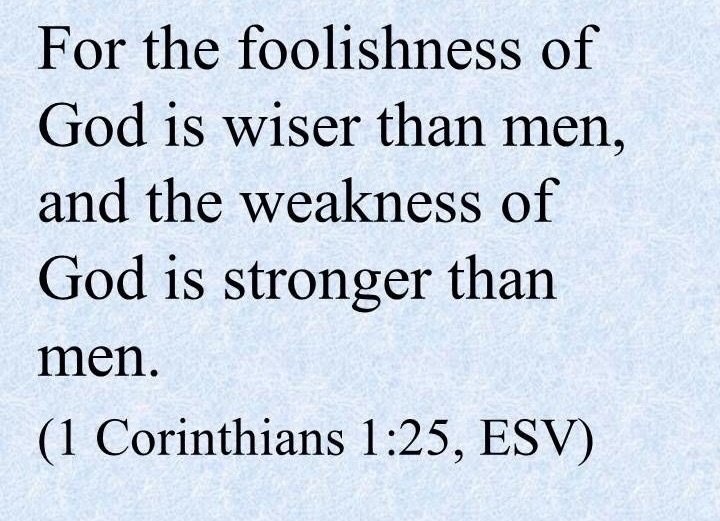
In the realm of spirituality, there exist profound paradoxes that challenge our human understanding. One such paradox is beautifully articulated in 1 Corinthians 1:25, “For the foolishness of God is wiser than mankind, and the weakness of God is stronger than mankind.” This verse, penned by the Apostle Paul, invites us to contemplate the depths of divine wisdom and strength, which often stand in stark contrast to our human perspectives.

In this blog post, we will explore the meaning of this verse, drawing insights from the Bible and other great literary works that shed light on the profound truths it conveys.

Understanding the Verse

At first glance, the notion that God’s foolishness could surpass human wisdom or His weakness could outshine human strength might seem perplexing. However, when we look into the context of this verse and its implications, we discover a wealth of spiritual wisdom.

Divine Wisdom vs. Human Wisdom

The Bible, in various passages, emphasizes the limits of human wisdom compared to God’s infinite understanding. Proverbs 2:6 states, “For the LORD gives wisdom; from his mouth come knowledge and understanding.” Here, we see that God is the ultimate source of wisdom, transcending human intellect.

Literary greats like C.S. Lewis have also explored this theme. In “Mere Christianity,” Lewis writes about the folly of human pride in intellect, contrasting it with the humility required to embrace God’s wisdom.

Divine Strength vs. Human Strength

The Bible frequently portrays God’s strength in terms of overcoming seemingly insurmountable challenges. One of the most iconic examples is the story of David and Goliath (1 Samuel 17). David’s victory over the giant Goliath illustrates how God’s strength operates through the weak and seemingly inadequate.

In John Milton’s epic poem “Paradise Lost,” the character of Satan, despite his immense power, is ultimately defeated by the divine strength of God, underscoring the idea that God’s strength transcends all.

Inspiration from the Verse

1 Corinthians 1:25 acts as a powerful reminder that, in our human limitations, we often fail to grasp the depth of God’s wisdom and strength. It inspires us to embrace humility, acknowledging our finite understanding and limited power in the face of the divine.

Conclusion

In a world that often glorifies human wisdom and strength, 1 Corinthians 1:25 invites us to shift our perspective. It prompts us that God’s foolishness surpasses our wisdom, and His weakness eclipses our strength. By seeking wisdom and strength from the Divine, we can navigate life’s challenges with humility, knowing that in our weakness, we can find the strength of God.

This verse calls us to a deeper understanding of the profound mysteries of faith and inspires us to trust in the wisdom and strength that transcend human comprehension.

Citations

The Holy Bible (New International Version)

“Mere Christianity” by C.S. Lewis

“Paradise Lost” by John Milton

🌷Every morning, I am blessed with an inspiring wake-up call from His Excellency, the Rt. Rev. Dr. Selvister Ponnumuthan, the Bishop of Punalur in Kerala, India. Today’s blog post draws inspiration from the beautiful verses he shared in his morning message.

Radiate Success with Rise&Inspire– Join our community and immerse yourself in the uplifting power of positivity.

The Bread of the Needy

A child holding a loaf of 🍞
A Reflection on Sirach 34:25-27 in Today’s World

Introduction:

The Bible is a rich source of wisdom and guidance for ethical living. One passage that stands out in its relevance to today’s world is Sirach 34:25-27, which warns against the grave sin of depriving the needy of their due.

Context of Sirach 34:25-27:

Sirach is a book of the Old Testament that is part of the Apocrypha, a collection of books that are not included in the Jewish canon but are considered to be valuable for their moral and spiritual teachings. Sirach was written in the second century BC and is attributed to a wise man named Ben Sira.

The passage in Sirach 34:25-27 is part of a larger section that offers guidance on ethical living. Ben Sira emphasizes the importance of compassion and social justice, and he warns against the dangers of greed and exploitation.

Significance of Sirach 34:25-27:

The passage in Sirach 34:25-27 is significant because it highlights the importance of caring for the needy. Ben Sira compares depriving the poor of their due to shedding blood. This powerful metaphor underscores the gravity of this sin and its devastating consequences.

Biblical Corroboration:

The theme of caring for the needy is not exclusive to Sirach. Throughout the Bible, numerous passages emphasize the importance of charity and empathy. In Matthew 25:35-36, Jesus himself exhorts us to feed the hungry and clothe the naked, for in doing so, we serve Him. This echoes the sentiments expressed in Sirach, reinforcing the enduring message of social responsibility.

Literary Echoes:

Great works of literature beyond the Bible have also explored the ethical implications of neglecting the needs of the impoverished. Charles Dickens’s “Oliver Twist” vividly portrays the struggles of an orphan in 19th-century England, shedding light on the harsh realities faced by the poor and the dire consequences of indifference. Dickens’ work, like Sirach’s, urges us to recognize the humanity in all people, regardless of their circumstances.

Relevance in Today’s World:

The message of Sirach 34:25-27 remains profoundly relevant in the contemporary world. Despite advances in society, poverty and inequality persist. Depriving the needy of their necessities, be it food, shelter, or fair wages, has real-life consequences. It perpetuates cycles of suffering, robbing people of their dignity and potential.

In an era marked by global challenges, such as economic disparities, climate change, and the ongoing refugee crisis, Sirach’s call to compassion takes on added urgency. As humans and as a society, we are called upon to reflect on our actions and policies, ensuring that we do not, in any way, deprive our neighbours and employees of their livelihood.

Specific Examples of the Relevance of Sirach 34:25-27 in Today’s World:

The global hunger crisis: According to the World Food Programme, over 800 million people do not have enough to eat. This includes millions of children who are at risk of malnutrition and stunting.

The exploitation of workers in developing countries: Many workers in developing countries are forced to work long hours for low wages in unsafe conditions. This includes child labour and forced labour.

The plight of refugees and displaced people: Millions of people around the world have been forced to flee their homes due to war, violence, and persecution. These refugees and displaced people often live in poverty and lack access to necessities such as food, water, and shelter.

Conclusion:

Sirach 34:25-27 offers a timeless reminder of our moral obligation to care for the needy and justly compensate the labourer. This message finds resonance not only in the Bible but also in the works of renowned authors like Charles Dickens.

In today’s world, where social issues persist, this verse calls us to examine our actions and policies, fostering a more compassionate and equitable society.

Call to Action:

What can we do to respond to the call of Sirach 34:25-27?

Donate to charities that are working to help the poor and needy.

Volunteer your time to serve those in need.

Advocate for policies that promote social justice and economic equality.

Educate yourself and others about the global hunger crisis, the exploitation of workers, and the plight of refugees and displaced people.

Citations:

Sirach 34:25-27, New Revised Standard Version (NRSV)

Matthew 25:35-36, New International Version (NIV)

Charles Dickens, “Oliver Twist,” 1837

The Holy Bible, various translations

🌹Each morning, I receive an inspiring wake-up call from His Excellency, the Rt. Rev. Dr. Selvister Ponnumuthan, the Bishop of Punalur in Kerala, India. Today’s blog post draws inspiration from the verses he shared in his morning message.

Explore more insights from Rise&Inspire

What Does Proverbs 13:24 Really Say About Parenting?

The Wisdom of Discipline: Exploring Proverbs 13:24

This image depicts a loving and nurturing parent-child relationship, which is important for effective discipline. The image also conveys the importance of education and teaching in child-rearing.

Introduction:

In a world filled with diverse opinions on parenting and discipline, the age-old wisdom found in Proverbs 13:24 continues to stand the test of time. This verse states, “Those who spare the rod hate their children, but those who love them are diligent to discipline them.”

In this blog post, we will examine the meaning and significance of this verse, drawing insights from the Bible and other authoritative books. We will also discuss the relevance of this verse in today’s society.

Understanding Proverbs 13:24:

The verse from Proverbs emphasizes the importance of discipline in child-rearing. To comprehend its meaning fully, let’s break it down:

“Those who spare the rod hate their children”: This part suggests that avoiding discipline or correction is detrimental to a child’s well-being. It doesn’t mean using physical force but rather addressing behaviour with appropriate guidance and correction.

“but those who love them are diligent to discipline them”: This portion highlights that true love for one’s children involves proactive and consistent discipline. Discipline here refers to teaching and guiding children to make responsible choices.

Biblical Perspective:

To gain a deeper understanding of this verse, it’s important to explore the broader context of biblical teachings on parenting. Proverbs is filled with verses emphasizing the value of discipline, such as Proverbs 22:6, which advises, “Train up a child in the way he should go, even when he is old, he will not depart from it.” The Bible underscores the role of parents in shaping the character and values of their children.

From Other sources:

Numerous authoritative books on child psychology and parenting align with the principles found in Proverbs 13:24. For example, Dr. James Dobson’s “The Strong-Willed Child” discusses the importance of setting boundaries and providing consistent discipline to raise well-adjusted children. Similarly, “Parenting with Love and Logic” by Foster Cline and Charles Fay advocates for teaching children responsibility through choices and consequences.

Relevance in Today’s Society:

In our modern world, the relevance of Proverbs 13:24 remains undeniable. Children need guidance and boundaries to thrive emotionally, socially, and morally. Discipline, when administered with love and wisdom, helps children develop self-control and responsible decision-making skills.

It’s important to adapt discipline methods to suit contemporary parenting styles, avoiding physical punishment and adapting positive discipline strategies. This includes communication, time-outs, and natural consequences, all designed to teach rather than punish.

Conclusion:

Proverbs 13:24 offers timeless wisdom on parenting and discipline. The verse makes us think that love for our children involves diligently guiding them towards becoming responsible and moral persons.

🌹Each morning, I receive an inspiring wake-up call from His Excellency, the Rt. Rev. Dr. Selvister Ponnumuthan, the Bishop of Punalur in Kerala, India. Today’s blog post draws inspiration from the verses he shared in his morning message.

Website: Home | Blog | About Us | Contact| Resources

The Virtue of Compassion and Integrity: Insights from Sirach

The Wisdom of Sirach: A Timeless Lesson in Neighborly Virtue

This image captures the spirit of the teachings of Sirach 29:2-3, which emphasize the importance of lending a helping hand to our neighbours and building strong communities based on compassion, generosity, and integrity.

In today’s fast-paced and interconnected world, it’s easy to lose sight of the timeless principles that underpin human relationships. The Book of Sirach, also known as Ecclesiasticus, offers a treasure trove of wisdom, including a powerful message about the significance of lending to your neighbour in their time of need and the importance of repaying debts when they fall due.

Let’s examine Sirach 29:2-3 and explore the enduring relevance of this ancient teaching.

The Virtue of Lending in Times of Need

Sirach 29:2 begins with the counsel to “lend to your neighbour in his time of need.” This simple yet profound guidance emphasizes the value of compassion and generosity in our interactions with others. It reminds us that we should not turn a blind eye to the struggles of those around us. Instead, we should extend a helping hand when it is within our means to do so.

In a world filled with challenges and uncertainties, this principle encourages us to cultivate empathy and selflessness. When we lend to our neighbours in their times of need, we not only provide tangible assistance but also create bonds of trust and goodwill. Acts of kindness like these have a ripple effect, fostering a sense of community and shared responsibility.

The Virtue of Honoring Promises

The second part of the verse, Sirach 29:3, focuses on the importance of keeping promises and being honest with our neighbours. This fundamental principle underscores the value of integrity and reliability in our relationships. When we make commitments, whether they involve financial obligations or personal pledges, honouring them demonstrates our respect for others.

In a world where trust is sometimes in short supply, upholding our promises becomes a beacon of integrity. When we repay loans promptly and keep our word, we build a reputation for dependability and honesty. Such qualities not only benefit our relationships but also contribute to the overall well-being of society.

Finding Fulfillment in Virtuous Acts

The closing phrase of the verse, “and on every occasion, you will find what you need,” encapsulates the profound truth that resonates through these teachings. When we embody the virtues of compassion, generosity, and integrity in our interactions with our neighbours, we create a virtuous cycle of reciprocity.

By lending to those in need and repaying our debts faithfully, we foster an atmosphere of trust and mutual support. In such an environment, we are more likely to receive help when we require it ourselves. However, the rewards extend beyond mere reciprocity; they encompass a deeper sense of fulfilment and purpose.

Incorporating the Teachings of Sirach Today

The teachings of Sirach 29:2-3 offer timeless guidance that transcends the boundaries of time and culture. They make us think that, even in the modern world, values such as kindness, honesty, and empathy are the cornerstones of harmonious relationships and thriving communities.

References:

• Sirach 29:2-3 (New International Version)

• The Book of Sirach (Ecclesiasticus)

• The Wisdom of Sirach: An Old Testament Book – Britannica

🌹Each morning, I receive an inspiring wake-up call from His Excellency, the Rt. Rev. Dr. Selvister Ponnumuthan, the Bishop of Punalur in Kerala, India. Today’s blog post draws inspiration from the verses he shared in his morning message.

How Does God Reveal Mysteries to Those Who Trust Him?

“But there is a God in heaven who reveals mysteries” (Daniel 2:28a):

In the book of Daniel, we find a fascinating story about a king who had a dream that he couldn’t remember. He was so frustrated that he threatened to kill all of his wise men if they couldn’t tell him what his dream was and what it meant.

Daniel was one of the wise men, but he was also a man of God. He knew that God was the only one who could reveal the mystery of the king’s dream. So, Daniel and his friends prayed to God for help.

That night, God revealed the dream to Daniel. Daniel then went to the king and told him the dream and its interpretation. The king was so impressed that he made Daniel a ruler of his kingdom.

The story of Daniel and the king’s dream teaches us an important lesson: God is the revealer of mysteries. He knows everything, and He is willing to reveal His secrets to those who trust Him.

What are the ways that God reveals mysteries to us today:

Through the Bible. The Bible is God’s Word, and it contains many mysteries. But as we study the Bible and ask God for wisdom, He will reveal His mysteries to us.

Through prayer. When we pray, we are communicating with God. And as we pray, He reveals His mysteries to us.

Through the Holy Spirit. The Holy Spirit is God’s presence in our lives. And as we walk with the Holy Spirit, He reveals God’s mysteries to us.

God reveals mysteries to us for a reason. He wants us to know Him better. He wants us to understand His plan for our lives. And He wants us to use our knowledge of His mysteries to help others.

Some examples of how God has revealed mysteries to people in the Bible

To Joseph. Joseph was sold into slavery by his brothers. But God had a plan for Joseph’s life. God revealed His plan to Joseph through dreams. And as Joseph followed God’s plan, he was eventually promoted to become the second most powerful man in Egypt. (See Genesis 37-50.)

To Moses. Moses was a shepherd who was tending his flock one day when he saw a burning bush. God spoke to Moses from the bush and revealed His plan to deliver the Israelites from slavery in Egypt. Moses followed God’s plan, and God used him to lead the Israelites out of Egypt and into the Promised Land. (See Exodus 3-14.)

To David. David was a young shepherd boy when he was anointed to be the next king of Israel. David faced many challenges in his life, but God was always with him. God revealed His mysteries to David, and David used his knowledge of God’s mysteries to lead Israel to victory over their enemies. (See 1 Samuel 16-31.)

God is still revealing mysteries to people today. If you are willing to trust Him, He will reveal His mysteries to you too.

Conclusion

The verse “But there is a God in heaven who reveals mysteries” (Daniel 2:28a) is a powerful reminder that God knows everything and that He is willing to reveal His secrets to those who trust Him. He reveals His mysteries to us through the Bible, through prayer, and the Holy Spirit. He reveals His mysteries to us for a reason: He wants us to know Him better, to understand His plan for our lives, and to use our knowledge of His mysteries to help others.

Sources

The Bible

Daniel 2:28a

Warren W. Wiersbe, Be Encouraged: 365 Devotions from the Psalms (Baker Books, 2014), 142.

John MacArthur, The MacArthur Study Bible (Thomas Nelson, 2006), 1028.

Charles R. Swindoll, Daniel: The Man Who Dared to Trust God (Word Publishing, 2001), 61-62.

I hope this blog post has inspired you to trust God to reveal His mysteries to you.

He is a good God, and He wants to give you good things. So, pray to Him and ask Him to reveal His mysteries to you. You won’t be disappointed.

🌹Each morning, I receive an inspiring wake-up call from His Excellency, the Rt. Rev. Dr. Selvister Ponnumuthan, the Bishop of Punalur in Kerala, India. Today’s blog post draws inspiration from the verses he shared in his morning message.

Explore more insights at Rise&Inspire