Comprehensive Considerations Regarding Prostatectomy and Prostate Health

Prostatectomy is the surgical removal of the prostate gland. It is a surgery with significant implications for a man’s physical and sexual health.

Implications of Prostatectomy

Fertility and sexual function: Prostate removal leads to dry orgasms and infertility due to the absence of seminal fluid. Preserving sperm through cryopreservation before surgery is an option for future assisted reproductive techniques. The erectile function also be impacted, especially in radical prostatectomies. Nerve-sparing techniques aim to retain function, but recovery varies, and treatments may be required.

Urinary changes: Removal of the prostate lead to urinary changes due to altered urethral structure. Urinary incontinence, both stress and urge types, result from prostatectomy.

PSA levels and monitoring: Post-surgery, PSA levels decrease significantly as there is no prostate tissue-producing PSA. Elevated PSA levels post-surgery indicate residual tissue or cancer recurrence, necessitating regular monitoring.

Advantages of Prostatectomy

Effective cancer treatment: Prostatectomy fully remove cancerous tissue, potentially curing localized prostate cancer.

Precise assessment: Tissue examination after removal aids in determining cancer aggressiveness, guiding further treatment choices.

Long-term monitoring: PSA level drop post-surgery aids in early recurrence detection through regular monitoring.

Relief from symptoms: Enlarged prostate symptoms like difficulty urinating, frequent urination, and urinary retention alleviated.

Personal choice: Based on preferences, medical history, and the need for definitive treatment, people opt for prostatectomy.

Decisions and Considerations

While prostatectomy holds advantages, it is accompanied by risks and side effects. Therefore, it is important to carefully consider all of the options before making a decision.

No cancer present: Without prostate cancer, prostate removal is not generally advisable due to the gland’s role in the reproductive and urinary systems. The surgery’s major nature and associated changes make it recommended primarily for cancer treatment or compelling medical reasons.

Enlarged prostate relief: Prostatectomy address BPH symptoms but with variability in symptom relief. Side effects like sexual function changes and urinary incontinence should be considered. Less invasive alternatives exist*, considering individual symptoms, health, and preferences.

Consultation and Understanding

The decision to undergo prostatectomy requires thorough discussions with healthcare professionals. Every individual’s situation is unique.

A comprehensive understanding of benefits, risks, and alternatives is vital for informed choices regarding prostate health and treatment.

*Some examples of less invasive alternatives for managing BPH include:

Medications: Medications like alpha-blockers and 5-alpha reductase inhibitors are commonly prescribed to manage BPH symptoms by relaxing prostate and bladder muscles or shrinking the prostate gland.

Minimally Invasive Procedures:

Transurethral Resection of the Prostate (TURP): A thin tube is inserted through the urethra to remove excess prostate tissue. It’s a common surgical option with a shorter recovery time compared to open surgery.

Laser Therapies: Various laser techniques, such as photoselective vaporization (PVP) and holmium laser enucleation of the prostate (HoLEP), are used to vaporize or remove obstructing prostate tissue.

UroLift: This procedure involves inserting small implants to lift and hold the enlarged prostate tissue away from the urethra, relieving urinary symptoms.

Water Vapor Therapy (Rezūm): This therapy uses steam to treat BPH by shrinking excess prostate tissue.

Prostate Artery Embolization (PAE): A minimally invasive procedure that reduces blood supply to the prostate, leading to its shrinkage.

Prostatectomy

References

“The Prostate Book: Sound Advice on Symptoms and Treatment” by Stephen N. Rous

“The Mayo Clinic Guide to Prostate Health” by Mayo Clinic

“A Man’s Guide to Healthy Aging: Stay Smart, Strong, and Active” by Edward H. Thompson Jr. and Lenard W. Kaye

“Dr Patrick Walsh’s Guide to Surviving Prostate Cancer” by Patrick C. Walsh and Janet Farrar Worthington

“The ABCs of Prostate Cancer: A Newly Diagnosed Patient’s Guide” by Joseph P. Banno and Stephen Strum

Explore more insights from Rise&Inspire

How to Infuse Enthusiasm into Your Life

To infuse enthusiasm into ourselves, we need to follow these steps:

Set clear goals, maintain positivity, visualize success, break tasks into smaller steps, learn continuously, surround ourselves with positivity, engage in activities we love, stay active, practice mindfulness, celebrate progress, challenge ourselves, use positive self-talk, stay curious, help others, limit negative influences, maintain a healthy lifestyle, and regularly reflect on our goals and progress.

It is important to remember that enthusiasm is not something that we are born with. It is something that we can cultivate and develop over time.

By following these tips, we can create a positive and enthusiastic mindset that will help us achieve our goals and live our best lives.

Following are some tips that I would add:

Take care of your physical and mental health. When we are feeling physically and mentally healthy, we are more likely to be enthusiastic. This means getting enough sleep, eating healthy foods, exercising regularly, and managing stress.

Spend time with positive people. The people we spend time with can have a big impact on our enthusiasm levels. Surround yourself with people who are positive, supportive, and encouraging.

Do things that make you happy. When we do things that we enjoy, it makes us feel good and more enthusiastic about life. Make time for activities that you love, whether it is spending time with loved ones, reading, playing sports, or listening to music.

Set realistic goals. When we set goals that are too ambitious, it can lead to discouragement and a lack of enthusiasm. Set goals that are challenging but achievable.

Celebrate your successes. When we achieve our goals, it is important to take the time to celebrate our successes. This will help us stay motivated and enthusiastic.

I hope these tips help you infuse enthusiasm into your life.

Transform Your Life with Rise&Inspire

Challenge Comfort, Welcome Growth.

Rise and Inspire: A Blog for Motivation, Positivity, and Personal Growth

riseandinspire.business.blog/rise-and-inspire-a-blog-for-motivation-positivity-and-personal-growth/

What Are the Key Steps for Emergency Preparedness at Home?

Create an emergency preparedness plan.

Introduction

In an unpredictable world, it is important to be prepared for the unexpected. A well-thought-out emergency preparedness plan helps you and your loved ones stay safe in the event of a natural disaster, a medical emergency, or any other unforeseen situation.

The Key Elements of an Emergency Preparedness Plan

An effective emergency preparedness plan should include the following key elements:

Assessment of potential risks: Identify the types of emergencies that are most likely to occur in your area. This will help you determine what supplies and preparations you need to make.

Communication plan: Establish a reliable way to communicate with your family, friends, and neighbours in the event of an emergency. This includes a designated meeting place, a communication app, or a text messaging group.

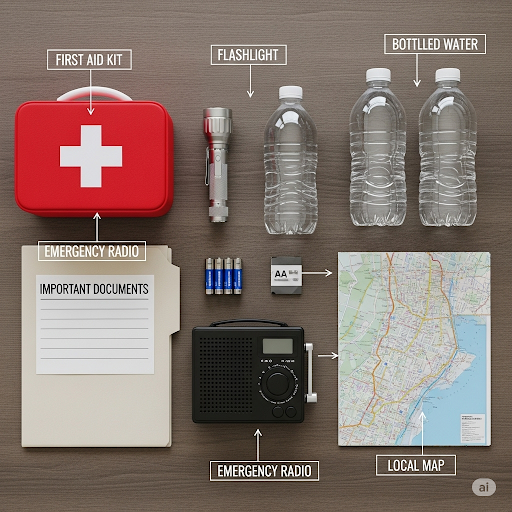
Emergency kit: A well-stocked emergency kit should include essential supplies such as food, water, first aid supplies, and other items that you need in the event of an emergency.

Plan for shelter and evacuation: Know where you will go and what you will do in the event of an evacuation. This includes having a plan for staying in your home, evacuating to a safe location, or sheltering in place.

Consideration of special needs: If you or any family members have special needs, such as medical or mobility issues, make sure your plan takes those into account.

Staying informed: Stay updated on local news and emergency alerts so that you are aware of any potential threats.

Practising drills: Regularly practice emergency scenarios with your family so that everyone knows what to do in the event of an emergency.

Securing your home: Take steps to secure your home against potential hazards, such as installing smoke detectors and carbon monoxide detectors.

Documenting important information: Create a list of important contacts, medical information, and insurance policies. Keep this information in a safe place, both physically and digitally.

Reviewing and updating your plan: Your emergency preparedness plan should be a living document that you regularly review and update based on changes in your circumstances.

Conclusion

By following these key elements, you can create an effective emergency preparedness plan that will help you and your loved ones stay safe in the event of an emergency.

Tips to follow

In addition to the key elements listed above, the following are a few tips for creating an effective emergency preparedness plan:

Make sure your plan is tailored to your specific needs and circumstances.

Be realistic about your resources and capabilities.

Don’t forget to include pets in your plan.

Practice your plan regularly so that it becomes second nature.

Keep your plan updated as your circumstances change.

This image shows the importance of knowing your evacuation routes in case of an emergency.

Remember, an emergency preparedness plan is not a guarantee of safety, but it helps you increase your chances of surviving and recovering from an emergency.

Explore more insights from Rise&Inspire
Exploring the Annual High-End Smartphone Upgrade Cycle: Is It Necessary?

In today’s fast-paced tech landscape, the allure of owning the latest high-end smartphone is undeniable. Phone manufacturers invest heavily in marketing, fueling the perception that staying ahead requires a yearly upgrade. Fear of missing out (FOMO) and the promise of technological advancements further intensify the push. However, experts widely agree that the urge to upgrade every year is not practical or advisable.

Despite the marketing blitz, the reality is that many people are comfortably extending the lifespan of their high-end phones beyond a single year. If your current device is functioning optimally, there’s no urgency to replace it. Surprisingly, the improvements between new and older models are often subtle, making the supposed leap less significant than anticipated.

One must also consider the rising cost of flagship phones. Frequent upgrades strain budgets, leading to a financial burden that might not justify the relatively minor improvements gained. Moreover, for environmentally conscious consumers, extending the lifecycle of a smartphone helps reduce the considerable environmental impact associated with production.

The infographic shows that there are both pros and cons to upgrading your high-end phone every year. The pros include getting the latest features, improved performance, and a longer battery life. The cons include the cost of upgrading, the environmental impact, and the fact that you do not need the latest features.

Finally, the decision to embrace the annual upgrade cycle is a personal one. Balancing the desire for the latest features with practicality, budget constraints, and environmental concerns is crucial. The mantra of “newer is better” does not always hold, and taking the time to weigh the benefits and drawbacks leads to a more informed decision regarding high-end smartphone upgrades.

#SmartphoneUpgradeCycle #TechChoices #SustainableTech #BudgetFriendly #LatestTech #EnvironmentalImpact #UpgradeWisely #TechSavvyDecisions #HighEndPhones #PracticalUpgrades

Monetization Methods for Your WordPress Blog

Exploring Revenue Options

WordPress offers a variety of avenues to monetize your blog, The following are some popular methods

Display Ads: Displaying ads through platforms like Google AdSense generates revenue as visitors click on ads featured on your site. The earnings depend on ad relevance and user engagement.

Affiliate Marketing: Promote others’ products or services using unique tracking links. You earn a commission for each sale made through your referral, making it essential to align with offerings your audience would value.

Selling Products/Services: Utilize your blog to sell digital or physical products, such as e-books, courses, or merchandise. It’s a direct way to generate income by leveraging your expertise.

Sponsored Posts: Partner with businesses to create content promoting their offerings. In exchange, you receive payment for promoting their products or services to your readers.

Donations: Enable visitors to support your content through donations. Adding a donation button or utilizing platforms like PayPal or Patreon facilitates this income stream.

When selecting a monetization method, consider factors like your blog’s niche, audience preferences, and long-term goals. Experimenting with a combination of methods helps you maximize your earnings.

The following gives more insights into each approach

Display Ads: Google AdSense is popular, but income depends on traffic and ad relevance.

Affiliate Marketing: Effective for products/services you genuinely endorse, with earnings from sales via your referral links.

Selling Products/Services: Offers direct revenue and leverages your expertise.

Sponsored Posts: Effective with an engaged audience, involving paid content creation for brands.

Donations: Rely on a passionate audience that appreciates your content and is willing to support it financially.

WordPress blog monetization methods infographic

Building a sustainable income from your WordPress blog requires patience and consistency. Over time, you can see significant returns on your efforts.

Transform Your Life with Rise&Inspire – Be part of our community, where uplifting vibes pave the way to success.

🌐 Home | Blog | About Us | Contact| Resources

WordPress: The Leading Content Management System Worldwide

For those seeking a user-friendly, versatile, and cost-free CMS for their websites, WordPress stands as an exceptional choice. It holds the title of being the most widely used CMS globally, making it an optimal solution for businesses of all scales.

Built with PHP and integrated with a MySQL or MariaDB database, WordPress operates as an open-source CMS. It boasts a plugin framework and template system that empowers users to customize their site’s appearance and functionality without altering the core code. Currently, approximately 43.3% of all websites on the Internet utilize WordPress, solidifying its status as the premier CMS worldwide.

The WordPress logo is simple and easy to remember, which is important for a CMS that is used by millions of people around the world. The blue colour of the logo is also associated with trust and reliability, which are important qualities for a website.

The following are several resources that could prove beneficial:

• Official WordPress Website: https://wordpress.org/

• WordPress Documentation: https://codex.wordpress.org/

• WordPress Tutorials for Beginners: https://www.wpbeginner.com/

• Collection of WordPress Themes: https://wordpress.org/themes/

• Directory of WordPress Plugins: https://wordpress.org/plugins/

How Often Do You Say “Awesome”—And Is It Time to Rethink It?

What is a word you feel that too many people use?

In the realm of language, words act as vibrant threads woven into the fabric of our communication. Each word brings its unique colour, texture, and meaning, contributing to the richness of our conversations.

However, amidst this linguistic tapestry, there is a word that has managed to capture our attention, albeit sometimes a bit too frequently – “awesome.”

As we traverse the landscape of conversation, we often find ourselves sprinkling this adjective like confetti at a celebration. But in our enthusiasm to express awe and wonder, have we inadvertently dimmed the brilliance of this powerful word?

Awesome” is indeed a remarkable word that signifies a deep sense of admiration, astonishment, and respect. Its origins can be traced back to the late 16th century when it was initially used to evoke feelings of reverence and fear in the presence of something truly majestic. Over time, its connotation has shifted, encompassing a broader spectrum of experiences that evoke positive emotions.

The digital age has further popularized “awesome,” turning it into a go-to adjective for everything from a delicious meal to a beautiful sunset. This widespread usage has led to a curious phenomenon where the word has, at times, lost some of its potency. The abundance of its presence might inadvertently diminish the weight it carries in certain contexts.

Does this mean we need to abandon “awesome” altogether? Certainly not. Instead, let’s embark on a journey to explore the diverse palette of our language. By embracing a variety of synonyms and alternatives, we can elevate our expression and restore the distinctiveness of each word.

Imagine being at the summit of a mountain, where you’re not just “amazed” but utterly “stunned” by the breathtaking view before you. Picture walking through a forest and feeling “awe-struck” by the towering trees that surround you. Visualize the shimmering ocean at sunset, leaving you “speechless” in its beauty. Each of these alternatives adds a fresh layer of meaning and depth to our communication.

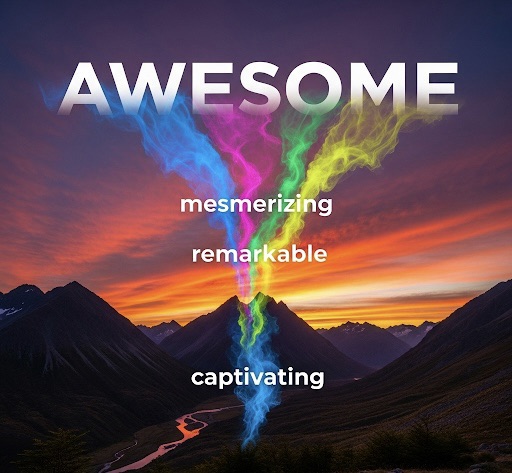
Moreover, by venturing beyond “awesome,” we discover a treasure trove of words that can more precisely capture the nuances of our experiences. “Remarkable,” “astounding,” “mesmerizing,” “captivating,” and “inspiring” are just a few examples that can infuse our conversations with a renewed sense of wonder and authenticity.

So, let’s embark on this linguistic journey together. Let’s celebrate the remarkable array of words at our disposal and use them to paint vivid pictures in the minds of those we communicate with. By diversifying our vocabulary, we not only breathe new life into our language but also enhance our ability to connect, share, and inspire.

To wrap things up, “awesome” is indeed a wonderful word, but its beauty shines even brighter when it is surrounded by a constellation of other equally splendid words. Let’s embrace the richness of our language and paint our conversations with the colours of expression, ensuring that each word finds its rightful place in the tapestry of our communication.

🌐 Home | Blog | About Us | Contact| Resources

Blessings for You with the most powerful name

Blessings for You with the most powerful name

The most powerful name I know is ‘god’. The most powerful prayerful word I know is ‘blessed’ and the person I wish all the best today is ‘you’. Have a wonderful and blessed day.

A heart is a symbol of love, compassion, and understanding. It reminds us to be kind to ourselves and others and to always be open to love.

The Future of Healthcare: Generic or Branded Drugs?

The cost of healthcare is a growing concern for people around the world. One of the biggest drivers of healthcare costs is the price of prescription drugs. Branded drugs, which are the first new drugs to come to market, are often very expensive. Generic drugs, which are copies of branded drugs that have been approved by the FDA, are much cheaper.

So, what is the future of healthcare: generic or branded drugs?

There are several factors to consider when making this decision.

▶️Cost. Generic drugs are typically much cheaper than branded drugs. This is because generic drug manufacturers do not have to invest in research and development, as they are simply copying an existing drug. The lower cost of generic drugs makes them more accessible to patients, and they help to reduce the overall cost of healthcare.

▶️Innovation. Branded drugs are often the first new drugs to come to market. This is because they require a lot of research and development, which is expensive. Branded drugs offer advantages in terms of efficacy and safety over generic drugs. However, the high cost of branded drugs makes them inaccessible to some patients.

▶️Access to care. Generic drugs make it easier for patients to access the care they need. This is because they are typically much cheaper than branded drugs, and they are covered by insurance plans that do not cover branded drugs. Generic drugs also help to reduce the waiting time for patients to get the medication they need.

✅Finally, the decision of whether to use a branded or generic drug is a personal one that should be made in consultation with a doctor. The doctor can help the patient to weigh the pros and cons of each option and make the best decision for their circumstances.

In the future, we will likely see a greater reliance on generic drugs. This is because generic drugs are more affordable and help to reduce the overall cost of healthcare. However, it is also important to continue to invest in the research and development of new drugs, as this is essential for healthcare innovation.

🏋️‍♀️A balanced approach to branded and generic drugs is likely to be the best way to ensure that patients have access to the care they need, while also supporting innovation in the pharmaceutical industry.

Branded and generic drug bottle

How to Use Mentions and Tags on Facebook to Connect with Others

On Facebook, mentions and tags are two ways to reference other users in your posts and comments.

✔️Mentions are used to draw attention to someone or to involve them in the conversation. To mention someone, you type their username preceded by the “@” symbol (e.g., “@JohnDoe”). This will notify the person that they have been mentioned and will often link to their profile.

✔️Tags are used to associate someone’s name with a particular piece of content, such as a photo, post, or comment. To tag someone, you type their name and select their profile from the suggestions that appear. When you tag someone, the content is usually displayed on their profile as well, and they receive notifications about the tag.

Both mentions and tags are ways to engage with other users on Facebook. They can be used to:

Share content with someone

Invite someone to participate in a conversation

Give someone credit for their work

Let someone know that you’re thinking of them

When used appropriately, mentions and tags are a great way to connect with other users on Facebook and build relationships.

Examples of how you can use mentions and tags on Facebook:

You can mention a friend in a post about a recent event you attended. This will notify them of the post and they may be interested in seeing the photos or reading the comments.

You can tag a friend in a photo that you took of them. This will add the photo to their profile and they may be interested in sharing it with their friends.

You can mention a group of friends in a post about a new business venture you’re starting. This is a great way to get their feedback and support.

You can tag a colleague in a comment on a work-related post. This is a great way to get their attention and collaborate on a project.

Smartphone with the Facebook app open

I hope this helps!

🌐 Home | Blog | About Us | Contact| Resources

The Phenomenon of “Addiction”

Addiction is a complex and compulsive state where an individual becomes dependent on a substance, action, or behaviour despite negative consequences. This can involve substances like drugs or alcohol, as well as activities such as gambling, gaming, or excessive internet use.

Common mental signs of addiction include:

• Strong cravings for the substance or activity

• Struggles to control usage

• Deception of usage

• Increasing need for the same effect

• Experiencing withdrawal symptoms when not using

• Challenges at work, school, or home

• Relationship difficulties

• Legal issues

Addiction often results in a loss of control, making it hard for individuals to halt their behaviour or consumption even when they desire to do so. It can lead to adverse effects on physical health, mental well-being, relationships, and overall quality of life.

Addiction is a complex and multifaceted issue, and there is no single image that can capture it all. However, this image provides a glimpse into the physical, psychological, and emotional toll that addiction can take on a person.

Here are some resources that can assist:

• The National Institute on Drug Abuse (NIDA): https://www.drugabuse.gov/

• The Substance Abuse and Mental Health Services Administration (SAMHSA): https://www.samhsa.gov/

• The National Council on Alcoholism and Drug Dependence (NCADD): https://www.ncadd.org/

• The American Society of Addiction Medicine (ASAM): https://www.asam.org/

Why Is the First Step Always the Hardest?

This blog post is a follow-up to my previous article titled “The Power of the First Step.” In that piece, I explored the concept behind the saying “The first step is always the hardest.”

This expression underscores the difficulty associated with starting something new or unfamiliar, primarily because of the uncertainty and lack of experience. However, pushing through this initial resistance demands both determination and motivation. Once this initial obstacle is overcome, subsequent steps tend to flow more smoothly as momentum builds, accompanied by growing confidence in one’s actions.

The first step is always the hardest.

Discover more insights from Rise&Inspire
How Can Gratitude Bring You Inner Peace?

What brings you peace?

As I continue on this journey of cultivating gratitude, I discover that true peace resides not in the absence of challenges, but in the presence of appreciation.

In a world that often feels fast-paced and chaotic, seeking moments of tranquillity becomes essential for our well-being. When asked what brings me peace, the answer lies in a simple yet transformative practice: gratitude. The act of acknowledging and appreciating the positive aspects of life has the remarkable ability to shift our mindset and cultivate a profound sense of peace.

Gratitude is like a beacon of light that guides us through life’s challenges. By focusing on the blessings we have, we create a mental shift away from what’s lacking or stressful. It’s not about ignoring difficulties, but rather about reframing our perspective to see the beauty that coexists with adversity.

When I sit down to reflect on the things I’m grateful for, I find that even the smallest details hold immense significance. Whether it’s the warmth of the morning sun, the laughter of a loved one, or the kindness of a stranger, these moments enrich our lives in ways we might overlook amidst our daily hustle.

Practising gratitude isn’t merely a fleeting exercise; it’s a conscious choice to nurture positivity. This choice has the power to rewire our brains, gradually diminishing the impact of negative thoughts. As we train ourselves to look for the silver linings, our neural pathways adjust, making room for contentment and inner peace.

One of the most remarkable aspects of gratitude is its ability to transcend boundaries. It’s a universal language that connects us all. When we share our appreciation and gratitude, we create a ripple effect of positivity. Our words and actions inspire others to cultivate their sense of peace, turning a personal practice into a collective journey.

In a world where external factors easily disrupt our equilibrium, practising gratitude becomes a refuge—a haven of tranquillity we can retreat to at any moment. This simple yet potent tool reminds us that even amid the chaos, there is room for stillness and reflection.

So, what brings me peace? It’s the act of embracing gratitude, cherishing the blessings that surround me, and consciously shifting my focus towards the positive. This practice transforms my mindset, allowing me to navigate life’s currents with a calm heart and a clear mind.

Write a thank-you note.
This is a classic way to express gratitude to someone who has done something nice for you

As I continue on this journey of cultivating gratitude, I discover that true peace resides not in the absence of challenges, but in the presence of appreciation.

Explore more insights and inspiration on my platform, Rise&InspireHub. Visit my blog for more stories that touch the heart and spark the imagination.

Email: kjbtrs@riseandinspire.co.in

Our brains are wired to focus on negative information.

Negativity bias has both positive and negative effects on humans. On the positive side, it helps us avoid danger, make better decisions, learn from mistakes, and take action to improve situations. However, constantly focusing on the negative lead to mental health issues and a pessimistic worldview.

To manage negativity bias:

▶️Focus on the positive aspects of life, like relationships, work, and hobbies.

▶️Practice gratitude through journaling or reflecting on what you’re thankful for.

▶️Challenge negative thoughts by considering their validity and alternative perspectives.

▶️Prioritize self-care by getting enough rest, eating well, and staying active.

The image shows a brain with two sides, one labeled “negative” and the other labeled “positive”. The negative side is much larger and more active than the positive side. This represents the fact that we are more likely to pay attention to and remember negative information than positive information.