Why Is November My Most Auspicious Month of the Year?

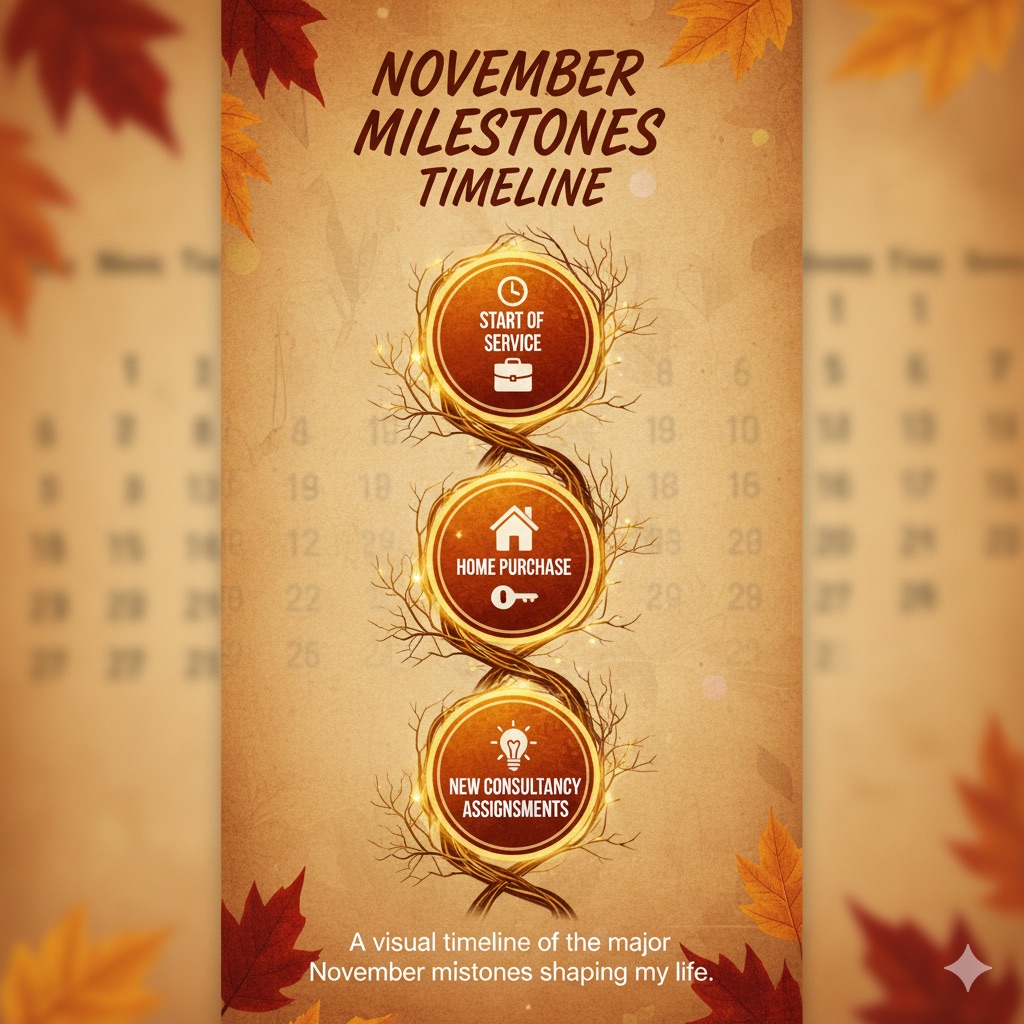
November is my favourite month because every major milestone in my life—starting my service, buying my home, and beginning new consulting assignments—has always happened in November. It’s the month that consistently brings me luck, new beginnings, and blessings.

Daily writing prompt
What’s your favorite month of the year? Why?

Some months simply pass by, but a few leave fingerprints on our lives. For years, I never noticed the pattern, but every major milestone—every shift, every new beginning—kept falling in the same month. This post uncovers the unexpected reason November became the quiet architect of my journey.

Why November Is My Favourite Month of the Year: A Personal Journey of Luck, Beginnings, and Blessings

When today’s WordPress prompt—“What’s your favorite month of the year? Why?”—appeared, I smiled. Not because the question was new, but precisely because it wasn’t.

This is a repeat prompt, one I’ve reflected on before with enthusiasm and nostalgia.

In earlier posts, I wrote passionately about October, a month I adored for its beauty, symbolism, and comfort. If you haven’t read them yet, you can find those reflections here:

🔗 My Favourite Month (2024)

Why Is October My Favorite Month?

🔗 October – My Favourite Month of the Year (2023)

But today, as I look back on my own life more honestly and more deeply, I realise that while October touches my heart, it is November that has consistently shaped my destiny.

A Month of New Beginnings

November has quietly stood behind every major turning point of my life—almost like a gentle guardian, guiding me from one milestone to the next.

 I began my service in November

The first major step into my professional journey happened in this month. It wasn’t just a job—it was the foundation on which the rest of my career was built. November gifted me stability, purpose, and direction.

 I purchased my home in November

Owning a house in the city was not just a financial decision; it was a dream rooted in years of effort. And fittingly, November brought that dream to life. It is as though this month opens doors—literally and symbolically.

 Every new consulting assignment began in November

There is something remarkable about this pattern. Whether coincidence or divine alignment, every significant consulting assignment—each a stepping stone to new professional horizons—has commenced in November. It is as if November recognises me, and I recognise it in return.

Why November Truly Feels Auspicious

Some months bring beauty. Some bring comfort. Some bring celebration.

But November brings alignment.

It is the month where my ambitions meet opportunity.

Where long-held prayers find their answers.

Where fresh paths open and life takes a step upward.

While October has always been a sentimental favourite, November has been the practical, powerful, life-changing favourite—the month that continues to gift me progress, prosperity, and positive change.

Looking Ahead: Honouring November With Gratitude

This year, as the prompt returned, I felt it was time to return to my truth as well. My journey shows a clear pattern, a quiet message:

November is the month in which my life moves forward.

So today’s reflection isn’t just an answer to a prompt—it’s gratitude.

Gratitude for the blessings wrapped in this eleventh month.

Gratitude for every new beginning that arrived wearing November’s colours.

Gratitude for a month that feels like a personal festival.

Final Thoughts

Even though I once crowned October as my favourite month, experience has taught me something profound:

The heart loves many things, but the soul recognises what truly shapes it.

For me, that is November—my month of auspicious beginnings.

© 2025 Rise&Inspire. All Rights Reserved.

Social Media: @RiseNinspireHub

Contact: kjbtrs@riseandinspire.co.in

Website: Home | Blog | About Us | Contact| Resources

Word Count:638
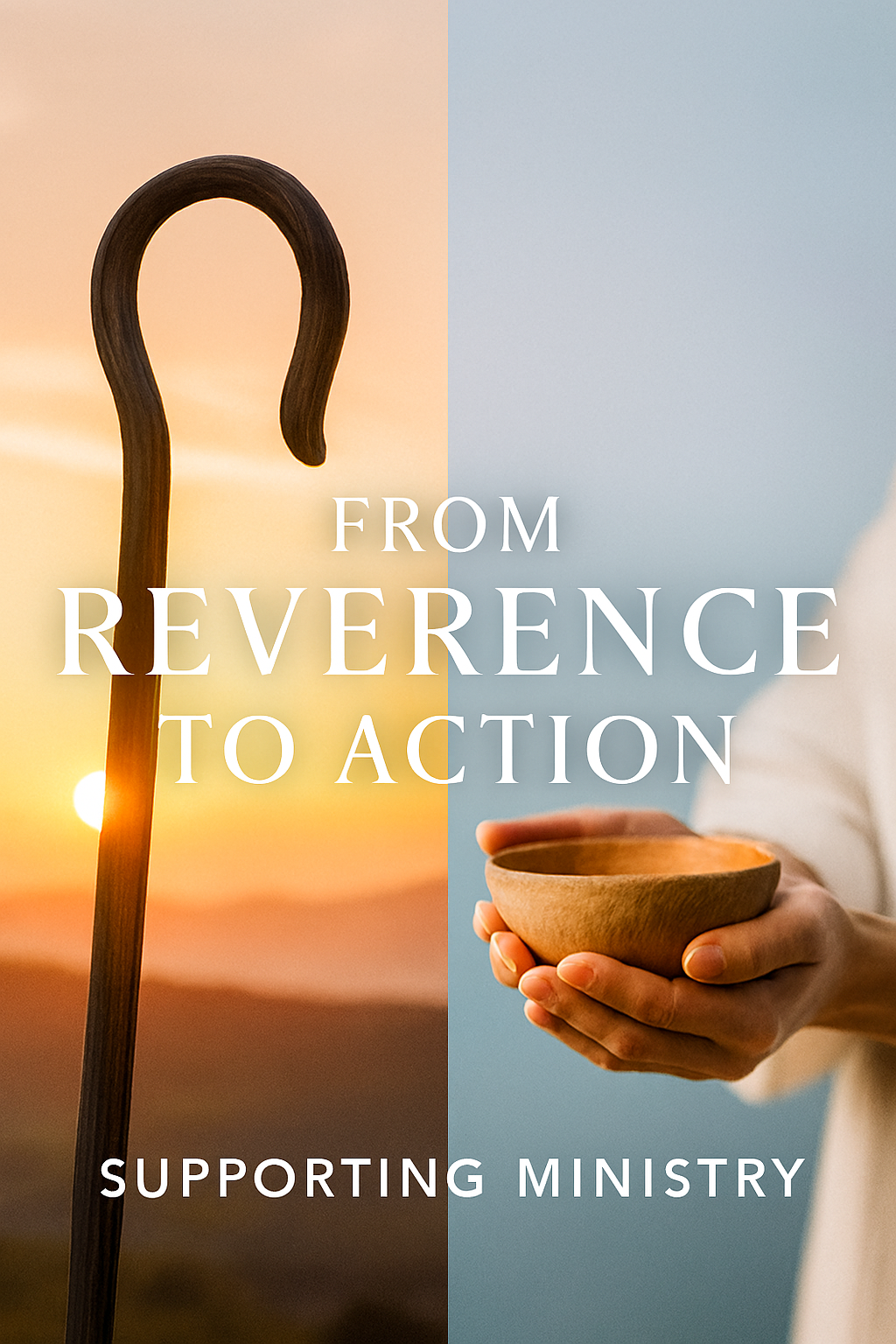
What Does Ecclesiasticus 7:31 Teach Us About Honoring Spiritual Leaders Today?

You cannot claim to fear God while dishonoring His servants. That is not opinion or preference. That is biblical reality preserved in a verse most Christians have never read. Ecclesiasticus 7:31 draws a line connecting your reverence for the Almighty to your treatment of pastors and priests. Cross that line carelessly and you reveal where your heart truly stands. Ready to examine what your actions toward spiritual leaders actually say about your faith?

Daily Biblical Reflection

Tuesday, November 18, 2025

Verse for Today

Fear the Lord and honor the priest, and give him his portion, as you have been commanded.

— Ecclesiasticus 7:31

Contemplation: Engaging the Heart

In the quiet sanctuary of our hearts, this ancient wisdom from Ecclesiasticus speaks to something profoundly human: our need for reverence, our call to gratitude, and our responsibility toward those who serve God’s people. When we take a moment to contemplate this verse, we are invited to reflect on the deep connection between fearing the Lord and honouring His ministers.

The “fear of the Lord” is not terror but awe, not anxiety but reverence. It is standing before the majesty of God with wonder and humility. This reverence naturally flows into how we treat those who dedicate their lives to sacred service. In biblical understanding, the priest stands as a mediator between God and humanity, offering prayers, teaching wisdom, and administering the sacraments that nourish our souls.

Today, let us open our hearts to examine: Do we approach our spiritual leaders with the honour they deserve? Do we support them not merely with words but with tangible care? This verse reminds us that our relationship with God is intimately connected to how we treat those who serve in His name.

Interpretation: Explaining the Text

The Book of Ecclesiasticus, also known as Sirach, is part of the wisdom literature that guided the Jewish community in practical holy living. Written around 200 BC, it offers concrete instruction on how to live righteously in everyday circumstances. This particular verse appears within a larger section addressing proper conduct toward various people in our lives.

The command to “fear the Lord” establishes the foundation. In Hebrew thought, the fear of the Lord is the beginning of wisdom—it is the proper ordering of our priorities, placing God at the centre of our existence. From this vertical relationship with the divine flows our horizontal relationships with others.

The instruction to “honour the priest” and “give him his portion” reflects the ancient Levitical system where priests, having no land inheritance, depended on the offerings of the people for their sustenance. This was not optional generosity but commanded provision, recognising that those who serve at the altar should live from the altar. The “portion” refers to tithes, offerings, and firstfruits that sustained the priestly ministry.

In our Christian context, while the specific sacrificial system has been fulfilled in Christ, the principle endures: those who devote themselves to full-time ministry of the Gospel deserve our material support and spiritual honour. As St. Paul echoes in 1 Timothy 5:17, “The elders who direct the affairs of the church well are worthy of double honour, especially those whose work is preaching and teaching.”

Formation: Shaping the Believer

This verse forms us into people of integrated faith, where our reverence for God shapes our treatment of His servants. It cultivates in us three essential virtues:

First, gratitude. When we recognise the tireless work of priests, pastors, and spiritual leaders—their late-night counselling, their preparation of sermons, their celebration of sacraments, their presence in our moments of joy and sorrow—our hearts should overflow with thankfulness. They bear our burdens, intercede for our souls, and stand watch over us as those who must give an account.

Second, generosity. This verse challenges our natural tendency toward self-centeredness. It calls us to move beyond token appreciation to substantive support. Formation in Christian generosity means ensuring our spiritual leaders have what they need to live with dignity and continue their ministry effectively. It means our churches are not places where shepherds struggle while the flock prospers.

Third, respect. In an age that often diminishes authority and questions leadership, this verse forms us to honour those called to sacred office. This doesn’t mean blind obedience or overlooking genuine failures, but it does mean approaching our spiritual leaders with the respect due to their calling, speaking to them and about them with charity, and supporting them in prayer.

As we internalise this teaching, we become a community that reflects God’s heart for those who serve Him. We become people who understand that honouring God’s ministers is itself an act of worship.

Application: Call to Action

How then shall we live in light of this word? Let these practical steps guide our response:

Pray daily for your spiritual leaders. Lift up by name your pastor, priest, bishop, and all who serve in ministry. Pray for their physical health, emotional strength, spiritual vitality, and family well-being. They face unique spiritual battles; your prayers are a fortress around them.

Express appreciation regularly. A simple word of encouragement after a sermon, a heartfelt note of thanks, a phone call recognising their ministry—these acts of honour can sustain a weary shepherd. Do not assume they know they are valued; tell them.

Provide practical support. Examine your giving to your church. Does it reflect gratitude for spiritual leadership? Beyond financial support, consider practical needs: a meal delivered during a busy week, help with yard work, or a gift card for a date night with their spouse. Think creatively about how to lighten their load.

Defend their reputation. When others speak critically or gossip about church leaders, be the voice that redirects the conversation toward charity and direct communication. While legitimate concerns should be addressed through proper channels, casual criticism wounds both the leader and the community.

Participate actively in church life. One of the greatest honours we give our spiritual leaders is to take our faith seriously—to attend worship faithfully, to engage in formation, to serve others, to grow in holiness. When shepherds see their flock thriving, it multiplies their joy and validates their labour.

This week, choose one concrete action. Perhaps it is writing a letter of gratitude, increasing your financial giving, or organising a blessing for your church leadership. Let your fear of the Lord translate into tangible honour for those He has called to serve His people.

May we become communities known for how we cherish and support those who labour among us in the Lord’s name. In honouring them, we honour the One who sent them.

Editor’s Note

Ecclesiasticus (Sirach) is deuterocanonical—canon for Catholics and Orthodox, apocryphal for most Protestants. This reflection treats it as Scripture, appropriate for Catholic and ecumenical use.

Reflection by Johnbritto Kurusumuthu

Bible verse forwarded by His Excellency, Rt. Rev. Dr. Selvister Ponnumuthan

Check the Rise & Inspire “Wake-Up Calls” archive at riseandinspire.co.in

© 2025 Johnbritto Kurusumuthu | Rise & Inspire Devotional Series

Word count:1171

Is It Worth Answering Repeat Writing Prompts Again?

I’m not choosing a favorite place today because this prompt has already been answered twice on my blog, and both posts still reflect my true experiences. Instead of repeating myself, I’m simply linking back to those earlier reflections.

Daily writing prompt
What is your favorite place to go in your city?

What happens when creativity meets repetition? Today’s WordPress prompt asked a question I’ve already answered twice—and instead of rewriting old thoughts with new words, I chose to explore a more honest question: Should we respond to repeat prompts at all?

Why I’m Not Repeating Today’s Prompt: A Note on Creative Integrity

Every morning, I look forward to opening the WordPress Daily Prompt—it’s a small spark of inspiration that often turns into a full blog post, a memory revisited, or a lesson rediscovered. But today’s prompt, “What is your favorite place to go in your city?” feels like déjà vu.

Not just because it’s familiar—but because I’ve already explored this question twice, with depth, emotion, and personal stories that still resonate with me.

A Prompt I’ve Already Answered—Beautifully

When I saw today’s prompt, my first thought was simple:

There’s nothing new I can add without repeating myself.

I’ve already written two posts that capture my connection with the spaces I love—places where my heart feels at home and my thoughts breathe freely.

Here are my earlier responses:

📌 From Beaches to Hills: My Favorite Places Near Home

A journey through landscapes that shape my everyday peace—sometimes the quiet waves, sometimes the misty hills.

👉 Read it here:

📌 My Favorite Place in My City: Poovar

A reflection on Poovar—where rivers, lakes, and the sea embrace each other—for me, a place that always feels like a soft exhale.

👉 Read it here:

Both posts captured what the prompt asked for. They still reflect who I am and how I experience the world around me.

Why I’m Not Writing the Same Story Again

Creativity blooms in fresh soil. Repeating the same prompt for the third time doesn’t offer new insights or inspire new reflections—not unless I force it. And I believe writing should always be authentic, not mechanical.

Today’s prompt is not unique, nor does it offer new scope for exploration. Instead of rewriting the same emotions in different words, I choose to acknowledge the repetition and celebrate the stories already told.

A Small Note to Fellow Bloggers

Daily prompts can be wonderful push-starts for creativity—but it’s equally important to recognize when a topic has already been meaningfully explored. It’s okay to step back, skip a prompt, or link to past work that still stands strong.

After all, blogging isn’t just about quantity—it’s about sincerity.

© 2025 Rise&Inspire. All Rights Reserved.

Social Media: @RiseNinspireHub

Contact: kjbtrs@riseandinspire.co.in

Website: Home | Blog | About Us | Contact| Resources

Word Count:488

Why Can’t We Understand Our Own Ways When God Orders Our Steps?

How many times have you replayed a decision in your mind, dissecting every choice, wondering if you took the wrong turn somewhere? The job you didn’t take. The relationship that ended. The opportunity that slipped away. We torture ourselves trying to understand the plot of our own story, as if enough analysis will finally reveal the hidden logic behind our lives. But Proverbs 20:24 suggests something radical: maybe you’re not supposed to understand. Perhaps that’s the whole point.

Daily Biblical Reflection – November 17, 2025

Proverbs 20:24

All our steps are ordered by the Lord; how then can we understand our own ways?

[Watch Reflection Video]

MEDITATION

In the stillness of this morning, let us take a moment to consider the mystery contained in these ancient words. Here stands humanity in all its ambition and planning, mapping out futures and charting courses, yet the wisdom of Solomon teaches us a fundamental truth: our steps are not ultimately our own. Like travellers on a winding mountain path shrouded in mist, we can see only the ground immediately before us, while God beholds the entire landscape from beginning to end.

This verse invites us into a posture of holy humility. It does not diminish human responsibility or effort, but rather places them within the larger framework of divine sovereignty. We are called to walk faithfully, yet to acknowledge that the One who numbers the hairs on our heads also orders the footsteps of our journey. There is both mystery and comfort here—mystery in recognising the limits of our understanding, comfort in knowing that our lives rest in hands far wiser and more loving than our own.

MEANING

The Hebrew word translated as “ordered” carries the weight of establishment, direction, and preparation. It suggests not merely that God observes our steps, but that He actively prepares and directs them. This is not fatalism that renders us passive, but rather divine providence that invites our active cooperation with God’s purposes.

The rhetorical question “how then can we understand our own ways?” is not meant to discourage reflection or discernment. Rather, it acknowledges that human wisdom has boundaries. We see through a glass darkly. Our perspective is limited by time, circumstance, and the constraints of our finite minds. What appears as a detour may be a divine appointment. What seems like a delay may be divine preparation. What feels like failure may be the fertile soil from which God brings forth unexpected fruit.

This wisdom literature teaches us that true understanding comes not from mastering every variable or predicting every outcome, but from trusting the One who holds all outcomes in His hand. It calls us away from anxiety about the unknown and toward faith in the Known One.

MOLDING

How does this truth reshape us? First, it cultivates humility. When we recognise that our steps are ordered by the Lord, we release the exhausting burden of trying to control everything. We acknowledge that we are not the authors of our story but beloved characters within God’s greater narrative.

Second, it develops patience. If we cannot fully understand our own ways, we can learn to wait on God’s revelation rather than demanding immediate clarity. The confusion we feel today may give way to understanding tomorrow, or perhaps only in eternity. Either way, we can rest in the knowledge that God’s timing is perfect even when our understanding is incomplete.

Third, it deepens trust. Every unexpected turn, every unanswered question, every moment of uncertainty becomes an invitation to lean more heavily on God rather than our own understanding. This is the practical outworking of Proverbs 3:5-6, trusting in the Lord with all our heart rather than leaning on our own understanding.

Finally, it transforms our perspective on both success and failure. If God orders our steps, then even our mistakes can become part of His redemptive purposes. This does not excuse carelessness or sin, but it does free us from the paralysis of perfectionism and the despair that follows our inevitable human failings.

MINISTRY

This truth has profound implications for how we serve others and live out our faith. When we embrace that our steps are ordered by the Lord, we become available to divine appointments we might otherwise miss. That unexpected conversation, that interruption to our plans, that person who crosses our path—these may be orchestrated by the One who orders our steps.

In ministry and service, this perspective guards us against both pride in success and devastation in apparent failure. We plant and water, but God gives the growth. We take steps of obedience, but God produces the fruit. This liberates us to be faithful without needing to be fruitful by our own measurements.

It also shapes how we counsel and encourage others. When fellow believers face confusion about their path, we can point them not to formulas for discovering God’s will, but to the character of the God who orders their steps. We can remind them that faithfulness in the present moment is more important than certainty about the distant future.

Moreover, this truth empowers bold obedience. When we know that God orders our steps, we can step forward in faith even when the path is unclear. We can say yes to opportunities that seem beyond us, trusting that the One who called us will also equip and guide us.

As we go forth into this day, let us walk with the confidence that comes not from understanding everything, but from trusting the One who understands all things. Let our steps be taken in faith, our plans held loosely, and our hearts open to the divine appointments that await us. For the God who orders our steps is the same God who promises never to leave us or forsake us. In this truth, we find both our humility and our hope.​​​​​​​​​​​​​​​​

Check the Rise & Inspire “Wake-Up Calls” archive at riseandinspire.co.in

© 2025 Johnbritto Kurusumuthu | Rise & Inspire Devotional Series

Word count:1004

Are You Creating the First Impression You Actually Want?

I want to give people a first impression of quiet confidence and genuine warmth—showing that I’m calm, grounded, and truly present when I meet them.

Daily writing prompt
What’s the first impression you want to give people?

People notice more about you in the first few seconds than you realise. Before you speak, explain, or express anything, your presence is already telling a story. But is it telling the story you want? Today’s post explores the first impression you wish to give—and the one you may actually be giving.

What’s the First Impression You Want to Give People? (A Fresh Look at a Familiar Question)

Some prompts come and go, but a few return—almost as if they’re asking us to look deeper. Today’s WordPress prompt, “What’s the first impression you want to give people?”, is one I’ve explored before. Not once, but twice.

And maybe that’s the beauty of it.

Because first impressions are not a fixed idea. They shift, evolve, and mature as we do.

Instead of repeating myself, today I’m revisiting this question with the lens of someone who has lived a bit more, learned a bit more, and changed a bit more since I last wrote about it.

Why This Prompt Keeps Coming Back

I find it interesting that this is a repeat prompt—one that WordPress has given before. Perhaps because it’s universal. Perhaps because our answers reveal who we are becoming.

I’ve explored it earlier in these posts:

📌 2024 Blog PostFirst Impressions: A Journey of Authentic Connection

🔗 https://riseandinspire.co.in/2024/11/16/first-impressions-a-journey-of-authentic-connection/

📌 2023 Blog PostCrafting Positive First Impressions: A Personal Guide

🔗 https://riseandinspire.co.in/2023/11/19/crafting-positive-first-impressions-a-personal-guide/

Those posts reflected who I was at those moments. Today, I stand somewhere new.

My Evolving First Impression: Quiet Confidence with Warmth

If I had to distill what I want people to feel when they meet me now, it would be this:

“Here is someone calm, grounded, and genuinely interested in you.”

Not loud confidence.

Not forced positivity.

Not a curated persona.

But a quiet confidence—the kind that comes from clarity, maturity, and inner steadiness.

And a warmth that says:

“You matter. Your story matters. I’m present.”

I’ve learned that the first impression I want to give people is not about appearing perfect. It’s about appearing real.

What Shapes This Impression?

1. Presence, not performance

Earlier, I tried to “do” first impressions—choosing the right words, right posture, right tone.

Now I try to simply be present. People feel the difference.

2. Listening more than speaking

Listening creates connection faster than a polished introduction ever will.

3. Consistency with my values

The version of me that people meet should reflect the same values I write about—kindness, growth, and authenticity.

First Impressions Aren’t About Them. They’re About Us.

This repeated prompt made me realise that first impressions are not just outward expressions—they’re inward reflections.

When I ask myself:

“What first impression do I want to give people?”

I’m really asking:

“What kind of person am I becoming?”

“What energy do I carry into the world?”

“How do I make others feel when I show up?”

And those are questions worth revisiting—every year, every season, every version of ourselves.

Why I Still Value This Repeat Prompt

Some questions deserve to return. They reveal our growth.

In 2023, I wanted to appear positive and approachable.

In 2024, I focused on authentic connection.

In 2025, I want to radiate calm, confidence, and kindness—without trying to impress.

Maybe next year, the answer will shift again. And that is the beauty of self-reflection.

Final Thought

Sometimes, the world asks us the same question again because we are not the same person anymore.

And today, as I reflect on this familiar prompt, I’m grateful.

Not because I need to craft the perfect first impression…

But because I’m learning to carry the right intentions.

© 2025 Rise&Inspire. All Rights Reserved.

Social Media: @RiseNinspireHub

Contact: kjbtrs@riseandinspire.co.in

Website: Home | Blog | About Us | Contact| Resources

Word Count:677

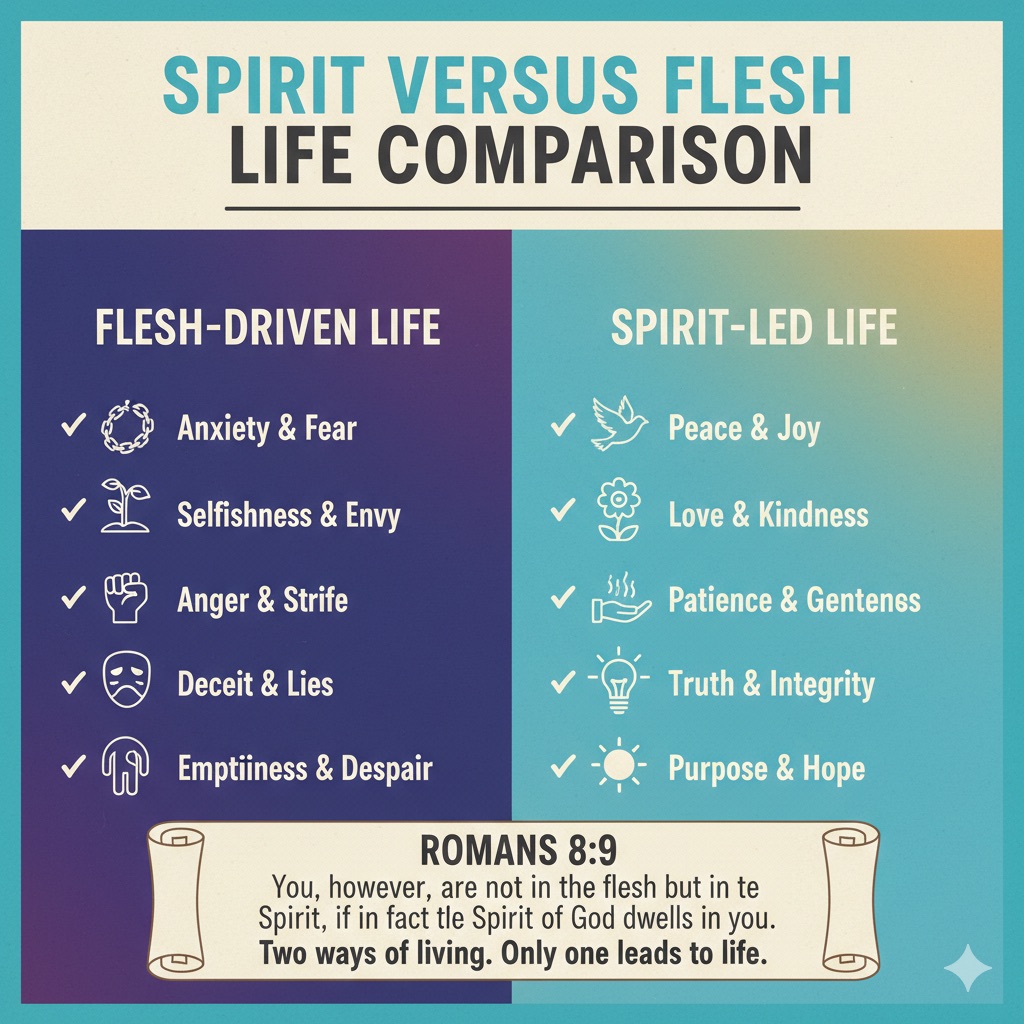
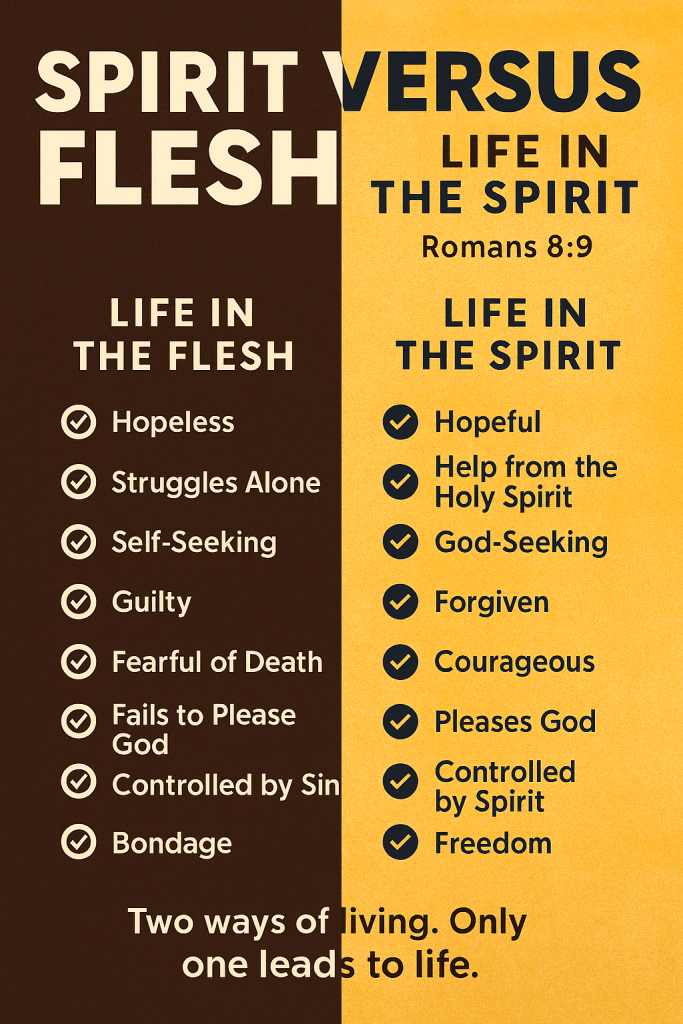
Are You Living in the Flesh or the Spirit? Here’s How to Know

Most Christians struggle with a nagging question they rarely voice aloud: Am I really living as a Spirit-filled believer, or am I just going through the motions? Romans 8:9 does not leave us guessing. Paul gives us clear indicators that help us honestly assess whether we are living in the flesh or walking in the Spirit. The answer might surprise you.

Daily Biblical Reflection

November 16, 2025

Bible Verse

But you are not in the flesh; you are in the Spirit, since the Spirit of God dwells in you. Anyone who does not have the Spirit of Christ does not belong to him.”

— Romans 8:9

CONTEMPLATION

In this verse, Saint Paul draws a clear distinction between two modes of existence: life lived according to the flesh and life lived in the Spirit. This is not merely a theological concept but a lived reality that transforms our entire being. Paul reveals to the Roman Christians, and us today, that our identity has fundamentally changed through faith in Christ. We are no longer defined by our fallen human nature, our weaknesses, or our past failures. Instead, we are defined by the indwelling presence of God’s Spirit.

The phrase “the Spirit of God dwells in you” carries immense weight. The same Spirit that hovered over the waters at creation, that spoke through the prophets, that descended upon Jesus at his baptism, now makes his home within us. This is not a distant God watching from afar, but an intimate divine presence living in the very temple of our bodies. What extraordinary dignity this confers upon every baptised Christian! We carry within us the life of God himself.

INTERPRETATION

To understand this passage deeply, we must recognise that Paul is addressing a fundamental question of Christian identity. The “flesh” he speaks of is not simply our physical body, but rather our human nature when it is turned away from God, enslaved to sin, and oriented toward self-gratification. It represents the old way of living, governed by selfish desires, worldly ambitions, and separation from God.

In contrast, being “in the Spirit” means our lives are now animated, directed, and empowered by the Holy Spirit. This is not something we achieve through our own effort, but a gift received through faith and baptism. Paul’s statement is both declarative and instructive: he declares what is true of believers while implicitly calling them to live according to this truth.

The final sentence carries both comfort and challenge: “Anyone who does not have the Spirit of Christ does not belong to him.” This is not meant to instill fear but to clarify reality. Belonging to Christ is inseparable from having his Spirit. The two cannot be divided. True Christian faith is not merely intellectual assent to doctrines, but a living relationship with Christ through the Spirit who transforms us from within.

APPLICATION

How does this truth apply to our daily lives? First, we must recognise and honour the Spirit’s presence within us. Every morning, we can consciously acknowledge that we do not face the day alone. The Spirit of God goes with us into every situation, every conversation, every challenge. This awareness should affect how we treat our bodies, minds, and souls. If we are temples of the Holy Spirit, then what we feed our minds, how we care for our bodies, and the ways we use our time all become acts of worship or neglect.

Second, living in the Spirit means allowing our decisions to be guided by spiritual values rather than worldly ones. When faced with choices, we can stop for a moment and ask: “What does the Spirit prompt me to do? What would honor Christ in this situation?” This might mean choosing forgiveness over resentment, generosity over greed, truth over convenience, service over self-interest.

Third, we must cultivate sensitivity to the Spirit’s voice through prayer, Scripture reading, and the sacraments. The Spirit speaks to us constantly, but our hearts can become so cluttered with noise that we miss his gentle guidance. Regular times of silence and prayer help attune us to his presence and direction.

MISSION

(Ensured Evangelically and Ecclesially Sound)

Our mission flows directly from this identity as Spirit-filled people. We are called to be witnesses to the transforming power of God’s Spirit in the world. This witnessing happens in several ways:

By our changed lives. When people see joy in the midst of trial, peace in the midst of chaos, love where hatred might be expected, they encounter evidence of the Spirit’s work. Our lives should raise questions in others’ hearts about the source of our hope.

Through our words. We are called to share the good news that the same Spirit who dwells in us is available to all who turn to Christ in faith. This requires courage to speak openly about our faith, wisdom to speak appropriately, and love to speak winsomely.

In our service. The Spirit empowers us not for our own benefit but for the building up of the body of Christ and the service of the world. Each of us has been given spiritual gifts meant to be used for others. What gifts has the Spirit given you? How are you using them for God’s kingdom?

By fostering community. The Spirit creates unity among believers. Our mission includes building up the Church, encouraging fellow Christians, and creating communities where the Spirit’s presence is tangible through love, mutual support, and shared worship.

Let us pray: Heavenly Father, we thank you for the incredible gift of your Holy Spirit dwelling within us. Help us to live each day conscious of this divine presence. May the Spirit guide our thoughts, purify our desires, and empower our actions. Give us the courage to witness boldly to your transforming love and the wisdom to serve others with the gifts you have given us. May our lives glorify you and draw others to know the life-changing presence of your Spirit. Through Christ our Lord. Amen.

(Made Theologically Robust)

Video Reflection:

[We have ensured the provided reflection for November 16, 2025, is theologically accurate, biblically faithful, and pastorally sound. It correctly interprets and applies Romans 8:9 within the broader context of Pauline theology, Christian doctrine on the Holy Spirit, and practical discipleship.]

Check the Rise & Inspire “Wake-Up Calls” archive at riseandinspire.co.in

© 2025 Johnbritto Kurusumuthu | Rise & Inspire Devotional Series

Word count:1073

What Book Am I Revisiting to Rebuild Momentum and Purpose?

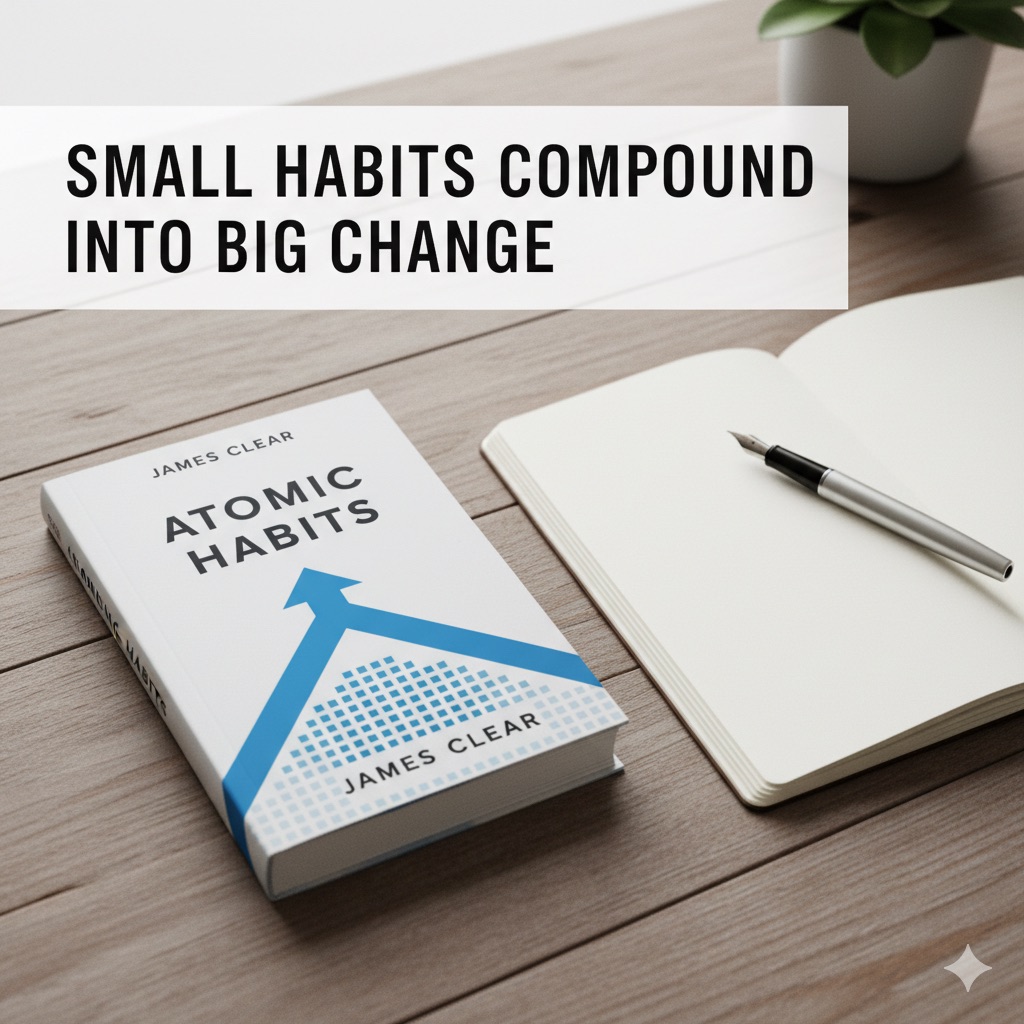
I’m currently rereading “Atomic Habits” by James Clear”—a book that perfectly resonates with my focus on personal growth and consistency. It shows me how small, daily habits quietly shape who we become, just as I explored in my earlier posts on The 5 Second Rule.

Daily writing prompt
What book are you reading right now?

I wasn’t looking for a big breakthrough this week, just a spark of clarity. But the book I’m reading right now has already started reshaping the way I think about momentum, discipline, and the quiet power of small daily actions. It’s a signal that change doesn’t wait for the perfect moment—it begins with the next page you turn.

What Book Am I Reading Right Now? A Journey Back to Inner Momentum

Every day brings us a new chance to rise a little higher, think a little deeper, and discover something that nourishes the soul. So when today’s prompt asked, “What book are you reading right now?”, I realised it was more than just a question about a book — it was an invitation to share what is shaping my mindset at this very moment.

📘 The Book That Has Captured My Mind: “Atomic Habits” by James Clear

Right now, I am revisiting a book that feels like a natural extension of the themes I live, write, and breathe daily — Atomic Habits.

It fits beautifully with everything I believe in: growth, discipline, inner transformation, and the power of small, consistent steps.

This book has always fascinated me because it doesn’t preach dramatic overnight change. Instead, it whispers something far more powerful:

“Small habits don’t merely add up — they compound.”

As someone who writes daily about personal growth, morning inspiration, and building a life filled with meaning, Atomic Habits feels like a companion rather than a text. It speaks to the quiet revolutions happening within us — the ones no one sees, but everyone eventually feels.

 Why This Book Suits My Journey (and Yours)

I chose this book intentionally. It fits perfectly with the themes my readers come back for.

✨ Self-improvement that feels real and reachable

✨ Spiritual grounding through everyday choices

✨ Discipline as a form of personal liberation

✨ Renewed motivation when consistency feels hard

Reading Atomic Habits again reveals that greatness is never born from grand gestures — but from the courage to repeat the right things, even when no one is watching.

🔗 A Beautiful Connection to My Previous Reflections

Interestingly, today’s prompt is a repeat. Last time it appeared, I wrote about “The 5 Second Rule” — a book that deeply shaped my understanding of action, courage, and overcoming hesitation.

Here are those reflections:

📎 “The 5 Second Rule” (2024 Post)

📎 “The 5 Second Rule: A Simple Technique to Transform Your Life” (2023 Post)

Revisiting those posts now, I see a beautiful pattern.

The 5 Second Rule taught me to start, and Atomic Habits is teaching me to continue.

One book pushes you into motion; the other teaches you to maintain momentum.

Together, they form a powerful truth:

Change begins in a moment, but it lasts through a system.

🧠 What I’m Gaining from the Book Right Now

Every chapter offers something new, even if I’ve read it before:

Identity-based habits remind me that change becomes real only when it becomes part of who we believe we are.

Environment design encourages me to shape my surroundings to match who I’m becoming.

The 1% rule nudges me not to chase perfection — only progress.

As I read, I feel grounded, inspired, and gently pushed toward a more disciplined, purpose-driven life.

 Final Reflection

Today’s question may seem simple, but books have a way of revealing where our minds and hearts currently stand.

Right now, Atomic Habits is more than a book on my table — it’s a quiet mentor, reminding me that every sunrise is a second chance to shape who I become.

What about you?

What book is shaping your inner world today?

© 2025 Rise&Inspire. All Rights Reserved.

Social Media: @RiseNinspireHub

Contact: kjbtrs@riseandinspire.co.in

Website: Home | Blog | About Us | Contact| Resources

Word Count:697

How Can I Apply Psalm 118:19 to Open Closed Doors in My Life?

You’re standing at a threshold. Behind you, the noise and chaos of everyday life. Ahead, gates that promise something more, something sacred. But these aren’t ordinary gates, and you can’t open them yourself. What do you do? The answer found in Psalm 118:19 might surprise you. It’s not about having the right credentials or perfect faith. It’s about something far simpler, yet infinitely more profound. And it starts with three words that change everything.

Daily Biblical Reflection

November 15, 2025

Bible Verse Forwarded by His Excellency, Rt. Rev. Dr. Selvister Ponnumuthan

Reflections by Johnbritto Kurusumuthu

“Open to me the gates of righteousness, that I may enter through them and give thanks to the Lord.”

Psalms 118:19

Video Reflection:

CONTEMPLATION

The psalmist stands before the gates of the temple, not with demands or entitlements, but with a humble plea. These are not ordinary gates; they are the gates of righteousness, portals that separate the sacred from the mundane, the holy from the common. In this moment of anticipation, we encounter a soul yearning for divine communion, recognising that entrance into God’s presence is not automatic but requires an invitation, a grace freely given yet earnestly sought.

Notice the beautiful paradox in this verse. The psalmist asks God to open the gates, acknowledging human limitation and divine sovereignty. Yet the purpose of entering is not to receive but to give, to offer thanksgiving to the Lord. This illustrates that true worship begins with recognition of our need for God and culminates in gratitude for His faithfulness.

We come empty-handed, seeking admission, but we enter with hearts full of praise.

INTERPRETATION

In the historical context, Psalm 118 was likely sung during temple processions, perhaps at great festivals when pilgrims journeyed to Jerusalem. The gates of righteousness refer to the temple entrance, the threshold where heaven touches earth, where the finite meets the Infinite. To pass through these gates was to step into sacred space, to enter God’s dwelling place among His people.

But these gates represent something deeper than physical architecture. They symbolise the path of righteous living, the way of obedience and faithfulness that leads to an intimate relationship with God. The gates are opened not by our merit but by God’s mercy. They stand as both invitation and challenge, reminding us that approaching God requires not perfection but a sincere heart and a humble spirit.

The act of giving thanks is central to this verse. Thanksgiving is not merely an emotion or a polite gesture; it is the language of faith, the proper response to God’s goodness. When we enter through the gates of righteousness, we acknowledge that everything we have, everything we are, comes from the Lord. Gratitude transforms our perspective, turning our focus from what we lack to the abundance we have received.

APPLICATION

How do we apply this ancient prayer to our contemporary lives? First, we must recognise that we too stand before gates that only God can open. These might be gates of opportunity, healing, restoration, or spiritual breakthrough. Whatever challenges or closed doors we face today, we are invited to pray with the same humble confidence as the psalmist. We acknowledge that God holds the keys, and we trust Him to open what needs to be opened in His perfect timing.

Second, we must examine our motivation for seeking entry. Do we approach God primarily to receive blessings, or do we come to offer thanksgiving? While it is appropriate to bring our needs before God, the psalmist reminds us that worship is ultimately about giving glory to God, not extracting benefits for ourselves. When gratitude becomes our primary posture, even our petitions are transformed from demands into expressions of trust.

Third, we must cultivate lives of righteousness that align with our prayers. We cannot ask God to open the gates of righteousness while walking paths of compromise and disobedience. This does not mean we must be perfect before approaching God, but it does mean we must be sincere in our desire to live according to His will. Our daily choices either prepare us for deeper communion with God or create barriers that separate us from His presence.

MISSION

Having passed through the gates of righteousness ourselves, we are called to become gate-openers for others. Christ has opened the way into God’s presence for all humanity through His death and resurrection. We are now ambassadors of this good news, inviting others to enter into a relationship with God. Our mission is to point people toward these open gates, to testify to God’s faithfulness, and to model lives of thanksgiving that attract others to the Source of all goodness.

Today, let us pray for those who stand outside the gates, unaware that God longs to welcome them in. Let us intercede for the lost, the hurting, and the searching, asking God to open their eyes to see the invitation He extends. And let us examine our own hearts, ensuring that we have not allowed familiarity to diminish our gratitude or complacency to close the gates we once entered with such joy.

As we go forth into this day, may we carry the spirit of Psalm 118:19 with us. May we approach every situation with humble dependence on God, recognising that He alone can open the gates we face. May we enter every space with thanksgiving, seeing His hand in both blessings and trials. And may we become living testimonies to God’s faithfulness, so that others may be inspired to pray, “Open to me the gates of righteousness, that I may enter through them and give thanks to the Lord.”

May the Lord open the gates of righteousness before you today, and may your heart overflow with thanksgiving for His faithfulness.

Check the Rise & Inspire “Wake-Up Calls” archive at riseandinspire.co.in

© 2025 Johnbritto Kurusumuthu | Rise & Inspire Devotional Series

Word count:999

Is the Best Place to Live Already Where You Are?

Daily writing prompt
If you could live anywhere in the world, where would it be?

If I could live anywhere in the world, I would still choose India — not because it’s perfect, but because it’s where my roots, identity, and deepest sense of belonging are found.

I used to think the perfect place to live was somewhere far away—a dream destination waiting beyond my current horizon. But every time I revisited the question, the answer revealed more about who I am than where I could go. This prompt isn’t really about geography; it’s about identity, longing, and the quiet truth of where we feel most at home.

Why I’m Skipping Today’s Prompt — Because It’s a Repeat

Daily Prompt #2122 asks the familiar question:

“If you could live anywhere in the world, where would it be?”

But today, I’m not writing a fresh post—because this prompt is a repeat. I’ve already explored this question deeply in earlier posts, each offering a different layer of reflection on what “home” truly means to me. Rather than rewriting the same idea, I’d like to revisit those insights instead of producing a duplicate response.

A Look Back at My Earlier Reflections

In 2024, I wrote “Redefining the Dream of Living Anywhere”, where I explored the idea that choosing a dream place to live isn’t really about geography—it’s about discovering the environment that mirrors your inner longings and values. It was a meditation on belonging, comfort, inspiration, and the places that shape our sense of identity.

👉 Read it here: https://riseandinspire.co.in/2024/11/14/redefining-the-dream-of-living-anywhere/

In 2023, I penned “Homebound Dreams: Why India Is My Ultimate Destination for Quality Living”, a heartfelt affirmation that no matter how wide the world is, India remains the place where my soul feels anchored. I reflected on culture, community, spirituality, and the deep emotional connection that makes India not just a location, but a lived experience.

👉 Read it here: https://riseandinspire.co.in/2023/11/17/homebound-dreams-why-india-is-my-ultimate-destination-for-quality-living/

Why No New Post Today?

Because I believe writing should add something meaningful—not simply repeat what’s already been said. Today’s prompt invites the same answer I have already explored with depth, honesty, and clarity in the past two years. Instead of repeating myself, I choose to honour those reflections by pointing readers back to them.

Sometimes, the best response is not a new post, but the realisation that you’ve already spoken your truth.

© 2025 Rise&Inspire. All Rights Reserved.

Social Media: @RiseNinspireHub

Contact: kjbtrs@riseandinspire.co.in

Website: Home | Blog | About Us | Contact| Resources

Word Count:426

Can Doing Good Really Protect You From Harm According to 1 Peter 3:13?

What if everything you believed about protecting yourself was backwards? What if the very acts of goodness you’ve been afraid to commit are actually the strongest defence you could ever build? In 1 Peter 3:13, the apostle poses a question so radical it still disrupts our fear-driven instincts two thousand years later. This isn’t about avoiding hardship. It’s about discovering an invulnerability that no opposition can penetrate.

Daily Biblical Reflection

November 14, 2025

Now who will harm you if you are eager to do what is good?

1 Peter 3:13

Peter’s question echoes through the centuries, carrying a truth that confronts our deepest anxieties.

In a world where goodness often seems vulnerable and righteousness appears to invite opposition, the apostle dares to ask: who can truly harm you when your heart is set on doing good?

This verse is not a naive promise that those who do good will never face opposition or suffering. Peter himself knew the sting of persecution, and he writes this letter to communities experiencing real hardship for their faith. Rather, this is a question about what constitutes genuine harm. Can anyone truly damage the soul that is anchored in righteousness? Can persecution diminish the worth of a life lived in alignment with God’s will?

The key lies in the phrase “eager to do what is good.” This is not a reluctant, fearful goodness that constantly calculates risk and reward. It is an enthusiastic, wholehearted commitment to righteousness that flows from a transformed heart. When we are genuinely eager to do good, when goodness becomes our passion rather than our burden, we step into a different dimension of living. Our security no longer depends on circumstances but rests in the unshakeable foundation of God’s approval and presence.

History bears witness to this truth. The martyrs sang hymns in prison. Saints found joy in service to the poorest of the poor. Ordinary believers have faced extraordinary trials with peace that defied understanding. What made them invulnerable was not the absence of opposition but the presence of a conviction deeper than fear: that no earthly power can separate us from the love of God or rob us of the eternal significance of lives lived for His glory.

In our daily lives, this verse invites us to examine what we truly fear. Do we hold back from acts of kindness because we fear being taken advantage of? Do we compromise our integrity to avoid conflict? Do we silence our witness to avoid rejection? Peter’s question exposes these fears as shadows. The person who is eager to do good walks in a light that casts out such darkness.

The remarkable protection this verse speaks of is not always physical or immediate, but it is absolutely real. A reputation built on consistent goodness becomes its own shield. A life of integrity creates a fortress that slander cannot easily breach. More importantly, the soul that delights in righteousness dwells in the secret place of the Most High, where true harm cannot reach.

Today, let us embrace this liberating truth: our safety does not lie in self-protection, but in self-giving. Our security is not found in building walls, but in building bridges. Our invulnerability comes not from hardening our hearts, but from softening them toward all that is good, noble, and true. When we are eager to do good, we align ourselves with the very nature of God, and in that alignment, we discover a protection more powerful than any earthly defense.

Video Reflection:

[Watch Video Reflection]

Prayer for Today:

Lord, kindle in us an eagerness to do what is good. Free us from the fears that hold us back from acts of love and righteousness. Help us to trust that in doing good, we are held in Your hands, and no harm can touch what truly matters. May our lives today reflect Your goodness and bring glory to Your name. Amen.

Check the Rise & Inspire “Wake-Up Calls” archive at riseandinspire.co.in

© 2025 Johnbritto Kurusumuthu | Rise & Inspire Devotional Series

Word count:686

[Every effort has been taken to confirm that the reflection is biblically sound, contextually faithful, and spiritually edifying. It correctly interprets 1 Peter 3:13 as a rhetorical challenge to fear, not a guarantee of physical safety, and invites readers into zealous goodness as the path to ultimate security in God.]

What Hidden Treasure Have You Already Found Within Yourself?

Daily writing prompt
What’s the coolest thing you’ve ever found (and kept)?

The coolest thing I’ve ever found and kept is my inner strength — a hidden treasure I rediscovered within myself through moments of reflection and self-discovery.

What’s the Coolest Thing You’ve Ever Found (and Kept)? — Prompt #2121

I think that when I hear the prompt “What’s the coolest thing you’ve ever found (and kept)?”, I think about the moments in my life when I stumbled upon something unexpectedly meaningful. It doesn’t have to be something flashy or valuable — it could be a small object, a memory, or even a part of myself I didn’t know existed until I found it. To me, this prompt is an invitation to look back and share a story about a discovery that stayed with me — something that shaped who I am or showed me what truly matters.

Interestingly, today’s prompt is a repeat prompt — one I’ve already reflected on not once, but twice before. Each time, it led me on a slightly different journey of introspection and storytelling.

In my earlier post, “Rediscovering the Coolest Treasure Within”, I explored how the real treasure wasn’t something I found in the world, but something I rediscovered within myself — my resilience, strength, and the quiet confidence that had always been there, waiting to shine through.

And even before that, in “My Hidden Treasure: A Journey of Self-Discovery”, I wrote about the joy of unearthing parts of myself I had long overlooked. That post was all about the power of looking inward and realising that sometimes, what we’re searching for is already part of who we are.

So, since today’s prompt (#2121) is a repeat, I’ve decided not to write a new response this time. Instead, I’m taking a moment to appreciate how these earlier reflections still resonate with me — because rediscovery itself can be a kind of “finding and keeping.”

Sometimes, the coolest things we find are the ones we’ve already found before — just seen with new eyes.

© 2025 Rise&Inspire. All Rights Reserved.

Social Media: @RiseNinspireHub

Contact: kjbtrs@riseandinspire.co.in

Website: Home | Blog | About Us | Contact| Resources

Word Count:353

What Does It Really Cost to Buy Truth in a World That Sells Everything?

You scroll past a thousand opinions every day. You hear conflicting voices from every direction. Truth has become negotiable, wisdom optional, and conviction outdated. But what if the most valuable thing you could ever own is the one thing this world keeps trying to sell at a discount? Proverbs 23:23 offers a divine investment strategy that defies every modern instinct. Read on before you trade away what you can never buy back.

Daily Biblical Reflection

November 13, 2025

Proverbs 23:23

Buy truth, and do not sell it; buy wisdom, instruction and understanding.

In a world where everything seems to have a price tag, where values are constantly negotiated and principles are often compromised for convenience, the wisdom of Proverbs 23:23 stands as a timeless beacon of divine counsel. This verse invites us to reconsider what truly matters in our lives and what deserves our ultimate investment.

The word “buy” here is significant. It suggests that truth, wisdom, instruction, and understanding require something from us. They demand our time, our effort, our attention, and sometimes our comfort. Just as a merchant invests resources to acquire valuable goods, we too must invest ourselves in the pursuit of these eternal treasures. This is not a passive reception but an active, deliberate choice to seek what is lasting and transformative.

Notice the emphasis: “do not sell it.” Once we have acquired truth, we must guard it jealously. In moments of pressure, when the world offers us easier paths or more profitable compromises, we may be tempted to trade our convictions for temporary gain. But the Scripture warns us that truth, once surrendered, leaves us impoverished in ways that no material wealth can restore.

Wisdom, instruction, and understanding are grouped together because they form a complete foundation for living. Wisdom gives us insight into God’s ways. Instruction provides us with practical guidance for daily decisions. Understanding deepens our perception of life’s complexities and mysteries. Together, they equip us not merely to survive but to thrive as people of God.

In our daily journey, let us ask ourselves: What am I investing in? Am I pursuing the fleeting or the eternal? Am I willing to pay the price of discipline, study, and reflection to grow in wisdom? And once I have received divine truth, am I guarding it against the corrosive influences of compromise and convenience?

May we be people who treasure truth above all earthly possessions, who seek wisdom with the fervour of those searching for hidden treasure, and who hold fast to understanding even when the world around us celebrates confusion and relativism.

Let this verse teach us today that the most valuable acquisition is not what fills our bank accounts but what shapes our character and directs our souls toward God.

I take every effort to ensure the reflection is biblically accurate, theologically sound, and pastorally faithful.

Video Reflection:

Bible verse forwarded by His Excellency, Rt. Rev. Dr. Selvister Ponnumuthan

Written reflections by Johnbritto Kurusumuthu

Check the Rise & Inspire “Wake-Up Calls” archive at riseandinspire.co.in

© 2025 Johnbritto Kurusumuthu | Rise & Inspire Devotional Series

Word count:529

Why I No Longer Skip Any Part of My Routine

Daily writing prompt
What part of your routine do you always try to skip if you can?

None — I no longer skip any part of my routine, because every step now holds a purpose and strengthens my discipline.

I used to believe that skipping my routine gave me time to breathe. But I’ve learned that consistency is what keeps me alive with purpose. When every habit reflects your goals, even the smallest task becomes a declaration of intent.

When Skipping Is No Longer an Option

A journey from resistance to mastery in daily discipline

Every November, WordPress throws the same question my way: “What part of your routine do you always try to skip if you can?”

In 2023, I answered it with honesty — confessing my quest for an errand-free routine, a life stripped of the mundane.

In 2024, I revisited it with maturity, learning to turn the tedious into meaningful through reframing and purpose.

And now, in 2025, my answer is simpler — and stronger.

None.

There’s no part of my routine I wish to skip anymore.

Because what once felt repetitive now feels like rhythm. What once seemed burdensome now feels like discipline. And discipline, I’ve learned, is not the enemy of freedom — it’s the foundation of it.

From Resistance to Realization

There was a time when I looked at routines as cages — predictable patterns that stole spontaneity. I used to believe skipping a task was reclaiming time for myself. But over the years, I discovered something deeper: every skipped step created a small fracture in focus, and those fractures eventually shaped how I approached everything in life.

So I stopped negotiating with discipline.

Whether it’s an early morning start, a structured workday, or moments of stillness at dusk — I no longer ask, “Do I feel like doing this?” I simply do it. Not because I enjoy every moment, but because I’ve realised that mastery is built through consistency, not convenience.

The Power of Unskippable Habits

When no part of your routine feels skippable, it’s not because life has become mechanical — it’s because your actions have aligned with your values.

Every small ritual becomes an anchor:

Morning preparation isn’t a chore; it’s a statement of readiness.

Completing daily work isn’t about obligation; it’s about excellence.

Quiet reflection isn’t optional; it’s the reset that fuels everything else.

True freedom doesn’t come from skipping the hard parts. It comes from conquering them until they no longer feel hard.

Mastery Over Mood

Discipline begins the moment motivation fades. It’s what keeps you moving when the excitement wears off, when results take longer than expected, and when comfort tempts you to take a shortcut.

There’s immense strength in doing the unskippable — in showing up for yourself even when no one’s watching. Because every time you follow through, you reinforce the belief that you can trust yourself.

The Final Lesson

Three years. Three identical prompts. Three completely different answers.

In 2023, I sought ease.

In 2024, I sought meaning.

In 2025, I found mastery.

So if you ask me today what part of my routine I try to skip, I’ll tell you — none. Not because I’ve become flawless, but because I’ve learned that every step, no matter how small, contributes to the person I’m becoming.

Skipping is no longer an option — because every part of the process has a purpose.

Key Takeaway:

When you stop skipping your routine, you start sculpting your life with intention. Discipline isn’t restriction — it’s the highest form of self-respect.

© 2025 Rise&Inspire. All Rights Reserved.

Social Media: @RiseNinspireHub

Contact: kjbtrs@riseandinspire.co.in

Website: Home | Blog | About Us | Contact| Resources

Word Count:596

What Does Psalms 36:10 Reveal About God’s Steadfast Love for Believers?

In a culture obsessed with upgrades, subscriptions, and limited-time offers, Psalms 36:10 presents a radically countercultural truth: God’s love has no renewal fee and no expiration policy. The psalmist does not beg for God’s love to begin but asks for it to continue, acknowledging that this divine affection has already been experienced and proven reliable. This single verse dismantles our performance-based anxiety and replaces it with covenant confidence. But here is the question that will frame everything you read next: are you living like someone who knows this God personally, or are you still trying to earn what has already been freely given?

Daily Biblical Reflection

Wednesday, November 12, 2025

Verse for Today

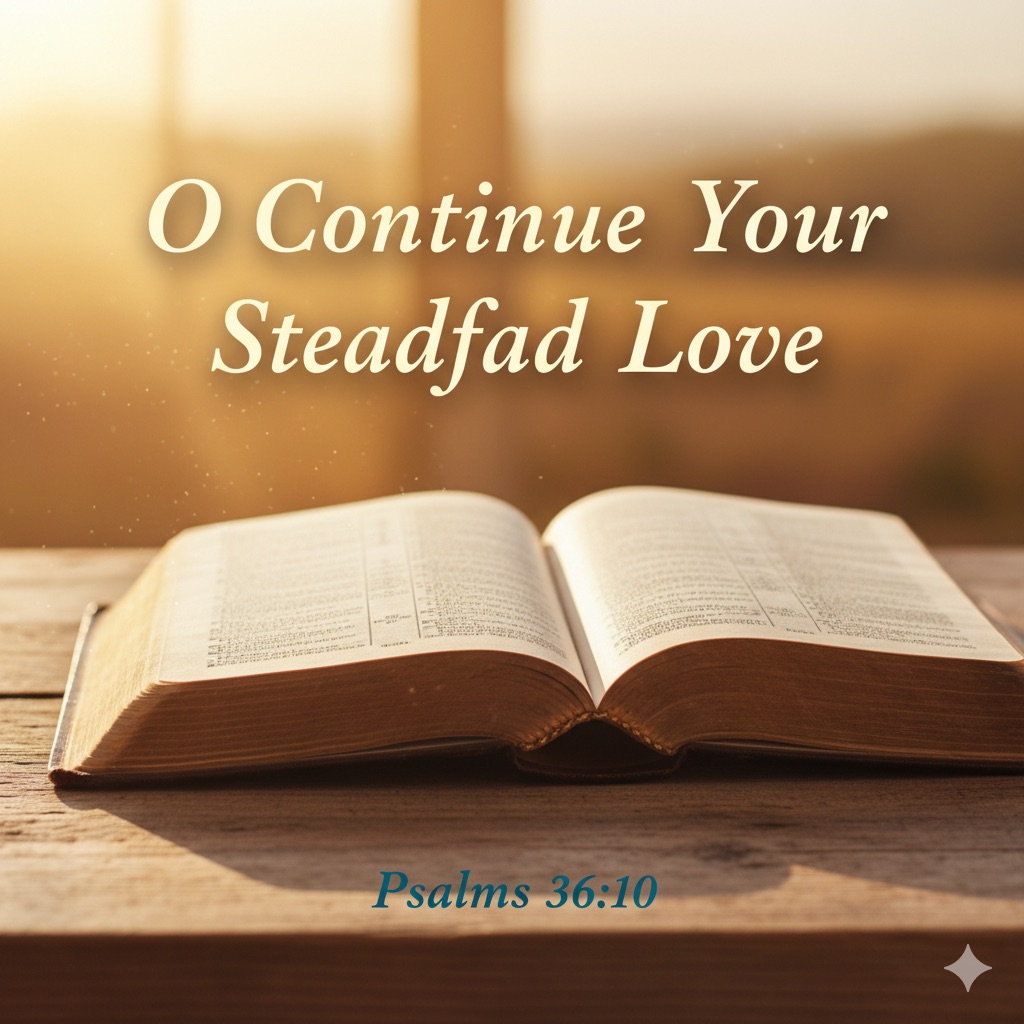
O continue your steadfast love to those who know you and your salvation to the upright of heart!

Psalms 36:10

Summary

This devotional on Psalm 36:10 explores the enduring nature of God’s steadfast love (“hesed”) and what it means for believers today. In a world defined by temporary commitments and conditional relationships, the psalmist’s plea—“Continue your steadfast love to those who know you”—reveals a God whose love is eternal, reliable, and covenantal.

The reflection highlights that this love is not something we must earn; it flows from God’s unchanging character. To “know” God is to live in intimate relationship with Him, while the “upright of heart” are those who pursue righteousness with sincerity.

The message calls readers to gratitude and trust, reminding them that God’s love and salvation are ongoing realities, not past events. It invites believers to reflect God’s constancy in their own relationships and to rest in the assurance of His faithful presence.

The devotional concludes with a heartfelt prayer of thanksgiving and commitment, encouraging daily renewal in faith and upright living.

Reflection

In this beautiful verse from Psalm 36, the psalmist David offers us a prayer that resonates across the centuries, speaking to the deepest longing of the human heart: the desire for God’s unfailing love and salvation to continue in our lives.

The word “continue” is particularly significant here. It acknowledges that we have already experienced God’s steadfast love, and now we plead for its continuation. This steadfast love, or “hesed” in Hebrew, describes a loyal love, covenant-keeping, and utter reliability. It is not based on our merit but on God’s character. Unlike human love that fluctuates with circumstances, God’s love remains constant, unwavering, and eternal.

The psalmist identifies two groups who are recipients of this divine love: “those who know you” and “the upright of heart.” To know God is not merely an intellectual acknowledgement but an intimate relationship. It is the knowledge that comes from walking with Him, conversing with Him in prayer, and experiencing His presence in our daily lives. The upright of heart are those who maintain integrity and sincerity before God, not claiming perfection but pursuing righteousness with genuine hearts.

In our fast-paced world where everything seems temporary and conditional, this verse offers us tremendous comfort. We serve a God whose love does not expire, whose mercies are new every morning, and whose salvation is not a one-time event but a continuous reality in our lives. When we feel inadequate or unworthy, we can remember that God’s steadfast love continues not because of who we are, but because of who He is.

Today, let us take a moment to thank God for His constant love and grace. May we draw closer to Him and live with sincere and upright hearts.”

May we be channels of this steadfast love to others, reflecting the constancy of God’s character in a world that desperately needs to experience unwavering love.

As we face the opportunities and challenges of this day, let us rest in the assurance that God’s steadfast love surrounds us, His salvation upholds us, and His faithfulness will never fail.

Prayer for Today:

Heavenly Father, we thank You for Your steadfast love that continues day after day in our lives. Help us to know You more intimately and to walk with upright hearts before You. May Your salvation be our strength and Your love be our refuge. In Jesus’ name, Amen.

Reflection prepared by Johnbritto Kurusumuthu in response to the daily verse forwarded by His Excellency, Rt. Rev. Dr. Selvister Ponnumuthan.

Check the Rise & Inspire “Wake-Up Calls” archive at riseandinspire.co.in

© 2025 Johnbritto Kurusumuthu | Rise & Inspire Devotional Series

Word count:738

What If the Most Important Person You Met Was Never Famous?

Daily writing prompt
Who is the most famous or infamous person you have ever met?

I’ve never met anyone famous — and that’s the point. The most impactful people I’ve known were ordinary individuals whose quiet work and kindness changed how I see the world.

We chase fame as if it validates our existence — a brush with the well-known becomes a badge of worth. But what if the most meaningful person you ever met never appeared on a screen? Maybe the stories that shape us most unfold quietly, far from the spotlight.

WordPress Daily Prompt 2119— 11 November 2025: “Who is the most famous or infamous person you have ever met?”

The question returns, familiar as déjà vu: Who is the most famous or infamous person you have ever met?

I’ve answered it before — in 2023 and again in 2024 — each time peeling back another layer of why we even ask it. The repetition of this prompt feels almost poetic now, as if the algorithm itself is nudging us to notice how obsessed we’ve become with fame.

But perhaps the more interesting question isn’t who we’ve met — it’s why it matters so much that they’re famous.

We’ve been conditioned to treat proximity to fame as a form of achievement. A photo with a celebrity becomes a kind of social currency — proof that, for a fleeting second, we were near someone who mattered. But fame is not the same as significance. Visibility is not the same as value.

When I think about the people who’ve shaped me, they are not household names. They won’t trend or be verified on social media. There was the retired librarian who spent decades digitising local histories so future generations wouldn’t lose them. The schoolteacher who quietly paid her students’ exam fees when families couldn’t afford them. The social worker who refused to give up on a boy the system had already written off.

They have no fans, no followers, no red-carpet moments — yet their influence runs deeper than any viral headline.

Fame is a magnifying glass; it enlarges what’s already visible. But most of what sustains the world happens outside that frame — in classrooms, kitchens, community centres, and quiet offices where people do the work that doesn’t make the news. The archivist who documents vanishing stories, the nurse who shows up every night shift, the neighbour who checks in on the elderly — they are the true architects of human connection.

So when I’m asked, “Who is the most famous or infamous person you’ve met?” I can only answer honestly: I don’t measure people that way anymore.

Maybe the more transformative question is this: Who have you met that changed how you see the world — even if no one else knows their name?

Because sometimes the most extraordinary encounters happen far from the spotlight.
And perhaps the most interesting answer to this recurring prompt is simply:
“No one famous — just people who made a difference.”

© 2025 Rise&Inspire. All Rights Reserved.

Social Media: @RiseNinspireHub

Contact: kjbtrs@riseandinspire.co.in

Website: Home | Blog | About Us | Contact| Resources

Word Count:506