Why Should Christians Stop Fearing When God Is Present?

Most advice about overcoming fear tells you to be stronger or think differently. Scripture takes a completely different approach. This verse from Deuteronomy points you away from yourself and toward the only source of courage that actually works.

Fear asks what if everything goes wrong. Faith answers with who is present when it does. Deuteronomy 7:21 settles the question of whether you face today’s challenges alone or accompanied by someone infinitely greater.

Some Bible verses offer comfort. Others offer correction. This one from Deuteronomy offers something better: a reality check about the size of your God compared to the size of your fears. The comparison is not even close.

Daily Biblical Reflection – Verse for Today (30th January 2026)

“Have no dread of them, for the Lord your God, who is present with you, is a great and awesome God.”Deuteronomy 7:21

Today, the 30th day of 2026This is the 30th reflection on Rise&Inspire in the wake-up call category in 2026

Verse for Today (30 January 2026)

I was moved this morning to write these reflections after receiving the Verse for Today (30 January 2026) from His Excellency, Rt. Rev. Dr. Selvister Ponnumuthan.

A Reflection on Divine Presence in the Midst of Fear

Dear brothers and sisters in Christ,

As we stand at the threshold of a new day, the Lord speaks to us through the ancient words given to His people Israel. These words, though spoken millennia ago, pulse with life and relevance for our journey today. Moses was preparing God’s people to enter a land filled with challenges, uncertainties, and formidable opponents. Yet the instruction was clear and direct: “Have no dread of them.”

How often do we find ourselves paralysed by dread? The anxieties that creep into our hearts in the quiet hours of the night, the fears that assault us when we face opposition or uncertainty, the trembling that accompanies us into difficult conversations or challenging circumstances. We live in times that seem designed to cultivate fear. Economic uncertainties, health concerns, relational strains, professional pressures, and the simple weight of living in a broken world can all conspire to fill our hearts with dread.

But notice the foundation upon which this command rests. We are not told to deny our fears or to manufacture courage through sheer willpower. Instead, we are pointed to a deep truth: “the Lord your God, who is present with you, is a great and awesome God.” The antidote to dread is not positive thinking or self-confidence. It is the conscious awareness of God’s presence.

The Lord your God is present with you. Not distant. Not disinterested. Not preoccupied with cosmic matters too grand to include your particular struggle. He is present, right here, right now, in this very moment as you read these words. The God who spoke galaxies into existence, who numbers every hair on your head, who knows the end from the beginning, walks beside you today.

And He is not merely present. He is great and awesome. The Hebrew word translated as “awesome” speaks of a God who inspires reverent wonder, whose power and majesty exceed all human comprehension. Whatever you face today, whatever giant looms on your horizon, whatever impossibility blocks your path, it is small in comparison to the God who stands with you. The forces arrayed against you, real though they may be, are nothing before the One who parts seas, topples walls, and turns the hearts of kings like channels of water.

This is the call to courage that echoes through Scripture. Joshua heard it: “Be strong and courageous. Do not be frightened, and do not be dismayed, for the Lord your God is with you wherever you go.” David knew it when he faced Goliath, declaring that the battle belongs to the Lord. The disciples learned it when Jesus calmed the storm and asked, “Why are you so afraid? Have you still no faith?”

As we walk through this 30th day of the year, let us practice the discipline of remembering God’s presence. When anxiety rises, pause and whisper, “The Lord is with me.” When challenges mount, recall His greatness. When opposition appears insurmountable, remind yourself that you serve an awesome God who has never met a problem He could not solve or an enemy He could not overcome.

The Christian life is not a journey free from difficulty, but it is a journey never taken alone. We do not walk in our own strength, relying on our limited resources and fragile courage. We walk hand in hand with the Almighty, whose presence transforms every valley of shadow into an opportunity for His light to shine, every battle into a testimony of His faithfulness.

Today, whatever you face, face it with this truth anchored in your soul: The Lord your God is present with you, and He is great and awesome. Let that truth banish dread and birth in you a holy confidence that rests not in circumstances, but in the unchanging character of the One who has promised never to leave you nor forsake you.

May this day be marked not by the fears that assail you, but by the faith that sustains you. May you walk in the peace that comes from knowing you are never alone. And may the presence of our great and awesome God be more real to you than any challenge you encounter.

Joshua 1:9 as the Echo of Deuteronomy 7:21

“When Courage Becomes Obedience: From Deuteronomy to Joshua”

This same call resounds powerfully in the life of Joshua, Moses’ successor, at one of Israel’s most critical moments. Standing at the edge of the Jordan River, with Moses gone and the Promised Land still unconquered, Joshua faced an overwhelming task. He would lead a people shaped by fear, confront fortified cities, and step into the shadow of a leader unlike any before him. Into that moment of uncertainty, God spoke with unmistakable clarity:

“Have I not commanded you? Be strong and courageous. Do not be frightened, and do not be dismayed, for the Lord your God is with you wherever you go.” (Joshua 1:9)

Notice the striking continuity with today’s verse from Deuteronomy. The command is the same. The foundation is the same. The reason fear is forbidden is not that danger has disappeared, but that God is present. Deuteronomy 7:21 says, “Have no dread of them,” because “the Lord your God, who is present with you, is a great and awesome God.” Joshua 1:9 presses the truth further: because God is present, courage is no longer optional—it is commanded.

Joshua is not told to feel brave. He is told to act in obedience to God’s presence. Fear and discouragement are named as real temptations, but they are not given authority. The authority belongs to the God who goes with His servant “wherever you go.” The geography may change—from wilderness to river to battlefield—but the presence of God remains constant.

This is where fear begins to lose its grip. Fear magnifies the unknown. Faith magnifies the One who is already there. What Deuteronomy declares about God’s greatness, Joshua 1:9 applies to God’s guidance. Together, they teach us that dread dissolves not when circumstances improve, but when awareness of God’s nearness deepens.

From Reflection to Biblical Formation

This reflection does more than invite readers to feel encouraged; it actively forms the mind and heart according to Scripture. By tracing the theme of God’s presence from Deuteronomy to Joshua, the post moves beyond momentary comfort into biblical formation—shaping how believers understand fear, obedience, and courage through God’s revealed character.

Rather than asking, “How do I feel today?” it trains readers to ask, “What has God said, and how must I live in response?” Fear is not merely soothed; it is reframed. Courage is not emotional confidence; it is obedient trust rooted in the unchanging presence of a great and awesome God.

In this way, the post functions as a wake-up call in the truest sense—awakening readers to a Scripture-shaped way of seeing reality, where faith is practiced daily, not just felt temporarily.

In Christ’s abundant grace,

A fellow pilgrim on the journey

© 2026 Rise&Inspire

Reflections that grow with time.

Website: Home | Blog | About Us | Contact| Resources

Category: Wake-Up Calls

Scripture Focus: Deuteronomy 7:21

Word Count:1407

Why We Love Watching Some Sports but Playing Others

Cricket and football are my favourite sports to watch—their mix of strategy and energy always captivates me. When it comes to playing, I enjoy badminton and volleyball for their agility, teamwork, and quick reflexes.

Daily writing prompt
What are your favorite sports to watch and play?

Some sports captivate us from the stands. Others pull us into the game.

Why does one thrill us as a spectator while another only makes sense when we feel it in our muscles and breath?

This reflection explores how our favourite sports quietly mirror who we are becoming.

What Are Your Favourite Sports to Watch and Play?

Sports have always been more than competition—they’re windows into rhythm, discipline, and joy. When I think about my favourites, I see two sides of myself: the spectator who marvels at strategy and artistry, and the participant who feels the pulse of movement firsthand.

✔️To watch: I’m drawn to cricket and football. Cricket’s patience and precision mirror life’s long arcs, while football’s energy and unpredictability remind me of the thrill of the unexpected.

✔️To play: Badminton and volleyball are my go-to choices. They demand agility, teamwork, and quick reflexes—qualities that spill over into daily life and creative work.

Every year, this prompt nudges me to reflect on how my relationship with sports mirrors my growth. Sometimes the favourites remain the same, sometimes they shift, but the meaning deepens.

📖 Related reflections from past years:

© 2025 Rise & Inspire. Follow our journey of reflection, renewal, and relevance.

Website: Home | Blog | About Us | Contact| Resources

Word Count:239

Why Do We Hesitate to Ask for Prayer When the Bible Commands It?

What if the greatest act of faith isn’t pretending you’re strong enough to handle everything alone? James 5:14 flips our self-sufficient mindset upside down with a simple instruction that most of us avoid: call for help. This single verse reveals a pathway to healing that our isolated, individualistic world desperately needs to rediscover.

Daily Biblical Reflection – Verse for Today (29th January 2026)

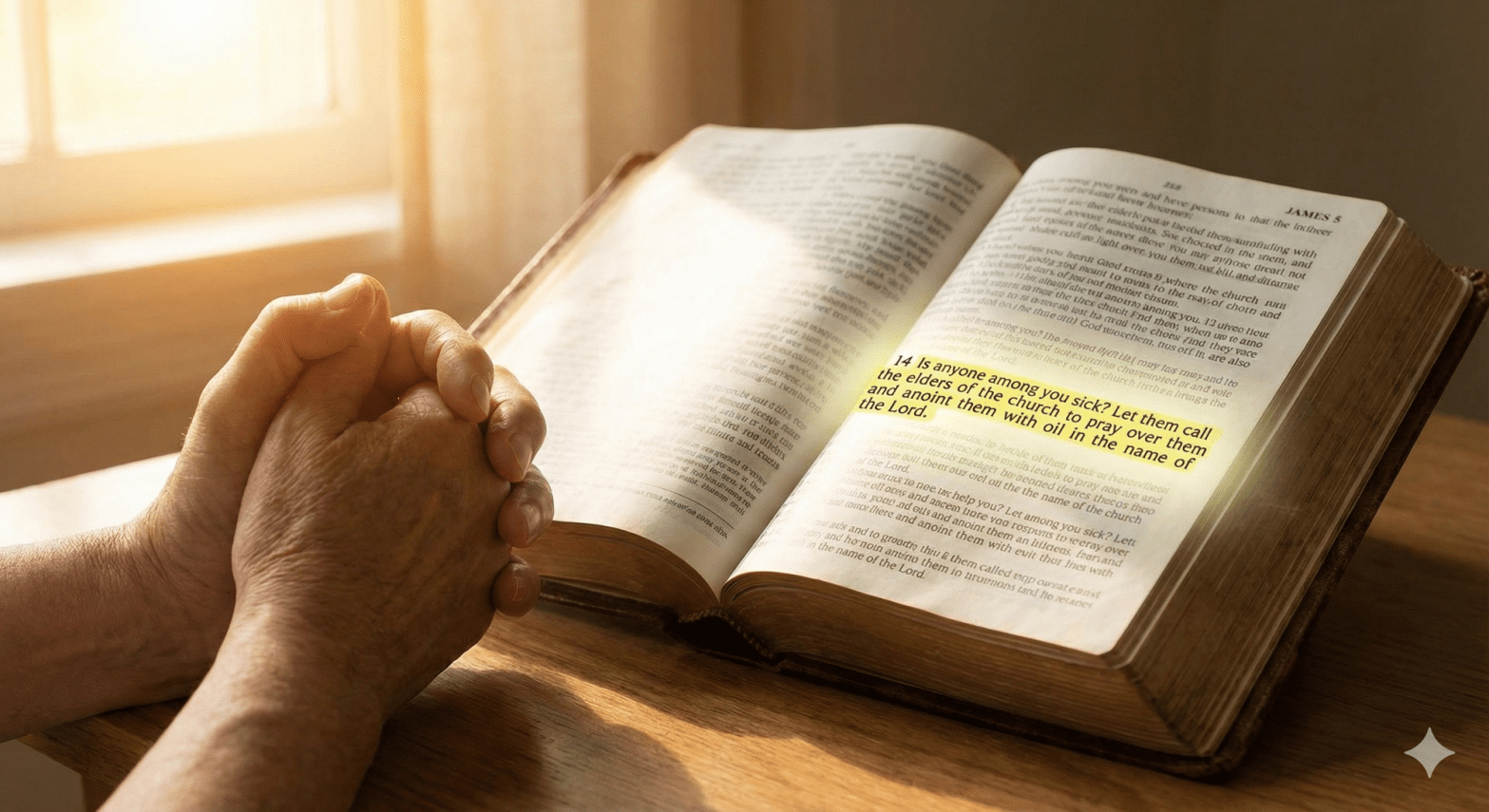
“Are any among you sick? They should call for the elders of the church and have them pray over them, anointing them with oil in the name of the Lord.”

James 5:14

Today, the 29th day of 2026. This is the 29th reflection on Rise&Inspire in the wake-up call category in 2026.

Verse for Today (29 January 2026)

This morning, I was inspired to write these reflections after His Excellency, Rt. Rev. Dr. Selvister Ponnumuthan shared the Verse for Today (29 January 2026).

The Apostle James offers us a timely invitation this morning, one that speaks directly to our human vulnerability and our deepest need for community in times of suffering. When sickness comes, whether it touches our bodies, minds, or spirits, we are reminded that we were never meant to bear our burdens alone.

Notice the tender wisdom in James’s instruction. He does not say, “If you are sick, suffer in silence.” He does not suggest that faith means pretending we are invincible. Instead, he says, “Call for the elders.” There is no shame in admitting our need. There is no weakness in asking for help. In fact, reaching out becomes an act of faith itself, a recognition that healing flows through the body of Christ, through the prayers of God’s people gathered in love.

The anointing with oil carries layers of meaning that stretch back through Scripture. Oil symbolises the Holy Spirit’s presence, God’s consecration, and His healing touch. But beyond the symbol, we find something beautifully practical. The elders come. They draw near. They lay hands on the sick. They pray. In a world that often leaves the suffering isolated, the church is called to draw close, to bring the tangible presence of Christ to those who hurt.

This passage reminds us that we serve a God who cares about our whole person. He is not indifferent to our physical pain, our emotional anguish, or our spiritual struggles. The Lord who spoke worlds into existence is the same Lord who bends low to hear the groan of His suffering child. He invites us to bring every sickness, every struggle, every burden to Him through the prayerful ministry of His church.

But there is something more here. This verse also calls us to be the elders, the ones who respond when someone calls. It invites us to create the kind of Christian community where people feel safe enough to admit their weakness, where no one has to pretend to have it all together, where prayers are not just polite words but powerful acts of faith.

Today, if you are carrying sickness or sorrow, hear James’s words as a gentle encouragement. Reach out. Let the church be the church for you. Let others pray, anoint, and stand with you in faith. And if you are healthy and strong today, hold yourself ready. Someone may need you to be the hands of Christ, the voice of prayer, the bearer of oil and hope.

In the name of the Lord, we find both our calling and our comfort. We are never alone in our suffering, and we are never without purpose in another’s pain.

May this day bring you courage to call when you are weak, and compassion to answer when others call. May you know the healing presence of Christ, whether it comes through miraculous touch or through the faithful, prayerful presence of His people who refuse to let you suffer alone.​​​​​​​​​​​​​​​​

When Prayer Leads to Restoration, Not Just Relief (James 5:15–16)

James does not stop at the call to summon the elders. He carries the invitation further—into the heart of what prayer is meant to do within the church.

He tells us that “the prayer offered in faith will make the sick person well; the Lord will raise them up.”This is not a promise of instant outcomes on demand, but a declaration of divine involvement. Healing begins not with human strength, but with God’s action. The raising up James speaks of may restore the body, renew the spirit, or ultimately anchor the believer in resurrection hope—but in every case, the Lord is the One who acts.

Then James dares to go deeper. “If they have sinned, they will be forgiven.” Here, healing is no longer merely physical. It becomes personal. Relational. Spiritual. James acknowledges what we often avoid admitting—that unconfessed sin, unresolved guilt, and broken relationships can weigh heavily on the soul and even spill into our suffering. Yet there is no condemnation here. Only mercy. In the presence of prayer and humility, forgiveness flows freely.

That is why James draws the circle wider: “Therefore confess your sins to each other and pray for each other so that you may be healed.” This is where many of us hesitate most. We are willing to be prayed for, but not known. We want healing without vulnerability, restoration without exposure. But Scripture offers no such shortcut. God’s design for healing includes honesty, mutual prayer, and shared burdens. The church becomes a place not of performance, but of grace.

James concludes with a quiet yet powerful assurance: “The prayer of a righteous person is powerful and effective.” Righteousness here is not flawless living, but faithful living—a life oriented toward God, open to repentance, and anchored in trust. Such prayer is not passive. It works. It moves. It participates in God’s restoring work among His people.

Together, James 5:14–16 dismantles the myth of self-sufficiency. It teaches us that healing often begins the moment we stop pretending we are fine and start obeying Scripture’s call to ask, confess, and pray—together.

Guided Journaling Exercise

James 5:14–16 | Healing Through Shared Prayer

Set aside a few quiet moments. Let your breathing slow. Invite the Lord to meet you here—not in perfection, but in honesty and grace.

Begin by noticing what you are carrying today. There is no need to minimise it or dress it up. Before God, name the weakness that has found its way into your life. It may be physical exhaustion, emotional heaviness, spiritual dryness, relational strain, or something you cannot quite put into words. Ask yourself how long you have been holding this quietly, and what story you have been telling yourself about why you must manage it alone. Write freely, without editing. God already knows what your heart is about to confess.

As you continue, turn your attention to the hesitation you feel around asking for prayer. Notice what stirs beneath the surface. Perhaps there is fear—of appearing weak, of being misunderstood, of losing control. Perhaps you learned long ago that strength meant silence and self-reliance. Do not judge what you discover. Simply observe it with compassion, allowing understanding to replace self-criticism.

Now, let Scripture speak to you personally. Read James’s words slowly: “Are any among you sick? They should call for the elders of the church…” Imagine these words written with your name in mind. What is this verse inviting you to do today? Where do you feel resistance, and where do you feel a quiet longing rising within you? Sit with the phrase that stays with you, and write it down as a way of holding it close.

As your heart opens further, gently ask whether there are wounds you have avoided bringing into the light. These may be regrets, sins, disappointments, or unresolved pain. Consider how confession—shared wisely and safely—might become a doorway to freedom rather than shame. Write only what you are ready to offer to God. Remember that grace never rushes; it moves at the pace of trust.

Then lift your gaze beyond yourself and imagine the community God has placed around you. Who might He be inviting you to trust with your vulnerability? What would it look like to let the church be the church for you—to receive prayer, presence, and care without apology? Name just one person, even if the step feels small and tentative.

Before you close, allow your reflection to turn outward. Ask whom God might be calling you to notice more attentively today. Someone may need your listening ear, your prayerful presence, or your quiet compassion. Write down one simple intention you can carry with you—a small way of becoming part of God’s healing work in another’s life.

End your time in prayer, whether written or whispered:

Lord, I release my need to appear strong.

Teach me to trust Your healing work—

through prayer, through community, through grace.

Give me courage to ask, and compassion to respond.

Amen.

As you prepare to step into the day, hold onto this final question: What one small step can I take today to move from isolation toward shared prayer? Circle it. Carry it with you. Let it guide your heart.

© 2026 Rise&Inspire

Reflections that grow with time.

Website: Home | Blog | About Us | Contact| Resources

Category: Wake-Up Calls

Scripture Focus: James 5:14

Word Count:1571

Could Winning the Lottery Actually Ruin Your Life?  

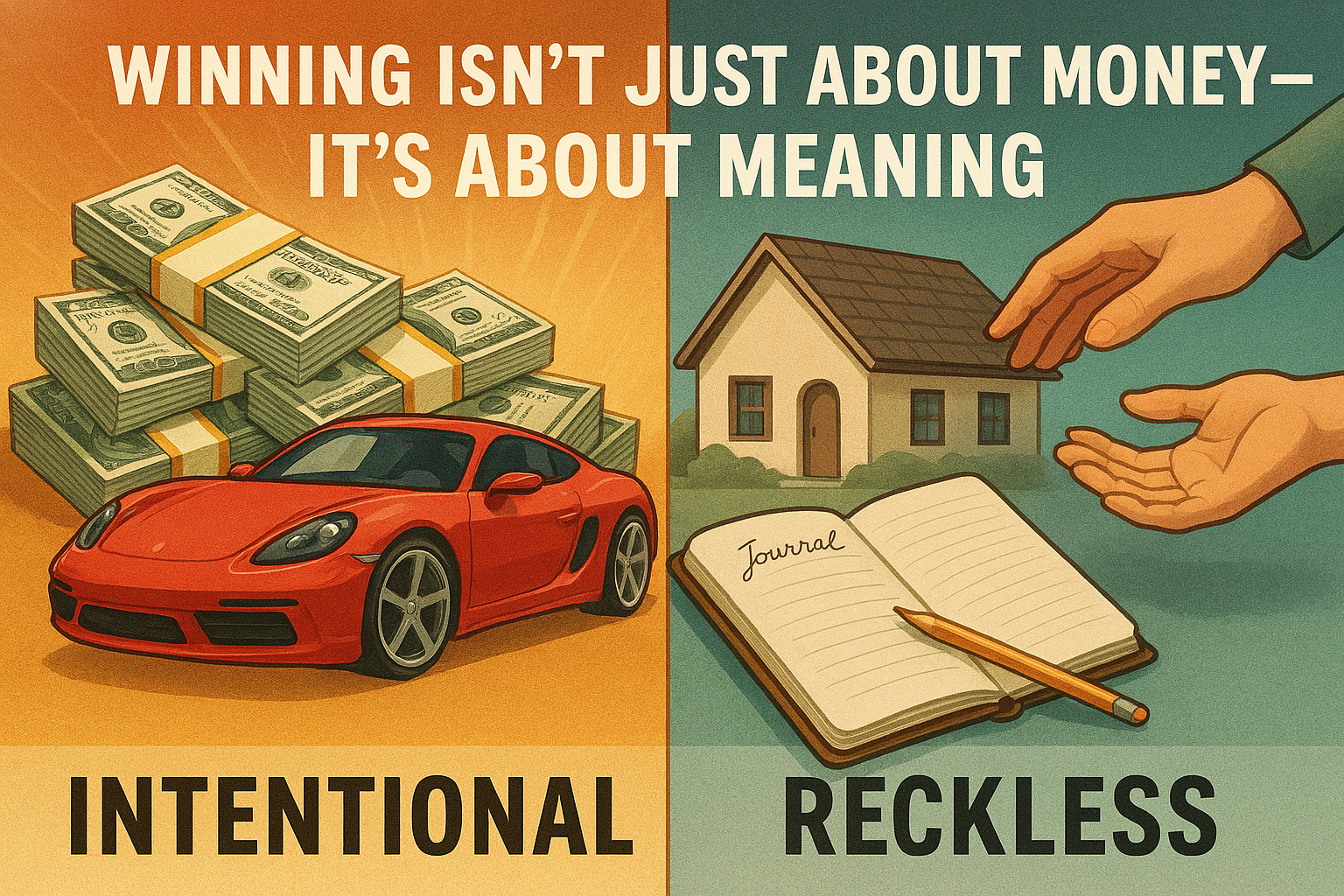
If I won the lottery, I wouldn’t chase luxury or extravagance. Instead, I’d focus on quiet freedoms—the ability to say no without fear and yes without calculation—while removing barriers between who I am and who I’m meant to become.

I’d establish a modest foundation for mental health access in rural India, fund scholarships for first-generation students (including life skills like financial literacy, emotional resilience, and creative courage), buy a small house in the hills for silence, retreats, and creativity, and allow myself to create (like writing poems or planting a garden) without needing to monetize everything.

Ultimately, it’s not about the money—it’s about using time, attention, kindness, and presence wisely, as those are the richer currencies we already hold.

Daily writing prompt
What would you do if you won the lottery?

Imagine waking up with enough money to never work again. Now imagine losing everything—your privacy, your friendships, even your sense of self—within five years. The difference between those two outcomes isn’t luck. It’s preparation.  

What Would I Do If I Won the Lottery? (2026 Edition)

Two years ago, I wrote about buying time—not things.  

Last year, I spoke of vision beyond windfalls.  

Today, in 2026, my answer hasn’t changed much—but it’s deepened.

If I won the lottery, I wouldn’t chase yachts or private islands. I’d invest in “quiet freedoms”: the ability to say “no” without fear, to say “yes” without calculation, and to walk away from anything that dims my light or drains another’s.

I’d set up a modest foundation focused on “mental health access in rural India”—because healing shouldn’t be a privilege. I’d fund scholarships for first-generation students, not just for college, but for life skills: financial literacy, emotional resilience, creative courage.

I’d buy a small house by the hills—not for luxury, but for silence. A place where friends could rest, writers could retreat, and ideas could breathe.

And yes, I’d permit myself to create without monetising every thought. To write poems that don’t go viral. To plant a garden that feeds no one but the bees.

Because winning the lottery isn’t really about money.  

It’s about “removing the barriers between who you are and who you’re meant to become”.

So maybe we don’t need a jackpot.  

Maybe we just need to remember: we already hold currencies far richer than cash—time, attention, kindness, presence.

Use those wisely, and you’ve already won.

Looking Back: Earlier Reflections on the Same Question

Final reassurance 🌱

Publishing this is not repetition.

It’s documentation of growth—something your long-time readers will feel, even if they can’t immediately name it.

© 2025 Rise & Inspire. Follow our journey of reflection, renewal, and relevance.

Website: Home | Blog | About Us | Contact| Resources

Word Count:468

How Can Divine Protection Transform Your Daily Anxieties and Fears?

What if the security you have been desperately trying to create for yourself was never yours to build in the first place? What if the protection you need has already been provided—held not in your trembling hands, but in the hands of the Holy One? This morning’s verse turns our self-reliant assumptions upside down with one powerful truth.

Daily Biblical Reflection – Verse for Today (28 January 2026)

“For our shield belongs to the Lord,

our king to the Holy One of Israel.”

Psalm 89:18

Today, the 28th day of 2026, marks the 28th wake-up call reflection on Rise&Inspire this year.

This morning, His Excellency, Rt. Rev. Dr. Selvister Ponnumuthan forwarded the Verse for Today (28 January 2026), which inspired these reflections.

A Shield That Belongs to the Lord

Dear friends in Christ,

As we begin this Wednesday morning, the psalmist offers us a word of deep reassurance—one that has the power to reshape how we face our daily anxieties and fears. In Psalm 89:18, we encounter not merely a comforting promise, but a revelation about the true source of our security.

Notice the striking language: our shield belongs to the Lord. The psalmist does not say that we possess a shield, or that we must carefully craft our own defence against life’s uncertainties. Rather, the shield itself is God’s possession, graciously extended to cover us. This is a profound shift in perspective. We are not self-made fortresses, struggling to protect ourselves through strength, resources, or clever planning. We are people who dwell under divine protection, recipients of grace that flows from the throne of the Holy One.

In ancient Israel, a shield was not an accessory—it was essential. It stood between the soldier and death, between defeat and survival. Yet even this most basic form of protection, the psalmist declares, does not ultimately belong to us. It belongs to God. Our king, our sovereign, our source of authority and safety, is none other than the Holy One of Israel.

And here is something deeply important to remember: this verse does not arise from a moment of ease or triumph. Psalm 89 is a psalm shaped by tension. It begins by celebrating God’s covenant faithfulness to David, but it later cries out in anguish as that covenant appears to be unravelling. The psalmist speaks honestly of defeat, humiliation, and unanswered questions. And yet, in the midst of that unresolved pain, he declares this truth: our shield belongs to the Lord.

This means that divine protection is not a promise that life will be free of struggle. It is a declaration that even in uncertainty, loss, and vulnerability, our lives remain held within God’s faithful care. The psalm teaches us that faith does not deny reality—it entrusts reality to God.

How close this feels to our own lives.

Many of our anxieties arise not because we lack faith, but because we are living between promise and fulfilment, between what we believe God has spoken and what we are currently experiencing. We worry about health, family, finances, responsibilities, and the future. We feel exposed, burdened, and unsure how to defend ourselves against circumstances beyond our control.

The word for us this morning is simple and freeing: you do not have to be your own shield. You were never meant to carry that weight. The Lord himself is your defence—your covering, your protection. He who neither slumbers nor sleeps watches over you. He who spoke galaxies into existence and knows every star by name knows your name, knows your need, knows your next step.

But the verse goes further.

It tells us that our king belongs to the Holy One of Israel. God is not only our protector; he is our sovereign. Yet this kingship is not distant or harsh. This is the Holy One who entered into a covenant with his people, who heard their cries in Egypt, who guided them through the wilderness, who remained faithful even when they wandered. This is the God who, in the fullness of time, sent his own Son to be our shield—bearing upon himself the arrows meant for us at Calvary.

When we say, “Our shield belongs to the Lord,” we are acknowledging that our security, our identity, and our very lives are not held in our anxious grip, but in his nail-scarred hands. When we confess that our king belongs to the Holy One, we declare that the final authority over our lives is not the shifting opinions of culture, not the power of earthly rulers, not even our own carefully laid plans—but the eternal, unchanging love of God.

So today, let us walk in this confidence.

Let us move through our responsibilities and relationships not with the tense vigilance of those who must protect themselves at all costs, but with the open-handed peace of those who know they are already protected. Let us make our decisions not as people pulled in a thousand directions, but as servants of one King—the Holy One who is faithful and true.

In your workplace today, remember whose you are. In your home, in your studies, in your service, and in your rest, remember who shields you. When criticism comes, when disappointment threatens, when the future feels uncertain, lift your eyes to the Holy One of Israel and remember this ancient truth: your shield belongs to him—and so do you.

May this day find you walking in the freedom and confidence that come from knowing you are covered by divine protection and governed by divine love. May you experience anew the peace that surpasses understanding as you entrust yourself, your loved ones, and all your concerns to the Lord who is your shield and your king.

In Christ’s love and peace,

Your fellow traveller on the journey

© 2026 Rise&Inspire

Reflections that grow with time.

Website: Home | Blog | About Us | Contact| Resources

Category: Wake-Up Calls

Scripture Focus: Psalms 89:18

Word Count:1012

What Kind of Books Do You Want to Read Now—And Why?

I want to read books that meet me where I am—books that offer quiet wisdom, explore faith and meaning, allow me to listen, and grow with me as companions rather than goals.

Daily writing prompt
What books do you want to read?

Once, I read to keep up.

Now, I read to slow down.

This reflection explores how the books we want to read quietly reveal who we are becoming—and what we truly seek.

What Books Do I Want to Read?

Once, I chased books.

Titles, lists, intentions neatly stacked like promises.

I read with urgency, as though time were watching.

Now, I read differently.

I want books that meet me where I am—

not where I planned to be.

Books that wait when I need to rest

and welcome me back without questions.

I want books that offer wisdom quietly,

that speak of faith without noise,

that sit with unanswered questions

and call that enough.

I want stories that feel human—

uncertain, gentle, unfinished.

Stories that remind me

that searching is not a flaw

but a way of being alive.

Most of all, I want books that age with me.

Books that change as I change.

Books that stop being possessions

and slowly become companions.

Perhaps this is what reading becomes over time

not ambition,

not achievement,

but relationship.

And like all true relationships,

it grows,

it softens,

it stays.

Looking Back

I have answered this question before.

Those reflections remain—

markers of who I was then.

A Closing Line

The books I want to read

are the ones that walk with me—

quietly,

faithfully,

one page at a time.

© 2025 Rise & Inspire. Follow our journey of reflection, renewal, and relevance.

Website: Home | Blog | About Us | Contact| Resources

Word Count:311

What Does the Aaronic Blessing in Numbers 6:24-26 Really Mean for Your Life Today?

What if the most powerful prayer you could receive today was spoken over three thousand years ago? The Aaronic blessing from Numbers 6:24-26 is not simply a beautiful collection of words meant to comfort us. It is a divine pronouncement, a sacred formula given directly by God to mark His people with His very name. When these words are spoken over you, something shifts in the spiritual realm. You are blessed, kept, favoured, and given a peace that the world cannot replicate. This morning, let these ancient words breathe new life into your day.

Daily Biblical Reflection – Verse for Today (27th January 2026)

“The Lord bless you and keep you; the Lord make his face to shine upon you and be gracious to you; the Lord lift up his countenance upon you and give you peace.”

Numbers 6:24-26

Today, the 27th day of 2026. This is the 27th reflection on Rise&Inspire in the wake-up call category in 2026.

This morning, His Excellency, Rt. Rev. Dr. Selvister Ponnumuthan forwarded the Verse for Today (27th January 2026), which inspired me to write these reflections.

A Benediction That Transforms

There is something profoundly beautiful about beginning our day with the ancient words of the Aaronic blessing. These verses from Numbers 6 are not merely a prayer or a wish. They are a divine pronouncement, a sacred formula that God himself gave to Aaron and his sons to speak over the people of Israel. When we read these words today, we stand in a tradition that stretches back over three millennia, receiving the same blessing that sustained our ancestors in their faith.

What makes this blessing so powerful is its threefold structure, each layer building upon the previous one, drawing us deeper into the heart of God’s love for us.

The Lord Bless You and Keep You

The blessing begins with the most fundamental promise: God’s desire to bless and protect us. To be blessed by the Lord is to experience his favour, his goodness, his generous provision in every area of life. But notice that the blessing is paired immediately with keeping. God does not simply bestow gifts and then withdraw. He remains present, watchful, protective. He keeps us as a shepherd keeps his flock, as a parent keeps a child, with constant attention and unfailing care.

In our fast-paced world, where we often feel exposed and vulnerable to so many threats, both seen and unseen, this promise speaks directly to our deepest needs. The Lord keeps you. Whatever you face today, you are not alone. You are held in the palm of a hand that will not let you go.

The Lord Make His Face Shine Upon You

The second movement of the blessing introduces us to something even more intimate: the shining of God’s face upon us. In ancient Near Eastern culture, to have the king’s face shine upon you meant to be in his favour, to be welcomed into his presence, to know his pleasure and approval. But this is not an earthly king. This is the King of kings, and when his face shines upon us, we are bathed in the light of divine love.

Think of the warmth of the sun on your face on a cold morning. That is the image here. God’s face turned toward us, not in anger or judgment, but in radiant acceptance and joy. And notice the result: he is gracious to you. Grace is the unmerited favour of God, the gift we could never earn or deserve but which he gives freely because of who he is, not because of what we have done.

The Lord Lift Up His Countenance Upon You

The final movement brings us to the climax: the Lord lifts up his countenance upon you. This is the language of an intimate relationship. When we lift up our face to look at someone, we are giving them our full attention, our complete focus. God is not distracted, not preoccupied with other matters. He looks at you, sees you fully, knows you completely, and the result of this divine gaze is peace.

Not the peace of mere absence of conflict, but shalom, the Hebrew word that encompasses wholeness, completeness, harmony, flourishing in every dimension of life. This is the peace that passes understanding, the peace that the world cannot give and cannot take away.

Living in the Light of the Blessing

As we carry this blessing with us today, let us remember that these are not empty words or pious sentiments. They are the very words God instructed his priests to speak over his people, and in verse 27, he promises: “So they shall put my name upon the people of Israel, and I will bless them.”

When we receive this blessing, we are marked with the name of God himself. We belong to him. We are his beloved children, chosen, cherished, and kept by his mighty hand and outstretched arm.

Whatever challenges this day may bring, whatever uncertainties lie ahead, we can walk forward in confidence because we carry this blessing with us. The Lord blesses us and keeps us. His face shines upon us with grace. His countenance is lifted upon us in peace.

May you experience the reality of this ancient blessing in fresh and tangible ways today. May you know, in the depths of your being, that you are blessed, you are kept, you are loved beyond measure, and you are at peace in the arms of the One who made you and calls you by name.

Amen.​​​​​​​​​​​​​​​​

A Blessing That Still Lives in Worship

What makes the Aaronic Blessing so extraordinary is that it has never been confined to the past. From the wilderness of Sinai to today’s synagogues and churches, these words continue to be spoken, heard, and received as a living channel of God’s grace.

In Jewish worship, this blessing—known as Birkat Kohanim—is not merely remembered; it is enacted. Descendants of Aaron ascend the dukhan, cover themselves with their tallit, and lift their hands in a sacred gesture as the words of blessing are pronounced. The congregation responds with faith-filled Amen, receiving not a human wish, but a divine act. As the Lord promised in the Book of Numbers 6:27, God’s own Name is placed upon His people, marking them as His own and surrounding them with protection, favour, and peace. Even within the intimacy of the home, Jewish parents echo this tradition each Sabbath, blessing their children with these ancient words of identity and hope.

In Christian worship, the same blessing has been cherished for centuries as a sending-forth benediction. Spoken at the close of Mass, liturgies, prayer services, and gatherings, it reminds believers that they do not walk back into the world alone. Whether pronounced by a priest, pastor, or minister, the blessing remains God’s action, not the speaker’s. The Church receives it as a gift of grace fulfilled in Christ, carrying divine peace into daily life, work, family, and mission.

Across both traditions, the meaning remains unchanged:

God turns toward His people.

God speaks blessings.

God grants peace.

This continuity—stretching back more than three thousand years—assures us that when these words are spoken over us today, we stand in a living stream of faith that has never run dry.

Sacred Truths from the Aaronic Blessing

1. What is the Aaronic (Priestly) Blessing?

The Aaronic Blessing is a three-line benediction given by God to Moses for Aaron and his sons to speak over the people of Israel (Numbers 6:24–26). It invokes God’s blessing, protection, grace, and peace and places God’s name upon His people.

2. Is the Aaronic Blessing a prayer or a declaration?

It is more than a prayer. Biblically, it is a divine pronouncement. God instructs the priests to speak these words, and He promises, “I will bless them” (Numbers 6:27). The blessing does not merely ask God to act—it announces that He is acting.

3. Why is the blessing structured in three parts?

The threefold structure reveals a progression:

Blessing and protection (“The Lord bless you and keep you”)

Grace and divine favour (“The Lord make His face shine upon you…”)

Peace and wholeness (“The Lord lift up His countenance upon you and give you peace”)

Each line deepens the relationship between God and His people.

4. What does it mean for God’s “face” to shine upon someone?

In biblical language, God’s shining face signifies favour, acceptance, and loving attention. It means God is turned toward His people with grace, not away from them in judgment.

5. What kind of peace does the blessing promise?

The peace mentioned is shalom—not merely the absence of conflict, but wholeness, harmony, well-being, and flourishing in every area of life: spiritual, emotional, relational, and physical.

6. Is this blessing still relevant for Christians today?

Yes. Christians receive this blessing through Christ, who fulfils God’s promises. It is widely used as a benediction in Christian worship, reminding believers that God’s favour and peace accompany them into daily life.

7. Why is the Aaronic Blessing often spoken at the end of worship services?

Because it is a sending blessing. It reassures worshippers that they leave God’s presence marked by His name, covered by His protection, and empowered by His peace.

8. Can individuals pray or speak this blessing over themselves or others?

Yes. While originally spoken by priests, the blessing is frequently used today in personal prayer, family devotions, and moments of encouragement—always acknowledging that God alone is the source of the blessing.

9. What does it mean to be “marked with God’s name”?

To bear God’s name means to belong to Him. It signifies identity, covenant relationship, and divine care. The blessing reminds believers that they are known, claimed, and loved by God.

10. How can I live in the light of this blessing daily?

By trusting God’s protection, receiving His grace without fear, and walking in His peace—especially during uncertainty. Let the blessing shape your mindset, your prayer, and your response to life’s challenges.

© 2026 Rise&Inspire

Reflections that grow with time.

Website: Home | Blog | About Us | Contact| Resources

Category: Wake-Up Calls

Scripture Focus: Numbers 6:24-26

Word Count:1723

How Do Simple Family Traditions Quietly Shape Our Faith and Values?

My favourite family traditions are beginning important days with prayer, sharing meals together, honouring elders, and celebrating life with simplicity and gratitude.

Daily writing prompt
Write about a few of your favorite family traditions.

Some family traditions never announce their importance. They repeat quietly, year after year, shaping faith, values, and belonging long before we recognise their power. This reflection explores how simple, lived traditions become lifelong spiritual anchors.

A Few Family Traditions That Still Lead Me Home

Some family traditions are not written down or consciously preserved. They are lived—day after day—until they quietly become part of our spiritual muscle memory. Long before we learn the language of faith or values, these traditions teach us how to stand, how to wait, and how to trust.

When I look back, I see how my family’s traditions were less about routine and more about orientation—gently turning our hearts toward what truly matters.

Important days in our home never began abruptly. There was always a moment of stillness before the movement began. A prayer. A word of gratitude. Sometimes it was spoken together; sometimes it was offered silently, each in our own way. As a child, I did not question it. As an adult, I understand it for what it was—a quiet acknowledgement that life is received, not controlled.

That simple moment of waiting shaped my faith more than many sermons. It taught me that before acting, we listen; before striving, we surrender.

Meals, too, carried a sacred quality. The table was not merely a place to eat, but a place to gather—where differences softened, stories flowed, and presence mattered more than perfection. We did not always agree, but we always returned to the table. In that rhythm, I learned that communion begins long before it reaches the altar.

Respect for elders was another tradition that gently formed my conscience. Elders were listened to with patience, even when their words circled familiar paths. Their stories carried memory, suffering, faith, and resilience. Sitting beside them, I learned that wisdom does not rush—and that honouring age is, in its own way, an act of reverence toward God’s work across generations.

Our celebrations followed the same spirit of restraint and gratitude. Festivals and birthdays were joyful, but never extravagant. Prayer came first. Togetherness followed. The emphasis was not on display, but on thanksgiving. Looking back, I see how this shaped my understanding of joy—not as excess, but as sufficiency.

None of these traditions demanded attention. They did not announce their importance. Yet they quietly formed a spiritual framework—teaching us to wait, to listen, to gather, and to give thanks.

Today, when life feels hurried and faith feels stretched thin, I return to these traditions instinctively. In the silence before a decision. In the longing to share a meal. In the patience to listen. In choosing simplicity when excess beckons.

I now understand that family traditions are not about preserving the past unchanged. They are about carrying forward a way of seeing life—a way that keeps God at the centre, even when His presence is felt more quietly than spoken.

And perhaps that is their greatest gift:

they lead us home—again and again—without ever needing directions.

📎 Earlier Reflections on This Theme

© 2025 Rise & Inspire. Follow our journey of reflection, renewal, and relevance.

Website: Home | Blog | About Us | Contact| Resources

Word Count:582

Is God Really Watching Everything You Do? What Deuteronomy 23:14 Reveals

Your home is not just where you live. Your workplace is not just where you earn. Your relationships are not just social contracts. When God travels with you, every ordinary space becomes a sanctuary. Every common moment becomes consecrated. The Israelites knew this. We’ve somehow forgotten it.

Every spiritual battle you face, every enemy that rises against you, every moment of vulnerability and fear, you don’t face it alone. God travels with your camp. Not as an occasional visitor or emergency responder, but as a constant companion. But here’s what nobody talks about: His presence isn’t just comfort. It’s a call to transformation.

Daily Biblical Reflection
Verse for Today (26th January 2026)
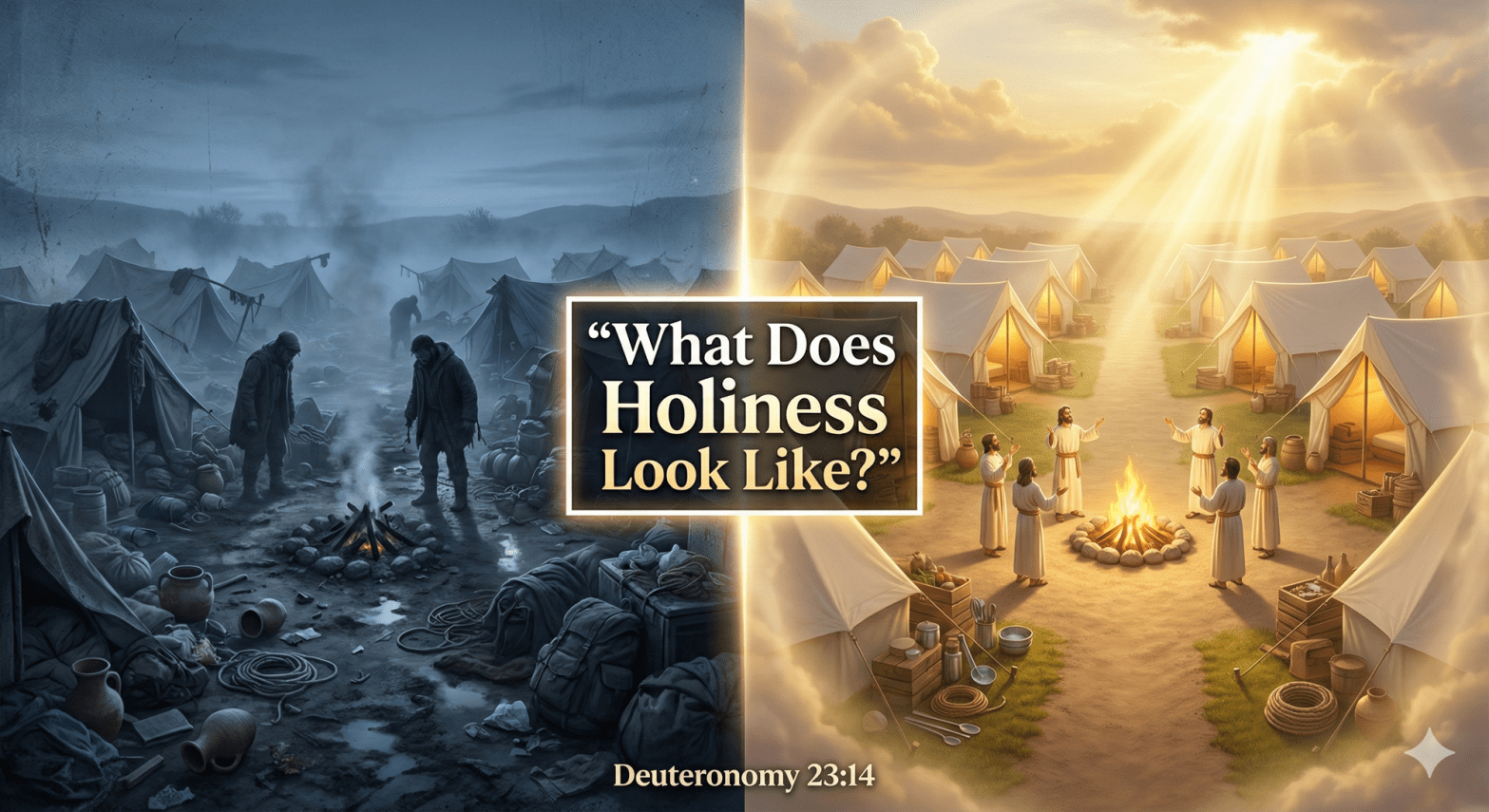
“Because the Lord your God travels along with your camp, to save you and to hand over your enemies to you, therefore your camp must be holy, so that he may not see anything indecent among you and turn away from you.”
Deuteronomy 23:14

Today, the 26th day of 2026
This is the 26th reflection on Rise&Inspire in the wake-up call category in 2026
Verse for Today (26 January 2026)
This morning, His Excellency, Rt. Rev. Dr. Selvister Ponnumuthan forwarded the Verse for Today (26th January 2026), which inspired me to write these reflections.

Reflection
What a powerful truth we receive today from the book of Deuteronomy. This verse speaks to us across the centuries with a truth that remains as vital now as it was for the Israelites journeying through the wilderness: God travels with His people.

Let us prayerfully consider the wonder of this reality. The Lord your God travels along with your camp. These words reveal the tender proximity of our God, who does not watch from a distance but journeys alongside us through every step of our pilgrimage. He walks with us in our ordinary days, in our struggles, in our battles, and in our moments of rest. This is not a distant deity who observes from heaven’s throne alone, but the Emmanuel, God with us, who chooses to dwell among His people.

Yet this beautiful intimacy carries with it a sacred responsibility. The very presence of God among us calls us to holiness. The camp must be holy, not because we earn God’s presence through our purity, but because His presence transforms the nature of where we dwell. When the Holy One travels with us, the space we occupy becomes sacred ground.

What does it mean for our camp to be holy today? It means that every aspect of our lives, our homes, our workplaces, our relationships, our thoughts, our words, becomes a place where God dwells. Holiness is not about perfection but about consecration, setting apart our lives for God’s purposes and His glory. It means living with integrity, treating our bodies as temples of the Holy Spirit, guarding our hearts against bitterness and unforgiveness, and cultivating purity in our intentions and actions.

The verse reminds us that God travels with us to save us and to hand our enemies over to us. How often do we forget that we do not fight our battles alone? The Lord who walks with us is also the Lord who fights for us. He is our deliverer, our protector, our strong tower. But His help and His victory are not automatic, they flow from a relationship, from walking in covenant faithfulness with Him.

There is a sobering warning here as well: that He may not see anything indecent among you and turn away from you. God’s holiness cannot coexist with deliberate, unrepentant sin. When we harbour what is obscene, when we make room for what grieves the Holy Spirit, we risk the withdrawal of His manifest presence. This is not about earning God’s love, His love is steadfast and unconditional. Rather, it is about maintaining the fellowship, the intimate communion, the sense of His nearness that every believer treasures.

Today, let us ask ourselves: What needs to be cleansed from our camp? What attitudes, habits, or relationships have we allowed that are not worthy of the presence of the Holy One? Where have we become casual about holiness, comfortable with compromise?

But let us also rejoice in this truth: the God who calls us to holiness is the same God who provides the grace to live holy lives. He does not demand what He does not enable. Through Christ, we have been made clean. Through the Holy Spirit, we are being sanctified day by day. The call to holiness is not a burden but an invitation to walk more closely with the One who loves us beyond measure.

May we live today with a fresh awareness that God travels with us. May our hearts be stirred to honour His presence in every word we speak, every decision we make, every relationship we nurture. And may our lives become camps of holiness, places where His glory dwells and where others can encounter the living God.

Why Even This Law Matters: God’s Presence Sanctifies the Ordinary

To modern readers, the command in Deuteronomy 23:12–14 may sound almost startling in its earthiness. Instructions about human waste hardly seem spiritual. Yet that is precisely the point. Scripture refuses to divide life into “sacred” and “secular” compartments.

In Israel’s military camp, God Himself was said to walk in the midst. The battlefield was not merely a place of strategy and survival; it was a space of divine presence. Because God was there, even the most private human acts had to be handled with reverence. What might otherwise seem insignificant became spiritually significant.

This teaches us a deep truth: holiness is not confined to rituals, altars, or prayers alone. It extends into daily habits, unseen moments, and personal disciplines. The Israelites were not asked to deny their humanity, but to order it rightly in the awareness that God was near.

The warning that God might “turn away” does not suggest a fickle or abandoning God. Rather, it speaks of relational distance—the loss of felt closeness, guidance, and protection that comes when God’s holiness is treated casually. God remains faithful, but fellowship can be impaired.

When read this way, Deuteronomy 23:14 confronts us gently but firmly:

  • Are there areas of our lives we consider too small or too private for God’s concern?
  • Have we unconsciously pushed God to the margins, inviting Him into worship but not into habits, screens, thoughts, or attitudes?
  • Do we remember that where God dwells, nothing is truly ordinary?

This ancient instruction reminds us that God’s nearness dignifies life, but it also demands reverence. The God who travels with us is not only our defender; He is our sanctifier.

As we reflect on this ancient law, the message rings clear for us today: No corner of our lives is too ordinary, too private, or too messy for God’s holy gaze. His presence doesn’t shame our humanity—it invites us to order it with reverence, trusting His grace to make us holy as we walk with Him.

Let us pray:
Lord, thank You for Your precious presence with us. You have not left us to journey alone. Cleanse our hearts, purify our minds, and make us holy as You are holy. Help us to honour Your presence in every aspect of our lives. Walk with us today, fight our battles, and let Your glory be seen in and through us. In Jesus’ name, Amen.

© 2026 Rise&Inspire

Reflections that grow with time.

Website: Home | Blog | About Us | Contact| Resources

Category: Wake-Up Calls

Scripture Focus: Deuteronomy 23:14

Word Count:1268

Can Leisure Exist Without Purpose or Productivity?

I enjoy being unhurried in my leisure time—writing without pressure, reading to be absorbed rather than informed, sitting in quiet reflection, and allowing myself moments of stillness that gently return me to myself.

Daily writing prompt
What do you enjoy doing most in your leisure time?

Leisure is often treated as leftover time—what remains after work, duties, and expectations. But what if leisure is not an absence of activity, but a return to self? This reflection explores what we truly enjoy when nothing is demanded of us.

What Do I Enjoy Doing Most in My Leisure Time?

Leisure, for me, is not an event I schedule.

It’s a space I enter quietly—often without announcing it even to myself.

In a world that constantly asks for output, opinions, updates, and responses, leisure becomes a rare permission slip:

You don’t have to produce anything right now.

What I enjoy most in my leisure time is being unhurried.

Sometimes that means writing—without a prompt, without an audience, without the pressure to make it “useful.” Words flow differently when they’re not being measured. They soften. They wander. They surprise me.

At other times, leisure looks like reading—not to extract ideas, but to be absorbed. A paragraph that lingers. A sentence that stays with me longer than expected. Reading reminds me that not everything has to lead somewhere; some things are enough simply because they exist.

There are moments when leisure is silence.

Not the empty kind, but the restful kind—the silence that arrives when the mind finally stops rehearsing tomorrow. Sitting still, watching the day slow down, letting thoughts pass without chasing them—this, too, is leisure.

I also find joy in reflection. Looking back at old posts, earlier thoughts, previous versions of myself. Leisure allows me to notice growth without judgment. It gives me the freedom to say, “I was there once, and now I am here.”

What I enjoy most, ultimately, is that leisure returns me to myself.

Not the self shaped by deadlines or expectations—but the quieter self that exists underneath all of that.

Leisure doesn’t always look impressive.

It doesn’t announce itself loudly.

But it restores something essential.

And that, I’ve learned, is more than enough.

Earlier reflections on leisure and creativity

(shared here for readers who may want to explore the journey further)

© 2025 Rise & Inspire. Follow our journey of reflection, renewal, and relevance.

Website: Home | Blog | About Us | Contact| Resources

Word Count:422

What Happens When the Lord’s Name Becomes One Across the Earth?

The prophet saw it clearly: a day when every division ends, every false claim crumbles, and the Lord alone reigns supreme over all creation. Zechariah 14:9 is not wishful thinking or religious poetry. It is the guaranteed destination of human history. And if you truly believe this future is coming, everything about how you live today must change. This ancient promise holds the key to unshakeable hope in a shaking world.

You are living between two kingdoms. One is fragmenting around you, marked by chaos, division, and competing voices demanding your allegiance. The other is breaking through, certain and unstoppable, where the Lord will be one and His name will be one. Zechariah 14:9 draws back the curtain on your ultimate reality. The question is not whether God’s kingdom will come, but whether you will live today as though you truly believe it.

History is heading somewhere. Not wandering. Not cycling endlessly. Somewhere specific, glorious, and certain. Zechariah 14:9 reveals the destination: the universal reign of the one true God. Every knee will bow. Every voice will confess. Every heart will acknowledge what has always been true. The King is coming. And those who know this truth do not live like everyone else. Discover how this ancient promise can anchor your soul today.

This reflection explores the promise of God’s universal reign, its implications for our present reality, and how this future hope should transform our daily lives.

Daily Biblical Reflection – Verse for Today (25th January 2026)

“And the Lord will become king over all the earth; on that day the Lord will be one and his name one.”

Zechariah 14:9

Today, the 25th day of 2026. This is the 25th reflection on Rise&Inspire in the wake-up call category in 2026.

Verse for Today (25 January 2026)

This morning, His Excellency, Rt. Rev. Dr. Selvister Ponnumuthan forwarded the Verse for Today (25th January 2026), which inspired me to write these reflections.

Reflection

My dear brothers and sisters in Christ,

What a magnificent vision the prophet Zechariah unveils before us this morning. In a world fragmented by divisions, where nations rise against nations, where families are torn apart by discord, and where even our own hearts are sometimes pulled in conflicting directions, this ancient promise speaks with startling clarity and hope: there is coming a day when the Lord will be king over all the earth, when He will be one, and His name will be one.

Let us take a moment and consider the profound beauty of this truth. The verse speaks not merely of God’s sovereignty, which has always existed, but of a day when that sovereignty will be universally acknowledged, when every knee will bow and every tongue confess that Jesus Christ is Lord. It is a promise of unity, wholeness, and the complete reign of divine love over all creation.

In our present moment, we live in what we might call the “in-between times,” caught between the inauguration of God’s kingdom through Christ’s first coming and its final consummation at His return. We see glimpses of this kingdom breaking through: in acts of sacrificial love, in communities transformed by grace, in hearts once hardened now made tender by the Holy Spirit. Yet we also witness the ongoing reality of brokenness, suffering, and the persistent rebellion of human hearts against their Creator.

Zechariah’s prophecy reminds us that our current reality is not the final word. The Lord will become king over all the earth. Notice the certainty embedded in these words. Not “might become” or “could become,” but “will become.” This is not wishful thinking or pious speculation; it is the assured promise of the God who cannot lie, who has demonstrated His faithfulness from generation to generation.

What does it mean that “the Lord will be one and his name one”? Throughout history, humanity has fractured the knowledge of God into countless competing visions. We have created gods in our own image, fashioned idols from our fears and desires, and even within the community of faith, we have sometimes divided over our understanding of the one true God. But there is coming a day when all confusion will cease, when every false conception will fall away like scales from our eyes, and we will see Him as He truly is. There will be no competing claims, no rival thrones, no alternative narratives. The Lord alone will be exalted, and His name, His character, His very essence will be universally known and honored.

This vision should transform how we live today. If we know that God’s universal reign is certain, how should we conduct ourselves now? How should we pray? How should we love our neighbors? How should we engage with the brokenness around us?

First, this promise should fill us with unshakeable hope. When we are discouraged by the state of the world, by the persistence of evil, or by our own spiritual struggles, we can lift our eyes to this horizon. The story is not over. Victory is certain. The King is coming.

Second, it should inspire us to participate now in the kingdom we know is coming. We are called to be ambassadors of that future reign, demonstrating in our lives and communities what it looks like when God is truly king. Every act of justice, every gesture of mercy, every moment when we choose love over hatred is a foretaste of that coming day.

Third, it should urgently compel us to share the good news of this King with those who do not yet know Him. If we believe that the Lord will indeed become king over all the earth, then we must long for others to willingly submit to His loving rule now, rather than to face Him as judge on that great day.

As we go about our day today, let us carry this vision with us. Let us remember that the mundane tasks we perform, the conversations we have, the challenges we face are all set against the backdrop of this glorious future. We are not wandering aimlessly through history. We are moving toward a destination, toward the day when heaven and earth will be united under the loving sovereignty of our God.

May this truth steady your heart when anxiety threatens. May it kindle fresh passion when your love grows cold. May it straighten your spine when you are tempted to compromise. May it open your hands in generosity, knowing that we are stewards of the King. May it loosen your tongue in praise, preparing for that day when every voice will join in eternal worship.

The Lord will become king over all the earth. On that day, the Lord will be one and His name one. This is not merely our hope; it is our certain future. Let us live today in the light of that coming dawn.

Amen.

Scriptural and Theological Context: Zechariah 14

The Book of Zechariah concludes with one of the most vivid and far-reaching prophetic visions in the Hebrew Scriptures. Chapter 14 functions as a climactic revelation of the “Day of the Lord”—a decisive moment when God intervenes in history to judge evil, deliver His people, transform creation, and establish His universal reign.

Zechariah prophesied during the post-exilic period (around 520–518 BC), after the return from Babylonian captivity under Persian rule. While the earlier chapters (1–8) focus on repentance, encouragement, and the rebuilding of the Temple, chapters 9–14 lift the reader’s gaze toward God’s ultimate purposes for Israel and the nations. These later chapters employ apocalyptic imagery—reminiscent of Ezekiel and Revelation—to reveal a future marked by both judgment and glory.

Chapter 14 stands apart for its dramatic scope. Jerusalem is besieged, the nations rage, and yet the Lord Himself intervenes. The Mount of Olives is split, creating a path of deliverance (cf. Acts 1:11). Cosmic rhythms are altered. Living waters flow outward from Jerusalem, bringing life in every direction (cf. Ezekiel 47; Revelation 22). The imagery is unmistakably theological: God is not merely defending a city; He is reclaiming creation.

At the heart of the chapter stands its theological summit:

“And the LORD will become king over all the earth; on that day the LORD will be one and his name one.” (Zechariah 14:9)

This verse echoes the Shema of Israel—“The LORD is one” (Deuteronomy 6:4)—but expands it universally. What was once confessed by a covenant people becomes acknowledged by all creation. No rival gods remain. No divided loyalties endure. No competing claims survive the day when God’s kingship is fully revealed.

The closing verses of the chapter portray a transformed world where worship is universal and holiness permeates ordinary life. Even the most mundane objects bear the inscription “Holy to the LORD.” The sacred and the secular are no longer divided. God’s reign touches everything.

Across differing interpretive traditions—whether read more literally or symbolically—the message is consistent and unmistakable: history is moving toward a single destination, where God alone reigns, evil is judged, and creation is restored under His rule.

This is not speculation. It is divine assurance.

Closing Prayer / Benediction

Let us pray.

Lord God Almighty,

King of heaven and earth,

We thank You for the sure promise that You will reign over all the earth,

that a day is coming when You will be one

And your name will be one.

In a world shaken by division, fear, and uncertainty,

anchor our hearts in this unchanging truth.

When we are tempted to lose hope, remind us that history is held in Your hands.

When we are tempted to compromise, remind us that You alone are worthy of our allegiance.

Teach us to live today as citizens of the kingdom that is surely coming.

Make our lives signs of Your future reign—

marked by holiness, mercy, justice, humility, and love.

May our words honour Your name,

our choices reflect Your will,

and our hearts remain faithful to You alone.

Strengthen us to walk with courage through the in-between times,

trusting not in what we see,

but in the certainty of what You have promised.

Prepare us for the day when every knee will bow

and every tongue will confess that You are Lord.

Until that glorious dawn,

keep us faithful, hopeful, and awake to Your work in the world.

For You are our King,

now and forever.

Amen.

© 2026 Rise&Inspire

Reflections that grow with time.

Website: Home | Blog | About Us | Contact| Resources

Category: Wake-Up Calls

Scripture Focus: Zechariah 14:9

Word Count:1775

Who Wins in Modern Blogging: The Writer or the Strategist?

In today’s digital world, one blogger spends hours refining sentences, while another spends the same time crafting a powerful prompt. Surprisingly, it’s often the second who reaches a wider audience. This post explores what that reveals about modern blogging—and how writers can thrive without losing depth.

Who Is the Better Blogger in the Fast Digital Age?

In the blogging world today, an interesting contrast often appears.

One blogger spends hours—sometimes days—crafting a single post. Every sentence is weighed, every paragraph refined. Writing is slow, deliberate, and deeply personal.

Another blogger may spend that same amount of time not writing the post itself, but designing the prompt—the angle, the question, the framing. Once the prompt is ready, the content flows quickly, sometimes reaching a far larger audience.

And occasionally—almost unfairly—the second blogger’s post explodes with views, shares, and engagement, while the first remains quietly unread.

So the question arises:

Which approach is better in the fast digital age?

The answer isn’t simple—but it is enlightening.

1. The Blogger Who Takes Time to Write

Strengths

Depth and originality

Slow writing often leads to layered thinking, emotional resonance, and originality that algorithms cannot manufacture.

Strong personal voice

Readers who stay become loyal. They don’t just read posts; they follow a mind.

Long-term credibility

Such blogs often age well. Years later, the content still feels relevant and thoughtful.

Challenges

Time-intensive

In a fast-moving digital ecosystem, fewer posts mean fewer touchpoints.

Lower immediate visibility

Algorithms often reward consistency and frequency over craftsmanship.

Delayed gratification

Recognition may come slowly—or not at all.

This blogger plays the long game.

2. The Blogger Who Takes Time to Create the Prompt

Strengths

Audience-first thinking

A strong prompt taps directly into curiosity, relatability, or urgency.

High shareability

Questions, hooks, and trends travel faster than polished prose.

Speed and scalability

Once the framing is clear, content production becomes efficient.

Challenges

Risk of surface-level engagement

Readers may click, skim, and move on.

Dependence on trends

What works today may be invisible tomorrow.

Weaker personal imprint

The post may perform well, but the writer may remain forgettable.

This blogger plays the visibility game.

3. Why the Second Blogger Often Reaches a Bigger Audience

This isn’t about talent—it’s about alignment with the digital environment.

Today’s digital space rewards:

• Speed over perfection

• Clarity over complexity

• Framing over fullness

• Questions over conclusions

A well-crafted prompt does three powerful things:

1. Stops the scroll

2. Creates instant relevance

3. Invites participation

In a crowded attention economy, being seen often precedes being valued.

4. What “Best” Really Means Depends on the Goal

If your goal is:

Influence and reach → Prompt-driven blogging works faster

Depth and legacy → Slow writing holds greater power

Consistency without burnout → Prompt clarity saves energy

Personal fulfillment → Thoughtful writing feels truer

Neither approach is inferior. They serve different definitions of success.

5. The Hidden Truth: The Most Effective Bloggers Combine Both

The most impactful bloggers today do not choose between writing and prompting.

They:

• Spend time thinking like strategists

• Spend time writing like craftsmen

• Use prompts to open the door

• Use depth to make readers stay

In other words:

The prompt attracts.

The writing retains.

6. Blogging in the Fast Digital Age: A Reframe

The real shift is this:

Blogging is no longer just about how well you write,

but about how clearly you think and how deliberately you position that thinking.

A powerful prompt without substance fades quickly.

Deep writing without visibility stays hidden.

The future belongs to bloggers who understand both speed and soul.

7. A Gentle Reminder for Bloggers

If your carefully written post didn’t travel far, it doesn’t mean it lacked value.

If your quickly framed post reached thousands, it doesn’t mean it lacked depth.

What matters is knowing:

✔️why you blog,

✔️whom you write for,

✔️and how you want your words to live in the world.

In a fast digital age, the best blogger is not the fastest or the deepest alone—

but the one who learns to balance intention, insight, and timing.

Closing Thought

The digital world moves fast.

Meaning still moves slowly.

A wise blogger learns when to run—and when to linger.

Explore more at the Rise & Inspire archive |  Personal Development

© 2025 Rise & Inspire. Follow our journey of reflection, renewal, and relevance.

Website: Home | Blog | About Us | Contact| Resources

Word Count:733

What Is the Place You Keep Postponing Trying to Teach You?

A small town close to home that I know by name and distance, yet haven’t visited—overlooked not because it lacks meaning, but because its nearness made me keep it for “later.”

Daily writing prompt
Name an attraction or town close to home that you still haven’t got around to visiting.

Some places remain unvisited not because they lack beauty or meaning, but because they are too close to demand urgency. This post explores what it means to keep postponing a destination that has always been within reach—and what such delays quietly reveal about us.

The Closest Place I Still Haven’t Visited

There is a small town not very far from where I live—close enough to be a casual weekend plan, familiar enough to be mentioned in passing, yet distant enough in practice that I have never truly arrived there.

I know its name.

I know roughly how long it would take to reach.

I even know people who have gone and returned with stories.

And yet, I haven’t.

It isn’t because I doubt its beauty or importance. It’s because closeness creates an illusion: the belief that there will always be time. When a destination is nearby, it loses urgency. It waits patiently, while we chase faraway places that feel more “worthy” of effort.

What strikes me now is that this postponement says less about the town and more about me.

We often imagine that unvisited places are waiting for our calendars to clear. But perhaps they are waiting for something else—a version of us that knows how to arrive without rushing, how to be present without turning the visit into a checklist.

Some journeys don’t happen because we are busy.

Others don’t happen because we are not yet attentive.

The town I haven’t visited stands as a quiet metaphor. It reminds me that meaningful experiences don’t always demand distance; they demand intention. The unfamiliar isn’t always far away—it is sometimes just ignored because it feels safely postponed.

One day, I will go there. Not to tick it off a list, but to honour the waiting. And when I do, I suspect it won’t feel like discovering a new place, but like finally listening to an old invitation.

Until then, its nearness continues to teach me something subtle:

that what we keep “for later” often holds lessons meant for now.

Earlier reflections on the same prompt (for readers who wish to explore the evolution):

© 2025 Rise & Inspire. Follow our journey of reflection, renewal, and relevance.

Website: Home | Blog | About Us | Contact| Resources

Word Count:436

How Do You Stay Spiritually Strong When Everything Feels Dry and Exhausting?

You’ve heard plenty of empty encouragement. Isaiah 58:11 offers something different: a divine blueprint for deep, structural renewal. God doesn’t patch you up or give you a temporary boost. He strengthens your bones, satisfies your soul in the wasteland, and transforms you into a perpetual spring. If surface-level inspiration hasn’t been enough, this reflection goes deeper.

Daily Biblical Reflection – Verse for Today (24th January 2026)

“The Lord will guide you continually and satisfy your needs in parched places and make your bones strong, and you shall be like a watered garden, like a spring of water whose waters never fail.”

Isaiah 58:11

Today, the 24th day of 2026. This is the 24th reflection on Rise&Inspire in the wake-up call category in 2026.

Verse for Today (24 January 2026) received this morning from His Excellency, Rt. Rev. Dr. Selvister Ponnumuthan. Reflections by Johnbritto Kurusumuthu.

Dear Friends in Christ,

What a beautiful promise the Lord extends to us this morning through the prophet Isaiah. In a world that often feels like a desert, where our souls grow weary and our spirits parched, God speaks a word of hope that flows like living water into the dry places of our lives.

Notice the tenderness in God’s promise: He will guide you continually. Not occasionally, not when we deserve it, but continually. This is the heart of a Father who never abandons His children, who walks beside us through every season, every struggle, every uncertain step. Even when the path ahead seems unclear, even when we feel lost in our own wilderness, His guidance is constant and sure.

The image of parched places resonates deeply with our human experience. We all know what it means to walk through seasons of spiritual dryness, times when prayer feels difficult, when faith seems distant, when life’s demands drain us of joy and vitality. Perhaps you are in such a place right now. The beautiful truth of this verse is that God specializes in satisfying our needs precisely in these parched places. He does not wait until we find our way to green pastures. He comes to us in the desert itself.

And what does He promise? That He will make our bones strong. This is not superficial encouragement or temporary relief. God is speaking about deep, structural renewal. He wants to strengthen us from the inside out, to restore the very framework of our being. When our bones are strong, we can stand firm, we can bear weight, we can support others.

But the most striking image comes at the end: you shall be like a watered garden, like a spring of water whose waters never fail. Think about this for a moment. A watered garden is not just surviving; it is flourishing, blooming, bearing fruit. It is a place of beauty and abundance, a place that gives life to others. And a spring whose waters never fail is a source of perpetual refreshment, not just for ourselves but for all who come near.

This is God’s vision for your life and mine. Not merely to get by, not simply to endure, but to become sources of life and hope for others. The secret is remaining connected to the Source. A garden flourishes when it is continually watered. A spring flows when it is connected to deep underground reserves. Our spiritual vitality depends on our connection to God, the fountain of living water.

As you step into this day, whatever parched places you may be walking through, remember this promise. The Lord who guides continually is with you. He sees your weariness. He knows your need. And He is already at work, bringing streams of living water into your desert, strengthening your bones, transforming you into a watered garden.

Let us pray: Lord, thank You for Your promise to guide us continually. In our parched places, satisfy our deepest needs. Strengthen us from within and make us sources of life and refreshment for others. Help us to remain connected to You, the spring of living water that never fails. Amen.

May this word from Isaiah settle deep into your heart today and throughout this year.

In Christ’s love,

Johnbritto Kurusumuthu​​​​​​​​​​​​​​​​

Why Isaiah 58:11 Carries Such Power

Isaiah 58:11 does not stand alone. It rises from one of Scripture’s most searching chapters about the difference between empty religion and life-giving faith.

Isaiah 58 belongs to the section often called Third Isaiah (chapters 56–66), written during the period after the Babylonian exile. The people had returned home, rebuilt the temple, and resumed fasting, prayer, and Sabbath observance. Outwardly, they were religious again. Inwardly, many felt spiritually dry, unheard by God, and exhausted.

The Lord addresses this frustration head-on.

Through the prophet, God exposes a painful truth: their fasting was intense, but their lives were unjust. They sought God daily, yet continued to exploit workers, quarrel, and ignore the suffering around them. Their religion had become performative rather than transformative.

Then comes the turning point.

God declares the fast He truly desires—not ritual self-denial, but active mercy:

to break oppressive systems, feed the hungry, shelter the homeless, clothe the naked, and refuse indifference toward one’s own people. In other words, worship that expresses itself through justice and compassion.

Only after this alignment between devotion and daily life do the promises unfold:

light breaking forth like dawn, healing springing up, prayers answered without delay—and then the breathtaking assurance of verse 11.

“The Lord will guide you continually… satisfy your needs in parched places… make your bones strong… and you shall be like a watered garden.”

This promise is not about quick fixes for spiritual fatigue. It is about deep renewal that flows from living in step with God’s heart. When faith moves beyond ritual into love expressed through action, God does not merely refresh us—He transforms us into sources of refreshment for others.

Isaiah 58 teaches us that spiritual strength in dry seasons is not found in doing more religious things, but in allowing worship to shape how we treat the vulnerable, the weary, and the overlooked. When justice and mercy become acts of devotion, God turns deserts into gardens—and exhausted souls into unfailing springs.

© 2026 Rise&Inspire

Reflections that grow with time.

Website: Home | Blog | About Us | Contact| Resources

Category: Wake-Up Calls

Scripture Focus: Isaiah 58:11

Word Count:1077

Can Fun Be Quiet? Five Small Joys That Make Life Deeper

1. Writing freely, without deadlines or expectations.

2. Reading slowly and revisiting meaningful lines.

3. Taking long walks with no fixed destination.

4. Listening to music in quiet solitude.

5. Sitting still and doing nothing, simply being present.

Daily writing prompt
List five things you do for fun.

Fun doesn’t always announce itself with laughter or noise.

Sometimes, it arrives quietly—through habits we barely notice but deeply need.

This is a reflection on five such moments that make life feel lighter, slower, and more real.

List Five Things You Do for Fun

(An Unhurried Answer)

If you had asked me this question years ago, I might have answered quickly—perhaps even proudly.

Today, I linger.

Because fun, I’ve learned, doesn’t always sparkle.

Sometimes, it settles.

Here are five simple things I do for fun—not because they impress anyone, but because they make life feel a little lighter.

1. Writing, When No One Is Asking

I write when there’s no deadline waiting and no expectation chasing me.

Just me, a thought, and a quiet moment.

That kind of writing feels less like work and more like coming home.

2. Reading Without Rushing

I enjoy reading slowly—sometimes the same page more than once.

Not to finish the book, but to let the words finish their work on me.

There’s a quiet joy in that unhurried companionship.

3. Walking With No Particular Destination

Some of my best thoughts arrive when I’m not trying to reach anywhere.

Just walking… noticing… breathing.

Fun, in these moments, feels wonderfully uncomplicated.

4. Listening to Music, Alone

With headphones on and the world gently turned down,

music becomes a private language—one that understands emotions even before I name them.

5. Doing Absolutely Nothing

This one took time to appreciate.

Sitting still. Watching the day soften.

Letting silence speak.

It turns out, doing nothing can be deeply satisfying.

A Quiet Truth

Fun doesn’t always laugh out loud.

Sometimes, it whispers.

And perhaps that’s what growing older—and wiser—teaches us:

joy doesn’t need noise to be real.

If you’d like to see how my answers to this prompt have evolved over time, you can find my earlier reflections here:

I’ve revisited this prompt across three consecutive years, and each time it has revealed not repetition, but refinement.

© 2025 Rise & Inspire. Follow our journey of reflection, renewal, and relevance.

Website: Home | Blog | About Us | Contact| Resources

Word Count:419