Why Do Charlie Chaplin’s Timeless Words Still Inspire Us Today?

Discover the timeless wisdom of Charlie Chaplin’s 4 profound quotes on life, laughter, and resilience. Learn how to apply these powerful insights to overcome challenges and live joyfully. Perfect for Rise&Inspire readers seeking motivation!

Charlie Chaplin’s Enduring Wisdom: 

4 Quotes to Spark Joy and Resilience

Category: Motivational Quotes

Charlie Chaplin, the genius of silent film, lived 88 years and gifted the world not just laughter but profound insights. His four unforgettable statements pulse with truth, urging us to embrace life’s highs and lows with courage and a smile. For Rise&Inspire readers, these words aren’t just quotes—they’re beacons to navigate life’s unpredictable waves. 

Let’s look into Chaplin’s wisdom, letting its depth and simplicity stir our souls.

1. “Nothing lasts, not even your problems.”

Troubles feel eternal when they grip us. Yet Chaplin, with his knack for cutting through life’s noise, reminds us: that everything fades. Storms pass. Heartaches soften. The weight you carry today will lift, maybe sooner than you think. This truth is a quiet anchor, grounding us when life feels like a runaway train.

Reflection: Hold fast. Your struggles are not your forever. Take one step, then another, trusting the tide will turn.

2. “I love walking in the rain because no one can see my tears.”

Rain falls, and so do tears—Chaplin knew this dance. This hauntingly beautiful line cradles vulnerability. It whispers that it’s okay to feel, to let sorrow spill in private moments. The rain becomes a shield, a soft cloak for our deepest emotions. Strength isn’t hiding pain; it’s finding a space to let it breathe.

Inspiration: Seek your own “rain”—a moment, a place, a ritual where you can be raw. Healing begins when you honour what you feel.

3. “The worst day is the one without laughter.”

A day without laughter? Unthinkable for Chaplin. The man who made the world chuckle through silent screens saw joy as life’s pulse. Laughter isn’t frivolous—it’s oxygen. A giggle, a guffaw, a fleeting smirk can crack open even the gloomiest day. It’s rebellion against despair, a spark that says, “I’m still here.”

Nudge: Find joy today. Watch a silly clip. Share a joke. Let laughter, however small, remind you life is worth living.

4. “The six best doctors: sun, rest, exercise, diet, self-respect, and friends. Follow them for a healthy life.”

Chaplin’s recipe for vitality is elegantly simple. Sun warms the soul. Rest rebuilds. Exercise sparks energy. Good food fuels. Self-respect roots you in dignity. Friends lift you higher. Before wellness trends flooded our feeds, Chaplin distilled health to these essentials—accessible, timeless, and true. Live them, and thrive.

Spark: Build your days around these pillars. Bask in sunlight. Nap guilt-free. Move. Eat well. Value yourself. Cherish your tribe. Watch life bloom.

Why Chaplin’s Voice Echoes Now

Chaplin’s words cut through our modern chaos like a lighthouse beam. They don’t just inspire—they invite us to live boldly, feel deeply, and laugh freely. In a world of endless noise, his simplicity is radical. Problems pass. Tears have their place. Laughter heals. Balance sustains. For Rise&Inspire readers, these aren’t just ideas—they’re a call to rise above, to weave joy and resilience into every day.

Which quote lights a fire in you? Maybe it’s the reminder to laugh, or the nudge to rest. Whatever stirs you, act on it. Take a walk in the rain. Call a friend. Smile at the absurd. Let Chaplin’s wisdom fuel your journey.
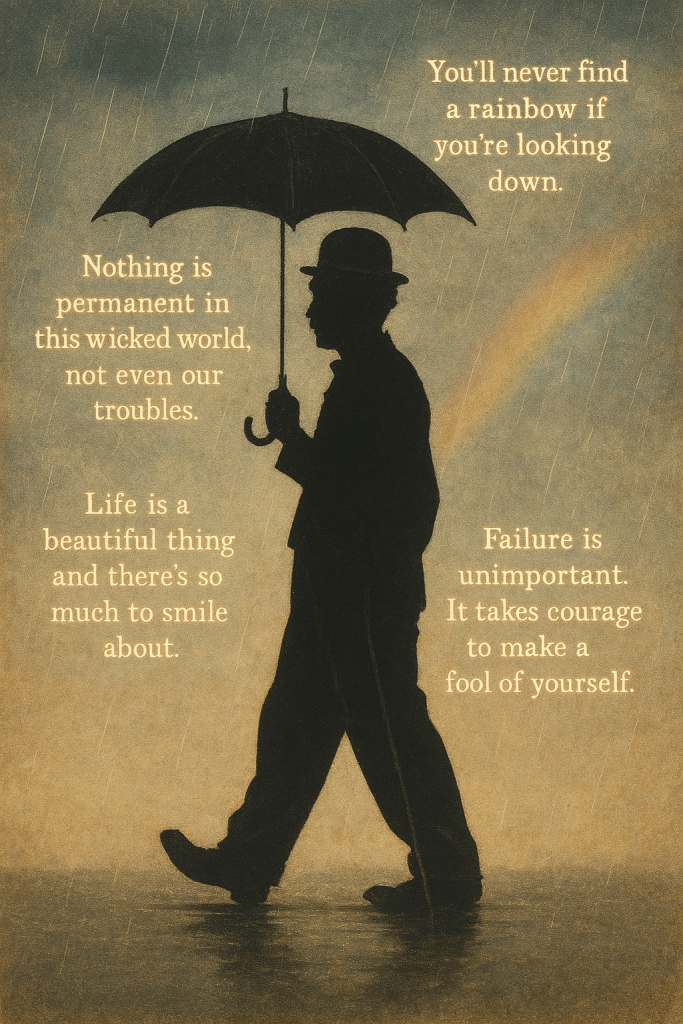
A Final Whisper

Charlie Chaplin turned life’s struggles into art, and his words do the same. They’re not just quotes—they’re lifelines, pulling us toward hope and wholeness. Carry them close. Let them guide you through shadows and into light.

Which of Chaplin’s truths will you live today? Drop your thoughts below, and let’s keep the Rise&Inspire fire burning.

Keep shining. Laugh often. Live fully.

Explore additional inspiration from the blog’s archive. |  Motivational Quotes |

Categories: Astrology & Numerology | Daily Prompts | Law | Motivational Blogs | Motivational Quotes | Others | Personal Development | Tech Insights | Wake-Up Calls

🌐 Home | Blog | About Us | Contact| Resources

📱 Follow us: @RiseNinspireHub

© 2025 Rise&Inspire. All Rights Reserved.

Word Count:717

This post is part of the Rise&Inspire series, crafted to ignite motivation and empower our community with timeless wisdom.
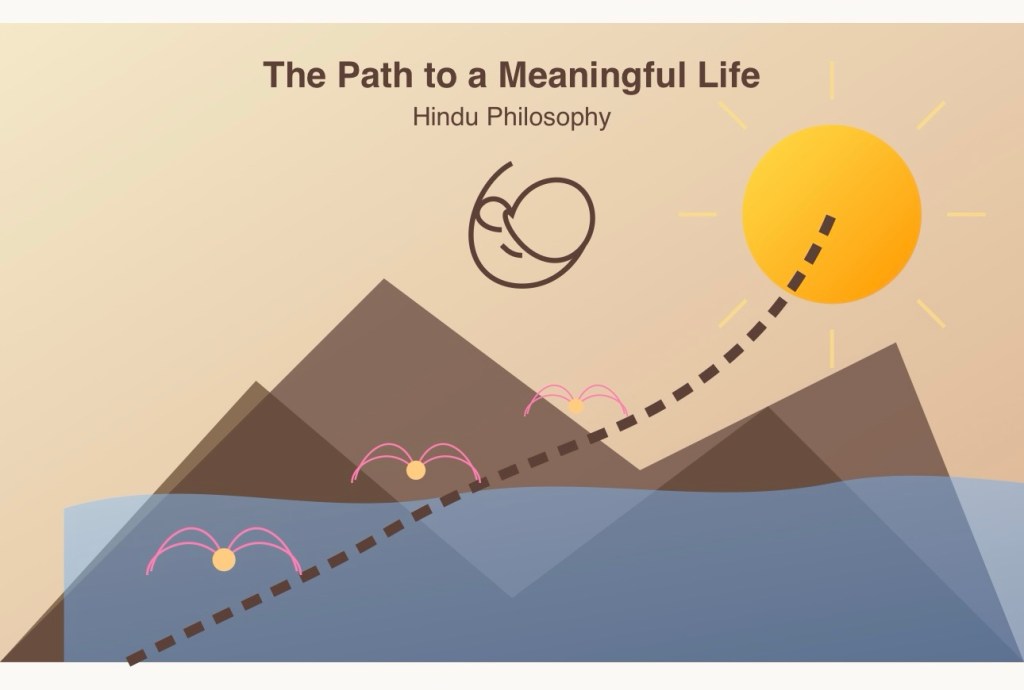
How Can Hindu Philosophy Guide You to a More Meaningful Life?

Introduction: Your Search for Deeper Meaning

Have you ever found yourself wondering about the deeper purpose of life? In the rush of daily existence, do you feel a longing for something greater—something beyond material success and fleeting happiness? If so, you are not alone. Since ancient times, seekers like you have turned to Hindu philosophy for answers.

This profound system of wisdom offers a path to self-discovery, fulfillment, and spiritual enlightenment. It doesn’t matter whether you’re religious or not—these teachings go beyond faith. They provide a practical framework for understanding yourself, the universe, and your place in it.

If you’ve ever questioned your purpose, sought inner peace, or simply wanted to live a more mindful life, then Hindu philosophy has something valuable to offer you. Let’s explore its foundations and how you can apply its timeless wisdom in your daily journey.

The Foundations: Discovering the Source of Knowledge

At the heart of Hindu philosophy are the Vedas, the oldest scriptures known to humanity. These texts contain insights into life, the cosmos, and human consciousness. As you explore them, you’ll see that knowledge isn’t just about gathering facts—it’s about understanding the deeper truth of existence.

The four Vedas—Rigveda, Yajurveda, Samaveda, and Atharvaveda—contain everything from sacred hymns to practical wisdom for everyday living. Each is further divided into four layers, with the Upanishads offering the deepest philosophical insights. These texts lay the foundation for the six schools of Hindu philosophy, each giving you a different way to understand life.

The Six Schools of Hindu Philosophy: Choosing Your Path

Think of Hindu philosophy as a vast ocean of wisdom, with multiple paths leading to the same destination: truth and self-realization. Depending on your nature and interests, different schools of thought may resonate with you.

1. Samkhya – Understanding the Universe

Do you ever wonder about the balance between your inner self and the outer world? Samkhya teaches you to see the difference between consciousness (Purusha) and material existence (Prakriti). This awareness helps you detach from illusions and find clarity.

2. Vedanta – The Path to Ultimate Knowledge

If you’ve ever asked, Who am I, really?, Vedanta has the answers. It teaches that your true self (Atman) is not separate from the Divine (Brahman). Schools like Advaita (non-dualism) explain that everything is one, while Dvaita (dualism) says your soul and God are distinct.

3. Vaisheshika – Observing the World Scientifically

Are you a logical thinker? Vaisheshika helps you understand the universe through atoms, natural laws, and cosmic order. It’s a system of scientific and philosophical reasoning that aligns with modern physics.

4. Nyaya – The Power of Logic

Do you enjoy debate and reasoning? Nyaya teaches you to question, analyze, and logically seek truth. It’s about clearing confusion and using systematic thinking to gain knowledge.

5. Mimamsa – The Power of Rituals and Ethics

If you believe that action and discipline shape your life, Mimamsa will resonate with you. It emphasizes rituals, duty (dharma), and righteous living as paths to spiritual fulfillment.

6. Yoga – The Path of Self-Realization

Yoga is not just about physical postures—it is a philosophy of mastering your mind, body, and soul. You might find yourself drawn to different paths within Yoga:

Jnana Yoga – Seeking wisdom and self-inquiry

Karma Yoga – Serving others selflessly

Bhakti Yoga – Finding devotion and surrender

Raja Yoga – Practicing meditation and inner discipline

If you’ve ever felt drawn to mindfulness, meditation, or self-improvement, Yoga offers you a structured way to transform your life.

How Do You Gain True Knowledge?

Hindu philosophy teaches that knowledge isn’t limited to what you read or hear. It can be gained in different ways, known as Pramanas:

1. Pratyaksha (Perception) – Learning through direct experience

2. Anumana (Inference) – Using logic and reasoning

3. Upamana (Comparison) – Understanding through analogy

4. Arthapatti (Postulation) – Connecting facts to uncover truth

5. Anupalabdhi (Non-perception) – Knowing something by its absence

6. Sabda (Verbal Testimony) – Learning from trusted sources

By combining intuition, logic, and experience, you develop a well-rounded perspective on life.

How Can You Apply Hindu Philosophy in Daily Life?

You don’t need to be a scholar or a monk to apply these teachings—you can integrate them into your daily routine. Here’s how:

🍑Cultivate Inner Peace (Yoga & Vedanta) – Spend time in meditation, self-reflection, or mindful prayer.

🍑Practice Ethical Living (Mimamsa & Nyaya) – Be truthful, kind, and responsible in your actions.

🍑Use Logic & Reason (Nyaya & Vaisheshika) – Question assumptions and seek deeper truths.

🍑Embrace Lifelong Learning (Pramanas) – Stay curious, read, and explore different viewpoints.

🍑Live Selflessly (Karma Yoga) – Serve others without expecting anything in return.

🍑Surrender to a Higher Power (Bhakti Yoga) – Find strength in faith, gratitude, and devotion.

Final Thoughts: Your Journey to Fulfillment🌝💯

Hindu philosophy is not just a belief system—it’s a guide to enlightened living. It teaches you that true happiness comes from self-awareness, wisdom, and connection with the divine.

In a fast-paced world full of distractions, these ancient teachings remind you to pause, reflect, and seek truth beyond the material realm. They help you live with purpose, make conscious choices, and find inner peace.

The path to higher knowledge is open to you—are you ready to take the first step?

Some valuable resources to deepen your understanding of Hindu philosophy:

Sacred Texts of Hinduism – Vedas & Upanishads – A collection of ancient scriptures and philosophical texts.

Introduction to Hindu Philosophy – Oxford Bibliographies – Academic insights into the different schools of thought.

The Six Schools of Hindu Philosophy – Vedanta Society – A detailed explanation of the core philosophies.

Yoga Sutras of Patanjali – Commentary & Interpretation – Understanding the philosophy behind yoga.

The Bhagavad Gita – Teachings on Duty & Wisdom – A profound text offering spiritual guidance.

These resources provide a solid foundation for anyone looking to explore Hindu philosophy further.

🌐 Home | Blog | About Us | Contact| Resources

Categories: Astrology & Numerology | Daily Prompts | Law | Motivational Blogs | Motivational Quotes | Others | Personal Development | Tech Insights | Wake-Up Calls

📱 Follow us: @RiseNinspireHub

© 2025 Rise&Inspire. All Rights Reserved.

Word Count:1000

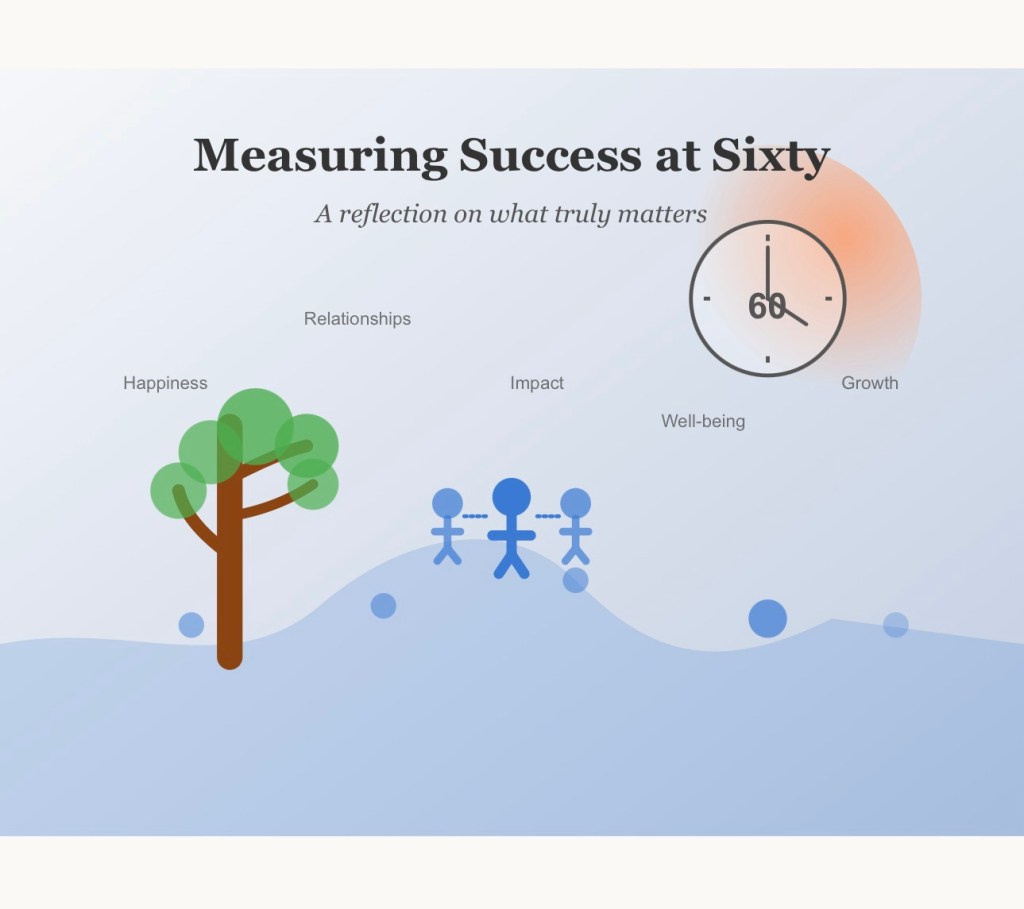
How Do You Measure Success at Sixty?


Success at Sixty: A Reflective Journey

Are You Truly Successful? 

A Reflection at Sixty

You wake up one morning and realize you’re sixty. The years have passed in a blink, and now, you find yourself asking a question that lingers in your mind: “Have I been successful in life?”

You pause. What does success even mean? Is it the wealth you’ve accumulated, the career you built, or the recognition you received? Or is it something more—something deeper?

You take a breath and decide to measure your life, not by society’s standards, but by the things that truly matter.

1. Have You Found Happiness and Fulfillment?

Think back to your journey. Have you lived in a way that aligns with your values? Have you pursued things that bring you joy? Do you feel at peace with the choices you’ve made?

Success isn’t just about achievement—it’s about contentment. If you can look in the mirror and say, “I have lived authentically,” then you are already successful.

2. Have You Built Meaningful Relationships?

The true wealth of life is measured in relationships. Have you loved deeply? Have you been a supportive friend, a caring partner, or a guiding mentor?

If people smile when they think of you, if your presence has brought warmth to someone’s life, then you have succeeded in ways that truly matter.

3. Have You Made a Difference?

Whether through your work, your kindness, or your wisdom, have you left a mark on the world?

Success isn’t always loud. Sometimes, it’s the quiet impact—the advice that changed someone’s life, the encouragement that lifted a soul, the simple act of being there when it mattered most.

4. Have You Taken Care of Yourself?

Your body has carried you through six decades. Have you treated it well? Have you honoured it with care, nourishment, and rest?

If you still wake up with energy, curiosity, and a zest for life, you have succeeded. Because true success includes well-being—physical, mental, and emotional.

5. Have You Continued to Grow?

Success isn’t about stopping—it’s about evolving. Have you stayed curious? Have you embraced new ideas, learned new things, and challenged yourself?

If you’re still eager to grow, to explore, to seek wisdom, then you are thriving. Because life is not about reaching a final destination—it’s about staying on the journey.

What If You Don’t Feel Successful?

Perhaps you look at these questions and feel a pang of regret. Maybe there were things left undone, words left unsaid, dreams left unexplored.

But here’s the truth: It is never too late.

Success isn’t about what you missed—it’s about what you do next.

1. Redefine What Matters – Let go of past definitions and embrace what success means to you now.

2. Strengthen Your Relationships – Reach out to an old friend, mend a broken bond, and express your love openly.

3. Find New Purpose – It’s never too late to follow your passions, to teach, to mentor, to create.

4. Take Care of Yourself – Make health a priority, so you can enjoy the years ahead with strength and vitality.

5. Leave a Legacy – Not in wealth, but in wisdom, kindness, and impact.

Your Life, Your Success

You don’t need the world’s validation to know you’ve lived a meaningful life.

If you have loved, if you have grown, if you have made a difference, then you have succeeded.

And if there’s still more you want to do, the good news is—your story isn’t over yet.

So go ahead, make the rest of your life the best of your life.

🌐 Home | Blog | About Us | Contact| Resources

📱 Follow us: @RiseNinspireHub

© 2025 Rise&Inspire. All Rights Reserved.

Word Count:615

What If Acceptance Is the Key You’ve Been Searching For?

“Acceptance isn’t passive resignation—it’s an active choice to stop warring with life.”

When Problems Are Truths: 

The Power of Acceptance
Category: Motivational Quotes

Introduction: The Trap of Unsolvable Problems
We’ve all been there—staring at a challenge that feels like a locked door with no key. We push, pull, and pound, exhausting ourselves trying to “fix” what refuses to budge. But what if the obstacle isn’t a puzzle to solve but a reality to embrace? As the quote reminds us, “When you find no solution to a problem, it is probably not a problem to be solved, but a truth to be accepted.” Today, let’s explore how shifting from resistance to acceptance can transform struggle into peace.

The Wisdom in Letting Go
Life often feels like a series of problems to conquer, but not every hurdle is meant to be cleared. Some are here to teach us that control is an illusion and that surrender is not weakness—it’s clarity. Imagine trying to stop a storm; it’s futile. Yet we can prepare, adapt, and find shelter. Similarly, some truths—like loss, change, or circumstances beyond our influence—ask us to stop fighting and start flowing.

When Is It Time to Accept?

  1. The Uncontrollable – A loved one’s illness, a job layoff, or societal shifts. These aren’t problems to “fix” but realities to navigate.
  2. The Past – Regrets, mistakes, or missed opportunities. No amount of rumination rewrites history. Acceptance frees us to write a new chapter.
  3. Inherent Truths – Aging, failure, or the unpredictability of life. These aren’t flaws; they’re the fabric of being human.

Example: Sarah poured years into a business that ultimately failed. Instead of clinging to “what ifs,” she accepted the end, grieved, and discovered a passion for teaching—a path she’d never have explored otherwise.

How to Practice Acceptance

  1. Pause and Reflect – Ask, “Is this within my control?” If not, redirect energy to what you can influence: your mindset, actions, or self-care.
  2. Reframe the Narrative – Replace “Why is this happening to me?” with “What is this teaching me?”
  3. Lean on Mindfulness – Meditation, journaling, or nature walks can ground you in the present, easing the urge to resist reality.
  4. Seek Support – Share your struggle with a friend or therapist. Often, voicing it diminishes its power.

Acceptance Is Not Defeat
Acceptance isn’t passive resignation—it’s an active choice to stop warring with life. Like a tree bending in the wind, it’s resilience. When we release the need to “solve” everything, we create space for growth, gratitude, and unexpected joy.

Final Thought
Next time you’re stuck in a loop of frustration, pause. Ask yourself: Is this a problem to solve, or a truth to make peace with? Sometimes, the bravest step isn’t pushing harder—it’s letting go, trusting that even unanswerable questions have a place in your journey.

Call to Action
Have you experienced a situation where acceptance brought you peace? Share your story in the comments below—we rise higher when we inspire each other.

Tags: acceptance, personal growth, motivational quotes, resilience, mindfulness

Rise&Inspire – Where every challenge is a stepping stone, not a stumbling block.

🌐 Home | Blog | About Us | Contact| Resources

📱 Follow us: @RiseNinspireHub

© 2025 Rise&Inspire. All Rights Reserved.

Word Count:544

What If Life’s Real Wisdom Lies in the Questions, Not the Answers?

“Curiosity turns obstacles into adventures.”

Why Life’s Questions Matter More Than Answers

Life has a way of surprising us. Just when we think we have it all figured out, it changes, bringing new challenges and mysteries.

This truth lies at the heart of the quote:
Life is very complicated. Don’t try to find answers. Because when you find answers, life changes the questions!”
At first glance, this feels counterintuitive. Aren’t answers the holy grail of progress, the markers of success, the reassurance we crave? But what if the magic of living isn’t in solving life, but in learning to dance with its endless mysteries?
The Illusion of Control and Why It Fails Us
We’re wired to seek answers. From childhood exams to adult dilemmas, we’re taught that clarity equals safety. But life isn’t a textbook—it’s a living, breathing story that evolves faster than our solutions. Think of the plans derailed by unexpected losses, careers upended by technological shifts, or relationships reshaped by growth. Clinging to answers is like building a sandcastle against the tide. The tighter we grip, the more slips through our fingers.
Questions: The Catalysts of Evolution
What if, instead of chasing answers, we revered questions as portals to reinvention? History’s greatest innovators thrived here. Marie Curie didn’t discover radium by clinging to known science; she leaned into the unknown. Steve Jobs didn’t perfect the iPhone on the first try—he iterated through endless “What ifs?” Questions propel us forward. Answers? They’re just rest stops.
Consider this: A seedling doesn’t fight the storm. It bends, roots deepening, adapting to thrive in new conditions. Life’s ever-changing questions are our storms. They don’t exist to break us—they exist to transform us.
How to Dance with Life’s Fluidity

  1. Trade Certainty for Curiosity
    Approach challenges with wonder, not worry. Ask, What can this teach me? instead of Why is this happening?Curiosity turns obstacles into adventures.
  2. Rewrite Your Relationship with Failure
    When life shifts the questions, old answers may no longer fit—and that’s okay. Thomas Edison’s 1,000 “failed” experiments weren’t defeats; they were steps toward the lightbulb.
  3. Embrace the And Mindset
    You can grieve a lost dream and plant seeds for a new one. You can feel uncertain and take bold action. Life isn’t binary—it’s a spectrum of coexisting truths.
  4. Find Joy in the Unfolding
    Like jazz music, the beauty lies in improvisation. Let go of the script. Dance with the rhythm of not knowing, and you’ll discover creativity you never knew you had.
    The Gift of a Life Unscripted
    Rumi once wrote, Live as if everything is rigged in your favour. What if life changes the questions not to frustrate you, but to free you? To pull you out of ruts, disrupt complacency, and guide you toward uncharted potential.
    The next time life swaps the questions, don’t scramble for old answers. Take a breath, smirk at the plot twist, and whisper, Okay, let’s play.
    After all, the most inspiring stories aren’t about those who had all the answers—they’re about those who dared to keep asking, adapting, and rising.

Rise & Inspire
Because sometimes, the greatest wisdom lies not in solving the mystery…
but in falling in love with it.

🌐 Home | Blog | About Us | Contact| Resources

📱 Follow us: @RiseNinspireHub

© 2025 Rise&Inspire. All Rights Reserved.

Word Count:563

Are You Truly Moving On, or Just Repeating the Past?

Title: The Cycle of Unprocessed Lessons: Why Moving On Requires Reflection

Category: Motivational Quotes

Date: February 09, 2025

“Let’s not just move on, but move forward with intention, understanding, and a heart full of learned wisdom.”

“Recognize that some things cannot be changed but can be accepted as part of our journey.”

Introduction

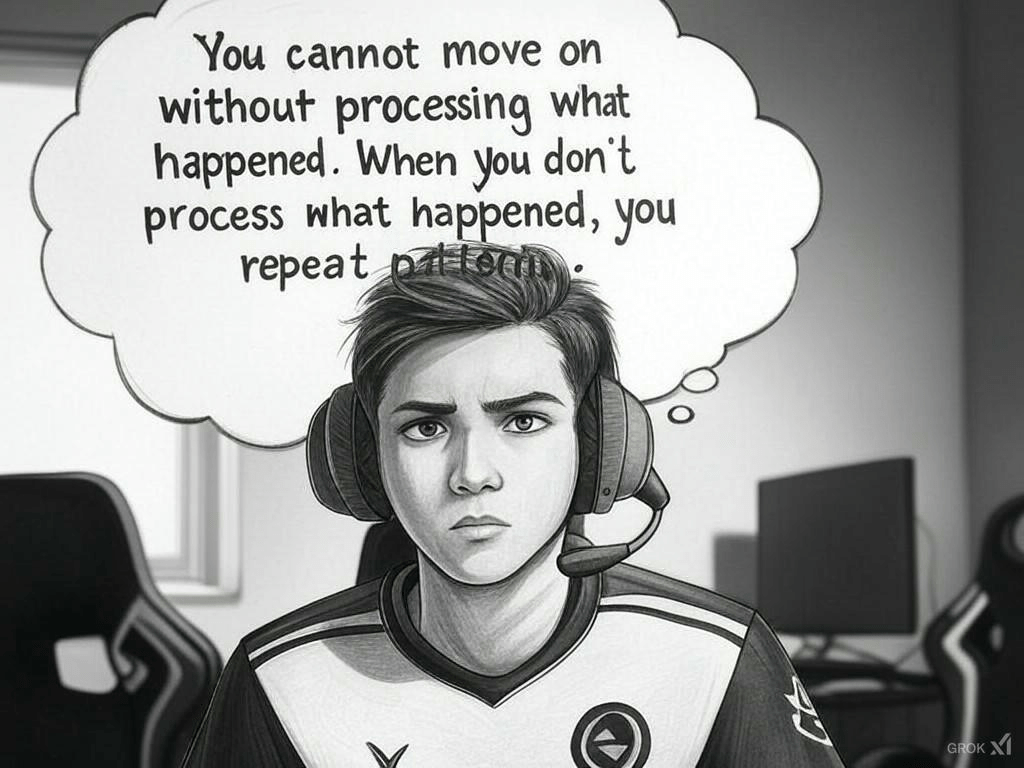
In the hustle of daily life, it’s tempting to skip over the painful moments, the setbacks, or the heartaches. We often hear phrases like “move on” or “let it go”, but what does that truly entail? Today, on Rise&Inspire, we look into a profound truth encapsulated by the quote: “You cannot move on without processing what happened. When you don’t process what happened, you repeat patterns.

Understanding the Cycle

Life presents us with cycles, some of which are beneficial, like the natural daily rhythm or seasonal changes. However, when it comes to personal growth, there exist cycles that can be more detrimental than developmental. These are the cycles of unprocessed experiences.

When we fail to reflect on, understand, and process our experiences, whether they are failures, traumas, or even successes, we leave a part of ourselves unresolved. This unresolved part tends to resurface in various guises, leading us inadvertently back to the same situations or feelings, thus repeating patterns.

The Importance of Processing

Emotional Alchemy: Much like alchemy seeks to turn base metals into gold, processing our experiences can transform pain into wisdom. By facing what has happened head-on, we learn from it, converting suffering into strength.

Breaking the Cycle: By understanding our past reactions and decisions, we can identify triggers and behaviours that do not serve our highest good. This awareness is the first step towards breaking repetitive patterns.

Mental Clarity: Unprocessed emotions can cloud our judgment. Clearing this fog through reflection allows for better decision-making, enhancing our life’s quality and direction.

How to Process:

Reflection: Set aside time to genuinely reflect on your experiences. Journaling can be a powerful tool for this. Write about your feelings, the lessons learned, and what you might do differently in the future.

⁃Seek Insight: Sometimes, talking it out with someone else, whether a friend, therapist, or coach, can provide new perspectives or validation of your feelings, aiding in deeper understanding.

Mindfulness Practices: Meditation or mindfulness can help you sit with your emotions without judgment, allowing them to pass through you and be understood more fully.

Acceptance: Recognize that some things cannot be changed but can be accepted as part of your journey. Acceptance is not about resignation but about acknowledging reality to move forward with peace.

Conclusion

To “move on” doesn’t mean to forget or to erase the past; rather, it means to understand it, learn from it, and integrate these lessons into who we are. By processing what happened, we equip ourselves with the wisdom to avoid repeating old patterns. Instead, we can create new, healthier cycles that lead to personal growth and fulfilment.

As we navigate through 2025, let’s commit to this process of reflection. Let’s not just move on, but move forward with intention, understanding, and a heart full of learned wisdom.

Rise & Inspire – We rise by inspiring each other, and sometimes, that inspiration comes from the very depths of our processed experiences.

Stay Connected:

🌐 Home | Blog | About Us | Contact| Resources

📱 Follow us: @RiseNinspireHub

© 2025 Rise&Inspire. All Rights Reserved.

Word Count:569

How Can a Simple Tamil Proverb Change Your Perspective?

Once the rain stops, the umbrella becomes a burden

A Timeless Life Lesson

In Tamil, there’s a proverb that beautifully expresses the impermanence of utility: “Mazhai vittathum kudai chumay akividum” (மழை விட்டதும் குடை சுமையாகிவிடும்). Translated, it means, “Once the rain stops, the umbrella becomes a burden.” At first glance, it’s a simple observation about how tools or objects lose their importance once their purpose is fulfilled. However, like most proverbs, its deeper meanings resonate across various aspects of life.

Unpacking the Wisdom

An umbrella is a lifesaver during a downpour, shielding us from getting drenched. But as soon as the skies clear, the very thing that protected us becomes a weight to carry. This metaphor reflects how situations, relationships, and even material possessions evolve in value as circumstances change.

The Life Lessons Hidden in the Proverb

1. Relationships and Gratitude

This saying is a mirror of how we often treat relationships. During tough times, we may lean on certain people—friends, family, or mentors. However, once the storm passes, do we continue valuing their support, or do we forget their significance?

Example: Imagine a friend who stood by you during a challenging phase of life. When you emerge stronger, do you carry forward the friendship with the same gratitude, or does the relationship fade into the background?

This proverb nudges us to reflect on how we treat the people who stand with us in the rain. It’s a call for gratitude and acknowledgement, not just during adversity but even after the skies have cleared.

2. The Transience of Material Possessions

Material objects often act as tools to meet immediate needs. However, when they’re no longer required, they may feel like burdens. This is especially true in today’s consumer-driven world, where possessions often outlive their usefulness.

Illustration: Think about a gadget you bought for a specific purpose, like a camera for a vacation. Once the trip is over, the device might sit unused, serving as a physical and financial burden.

This reminds us to be mindful of what we acquire and to embrace minimalism whenever possible.

3. Professional Contexts

In workplaces, the proverb can apply to how roles and skills are valued during specific situations. A professional who excels in crisis management may be celebrated during turbulent times but could struggle to find appreciation when stability returns.

This dynamic teaches us the importance of adaptability and continuous self-improvement to remain relevant.

4. Philosophical Reflections on Life’s Impermanence

On a deeper level, this proverb reminds us of life’s transient nature. Situations, people, and even challenges are temporary. The umbrella that shelters us today might not be necessary tomorrow.

This realization can help us let go of attachments and appreciate the present moment without clinging to things that no longer serve us.

Modern-Day Applications

Technology

Think of apps or tools that solve temporary problems. For instance, a fitness tracker might feel essential during a health transformation but redundant once the habit is established.

Social Media Trends

In the digital age, trends, influencers, and viral sensations are celebrated briefly before fading away. This proverb works as a reminder not to chase fleeting relevance but to focus on lasting value.

A Call to Gratitude and Awareness

The essence of “Mazhai vittathum kudai chumay akividum” lies in mindfulness. It encourages us to:

  1. Value relationships: Don’t discard people who’ve supported you, even when you no longer need their help.
  2. Reassess possessions: Be intentional about what you acquire and let go of what no longer serves a purpose.
  3. Adapt to change: Embrace life’s ebb and flow, recognizing that utility and relevance are ever-changing.

Conclusion

This humble Tamil proverb carries a profound lesson: everything has its time and purpose. The challenge lies in recognizing the shifting seasons of life and responding with grace, gratitude, and adaptability.

So the next time you carry an umbrella after the rain has stopped, let it remind you of this wisdom. Hold onto gratitude for what served you in the storm, and learn to let go when the time comes.

What’s your interpretation of this proverb? Share your thoughts below—I’d love to hear your perspective!

🌐 Home | Blog | About Us | Contact| Resources
Social Media: @RiseNinspireHub
© 2024 Rise&Inspire. All Rights Reserved.

Word Count:709

What is a Quote?

The Power of Words That Endure

A quote is a powerful capsule of wisdom—an echo of thought and human experience. It captures a moment of brilliance or a universal truth, motivating, inspiring, and connecting us across time and space.

What Makes a Quote Memorable?

Attribution: Every great quote has a story, often tied to a leader or thinker whose experiences give it depth (e.g., Gandhi’s “Be the change you wish to see in the world”).

Brevity: Quotes are short yet impactful, making them easy to remember (e.g., Einstein’s “Imagination is more important than knowledge”).

Universality: A great quote resonates universally, transcending time, place, and culture.

Why Quotes Matter

They Inspire: Quotes like Churchill’s “Success is not final, failure is not fatal: it is the courage to continue that counts” motivate us through challenges.

They Teach Wisdom: They distill complex ideas into simple insights, as Socrates’ “The unexamined life is not worth living” encourages self-reflection.

They Build Connection: Quotes unite us in shared experiences and ideas, like Maya Angelou’s “We may encounter many defeats, but we must not be defeated.”

Types of Quotes

  1. Inspirational: “The best way to predict the future is to create it.” – Abraham Lincoln
  2. Philosophical: “Happiness depends upon ourselves.” – Aristotle
  3. Humorous: “The secret of getting ahead is getting started.” – Mark Twain

How to Use Quotes in Daily Life

Morning Motivation: Start your day with a quote.

Journaling: Reflect on a favorite quote in your writing.

Sharing Wisdom: Spread positivity by sharing quotes on social media.

Problem-Solving: Use quotes for guidance during challenges.

Timeless Quotes to Reflect On

“Do what you can, with what you have, where you are.” – Theodore Roosevelt

“In the middle of every difficulty lies opportunity.” – Albert Einstein

“Not all those who wander are lost.” – J.R.R. Tolkien

Closing Thoughts

Quotes are powerful tools that capture our shared struggles, triumphs, and hopes. They inspire, comfort, and spark joy, enriching our lives in meaningful ways. 

What’s a quote that inspires you? Share it in the comments!

Resources to Explore Further:

These resources will help deepen your understanding of quotes and their lasting impact on us.

🌐 Home | Blog | About Us | Contact | Resources
Social Media: @RiseNinspireHub
For inquiries or collaborations, reach us at: kjbtrs@riseandinspire.co.in
© 2024Rise&Inspire. All Rights Reserved.

This blog post contains a total of 418 words

Wake Up to Wisdom

A Lesson from Proverbs 4:2

Wake-Up Call: Embracing Wisdom – A Lesson from Proverbs 4:2

“I give you good precepts; do not forsake my teaching.”
– Proverbs 4:2

Good morning, dear readers. As we begin this new day, let us take a moment and reflect on the powerful words of wisdom from the Book of Proverbs, specifically from verse 4:2. In this simple yet profound teaching, we are reminded of the value of wisdom and the importance of embracing the teachings that guide us in life.

The Wisdom of Proverbs: A Guiding Light

The Proverbs, a collection of ancient wisdom, offer timeless principles that speak to the heart of our daily lives. In this particular verse, we hear a clear message: Do not forsake wisdom. It is easy to get lost in the busyness of life, but this verse calls us to remember the teachings that provide clarity, direction, and purpose. Wisdom isn’t just knowledge; it is the ability to apply that knowledge in ways that lead to growth, peace, and fulfilment.

The verse starts with, “I give you good precepts.” Precepts are instructions, guidelines, or principles that shape our behaviour and choices. These “good precepts” are not arbitrary rules; they are words that come from divine insight, intended to lead us toward righteousness and peace. As we face the challenges of daily life, we are urged to turn to these teachings, trusting that they will lead us to greater understanding and a life well-lived.

The Danger of Forsaking Wisdom

The second part of the verse, “Do not forsake my teaching,” is a cautionary reminder. To forsake wisdom is to turn away from what is good, what is right, and what is true. It is a warning against disregarding the teachings that have been entrusted to us.

In our fast-paced world, it can be tempting to ignore the wisdom passed down through generations or even the quiet, personal teachings that arise from our hearts. We may think we know better, or we may believe that wisdom doesn’t fit into the modern context. Yet, the truth remains: abandoning wisdom leads to confusion, disarray, and even hardship.

Practical Application: How to Live This Teaching

  1. Start Your Day with Wisdom
    Just as we start our physical day with the simple act of waking up, let us start our spiritual day by waking up to wisdom. Spend a few moments each morning reflecting on a piece of divine wisdom—be it from the Bible, a spiritual mentor, or your inner guidance. Ask yourself, How can I apply this teaching today? This simple act will set a positive tone for your day.
  2. Live According to Principles
    Embrace the good precepts given to you, whether they are spiritual teachings or moral guidelines. Whether you are making decisions in your personal or professional life, let these principles guide you. When faced with choices, ask yourself, What would wisdom say in this situation?
  3. Teach Others What You Have Learned
    Proverbs 4:2 is not merely a personal reminder; it is a call to pass wisdom on. Share the lessons you’ve learned with others, especially with those who may need guidance. Wisdom, when shared, multiplies and benefits the community as a whole.
  4. Seek Continuous Learning
    Never stop seeking wisdom. As we grow in life, we also grow in understanding. Whether through reading, meditation or simply listening to others, continue to seek good teaching that aligns with truth and goodness.

A Wake-Up Call Message from His Excellency, the Rt. Rev. Dr. Selvister Ponnumuthan

Dear friends, as we reflect on this verse, let us remember the wisdom that has been passed down to us, not only through scripture but also through the words of our spiritual leaders. His Excellency, the Rt. Rev. Dr. Selvister Ponnumuthan, often emphasizes the power of embracing divine teachings in our lives.

His Excellency reminds us that wisdom is not for personal enrichment but for the benefit of those around us. Let us take his words to heart as we move forward today: “Wisdom is not only a gift; it is a responsibility. To live wisely is to honour the teachings that have shaped our lives and to share that wisdom with others in every action we take.”

Meditation and Prayer

Let us take a moment for a guided meditation and prayer:

Meditation
Close your eyes and take a deep breath. As you breathe in, imagine yourself filling up with light, wisdom, and peace. As you exhale, release all doubts, confusion, and distractions. In this moment, reflect on the teachings that have shaped your life and ask for guidance in applying them today.

Prayer
Heavenly Father, we thank You for the gift of wisdom. We pray for the strength to embrace Your teachings and the humility to walk according to Your ways. Help us not to forsake the good precepts You have given us but to live by them each day. May we honour You with every thought, word, and deed? In Jesus’ name, we pray. Amen.

Call to Action

As you move forward today, remember that wisdom is a light that guides us through the darkest times. Don’t forsake it. Let it shape your thoughts, decisions, and actions. And, most importantly, share it with others. By doing so, you not only enrich your own life but help bring light into the lives of those around you.

I give you good precepts; do not forsake my teaching.”
May you live with this truth in your heart today and always.

Have a blessed day ahead!

🌐 Connect with Rise&Inspire
Follow us on social media @RiseNinspireHub or reach us at kjbtrs@riseandinspire.co.in

© 2024 Rise&Inspire. All Rights Reserved

The blog post contains a total of 939 words

Wisdom vs. Power: Reflecting on Ecclesiastes 7:19 for Spiritual Growth

Wisdom vs. Power: Reflecting on Ecclesiastes 7:19 for Spiritual Growth

🌅 WAKE UP CALL 🌅

☕ Good Morning! ☕

🔥🔥 Praise be to Jesus Christ! 🔥🔥

Verse of the Day:

“Wisdom gives strength to the wise more than ten rulers that are in a city.”
Ecclesiastes 7:19

“നഗരത്തിലെ പത്തു ഭരണാധിപന്‍മാരെക്കാള്‍ ശക്‌തി ജ്‌ഞാനം ജ്‌ഞാനിക്കു പകര്‍ന്നു കൊടുക്കുന്നു.”
സഭാപ്രസംഗകന്‍ 7:19

Meaning of the Verse:

Ecclesiastes 7:19 highlights the immense power and value of wisdom. The verse emphasizes that wisdom offers greater strength and influence than even the mightiest rulers governing a city. This comparison suggests that while political power is significant, the true strength lies in the understanding and discernment that wisdom brings. Wisdom enables the wise to navigate life’s challenges effectively, make sound decisions, and influence others positively, surpassing the superficial authority of mere rulers.

Practical Application:

  1. Decision-Making:
    • When faced with choices, prioritize wisdom over immediate rewards or pressure from others. Before making decisions, reflect, seek counsel, and consider long-term consequences.
  2. Relationships:
    • Wisdom guides us to build stronger, more meaningful relationships. By practicing patience, understanding, and empathy, we foster trust and harmony in our interactions.
  3. Personal Growth:
    • Continuously seek knowledge and understanding. Read, meditate, and pray for wisdom to grow in all areas of life. Allow your experiences to teach you, and be open to learning from others.

Integrating Wisdom into Daily Life:

  • Start the Day with Reflection:
    Begin each day with a moment of reflection or meditation. Ask God for the wisdom to face the challenges ahead.
  • Mindful Communication:
    In conversations, listen more than you speak. Consider your words carefully and strive to speak with kindness and understanding.
  • Balanced Living:
    Use wisdom to balance your time between work, family, and personal pursuits. This equilibrium fosters a peaceful and fulfilling life.

Spiritual Growth and Self-Discovery:

Ecclesiastes 7:19 is an invitation to deepen our spiritual journey through the pursuit of wisdom. It encourages us to go beyond surface-level understanding and dive into the deeper truths of life. This verse reminds us that true strength and fulfillment come not from external power or material success but from inner wisdom and spiritual growth. By seeking wisdom, we align ourselves with God’s will, discover our true purpose, and grow closer to Him.

Meditation and Prayer:

Meditation:

  • Find a quiet space and focus on the verse, “Wisdom gives strength to the wise more than ten rulers that are in a city.” Reflect on how wisdom has guided you in the past and how it can continue to lead you. Imagine yourself filled with divine wisdom, making decisions that positively impact your life and those around you.

Prayer:

  • “Lord, grant me the wisdom to navigate this life with discernment and grace. Help me to seek Your guidance in every decision, to speak with wisdom in every conversation, and to act with understanding in every situation. May Your wisdom strengthen me more than any earthly power. Amen.”

Call to Action:

Today, let this verse inspire you to:

  1. Be a source of wisdom in your community.
    • Share your insights and understanding with others, especially those who seek guidance.
  2. Make decisions that reflect your values.
    • Let wisdom guide you in choosing what is right, even if it is not the easiest path.
  3. Grow in wisdom daily.
    • Commit to learning something new today—whether from a book, a conversation, or an experience.

Historical and Cultural Context:

The book of Ecclesiastes is attributed to King Solomon, who is known for his unparalleled wisdom. In the context of ancient Israel, rulers held immense power, but Solomon’s writings emphasize that wisdom surpasses even the greatest political strength. This was a radical idea at the time, challenging the belief that authority alone was the pinnacle of power. The verse has endured over time as a timeless reminder that true strength lies in wisdom, not in positions of power.

🌟 Wake-Up Call Message 🌟

His Excellency, the Rt. Rev. Dr. Selvister Ponnumuthan, Bishop of Punalur, Kerala, shares this morning’s reflection:

“As we rise today, let us remember the enduring power of wisdom. In our fast-paced world, it’s easy to be swayed by the influence of power, status, and authority. Yet, Ecclesiastes 7:19 reminds us that wisdom is the greatest strength we can possess. Let us seek this divine wisdom, allowing it to guide our decisions, shape our relationships, and lead us closer to God. May each step we take today be rooted in the wisdom that surpasses all earthly power, for it is in wisdom that we find true strength and purpose. May you be blessed with wisdom today and always. Amen.”

🔥🔥 Have a Blessed Day! 🔥🔥

👉 Read our past articles on ‘power of wisdom‘ through the links provided below.”

(1) http://riseandinspire.co.in/2023/09/13/%f0%9f%8f%86exploring-wisdom-1613/

(2) http://riseandinspire.co.in/2023/09/22/beyond-human-understanding-gods-wisdom-and-strength/

(3) http://riseandinspire.co.in/2023/09/29/the-wisdom-of-warren-buffett-integrity-as-the-cornerstone-of-success/

(4) http://riseandinspire.co.in/2023/11/08/wisdom-from-proverbs-the-seven-abominations-the-lord-hates/

(5) http://riseandinspire.co.in/2023/11/30/a-journey-into-wisdom-wisdom-617-as-a-guiding-light/

For further insights and inspiration, visit Rise&InspireHub. The blog offers stories that touch the heart and spark the imagination.
Email: kjbtrs@riseandinspire.co.in

Reflect on it.

Amen🙏🌷

Why Is the Fear of the Lord Considered the Path to Wisdom?

Discovering Wisdom Through Sirach 1:26-27

Outline

1. Introduction

Personal reflection or story

2. Meaning and Significance

Explanation of the verse

Real-life examples of wisdom and humility

Expert commentary and insights

3. Exploration of the Verse

Practical applications and actionable tips

Comparative analysis with other wisdom literature

4. Authorship and Historical Context

Brief overview of the Book of Sirach

Connection to modern life

Advanced scriptural analysis

5. Connecting with God and Living Righteously

Reflection questions and personal challenge

Scriptural connections

Case studies and practical workshops/webinars

6. Core Idea

Summary of the key teachings

7. Clarifications

FAQs with practical advice

8. Resources for Further Research

Expert video interviews

Infographics and additional reading materials

9. Community Engagement

Discussion forums and interactive content

Invitation to comment and share

10. Prayer or Meditation Guide

Guided prayer and meditation practice

1. Introduction

Wisdom often feels like an elusive treasure, something we all seek but struggle to grasp fully. Reflecting on Sirach 1:26-27, I recall a pivotal moment in my life when I faced a critical decision. Overwhelmed and unsure, I found that embracing God’s commandments and developing a deeper respect for Him led me to the wisdom I so desperately needed. This personal journey has taught me that wisdom is not just an intellectual pursuit but a profound spiritual transformation.

2. Meaning and Significance

Explanation of the Verse

Sirach 1:26-27 reads:

“If you desire wisdom, keep the commandments, and the Lord will lavish her upon you. For the fear of the Lord is wisdom and discipline, fidelity and humility are his delight.”

This passage emphasizes that true wisdom is a divine gift given to those who live according to God’s commandments. The “fear of the Lord” here denotes a deep, reverent respect for God, which forms the foundation for acquiring wisdom. By living in reverence, one naturally adopts qualities such as discipline, fidelity, and humility, which are highly valued by God.

Real-Life Examples of Wisdom and Humility

Consider figures like Mahatma Gandhi and Nelson Mandela. Gandhi’s unwavering commitment to non-violence and Mandela’s perseverance in the face of adversity are exemplary of wisdom and humility. Their lives illustrate how living by core values and principles can lead to impactful wisdom and enduring legacy.

Expert Commentary and Insights

Dr. John Walton, a scholar in Old Testament studies, notes that the “fear of the Lord” is not about being scared but about cultivating a respectful and obedient relationship with God. According to Walton, this profound reverence enables a deeper understanding and application of divine wisdom in everyday life.

3. Exploration of the Verse

Practical Applications and Actionable Tips

1. Daily Reflection: Begin each day with a moment of reflection on God’s commandments. Ask yourself how you can incorporate these teachings into your daily actions.

2. Practice Humility: Engage in acts of kindness and service. Recognize that humility enriches your spiritual journey and relationships.

3. Seek Discipline: Develop a personal growth plan including regular prayer, scripture study, and ethical adherence.

Comparative Analysis with Other Wisdom Literature

Comparing Sirach 1:26-27 with Proverbs 1:7, which states, “The fear of the Lord is the beginning of knowledge; fools despise wisdom and instruction,” reveals a common thread in biblical wisdom literature. Both texts highlight that reverence for God is foundational to acquiring wisdom. Similarly, Confucian texts emphasize the value of respect and propriety in gaining wisdom.

4. Authorship and Historical Context

Brief Overview of the Book of Sirach

The Book of Sirach, also known as Ecclesiasticus, is part of the Apocrypha and was written by Jesus ben Sirach in the early 2nd century BCE. It offers practical ethical teachings and guidance for living a righteous life amidst Hellenistic influences.

Connection to Modern Life

In our modern, fast-paced world, the principles from Sirach 1:26-27 are still relevant. Embracing divine commandments and maintaining reverence for God provides timeless guidance for making ethical decisions and living with integrity.

Advanced Scriptural Analysis

A detailed examination of the Hebrew term for “fear” (יראה, yir’ah) reveals its connotations of awe and respect rather than terror. This deeper understanding enhances our appreciation of how reverence for God underpins true wisdom.

5. Connecting with God and Living Righteously

Reflection Questions and Personal Challenge

1. How can you demonstrate greater respect for God in your daily actions?

2. What steps can you take to develop more discipline and humility in your life?

Personal Challenge: Undertake a 30-day challenge focusing on practicing humility, discipline, and adherence to God’s commandments. Reflect on the changes this challenge brings to your life and relationships.

Scriptural Connections

Proverbs 1:7: “The fear of the Lord is the beginning of knowledge; fools despise wisdom and instruction.”

James 1:5: “If any of you lacks wisdom, let him ask of God, who gives to all liberally and without reproach, and it will be given to him.”

Case Studies and Practical Workshops/Webinars

Explore case studies of individuals who have lived out these principles. Consider participating in workshops or webinars that offer practical advice on living wisely and reverently.

6. Core Idea

Sirach 1:26-27 teaches that wisdom is a divine gift granted to those who live by God’s commandments and cultivate a respectful fear of Him. By embodying discipline, fidelity, and humility, individuals align themselves with divine wisdom and lead a more righteous life.

7. Clarifications

Q: What does “fear of the Lord” mean?

A: It signifies a profound respect and reverence for God, fostering wisdom and righteous living.

Q: How can I apply this verse to my life?

A: Embrace God’s commandments, practice humility, and seek discipline in your daily actions. Reflect on how these principles guide your decisions.

Q: What historical background should I know about the Book of Sirach?

A: Written by Jesus ben Sirach in the early 2nd century BCE, it provides ethical guidance for Jewish communities influenced by Hellenistic culture.

8. Resources for Further Research

Bible Gateway – Sirach 1:26-27

Bible Hub – Commentary on Sirach

Apocrypha Project – Overview of Sirach

Infographic: Understanding Wisdom in the Bible

Video: The Fear of the Lord and Wisdom

Expert Interview: Dr. John Walton on Wisdom and Reverence

9. Community Engagement

We invite you to share your thoughts on Sirach 1:26-27. How has the pursuit of wisdom and humility influenced your life? Join the discussion in the comments below and connect with others on this journey of faith.

10. Prayer or Meditation Guide

Guided Prayer:

“Lord, grant me the wisdom to live according to Your commandments. Help me to cultivate a deep respect for You, guiding my actions with humility and discipline. May Your wisdom illuminate my path and strengthen my faith. Amen.”

Use this prayer to start your day and align your actions with divine wisdom.

This blog post aims to offer a comprehensive and engaging exploration of Sirach 1:26-27, blending personal reflections, expert insights, practical applications, and interactive elements to resonate with both general and expert readers.

Explore more insights and connect with us at Rise&Inspire. Visit RiseNinspireHub to see all my posts or reach out via Email Address. Each morning, I am uplifted by an inspiring message from His Excellency, the Rt. Rev. Dr. Selvister Ponnumuthan, Bishop of Punalur in Kerala, India. Today’s blog post is deeply influenced by his profound wisdom.

What Lessons Can We Learn from Proverbs 13:13 Today?

“Those who despise the word bring destruction on themselves, but those who respect the commandment will be rewarded.”

The Proverbs 13: 13

Proverbs 13:13 underscores the significance of honouring wisdom and divine guidance, which yield positive outcomes and rewards while neglecting them leads to self-inflicted harm.

The Timeless Wisdom of Proverbs 13:13 in Modern Life

Proverbs 13:13 teaches that those who disregard wisdom face destruction, while those who respect it are rewarded. This ancient wisdom, attributed to King Solomon, remains relevant today, emphasizing the importance of ethical behaviour and adherence to divine guidance.

Key Points:

Despising the Word: Ignoring divine teachings leads to negative consequences.

Bringing Destruction: Rejecting wisdom results in moral decay and personal ruin.

Respecting the Commandment: Valuing and following divine guidance leads to rewards like spiritual peace and moral integrity.

Historical Context:

Written during Solomon’s prosperous reign, Proverbs aimed to provide moral and practical life guidelines.

Part of the wisdom literature of the Old Testament, it taught young leaders principles of justice and righteousness.

Contemporary Relevance:

Workplace Ethics: Following guidelines ensure recognition and success.

Public Health: Adhering to health advice protects individuals and communities.

Financial Responsibility: Prudent financial practices lead to stability.

Environmental Stewardship: Respecting environmental laws benefits society and the planet.

Social Interactions: Acting with respect and integrity fosters strong relationships.

Proverbs 13:13 highlights the universal principle that respecting wisdom leads to positive outcomes while ignoring it results in self-inflicted harm.

Prayer Based on Proverbs 13:13

Heavenly Father,

We come before You with humble hearts, seeking Your wisdom and guidance. Your Word teaches us that those who despise Your teachings bring destruction upon themselves, but those who respect Your commandments will be rewarded.

Lord, grant us the grace to value and cherish Your Word. Help us to understand and obey Your divine instructions, that we may walk in the path of righteousness. Strengthen our faith and resolve, so that we may resist the temptations that lead us astray.

Fill our hearts with reverence for Your commandments, and let Your wisdom be the light that guides our actions. May we always seek to live in accordance with Your will, finding peace and fulfillment in Your presence.

We ask for Your blessings upon our lives, as we strive to honor and follow Your Word. Reward us with spiritual growth, moral integrity, and the abundant life that comes from living in harmony with Your divine principles.

In Jesus’ name, we pray.

Amen.

The key takeaway from this blog post

The key takeaway from this blog post is that Proverbs 13:13 highlights the importance of respecting wisdom and divine guidance, as doing so leads to positive outcomes and rewards while disregarding such wisdom results in self-inflicted harm.

This ancient principle remains profoundly relevant in contemporary life, emphasizing ethical behaviour, adherence to moral principles, and the benefits of living in alignment with divine teachings across various aspects of life.

🌹 Every morning, I receive an inspiring message from His Excellency, the Rt. Rev. Dr. Selvister Ponnumuthan, the Bishop of Punalur in Kerala, India. Today’s blog post is inspired by his message.

Explore More:

Rise&Inspire: Discover articles and reflections for spiritual growth.

RiseNinspireHub: Visit our hub for all blog posts.

View All My Posts: Read more inspiring content.

Contact Us: For inquiries, email us at kjbtrs@riseandinspire.co.in.

By staying connected and sharing our faith journey, we can strengthen our spiritual lives and support one another in our commitment to Christ.

Why Should We Prioritize Wisdom Over Material Inheritance?

Wisdom is as Good as an Inheritance

Ecclesiastes 7:11 – “Wisdom is as good as an inheritance, an advantage to those who see the sun.”

Meaning and Significance

The verse from Ecclesiastes underscores the value of wisdom, comparing it to an inheritance. An inheritance is traditionally seen as a valuable asset passed down from one generation to the next, providing financial stability and opportunities. Similarly, wisdom is portrayed as an invaluable asset that offers guidance, protection, and insight.

It is an advantage to those “who see the sun,” meaning those who are alive and experiencing life. Just as an inheritance can provide a foundation for a stable future, wisdom equips individuals with the tools needed to navigate life’s complexities and challenges.

Exploration of the Verse

1. Wisdom as a Legacy: Like an inheritance, wisdom can be passed down from one generation to another. It represents accumulated knowledge and understanding that can help future generations make better decisions and lead more fulfilling lives.

2. A Living Advantage: The phrase “to those who see the sun” emphasizes that wisdom is particularly valuable to the living. It is a practical tool that enhances our daily lives, helping us to discern right from wrong, make sound judgments, and approach situations with a thoughtful and informed perspective.

3. Practical Benefits: Unlike material wealth, which can be lost or squandered, wisdom is a lasting asset. It provides ongoing benefits, such as peace of mind, improved relationships, and the ability to navigate life’s challenges with grace and resilience.

Lessons from the Verse

Value of Wisdom: The verse teaches us to seek and cherish wisdom as a vital part of our lives. It encourages us to pursue knowledge and understanding, recognizing their profound impact on our well-being and decision-making.

Wisdom Over Wealth: While material inheritance has its place, the verse highlights that wisdom is even more critical. It suggests that we should prioritize the pursuit of wisdom over the accumulation of material wealth.

Intergenerational Impact: The verse reminds us of the importance of passing down wisdom to future generations. It encourages and reinforces us to share our knowledge and experiences with others, fostering a legacy of informed and thoughtful individuals.

Prayer Based on Ecclesiastes 7:11

Heavenly Father,

We come before You with grateful hearts, acknowledging the profound truth of Your Word. Thank You for the gift of wisdom, which is as precious as any earthly inheritance. We ask for Your guidance and discernment as we navigate the complexities of life. Grant us the understanding to make wise decisions and the humility to seek Your counsel in all things.

Lord, help us to recognize the true value of wisdom and to prioritize it above material wealth. Teach us to share the knowledge and insights we have gained with others, creating a legacy of wisdom that benefits future generations. May Your wisdom illuminate our path, providing clarity and peace in times of uncertainty.

We pray for those who are seeking wisdom, that they may find it in abundance through Your grace. May we all grow in understanding and live lives that reflect Your love and truth.

In Jesus’ name, we pray.

Amen.

This verse from Ecclesiastes reminds us of the enduring value of wisdom. As we reflect on its significance, let us strive to seek and share wisdom in our daily lives, recognizing its power to transform and enrich our journeys.

Explore Deeper:

Rise&Inspire: Dig into a collection of thought-provoking articles and reflections to expand your spiritual horizons. (https://riseandinspire.co.in/)

RiseNinspireHub: Visit our hub for all our blog posts.

View All My Posts: Read more inspiring content.

Contact Us:

For further inquiries, please feel free to reach out to us at Email:kjbtrs@riseandinspire.co.in

Today’s post is inspired by the wisdom of His Excellency, the Rt. Rev. Dr Selvister Ponnumuthan, Bishop of Punalur, Kerala, India, reflects on the profound message of Ecclesiastes 7:11.

Are We Open to Correction or Driven by Arrogance?

What Lessons Can We Learn from Sirach on Accepting Advice?

In the pursuit of personal and spiritual growth, how we respond to correction and advice reveals much about our character. The ancient wisdom found in Sirach 32:17-18 offers profound insights into this aspect of human behaviour. These verses contrast the reactions of a sinner and a sensible person to reproof, highlighting the virtues of humility and the pitfalls of pride.

In this blog post, we will look at the meaning and significance of these verses, exploring what they teach us about the importance of accepting criticism, valuing thoughtful suggestions, and cultivating moral and spiritual integrity.

Join us as we unpack these timeless lessons and reflect on how they can guide us toward a more virtuous and discerning life.

The verses from Sirach 32:17-18 present a contrast between two types of individuals: the sinner and the sensible person, highlighting their different reactions to advice and correction.

Verse 17: “The sinner will shun reproof and will find a decision according to his liking.

Meaning: This verse describes how a sinful person reacts to correction. Instead of accepting constructive criticism, they avoid it and prefer decisions that align with their desires, even if those decisions are misguided or morally wrong. This behaviour demonstrates a refusal to acknowledge one’s faults or the wisdom in others’ counsel.

Significance: The verse warns against the dangers of rejecting correction. It underscores the importance of being open to reproof as a path to self-improvement and moral growth. It suggests that a person’s unwillingness to accept criticism is a sign of deeper moral and ethical failings.

Verse 18: “A sensible person will not overlook a thoughtful suggestion; an insolent and proud person will not be deterred by fear.

Meaning: This verse contrasts the sensible person, who values and considers thoughtful suggestions, with the proud and insolent person, who is undeterred even by fear or potential consequences.

Significance: The sensible person is portrayed as wise and humble, valuing the insights and advice of others. This openness to suggestion is a sign of true wisdom and a desire to grow. On the other hand, the proud and insolent person is characterized by arrogance and a lack of humility, making them resistant to change even in the face of danger or reprimand. This highlights the destructive nature of pride and arrogance.

Teaching and Exploration:

1. Humility and Openness to Correction: The verses teach the value of humility and being receptive to criticism. Being open to reproof and thoughtful suggestions is crucial for personal development and moral integrity.

2. Dangers of Pride and Insolence: Pride and insolence are portrayed as significant barriers to growth and improvement. These traits lead individuals to ignore advice and warnings, potentially leading to negative consequences.

3. Moral Discernment: The verses emphasize the need for discernment in accepting advice. A sensible person knows the importance of thoughtful suggestions and uses them to make better decisions.

4. Responsiveness to Reproof: The ability to accept reproof is linked to one’s moral and spiritual maturity. It is a sign of wisdom to be able to listen to and learn from others.

In summary, Sirach 32:17-18 underscores the importance of humility, openness to advice, and the willingness to accept correction as essential qualities for moral and spiritual growth. It warns against the dangers of pride and the tendency to reject criticism, highlighting the contrasting paths of the wise and the foolish.

The Book of Sirach

The Book of Sirach, also known as Ecclesiasticus, is part of the Deuterocanonical books in the Old Testament of the Christian Bible. Its authorship is attributed to Jesus ben Sirach, a Jewish scribe and scholar who lived in Jerusalem around the early 2nd century BCE. The book is also known as the Wisdom of Sirach, and its primary purpose is to provide moral and ethical teachings, much like the Book of Proverbs.

Authorship

Jesus ben Sirach, also referred to as Yeshua ben Sira, compiled and wrote the book in Hebrew. His work was later translated into Greek by his grandson, who added a prologue explaining the translation process. Ben Sirach was well-versed in Jewish law and tradition, and his writings reflect a deep understanding of the Hebrew Scriptures and the wisdom literature of his time.

Historical Context

The period in which Sirach was written was one of significant change and challenge for the Jewish people. This era followed the conquest of Alexander the Great and the subsequent Hellenistic influence on the region. The Jewish community faced cultural and religious pressures from the dominant Greek culture, which often conflicted with their traditional beliefs and practices.

Key Themes

Wisdom and Instruction: The book focuses on imparting practical wisdom for daily living, covering a wide range of topics such as ethics, family life, friendship, and piety.

The Fear of the Lord: Central to the teachings of Sirach is the concept of reverence for God, which is presented as the foundation of true wisdom.

Moral and Ethical Conduct: The text emphasizes the importance of living a virtuous life, adhering to the commandments, and maintaining social justice.

Respect for Tradition: Ben Sirach advocates for the preservation of Jewish traditions and customs, urging his readers to remain faithful to their religious heritage despite external influences.

Relevance to the Verses (Sirach 32:17-18)

The specific verses, Sirach 32:17-18, reflect these broader themes by contrasting the behaviour of a sinner with that of a sensible person. This contrast underscores the value of humility, the acceptance of reproof, and the avoidance of pride and arrogance. These teachings would have been particularly pertinent at a time when the Jewish community was navigating the complexities of maintaining their identity and values amidst Hellenistic pressures.

Explore Deeper:

Rise&Inspire: Dig into a collection of thought-provoking articles and reflections to expand your spiritual horizons. (https://riseandinspire.co.in/)

RiseNinspireHub: Visit our hub for all our blog posts.

View All My Posts: Read more inspiring content.

Contact Us:

For further inquiries, please feel free to reach out to us at Email:kjbtrs@riseandinspire.co.in

Today’s post is inspired by the wisdom of His Excellency, the Rt. Rev. Dr Selvister Ponnumuthan, Bishop of Punalur, Kerala, India, reflects on the profound message of Sirach 32:17-18:

Truth on Demand? Not Quite!**

Are You Ready to Buy Truth and Wisdom?

Invest in Your Light: A Spark from Proverbs 23:23

Are You Ready to Buy Truth and Wisdom?

Ever wondered how ancient wisdom can guide us today? Proverbs 23:23 offers a timeless call to invest in truth, wisdom, instruction, and understanding.

Join me as we explore its profound message and uncover how it can light up our lives with meaning and clarity.

Proverbs 23:23 shimmers like a beacon in the vast collection of wisdom that is this biblical book.

It offers a message that transcends religious boundaries, a timeless call to cultivate knowledge and live a meaningful life: “Buy truth, and do not sell it; buy wisdom, instruction, and understanding.”

Unearthing the Treasure:

Active Pursuit, Not Passive Wish: The verse uses the concept of “buying” to emphasize the need for active engagement. Truth, wisdom, instruction, and understanding aren’t handed to us on a silver platter; they require dedication and effort.

Cling to Your Values: The phrase “do not sell it” highlights the importance of holding onto the knowledge and values we acquire. Don’t compromise your principles or let fleeting desires cloud your judgment.

A Gradual Ascent of Knowledge: The verse starts with truth, the bedrock upon which all understanding rests. Wisdom builds upon truth, offering a practical lens through which to apply it in our lives. Instruction and understanding refine this knowledge further, providing specific guidance and clarity.

Echoes of Wisdom in Other Faiths:

Hinduism: The Bhagavad Gita (2.46) echoes this sentiment: “Doubts always arise in the hearts of the bewildered. One should dispel them with the lamp of knowledge.” Both Hinduism and Proverbs emphasize knowledge as a tool to illuminate the path and dispel confusion.

Islam: The Quran (39:9) reinforces the value of knowledge and discernment: “Say, ‘Are those who know equal to those who do not know?‘” Similar to Proverbs, Islam highlights the importance of seeking knowledge and understanding.

Buddhism: The Dhammapada (Verse 188) reminds us, “Not by mere knowledge does one become wise. The one who practices the Dhamma is wise.” Like Proverbs, Buddhism recognizes the importance of integrating knowledge with action for true wisdom.

Interpretations Through the Lens of Faith:

Literal vs. Figurative Acquisition: Some Christian denominations interpret “buy” literally, emphasizing the pursuit of formal education and scholarship. Others see it metaphorically, focusing on seeking guidance from spiritual teachers and religious texts.

Balancing Faith and Reason: Some interpretations prioritize faith as the ultimate source of truth. Others acknowledge reason and logic as valuable tools alongside faith in understanding the world around us.

The Universal Spark: A Call to Action

Proverbs 23:23 transcends religious boundaries. It’s a clarion call, urging us to actively cultivate knowledge, wisdom, and understanding. Regardless of our faith tradition, we can all benefit from this timeless message.

Here are some ways to embrace this verse in your daily life:

Embrace Lifelong Learning: Dedicate time to reading, exploring new ideas, and challenging your assumptions.

Seek Mentorship: Find teachers, spiritual leaders, or wise figures who can offer valuable insights and guidance.

Live with Integrity: Uphold your values and principles, even when faced with challenges.

Action is Key: Integrate knowledge into your actions, allowing wisdom to guide your choices.

By following these steps, we can all transform Proverbs 23:23 from inspiring words into a guiding light on our path towards a more fulfilling existence. Let the pursuit of truth, wisdom, and understanding illuminate your journey.

Explore more insights from Rise&Inspire

Unlock further wisdom and inspiration from Proverbs and beyond at Rise&Inspire.

Visit our hub to delve into a collection of thought-provoking posts that aim to uplift and enlighten.

See All my posts: Discover a treasure trove of reflections and teachings.

Contact me: email:kjbtrs@riseandinspire.co.in

Note:

This note acknowledges the source of inspiration and gives credit to His Excellency, the Rt. Rev. Dr. Selvister Ponnumuthan, for his teachings and message that have influenced the content and interpretation of the blog post on Proverbs 23:23.

**The blog title “Truth on Demand? Not Quite” suggests that truth is not readily available whenever we want it. It implies that truth is not something that can be summoned or accessed at will, but rather something that requires effort, investigation, and sometimes uncertainty. The title acknowledges that truth can be elusive or complex, and isn’t always straightforward or immediately accessible.