Why Does Jesus Want You to Offer Peace Before You Offer Anything Else?

Stop for a moment and think about the last three places you entered. Your workplace. Your home. A friend’s house. A store. Now ask yourself honestly: Did you bring peace with you, or did you bring your stress, your agenda, your judgment, your chaos? Jesus had strong opinions about this. In fact, He made it the very first instruction to His disciples. And it changes everything.

I’ve written a biblical reflection on Luke 10:5.

The reflection explores the significance of Jesus’ instruction to offer peace first, emphasising how this teaching reveals the heart of Christian mission, the unconditional nature of God’s grace, and our calling to be bearers of Christ’s shalom in the world. It includes a prayer and, practical application.

Daily Biblical Reflection – December 9, 2025

Verse for Today

Whatever house you enter, first say, ‘Peace to this house!’

Luke 10:5

Reflection

In this simple yet powerful instruction, Jesus teaches His disciples the very first word they must speak when entering any home: Peace.

Not a casual greeting, not small talk, but Peace—shalom in Hebrew—a word heavy with meaning, carrying within it wholeness, harmony, divine blessing, and the very presence of God.

This command reveals something beautiful about the heart of Christian mission and ministry. Before we preach, before we teach, before we perform any service or miracle, we are called to be bearers of peace. The Gospel we carry is not merely information to be delivered but transformation to be shared, and it begins with peace.

Consider the significance of making peace our first offering. In a world torn by anxiety, division, conflict, and fear, what greater gift could we bring than the peace of Christ? When we enter someone’s life, whether literally crossing their threshold or simply engaging them in conversation, we have a choice about what we bring with us. Do we bring our worries, our judgments, our agendas? Or do we bring peace?

Jesus is teaching us that genuine ministry always begins with blessing, never with burden. We come not to take but to give, not to judge but to bless, not to disturb but to settle troubled hearts. This is the posture of Christ Himself, who said, “Peace I leave with you; my peace I give you” (John 14:27).

Watch Video Reflection

There is also something deeply practical in this instruction. When we begin with peace, we create sacred space. We signal that we come with good intentions, with respect, with the love of God. We disarm defensiveness and open hearts. Peace is the soil in which all other virtues can take root.

But notice, too, that Jesus doesn’t say “Peace to you who deserve it” or “Peace to the righteous house.” He simply says, “Peace to this house”—whatever house, whoever dwells there. The offer of peace is universal, unconditional, and extended before we know anything about those inside. This is grace in action. This is the radical hospitality of the Kingdom of God, where God’s peace is offered freely to all.

For us today, this verse invites how we move through the world. Do we enter our workplaces, our homes, our communities as bearers of peace? Do our words and presence calm troubled waters or stir them further? Are we known as people who bring God’s peace wherever we go?

The peace Jesus speaks of is not merely the absence of conflict but the presence of God’s shalom-His complete well-being, His saving presence, His reconciling love. When we offer this peace, we offer Christ Himself. We become channels of His grace, ambassadors of His Kingdom.

Let us remember, too, that we cannot give what we do not possess. If we are to bring peace to others, we must first receive it ourselves. We must dwell in that peace, cultivate it through prayer, protect it through trust in God, and allow it to become the very atmosphere of our souls.

Prayer for Today

Lord Jesus, You are the Prince of Peace, and You have called us to be peacemakers. Help us to carry Your peace into every place we enter today. Let our words bring calm, our presence bring comfort, and our lives bear witness to Your reconciling love. May we be quick to bless, slow to judge, and faithful in extending Your peace to all we meet. Fill us with Your shalom, that we might overflow with it to a world in desperate need. In Your holy name we pray. Amen.

Practical Application

Today, make a conscious effort to be a bearer of peace. Before entering your home, workplace, or any gathering, take a moment and pray, “Lord, let me bring Your peace here.” Speak words that heal rather than harm, that unite rather than divide. If there is conflict around you, be the calm presence. If there is anxiety, be the steady voice of trust in God. Let peace be not just what you wish for but what you actively create through the grace of Christ working in you.

Luke 10:5 is not a standalone verse but the first step in a strategic missionary plan that emphasises the priority of proclaiming peace (Shalom) as a tangible blessing tied directly to the message of the Kingdom of God that they were sent to announce.

Verses for Daily Biblical Reflection forwarded by His Excellency, Rt. Rev. Dr. Selvister Ponnumuthan

Reflections written by Johnbritto Kurusumuthu

© 2025 Johnbritto Kurusumuthu | Rise & Inspire Devotional Series

Word count:926

Could Doing Less Actually Help You Achieve More in Life?

I could do less explaining myself to others, less consuming and more creating, less perfectionism in first drafts, and less false urgency. It’s about staying aware of what drains my energy and consciously making space for what truly matters.​​​​​​​​​​​​​​​​

Daily writing prompt
What could you do less of?

The to-do list keeps growing. The expectations keep mounting. The noise keeps getting louder. But beneath all of it is a simpler question waiting to be heard: what would happen if you just stopped? Not everything. Just the things that never served you to begin with.​​​​​​​​​​​​​​​​

What Could I Do Less Of? Revisiting a Question That Never Gets Old

This is the third time WordPress has offered me this prompt: “What could you do less of?”

The first time, back in [2023](https://riseandinspire.co.in/2023/12/08/refining-my-blogging-journey/), I focused on refining my blogging habits. The second time, in [2024](https://riseandinspire.co.in/2024/12/08/the-art-of-doing-less-a-path-to-meaningful-living/), I explored the art of doing less as a path to meaningful living—examining overthinking, comparison, and the weight of unnecessary obligations.

Now, as December 2025 arrives, I find myself facing the same question again. And honestly? I’m grateful for it.

Because the truth is, this isn’t a question we answer once and move on from. It’s a question that deserves to be revisited regularly, like pruning a garden. What felt essential last year might feel excessive today. What we released before might have crept back in wearing a different disguise.

So what could I do less of right now, in this season of my life?

I could do less explaining. Less justifying my choices to people who haven’t earned that level of access to my inner world. I’ve noticed how much energy I spend defending decisions that don’t actually require anyone else’s approval—what I read, how I spend my weekends, the pace at which I’m moving toward my goals. There’s a quiet confidence in simply living without constant narration.

I could do less consuming and more creating. It’s so easy to scroll endlessly, absorbing everyone else’s thoughts, opinions, and carefully curated lives. But that passive consumption leaves me feeling full yet somehow empty. What if I spent that time writing, thinking, building something that reflects my own voice instead of echoing others?

I could do less striving for perfection in first drafts. This one hits close to home as a writer and blogger. I’ve caught myself rewriting opening lines five times before finishing a single paragraph, or abandoning ideas because they don’t feel polished enough from the start. But rough drafts are meant to be rough. The magic happens in the revision, not in the pressure to get it perfect immediately.

I could do less urgency. Not everything is an emergency, even when it feels like one. Not every message needs an instant response. Not every opportunity requires immediate action. Some things can wait. Some things should wait. And creating space between stimulus and response often leads to better decisions anyway.

Looking back at my [previous reflections on this prompt](https://riseandinspire.co.in/2024/12/08/the-art-of-doing-less-a-path-to-meaningful-living/), I see themes that remain constant-the desire to overthink less, to compare less, to carry less of what isn’t mine to carry. But I also see growth. The specific ways these patterns show up in my life have shifted, become more subtle, more sophisticated.

That’s why this question matters. It’s not about achieving some final state of minimalist perfection where we’ve eliminated all excess forever. It’s about staying awake to our own lives, noticing what’s accumulated, and making conscious choices about what we keep and what we release.

As I wrote last year, doing less isn’t about emptiness-it’s about making room. Room for what energises rather than depletes. Room for depth instead of breadth. Room for presence instead of performance.

So here’s to asking ourselves again and again: What could I do less of?

The answer will keep changing. And that’s exactly as it should be.​​​​​​​​​​​​​​​​

© 2025 Rise&Inspire. All Rights Reserved.

Website: Home | Blog | About Us | Contact| Resources

Word Count:682

How Can You Trust God’s Timing When Every Need Feels Urgent Right Now?

You’ve prayed the prayers. You’ve waited through the silence. And still, the need remains urgent while heaven seems to move at its own mysterious pace. But what if the timing you’re questioning is actually the mercy you’re requesting? What if divine delay is divine preparation? Today’s reflection on one powerful verse will challenge everything you thought you knew about God’s timing and transform how you wait.

I’ve created a biblical reflection on Ecclesiasticus 39:33 with pastoral warmth and spiritual depth. The reflection explores the themes of divine providence, God’s perfect timing, and trust in His goodness.

The reflection includes an opening meditation on God’s goodness, explores the meaning of His provision “in its time,” addresses the human struggle with divine timing, and concludes with a pastoral prayer.

Daily Biblical Reflection – Verse for Today (8th December 2025)

Forwarded every morning by His Excellency, Rt. Rev. Dr. Selvister Ponnumuthan, upon whom Johnbritto Kurusumuthu wrote reflections.

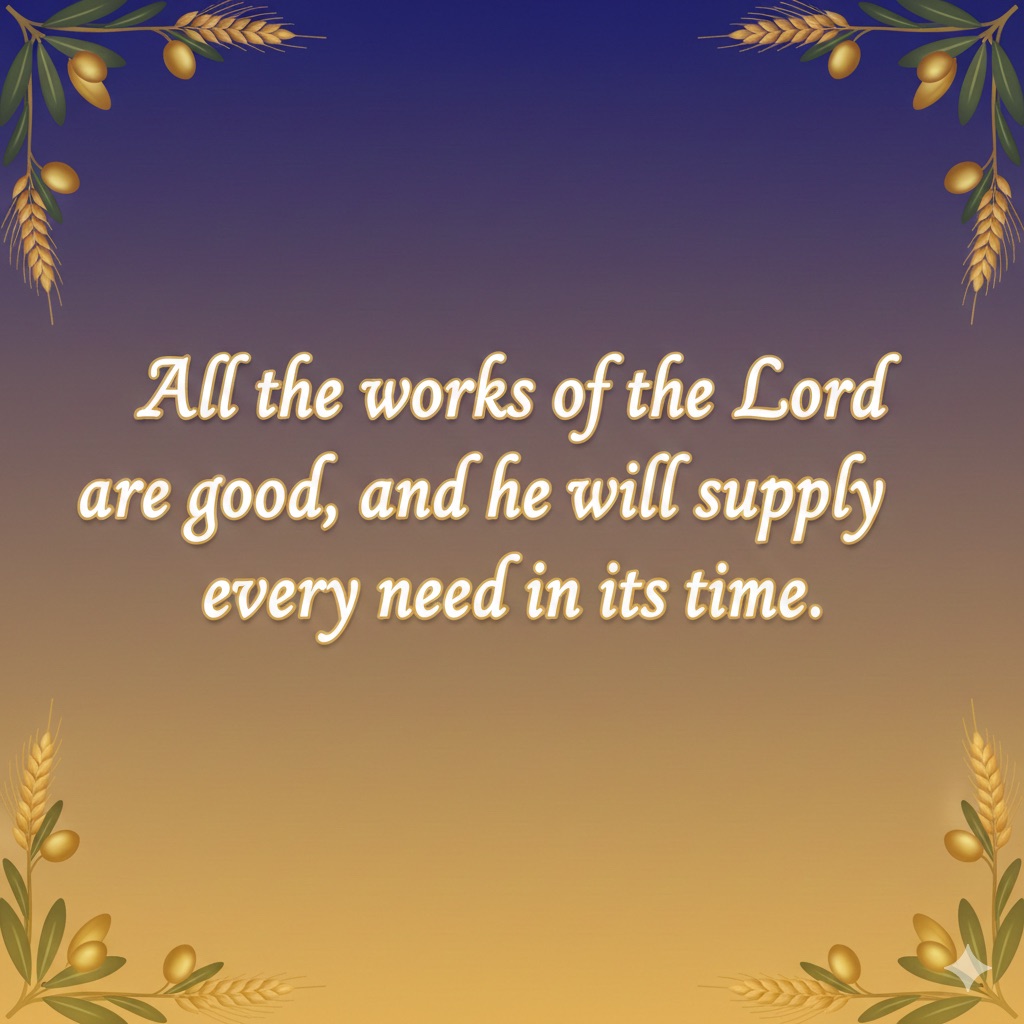
“All the works of the Lord are good, and he will supply every need in its time.”

Ecclesiasticus 39:33

A Reflection on Divine Providence and Perfect Timing

Dear Brothers and Sisters in Christ,

As we meditate on this beautiful verse from the Book of Ecclesiasticus, we are invited to contemplate one of the most profound truths of our faith: the goodness of God manifested in all His works and His unfailing provision for our needs. In a world that often feels uncertain and anxious, these words offer us an anchor of hope and a reminder of God’s tender care for each one of us.

The Sacred Scripture begins with a declaration that encompasses everything: “All the works of the Lord are good.” This is not merely an optimistic statement, but a theological truth rooted in the very nature of God. Everything that proceeds from the hand of the Almighty bears the stamp of His goodness. From the majesty of creation to the smallest details of our daily lives, from the grandeur of His salvific plan to the quiet movements of grace in our hearts, all reflects His loving purpose.

Yet the verse does not stop at acknowledging God’s goodness. It moves to a promise that touches the very core of our human vulnerability: “He will supply every need in its time.” Notice the beautiful assurance contained in these words. Not some needs, but every need. Not according to our hurried timeline, but “in its time,” in that perfect kairos moment that only divine wisdom can discern.

How often do we struggle with the timing of God’s providence? We pray with urgency, we wait with impatience, and sometimes we doubt when answers do not come according to our schedule. But this verse invites us to trust in a deeper reality: God’s timing is always perfect. He sees what we cannot see. He knows what we truly need, distinguishing between our genuine necessities and our passing desires. And in His infinite wisdom, He provides precisely what we need, exactly when we need it.

This does not mean our lives will be free from trials or that every want will be satisfied. Rather, it means that in the midst of our struggles, God is actively at work, preparing us, molding us, and bringing about His good purposes. The needs He supplies are not just material, but spiritual, emotional, and relational. He gives us strength when we are weak, comfort when we grieve, wisdom when we are confused, and hope when we are discouraged.

As we go through this day, let us carry this truth in our hearts. When anxiety threatens to overwhelm us, let us remember that all God’s works are good. When we face needs that seem pressing and solutions seem distant, let us trust that He will supply them in His perfect time. Our call is not to worry or to grasp frantically for control, but to trust, to pray, and to remain open to the ways God wishes to work in our lives.

May this reflection strengthen your faith and deepen your trust in the Lord’s loving providence. In every circumstance, whether of abundance or need, may you recognise His hand at work, always good, always faithful, always providing exactly what we need when we need it most.

Let us pray: Loving Father, we thank You for Your goodness that fills all creation. Help us to trust in Your perfect timing and to rest in the assurance that You know our every need. Give us patience to wait upon You, wisdom to recognize Your provision, and grateful hearts that acknowledge Your hand in all things. Through Christ our Lord. Amen.

In Christ’s love and peace,

Johnbritto Kurusumuthu

Note:-

In the Bible, kairos means “God’s appointed time” or an “opportune moment,” referring to a specific, decisive season for His purpose. It contrasts with chronos, which refers to sequential, quantitative time, such as hours or days. Examples include Jesus’ announcement that the kairos for God’s kingdom was at hand and Paul’s mention of God’s timing for sending his Son (Galatians 4:4)

Theological Soundness

✔️ The reflection conveys that all of God’s works are intrinsically good (cf. Genesis 1; Psalm 145:9; Catechism §299–314).

✔️ It faithfully presents the Catholic understanding of divine providence and God’s perfect timing(kairos vs. chronos)- a theme repeatedly taught by saints (St. Augustine, St. Ignatius of Loyola, St. Josemaría Escrivá, etc.).

✔️ The distinction between true needs and passing desires is classic Catholic spiritual theology (cf. Matthew 6:32–33; Philippians 4:19; Catechism §2547, §2737).

 The reflection avoids the errors of the prosperity theology by clarifying that God supplies every need, not every want, and that His provision includes spiritual graces and character formation through trials.

Understanding Divine Providence Through the Catechism

The following is a clear and concise explanation of the two paragraphs from the Catechism of the Catholic Church that were referenced in the note of the reflection:

§2547

Full text:
“The Lord grieves over the rich, because they find their consolation in the abundance of goods. ‘Let the proud seek and love earthly kingdoms, but blessed are the poor in spirit for theirs is the Kingdom of heaven.’ Abandonment to the providence of the Father in heaven frees us from anxiety about tomorrow. Trust in God is a preparation for the blessedness of the poor. They shall see God.”

Explanation:
This paragraph teaches that:

  • Material wealth often becomes a false source of security and consolation, which is why Jesus says it’s hard for a rich person to enter the Kingdom (Mt 19:23–24).
  • The “poor in spirit” (those who depend radically on God rather than on money, status, or self-sufficiency) are the ones who are truly free and blessed.
  • Trusting in God’s providence (i.e., believing that “He will supply every need in its time” – Sirach 39:33) is the practical way we live out this blessed poverty of spirit.
  • When we stop anxiously clutching at control (“anxiety about tomorrow”), we become spiritually free and ready to “see God” both now (in faith) and eternally (in the beatific vision).

This paragraph is a direct scriptural and theological foundation for the reflection’s message that God’s timing, even when it feels like delay, is part of His loving providence.

§2737

Full text:
“‘You ask and do not receive, because you ask wrongly, to spend it on your passions’ (Jas 4:3)(Letter of James, chapter 4, verse 3..) If we ask with a divided heart, we are ‘adulterers’; God cannot answer us, for he desires our good. Even if we say ‘It is for a good purpose,’ if our heart is not in accord with God’s will, he remains deaf. Prayer of petition is a test of the purity of our desires. ‘We do not know how to pray as we ought’ (Rom 8:26), but the Spirit himself intercedes for us.”

Explanation:
This paragraph explains why some prayers seem unanswered:

  • God always desires our true good (not just what we think is good).
  • Sometimes we pray for things that would actually harm us spiritually or that spring from selfish or disordered desires (“to spend it on your passions”).
  • God, in His wisdom, distinguishes between:
    → our real needs (which He always provides – Sirach 39:33; Phil 4:19), and
    → our wants or poorly-motivated requests (which He may lovingly withhold).
  • Therefore, when God delays or says “no,” it is an act of mercy that purifies our desires and aligns our will with His.

Again, this perfectly supports the reflection’s point that God supplies “every need” genuine need (not every whim) and does so “in its time” according to His perfect knowledge of what is truly good for us.

Summary of how these two paragraphs support the reflection:

  • §2547 → Trusting God’s timing is the attitude of the “poor in spirit” who will inherit the Kingdom.
  • §2737 → God withholds or delays answers when what we’re asking for isn’t actually good for us, proving that His timing and His choices are always rooted in love.

Both paragraphs together show why the statement “He will supply every need in its time” (Sirach 39:33) is not a naïve promise of getting whatever we want whenever we want it, but a deep declaration of God’s wise, merciful, and utterly trustworthy providence.

© 2025 Johnbritto Kurusumuthu | Rise & Inspire Devotional Series

Word count:1566

How Did This Year Open New Doors I Never Expected?

Over the past year, I experienced remarkable growth on my blog, meaningful new opportunities in government and other sectors, deeper spiritual guidance, and the blessing of good health. It was a year filled with gratitude, progress, and unexpected positive changes.


Daily writing prompt
What positive events have taken place in your life over the past year?

Some years change us quietly; others transform us boldly. 2025 did both. Looking back, I see countless moments that strengthened my spirit, widened my path, and filled my life with gratitude.

A Year of Grace, Growth, and Gratitude: Looking Back at 2025

What positive events have taken place in your life over the past year?

For the past three years, the WordPress prompt of December 7th has become a personal ritual for me — a moment to listen, reflect, and celebrate the journey God has guided me through.

Each year, I have recorded my blessings and milestones with gratitude:

📌 2023 Reflection: A Year of Achievements – From Passion to Platform

➡️ https://riseandinspire.co.in/2023/12/07/a-year-of-achievements-from-passion-to-platform/

📌 2024 Reflection: A Year of Growth, Gratitude, and New Horizons

➡️ https://riseandinspire.co.in/2024/12/07/a-year-of-growth-gratitude-and-new-horizons/

And now, in December 2025, I joyfully continue this tradition — looking back once again, with my heart returning to Psalm 118:23:

“The Lord has done this, and it is marvellous in our eyes.”

🌱 1. A Year of Remarkable Growth on Rise & Inspire

Every time I revisit my website, I feel overwhelmed with gratitude.

This year, Rise&Inspire grew not just in numbers, but in depthreach, and purpose.

✨ More readers discovered the site

✨ Stronger engagement on motivational and faith-based posts

✨ Increased interaction through reflections, biblical studies, and WordPress prompts

✨ New collaborations and opportunities are emerging from the blog’s consistency and quality

Watching the site evolve from a simple idea into a platform that connects hearts and minds has been one of the most fulfilling blessings of 2025.

2. Opportunities to Display My Skills-Both in Government and Beyond

Another major highlight of this year has been the new opportunities that opened up for me across sectors, especially within the government space.

From contributing to projects…

to offering insights…

to using my experience in teaching, research, organisational analysis, and policy…

-2025 became a year where my skills were not just valued but invited.

These opportunities affirmed one beautiful truth:

When we stay faithful to our calling, God widens the path beneath our feet.

3. Deepening My Voice as a Writer

Writing became more than expression- it became growth.

This year, I learned to:

✔️ write with clearer intention,

✔️ embrace new styles,

✔️ respond meaningfully to daily prompts,

✔️ explore deeper themes like spirituality, motivation, and personal growth,

✔️ and stay committed even during periods of low engagement.

The discipline of writing daily reflections strengthened my mind, sharpened my ideas, and kept my heart anchored.

4. Abundant Health and God’s Grace

Above everything, health has been the greatest gift this year.

It has allowed me to work, write, serve, travel, and stay active with purpose.

Every morning felt like a blessing, especially with the inspiring wake-up call messages(Bible verses) from His Excellency, Rt. Rev. Dr. Selvister Ponnumuthan, whose words continue to guide my reflections.

In 2025, God’s protection, strength, and grace were unmistakable.

🌈 5. Gratitude for Community and Connection

Through every blog post, every comment, every email, and every WordPress prompt, I felt the warmth of a beautiful community.

This year brought:

new readers who resonated with my voice

fellow writers who shared their journey

supportive friends who encouraged my growth

and moments of reflection that deepened my understanding of myself and others

The joy of writing became even richer because of the people who chose to walk with me.

 A Closing Note: My Heart Today

As I look back at 2025, one feeling rises above all — gratitude.

This year was not perfect, but it was purposeful.

It brought blessings I prayed for, opportunities I never expected, and growth that strengthened me in every way.

And as I step into another year, I carry this truth with me:

Every blessing is a sign that God’s plans are always greater than our expectations.

Links to Previous Reflections (Embedded Tradition)

🔗 2024 Reflection:

🔗 2023 Reflection:

© 2025 Rise&Inspire. All Rights Reserved.

Website: Home | Blog | About Us | Contact| Resources

Word Count:740

Does Your Past Disqualify You From Serving God? A Biblical Answer

There’s a verse in the Old Testament that most people skip right over. Four simple phrases that completely demolish everything we’ve been taught about shame, guilt, and whether God still wants us after we mess up. When I first read it properly, I had to stop and read it three more times. Samuel the prophet is speaking to people who just betrayed God, and what he says next is so counter to religious thinking that it almost sounds heretical. Almost.

Daily Biblical Reflection – Verse for Today (7th December 2025)

Forwarded every morning by His Excellency, Rt. Rev. Dr. Selvister Ponnumuthan, upon whom Johnbritto Kurusumuthu wrote reflections.

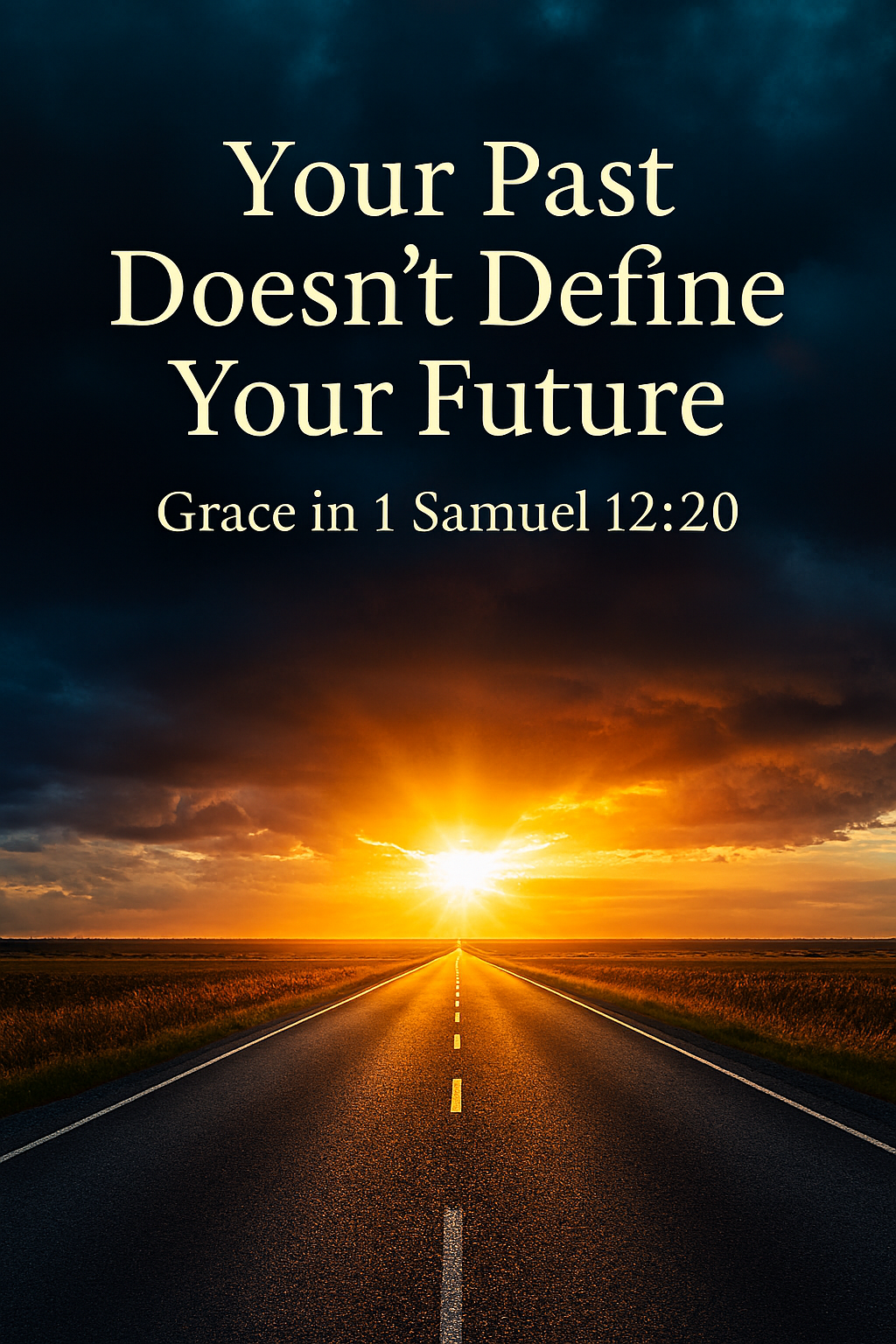
Do not be afraid; you have done all this evil, yet do not turn aside from following the Lord, but serve the Lord with all your heart.

1 Samuel 12:20

[Watch Reflection Video]

The words of the prophet Samuel ring across the centuries with a grace that can still take our breath away. Here is a word for every soul that has ever stumbled, every heart that has carried the weight of its own failures. “Do not be afraid,” Samuel begins, and already we sense that something extraordinary is being offered.

The Israelites had just committed what they themselves recognized as evil. They had rejected God’s direct kingship over them, demanding instead a human monarch like the surrounding nations. It was a betrayal born of fear and faithlessness. Yet even in this moment of confession and consequence, Samuel does not leave them drowning in their guilt. Instead, he extends a lifeline of hope that reveals the very heart of God.

Notice the remarkable structure of this verse. Samuel does not minimise their sin. He names it plainly: “you have done all this evil.” There is no cheap grace here, no pretense that wrongdoing doesn’t matter. God takes our choices seriously because He takes us seriously. But Samuel immediately pivots from acknowledgment to invitation: “yet do not turn aside from following the Lord.”

This is the stunning scandal of divine mercy. Our failures do not have the final word. The same God we have wronged is the God who still calls us forward. The path ahead is not closed because of the mistakes behind us. What matters now is not where we have been, but the direction we choose from this moment on.

“Do not be afraid.” These words address the paralysis that so often grips us after we have failed. Fear whispers that we have disqualified ourselves, that we are now too stained to approach the holy, too broken to be of use. Fear wants us to turn away in shame, to abandon the journey because we have stumbled along the way. But God speaks a different word. He says: Come back. Keep walking. Do not let your past become your prison.

The call to “serve the Lord with all your heart” is not reserved for the perfect. It is extended precisely to those who know their need for grace. Wholehearted service does not require a spotless record. It requires honesty about our brokenness and a willingness to continue despite it. God is not looking for those who have never failed. He is looking for those who, having failed, still choose to rise and follow.

This verse offers us a deep pastoral wisdom for our own spiritual lives. When we inevitably fall short, when we recognise the gap between who we are and who we are called to be, we face a choice. We can turn away in shame and self-protection, convinced we have forfeited our place in God’s story. Or we can hear the voice that says, “Do not be afraid,” and discover that the door to grace remains open.

The path of discipleship is not a tightrope where one misstep means falling into the abyss. It is more like a long journey with a faithful companion who picks us up when we stumble, dusts us off, and says: “Let’s keep going. I’m still with you.” Our failures do not surprise God. They do not exhaust His patience. They do not cancel His call.

To serve the Lord with all our heart after we have failed is perhaps the purest form of worship. It is to say: “I know I have gotten it wrong, but I believe You are greater than my mistakes. I know I have wandered, but I trust You can still lead me home.” This is faith tested and refined, hope that has looked honestly at our weakness and chosen to trust in God’s strength anyway.

Let this word sink deep today. Whatever evil you have done, whatever wrong turn you have taken, do not be afraid. Do not turn aside. The God who knows every detail of your failure is still calling you to wholehearted service. He has not given up on you. The invitation still stands. The road still stretches ahead. And the grace that was sufficient yesterday is more than enough for today.

Your past does not define your future in God’s kingdom. Your worst moment is not your truest identity. You are a beloved child invited to walk in the light, even with mud still clinging to your feet from the darkness you have left behind.

Do not be afraid. Serve the Lord with all your heart. This is always, always possible, because God’s mercy is always, always new.

© 2025 Johnbritto Kurusumuthu | Rise & Inspire Devotional Series

Word count:914

Is the Wild Still Around Us, Even When We Think It’s Not?

Yes, I do see wild animals-not always in dramatic ways, but in the quiet, everyday moments around me, like a koel calling at dawn, butterflies after the rain, or the silent presence of street animals that show me the wild is always close.

Daily writing prompt
Do you ever see wild animals?

Before I even began writing this post, I realised something surprising: I’ve been seeing wild animals far more often than I thought — not in dramatic encounters but in quiet, everyday moments that reveal more about me than about the animals themselves. These small encounters have reshaped the way I understand the wild.

Do You Ever See Wild Animals? My 2025 Reflection

Every year, the WordPress prompt “Do you ever see wild animals?” seems to circle back into my life almost like a familiar creature stopping by to check on me. And each time it appears, I realise how much I’ve changed, how my surroundings have changed, and how my way of noticing the world continues to evolve.

I’ve written on this exact prompt before.

Here are my earlier posts:

🌿 2024 Post: Do you ever stop to notice the wild around you?

👉https://riseandinspire.co.in/2024/12/06/do-you-ever-stop-to-notice-the-wild-around-you/

🌳 2023 Post: Silent Valley Diaries: A Day of Surprises Amidst Nature

👉https://riseandinspire.co.in/2023/12/06/silent-valley-diaries-a-day-of-surprises-amidst-nature/

When I look back at these two posts, I feel as though I’m revisiting different versions of myself, one discovering the thrill of a forest trail, the other learning to slow down and notice the beauty hidden in the everyday. And now, here I am in 2025, once again facing the same question.

But it doesn’t feel repetitive.

It feels like a tradition.

How I See the Wild This Year

This year, my encounters with wild animals have been quieter and more subtle. I haven’t gone on big forest trips or stumbled upon unexpected creatures like before. Instead, the “wild” finds me in gentler ways:

The koel that sings near my window before sunrise

Butterflies that dance through the noon light after a shower

A sudden rustle in the bushes when I walk past our lane

The quiet dignity of a stray dog who watches over our street like its guardian

I’ve realised that I don’t always need dramatic sightings to feel connected to nature. Sometimes, the wild appears softly in moments I would have missed if I weren’t paying attention.

How My Perspective Has Shifted

When I wrote the Silent Valley post in 2023, I was filled with the excitement of discovery. By 2024, I was learning to “stop and notice” to let the wild come to me.

2025 feels different.

This year, I’m seeing the wild not with my eyes alone, but with a sense of mindfulness. I’m noticing life in between the noise of everyday living. And honestly, these little encounters mean just as much to me as the big ones once did.

Why I Keep Writing About This Prompt

Perhaps because nature never gives the same answer twice.

And neither do I.

Each December 6th becomes a quiet checkpoint a moment to ask myself how attuned I am to the world beyond my routines. These posts have become a small tradition, a reminder that the wild is always around me if I’m willing to see it.

So, do I see wild animals?

Yes.

Not always in the dramatic or extraordinary sense.

But in the rustle of a leaf, the call of a bird, the flutter of wings, the quiet companionship of street animals-all little lessons that I share this space with so many other lives.

And every year, I learn to notice these moments a little more.

© 2025 Rise&Inspire. All Rights Reserved.

Website: Home | Blog | About Us | Contact| Resources

Word Count:633

Are You Waiting for Perfect Conditions or Trusting God’s Great Things?

When a prophet speaks not to kings or crowds but to the earth itself, something extraordinary is happening. Joel 2:21 contains one of scripture’s most unusual commands: the soil is told to stop fearing and start celebrating. What could this possibly mean for your life today? More than you might think. This ancient verse holds keys to understanding how God meets us in seasons of barrenness, how fear blocks fruitfulness, and why remembering past faithfulness is the doorway to present hope. Read on to discover why this message to the ground beneath your feet might be the most relevant word you hear all week.

Daily Biblical Reflection

6th December 2025

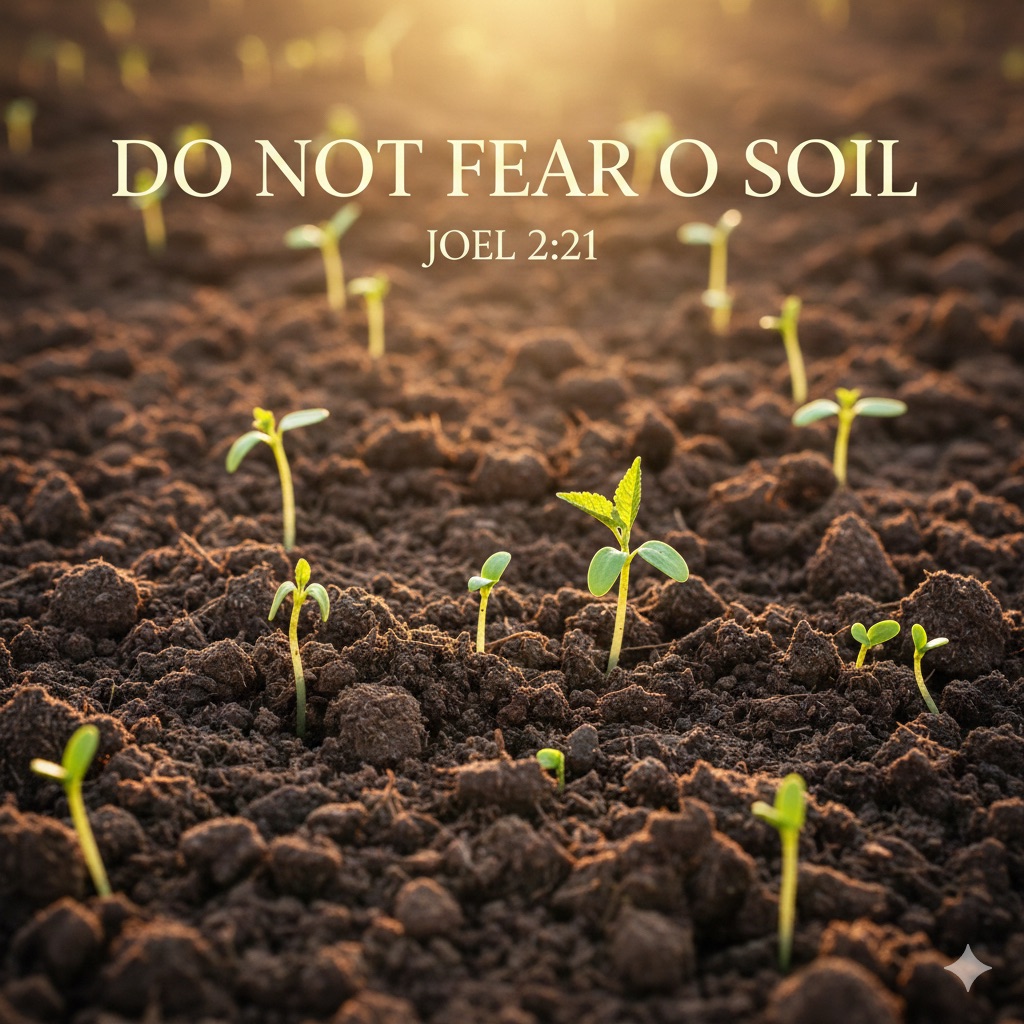
Do not fear, O soil; be glad and rejoice, for the Lord has done great things!

— Joel 2:21

What a beautiful call to courage and celebration this morning! The prophet Joel speaks not just to people, but to the very earth itself, inviting even the soil beneath our feet to cast aside fear and embrace joy. There is something deeply moving about this image: if the ground can be summoned to rejoice, how much more should we, who bear the breath of God within us?

This verse emerges from a context of restoration. Joel’s prophecy comes after devastation-locust plagues had stripped the land bare, leaving famine and despair in their wake. Yet here, God speaks a word of reversal. The same soil that seemed cursed and barren is now invited to be glad, for the Lord is doing great things.

How often do we find ourselves in seasons that feel like spiritual drought? Times when our prayers seem to fall on hardened ground, when our efforts yield little fruit, when we look at the landscape of our lives and see only what has been lost or stripped away. In such moments, this word from Joel becomes our lifeline: “Do not fear.”

Fear is the enemy of fruitfulness. It paralyses the soil of our hearts, making us resistant to the seeds of hope God wishes to plant. But notice what dispels the fear, not our own efforts to manufacture optimism, but the recognition that “the Lord has done great things.” Our joy is rooted not in our circumstances changing first, but in remembering God’s faithfulness. The great things God has done in the past become the foundation for trusting what He will do in the present and future.

[Video: Daily Biblical Reflection – 6th December 2025](https://youtu.be/FZYZGVAHuDU?si=Ujx20AZIIv2LR5RP)

The call to the soil is also deeply ecological and incarnational. God cares about creation-about the fields, the harvests, the cycles of nature that sustain life. Our faith is not detached from the material world; it embraces it, sanctifies it, and calls it to participate in divine praise. When we pray, we are not escaping earth for heaven, but inviting heaven to touch earth, just as Jesus taught us: “Thy kingdom come, thy will be done, on earth as it is in heaven.”

As we move through Advent, preparing our hearts for the coming of Christ, this verse invites us to tend the soil of our own souls. Are there areas of fear that need to be surrendered? Are there places where we have grown hard, cynical, or despairing? The Lord who called barren land to rejoice is the same Lord who was laid in a manger, born of earth and straw, entering our world to make all things new.

Let us dare to believe today that God is still doing great things in our families, in our churches, in the hidden places of our hearts that only He can see. Let us rejoice not because everything is perfect, but because we serve a God who brings life from death, harvest from famine, and joy from mourning.

May the soil of your heart be glad today. May you know that you are deeply loved, that your prayers are heard, and that the Lord is working even now to bring forth beauty from what seemed barren.

Fear vs. Fruitfulness: The link between fear and spiritual barrenness echoes with biblical themes (e.g., Matthew 13:22, where “the worry of this life” chokes the word).

God’s Past Faithfulness as Foundation: The call to remember “the Lord has done great things” is central to Israel’s identity (Psalm 77:11–12) and a valid basis for present hope.

Incarnational and Ecological Perspective: The reflection emphasises the God’s care for creation theme present in Joel (restoration of agriculture) and throughout Scripture (Romans 8:19-22).

Bible verses shared daily by His Excellency, Rt. Rev. Dr. Selvister Ponnumuthan

Reflection Written by Johnbritto Kurusumuthu

© 2025 Johnbritto Kurusumuthu | Rise & Inspire Devotional Series

Word count:788

Why Do Certain Places Stay in Our Hearts Long After We Leave?

My favourite places are the ones that leave a quiet mark on my soul. I’ve reflected on this before why some destinations stay with us long after we leave and how places like Alexandria, Virginia, became unforgettable for me.

Daily writing prompt
Do you have a favorite place you have visited? Where is it?

Some journeys end when the suitcase is unpacked, but a few continue quietly within us. These are the places that leave a mark—subtle, emotional, impossible to forget. Today, I’m revisiting what makes certain destinations become my most cherished favourites.

Do You Have a Favorite Place You Have Visited? Where Is It?

When I saw today’s WordPress prompt—“Do you have a favourite place you have visited? Where is it?”—I felt a quiet joy, because this question had already inspired me twice before. Some prompts open doors to new thoughts, while others invite us to revisit familiar rooms in our hearts. This one clearly belongs to the second category.

In fact, I’ve reflected on this very topic in earlier posts, each capturing a different layer of what makes a place unforgettable.

In 2024, I explored why certain destinations leave an imprint on our spirit, shaping our memories long after the journey ends. You can read that reflection here:

👉 Why Do Some Places Leave a Lasting Mark on Our Souls?

A year earlier, I shared a more specific travel memory, my meaningful visit to Alexandria, Virginia, a city that blends history, intellect, and quiet charm. That story is here:

👉 Exploring the Intellectual Hub: My Visit to Alexandria, Virginia

Since today’s prompt is a repeat, it feels unnecessary to write a completely new post. My earlier reflections already express what this question draws out of me:

that our favourite places are not just physical locations, they are emotional experiences, spiritual impressions, and moments of connection that stay with us.

So instead of rewriting what I have already said from the heart, I’m choosing to continue the conversation through the posts I’ve already shared.

After all, some journeys don’t need to be taken twice; they just need to be remembered.

© 2025 Rise&Inspire. All Rights Reserved.

Website: Home | Blog | About Us | Contact| Resources

Word Count:363

What Happens When You Commit Your Daily Work to the Lord Instead of Relying on Yourself?

We have been taught that success depends entirely on us, that every outcome rests on our shoulders alone. But what if that belief is not just exhausting but fundamentally incomplete? A single verse from Proverbs questions this modern assumption and offers a model where diligence and surrender work together rather than against each other.

Daily Biblical Reflection

December 5, 2025

Commit your work to the Lord, and your plans will be established.

Proverbs 16:3

There is something  deeply liberating about this ancient wisdom from the Book of Proverbs. In a world that constantly pressures us to be self-sufficient, to have everything figured out, to control every outcome, this verse offers us a different path: the path of surrender and trust.

To commit our work to the Lord is not an act of passivity or resignation. Rather, it is an act of deep faith and wisdom. It means bringing our plans, our efforts, our ambitions, and our daily tasks into the presence of God, acknowledging that while we are called to work diligently and plan carefully, the ultimate establishment of our efforts rests not in our own strength but in His providence.

Consider the farmer who plants his seed. He prepares the soil, waters the ground, and protects the tender shoots. Yet he knows that it is not his hand that causes the seed to germinate, the roots to deepen, or the harvest to come. He does his part faithfully, but he trusts in forces beyond his control to bring forth the fruit. So it is with us.

<https://youtu.be/kdEWi0CDeKA?si=2kPK5dLkrerAXSmV&gt;

When we commit our work to the Lord, we are freed from the anxiety that comes from believing everything depends solely on us. We can plan with wisdom, work with diligence, and yet rest in the assurance that God is actively involved in shaping the outcomes of our lives. This does not mean we become careless or irresponsible. On the contrary, knowing that our work is offered to God should inspire us to do our very best, to work with integrity and excellence, for we are working not merely for earthly success but as an offering to the One who sees all.

The promise that follows is beautiful: “your plans will be established.” Not necessarily in the exact way we envisioned, but in the way that corresponds with God’s greater purpose for our lives. Sometimes our plans succeed beyond our expectations. Sometimes they are redirected in ways we could never have imagined. Sometimes what we thought was failure becomes the doorway to something far better. When our work is committed to the Lord, we can trust that He is establishing something lasting, something that fulfils His kingdom and our ultimate good.

Today, as you go about your tasks, whether grand or ordinary, take a moment and consciously commit them to God. Offer your work as a prayer. Trust that as you do your part faithfully, God is at work establishing something beautiful through you.

May you live today with the confidence that comes from knowing you are not alone in your labour, and may your heart be at peace, knowing that what is committed to the Lord will be established according to His perfect will.

Today’s Bible Verses Shared with pastoral care by His Excellency, Rt. Rev. Dr. Selvister Ponnumuthan

Reflection by Johnbritto Kurusumuthu

© 2025 Johnbritto Kurusumuthu | Rise & Inspire Devotional Series

Word count:583

What Are the Five Things You’re Truly Good At?

I’m good at expressing ideas clearly, staying consistent with my writing, motivating others with positivity, learning new concepts quickly, and paying attention to meaningful details.

Daily writing prompt
Share five things you’re good at.

Share Five Things You’re Good At

Some prompts feel familiar the moment you read them because they’ve already found their waythrough your life once before.

Today’s WordPress prompt, “Share five things you’re good at,” is one I’ve responded to earlier. Last time, I explored my strengths deeply in a post titled “What Five Strengths Could Change the Way You See Yourself?

You can revisit it here:345

But that was then. And this is now.

Life shifts, perspectives evolve, and strengths quietly grow beneath the surface. So today’s repeat prompt feels less like recognition and more like recollection.

You’re a different person each time you’re asked the same question.

Five Things I’m Good At — Today

1. Expressing Myself Through Writing

Writing has become more than communication—it’s my space for clarity, reflection, and connection.

2. Staying Calm Under Pressure

Over time, I’ve learned the strength of stillness. Challenges don’t unsettle me the way they once did.

3. Listening with Empathy

I’m good at hearing beyond the words, understanding emotions, intentions, and the unspoken moments.

4. Maintaining Consistency in My Routine

Whether it’s writing, reflection, prayer, or organising my day, showing up has become one of my quiet strengths.

5. Encouraging and Uplifting Others

I naturally gravitate toward positivity, offering support, reassurance, and steady motivation.

Why This Repeat Prompt Still Matters

The beauty of a repeated question is that it reflects who you are this time around.

You may have answered it last year, last month, or yesterday but today’s answers carry today’s truth.

Looking back at my earlier post showed me how far I’ve come. Writing this one helped me see where I’m growing next. And that’s the value of reflection each return reveals a new layer of strength.

© 2025 Rise&Inspire. All Rights Reserved.

Website: Home | Blog | About Us | Contact| Resources

Word Count:345

Can You Really Ask God to Wake Up and Fight for You?

You have been praying for weeks, maybe months. The situation has not improved. The injustice continues. The pain persists. And somewhere in the back of your mind, a dangerous question forms: Is God even paying attention?

If you have ever felt this way, you are in good company. King David, the man after God’s own heart, once shouted at heaven: “Wake up! Rouse yourself for my defense!” It is Psalm 35, verse 23, and it is one of the most brutally honest prayers in all of Scripture. No religious language. No careful diplomacy. Just raw need meeting divine silence.

But here is what makes this prayer so powerful: David did not stop believing. He stopped pretending. And in that moment of radical honesty, he discovered something about prayer that most of us miss entirely.

Daily Biblical Reflection – Verse for Today (4th December 2025)

Forwarded every morning by His Excellency, Rt. Rev. Dr. Selvister Ponnumuthan, upon whom Johnbritto Kurusumuthu wrote reflections.

Wake up! Rouse yourself for my defence, for my cause, my God and my Lord!

Psalms 35:23

There is something deeply human in the cry of the psalmist today. It is the voice of one who feels abandoned, wrongly accused, and surrounded by adversity. “Wake up!” he cries to God. “Rouse yourself!” It is not a prayer whispered in quiet confidence, but a plea shouted from the depths of desperation.

We might be startled by such boldness. Can we really speak to God this way? Can we shake the Almighty from what seems like divine silence? Yet the beauty of Scripture is that it permits us to be honest before God. The psalms teach us that faith is not about maintaining a polished exterior or pretending that everything is fine when our hearts are breaking. Faith is about bringing our whole selves into God’s presence, even our anger, our confusion, our urgent need.

David, the author of this psalm, was no stranger to injustice. He was pursued by enemies, betrayed by friends, misunderstood and maligned. In his distress, he does not turn away from God but turns toward Him with greater intensity. “My God and my Lord,” he says, claiming relationship even in the moment of felt absence. This is the paradox of faith: we cry out for God to wake up precisely because we believe He is there, because we trust that He cares, because we know that our cause matters to Him.

What is your cause today? What burden are you carrying that feels too heavy to bear alone? Perhaps you face opposition at work, misunderstanding in your family, or a situation where the truth seems buried beneath layers of accusation and deceit. Possibly illness has worn you down, or financial pressures have left you feeling vulnerable. Whatever your struggle, this psalm invites you to bring it boldly before the Lord.

But notice something important in David’s cry. He does not merely ask God to vindicate him; he asks God to defend His own cause. “My defence, my cause,” David prays, but he addresses “my God and my Lord.” The psalmist understands that when we surrender to ourselves with God’s purposes, our cause becomes His cause. When we seek justice, mercy, and truth, we are not asking God to serve our agenda but inviting Him to accomplish His own purposes through our circumstances.

This is an important distinction. We can pray with confidence when our deepest desire is not merely to win or to be proven right, but to see God’s will done and His name glorified. The psalmist’s boldness comes not from arrogance but from the conviction that God cares about justice, that He is not indifferent to the suffering of His children, that He will ultimately set all things right.

In our own lives, we often face the painful silence of heaven. We pray and hear no answer. We cry out and sense no movement. We wonder if God is truly present, truly listening, truly engaged with the details of our daily struggles. The psalm today reminds us that it is in these very moments that we must persist in prayer, not because God is asleep and needs to be awakened, but because we need to maintain our connection with Him through the darkness.

God is never truly silent. He is never truly absent. But sometimes He allows us to experience what feels like His absence so that our faith might deepen and we might learn to trust not in immediate answers but in His faithful character. The trial we face today is training us for the testimony we will give tomorrow.

As we move through this day, let us carry with us the psalmist’s passionate faith. Let us not be afraid to cry out to God with urgency and honesty. Let us bring our causes before Him, knowing that when they align with His heart for justice and mercy, they become His causes too. And let us wait with confident expectation, not for a God who needs to wake up, but for a God who is always awake, always aware, always working behind the scenes to bring about His good purposes.

The day will come when we see clearly what now seems hidden. The moment will arrive when God’s justice breaks through like the dawn. Until then, we pray, we trust, we persevere. We rouse ourselves to faith even as we ask God to rouse Himself to action. And in this dynamic conversation between heaven and earth, our relationship with the Lord deepens, and we discover that His presence was there all along, sustaining us through every valley, hearing every cry, preparing a vindication beyond anything we could ask or imagine.

May this day bring you the courage to pray boldly and the faith to trust deeply. May you know that your God and your Lord are awake, attentive, and already at work on your behalf.

When Silence Is Too Loud.

Have you ever prayed so desperately that you wondered if God was even listening? The psalmist did too. In one raw, unfiltered moment, David shouted at heaven: “Wake up! Rouse yourself!” It sounds almost blasphemous, until you realize this kind of honest, urgent prayer is exactly what God invites. When your back is against the wall and justice seems distant, the question is not whether you can speak to God this way, but whether you dare to.

© 2025 Johnbritto Kurusumuthu | Rise & Inspire Devotional Series

Word count:1091

What Would Happen if You Changed Just One Habit?

If I could change one thing about myself, I would stop overthinking and start trusting myself more, allowing clarity and calm to guide my decisions.

Daily writing prompt
What is one thing you would change about yourself?

Before we try to change our entire lives, we often forget how powerful a single, small shift can be. Sometimes the greatest transformation begins with one habit, one mindset, or one quiet decision we finally stop postponing. Today’s reflection starts with a simple but honest question: What is the one thing I would change about myself right now?

What Is One Thing I Would Change About Myself? A Fresh Look at a Familiar Question

Some questions return to us again and again, not because we didn’t answer them well the first time, but because life keeps inviting us to grow.

Today’s WordPress prompt, “What is one thing you would change about yourself?”, is one such visitor.

Interestingly, it’s a repeat prompt, and the last time it came around, it led me to write this reflection:

👉 What Would Happen If You Stopped Trying to Be Perfect?

That post explored perfectionism, the silent weight many of us carry and how letting go of it can help us breathe again.

But today, the question invites me to look inward from a new angle, with new experiences and new awareness.

So yes — I believe it’s worth writing about again.

The One Thing I Would Change About Myself Today

If I could change one thing about myself today, it would be this:

I would like to stop delaying my own peace by overthinking everything.

Overthinking has a way of stealing joy from the present moment.

A simple decision becomes a mental maze.

A small challenge becomes a storm inside the mind.

A quiet moment becomes a conversation with imaginary outcomes.

I’ve learned that overthinking doesn’t protect me, it only exhausts me.

I don’t need to carry every possibility in my mind.

I don’t need to prepare for every “what if.”

I don’t need to replay every mistake like a movie on loop.

What I need is clarity, courage, and calm.

And that begins with changing one internal habit:

learning to trust myself a little more and fear a little less.

Why This Question Matters Every Time It Appears

A repeated prompt is not a coincidence, it’s a reminder.

It reminds me that:

📌 Growth is not a one-time achievement.

📌 Self-awareness deepens with time.

📌 The person I was last year, last month, or even yesterday is not the person I am today.

Each time I answer the same question, I learn something new about myself,

not because the question changed, but because I did.

What Changing This One Thing Means for Me

If I could shift this single habit, stop overthinking and start living more presently I believe it would bring:

✨ A calmer mind

✨ A lighter heart

✨ More spontaneous joy

✨ Better decisions made with confidence

✨ Freedom from unnecessary mental noise

This change isn’t drastic or dramatic.

But small shifts have a way of transforming entire inner landscapes.

An Invitation to You

If you’re reading this, maybe this prompt is knocking on your door as well.

What is one thing you would change about yourself today — not forever, not ideally, but realistically?

Sometimes the smallest change leads to the greatest awakening.

Closing Thoughts

Reflecting on today’s prompt shows me that personal growth is not about becoming someone else.

It’s about gently peeling away the layers that keep us from living as our truest selves.

And if the same question shows up again someday, I’ll welcome it because it means life is giving me another chance to grow.

© 2025 Rise&Inspire. All Rights Reserved.

Website: Home | Blog | About Us | Contact| Resources

Word Count:627

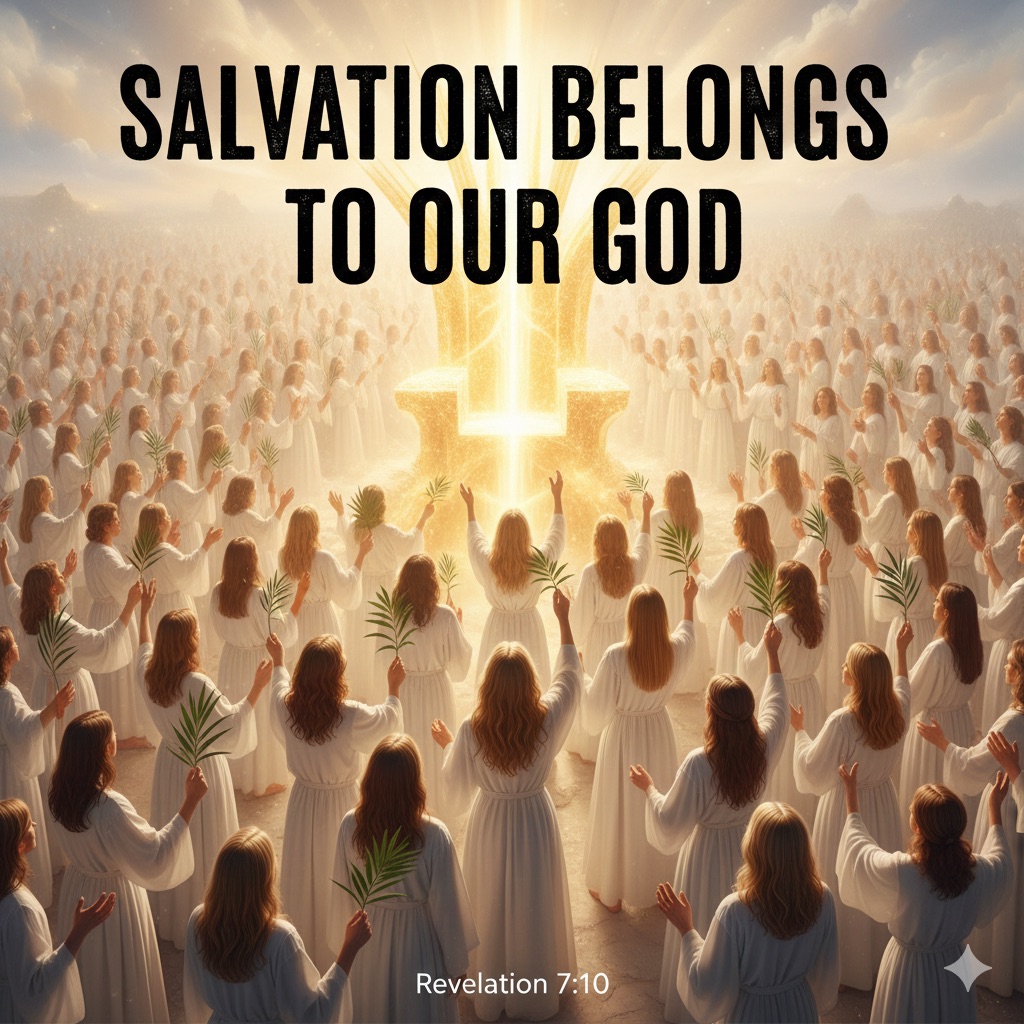
Why Does Salvation Belong to God Alone According to Revelation 7:10?

Picture this: every tribe, every language, every nation represented in one unified chorus. What could possibly unite such diversity? Not politics. Not culture. Not shared trauma. But a single, overwhelming realisation about where salvation actually comes from. Revelation 7:10 captures that moment, and it speaks directly to every place you’re trying to save yourself today.

Daily Biblical Reflection

3rd December 2025

Scripture Reading:

“They cried out in a loud voice, saying, ‘Salvation belongs to our God who is seated on the throne and to the Lamb!’”

— Revelation 7:10

In the Book of Revelation, the Apostle John grants us a glimpse into the heavenly realm, where the redeemed from every nation, tribe, people, and language stand before God’s throne. Their voices unite in a great chorus of praise, proclaiming a profound truth that echoes through eternity: salvation belongs to God and to the Lamb.

This vision comes at a crucial moment in John’s apocalyptic narrative. After witnessing the opening of the seals and the trials that shake the earth, John sees a multitude so vast that no one can count them. They stand clothed in white robes, holding palm branches, symbols of victory and celebration. These are the ones who have come through great tribulation, who have washed their robes and made them white in the blood of the Lamb. Their cry is not one of despair but of triumphant recognition.

Watch this video reflection:👇

<https://youtu.be/BX8K1BxyrHs?si=eIwlyi-QOoffQiF-&gt;

The declaration that salvation belongs to God is a statement of absolute sovereignty and grace. In our world, we often seek salvation in many places: in our accomplishments, in relationships, in material security, or in our own strength. Yet this heavenly chorus reminds us that true salvation, the kind that transcends earthly troubles and reaches into eternity, has only one source. It is not something we can earn, manufacture, or claim for ourselves. It is a gift that flows from the throne of God and through the sacrifice of the Lamb.

The Lamb, of course, is Christ Jesus, who was slain for our redemption. The image of the Lamb in Revelation is both tender and powerful. It speaks of innocence and sacrifice, yet also of victory and authority. The same Lamb who was led to slaughter is the one who now shares the throne of God, worthy to receive all honour and praise.

What does this mean for us today, as we navigate our daily struggles and uncertainties? It means that our hope is not placed in uncertain things. When we face trials that seem overwhelming, when the future appears unclear, when our own strength fails us, we can remember that salvation belongs to God. We are held not by our grip on Him, but by His grip on us.

The loud voice of the multitude also teaches us about worship. True worship is not timid or halfhearted. It is the full-throated acknowledgment of who God is and what He has done. The redeemed in heaven do not whisper their gratitude; they cry out with joy. They have experienced the reality of God’s saving power, and their response is wholehearted praise.

As we reflect on this verse today, let us join our voices with that heavenly chorus. Let us acknowledge that our salvation rests securely in God’s hands. Let us turn away from the false securities of this world and place our trust fully in the One who sits on the throne and in the Lamb who gave His life for us.

May this truth bring comfort to your heart today. Whatever circumstances surround you, whatever challenges you face, remember that your salvation is secure. It belongs to God, and He does not let go of what is His.

Prayer:

Heavenly Father, we join our voices with the great multitude in heaven, declaring that salvation belongs to You alone. Thank You for Your infinite mercy and grace. Thank You for the Lamb, our Lord Jesus Christ, who gave His life that we might live. Help us to trust completely in Your saving power, not in our own strength or accomplishments. May our lives be a continual song of praise to You, now and forever. Amen.

Reflection prepared by Johnbritto Kurusumuthu

Verse Forwarded by His Excellency, Rt. Rev. Dr. Selvister Ponnumuthan

© 2025 Johnbritto Kurusumuthu | Rise & Inspire Devotional Series

Word count:734

Are You Wired for Sunrise or Sparked by the Night?

I’m ultimately a morning person—my mind finds clarity and purpose at sunrise but I’ve learned to honour the night too, because it brings depth, reflection, and quiet creativity.

Daily writing prompt
Are you more of a night or morning person?

Some people wake up with purpose. Others come alive when the world goes quiet. But what if your peak hours reveal more about your identity, creativity, and inner rhythm than you ever realised? Today, I explore the moment when the soul truly wakes up.

When Does Your Soul Truly Wake Up?

Are You More of a Night or Morning Person? – A New Reflection

Every day offers us two thresholds, the quiet promise of dawn and the contemplative hush of night. And somewhere between these borders lies the rhythm that shapes who we are. Today’s WordPress prompt asks a seemingly simple question:

“Are you more of a night or morning person?”

But like many simple questions, it invites a deeper exploration of identity, energy, and how we move through the world.

Last year, I reflected on this very theme in my post “The Dawn of Potential,” where I explored how the early morning hours give me clarity, purpose, and spiritual grounding.

👉 Read my earlier reflection:

The Dawn of Potential

That post beautifully captured who I was then: someone deeply rooted in the serenity of dawn.

Today, however, I felt called not to repeat that message but to re-examine it from a new perspective.

🌙 The Beauty of Night: A Season of Quiet Discovery

For much of my life, I viewed night as a closing chapter an ending, a winding down. But with time, I’ve discovered an unexpected richness in the late hours.

There is a quiet honesty in the night.

When the world stops pressing its demands, your thoughts start moving with a different rhythm.

At night, creativity unfurls without pressure. Emotions soften. Ideas wander freely. The night holds a kind of stillness that invites introspection, raw, unfiltered, and deeply personal.

Yet the Morning… That Is Where My Purpose Lives

If the night is where my thoughts bloom, the morning is where they take form.

Science tells us that “morning people” (or chronotype larks) experience natural energy spikes at dawn. Whether biology or habit, my mind feels clearest in the early hours. The morning sun doesn’t just light up the world it lights up my intentions.

Sunrise feels like a gentle promise:

“Start again. You get another chance.”

Every morning is a fresh invitation to reset, refocus, and realign.

Have I Changed Over the Years? Absolutely.

There were seasons when I lived like a night owl, by necessity, by circumstance, and sometimes by emotion. Late-night study sessions, personal reflections, unresolved thoughts… the night became a companion.

But with time, I’ve realised:

💛 My mind wakes up with the morning.

💙 My heart speaks at night.

And maybe that is the truest answer.

Not a fixed identity but a rhythm that shifts with life’s seasons.

Why This Question Matters More Than We Think

This prompt isn’t simply asking us to choose a time of day. It’s asking:

✔️ When do you feel most yourself?

✔️ When does your inner world feel loudest?

✔️ When does clarity arrive?

✔️ When does creativity flow?

Recognising our natural rhythm is an act of self-respect. It helps us structure our lives in harmony with our energy, not in conflict with it.

So, Am I a Morning or Night Person Today?

If I must choose, I remain a morning person—the early hours steady me, inspire me, and carry me through the day.

But I have also learned to honour the night.

It no longer represents an ending, but a quiet space for depth, imagination, and emotional truth.

Perhaps that is the beautiful paradox of being human:

We are shaped by the softness of night and the strength of dawn.

We belong to both.

Key Takeaway

Whether you rise with the sun or bloom in the darkness, honour the rhythm that helps you grow. That is where your energy and your purpose truly live.

© 2025 Rise&Inspire. All Rights Reserved.

Website: Home | Blog | About Us | Contact| Resources

Word Count:700

Why Is Praying God’s Name the Most Powerful Spiritual Weapon?

Some prayers change everything. Psalm 54:1 is one of them. In just thirteen words, David captures the essence of what it means to be completely dependent on God while simultaneously confident in His power to save. If you’ve ever felt cornered, misunderstood, or outnumbered, this ancient cry will resonate in the deepest part of your soul.

Daily Biblical Reflection

2nd December 2025

 “Save me, O God, by your name, and vindicate me by your might.

Psalms 54:1

In the opening verse of Psalm 54, we hear the urgent cry of a soul in distress. David, surrounded by enemies and facing imminent danger, turns not to his own strength or wisdom, but to the name and might of God. This simple yet powerful prayer reveals the essence of authentic faith: the recognition that our salvation comes not from ourselves, but from the One who is both willing and able to save.

The psalmist’s appeal is remarkably specific. He calls upon God’s name and God’s might—two attributes that together convey the fullness of divine power and presence. In biblical understanding, a name represents the very essence and character of a person. To invoke God’s name is to call upon everything that God is: holy, merciful, just, and faithful. It is to anchor our hope not in an abstract concept, but in the living reality of a God who has revealed Himself throughout salvation history.

When we cry out “by your name,” we are in other words saying, “God, be true to who You are. Act according to Your character. Let Your faithfulness, Your love, and Your justice shine forth in my situation.” This is not manipulation or presumption; it is faith grounded in relationship, trust built upon the covenant promises of a God who has proven Himself worthy.

The second part of the verse speaks of vindication through God’s might. To be vindicated is to be proven right, to be cleared of false accusations, to have one’s innocence or integrity established. David doesn’t ask God to vindicate him through clever arguments or worldly influence, but through divine power. He recognises that true justice comes from God alone, and that God’s might is sufficient to set all things right.

This prayer holds deep relevance for our lives today. We all face moments when we feel overwhelmed, misunderstood, or unjustly treated. We encounter situations that seem beyond our capacity to resolve. In such times, the temptation is to rely on our own resources, to fight our battles with purely human means, or worse, to despair entirely.

The psalm invites us to a different response: to turn first and foremost to God. Not as a last resort when all else has failed, but as our primary refuge and strength. To call upon His name is to acknowledge our dependence and His sufficiency. It is to remember that He who created the universe, who parted the Red Sea, who raised Jesus from the dead, is the same God who hears our prayers today.

Moreover, this verse teaches us about the nature of Christian prayer. It is direct, honest, and unafraid to express our deepest needs. David doesn’t dress up his distress in pious language or pretend that everything is fine. He cries out for help, knowing that God welcomes such authentic communication. Our prayers need not be eloquent or theologically sophisticated; they need only be sincere.

As we begin this new day, let us take these words upon our lips. Whatever challenges we face—whether they be external circumstances or internal struggles—let us remember that God’s name is a strong tower, and His might is available to those who call upon Him. Let us entrust to Him not only our physical safety but also our reputation, our relationships, and our deepest anxieties.

The God who saved David is the same God who saves us today. In the fullness of time, He demonstrated His saving power most completely in Jesus Christ, who conquered sin and death itself. Through Christ, we have access to the Father, and through the Holy Spirit, we have the very presence of God living within us.

Prayer for Today:

Heavenly Father, we come before You this morning acknowledging our complete dependence upon You. Save us by Your name, O God, for Your name alone is our refuge and our strength. In moments of trial and uncertainty, help us to remember that You are faithful to Your character and Your promises.

Vindicate us by Your might, not according to our own merit, but according to Your justice and mercy. When we are misunderstood or falsely accused, be our defender. When we face challenges beyond our strength, be our deliverer. When fear threatens to overwhelm us, be our peace.

We thank You that in Jesus Christ, You have demonstrated Your saving power once and for all. Help us to live this day in the confidence that You who began a good work in us will be faithful to complete it. May our lives give testimony to Your greatness and Your love.

Through Christ our Lord. Amen.

Video Reflection:

May the Lord bless you and keep you. May His face shine upon you and give you peace throughout this day.

Laudetur Jesus Christus

Translation and Liturgical Note

[Laudetur Jesus Christus” is a Latin phrase that means “Praise be to Jesus Christ“. It is a traditional Catholic salutation, often used by members of religious communities, and is the equivalent of saying “Jesus Christ be praised.]

[The phrase “thirteen words” in English depends on the translation. ESV/NIV have exactly 13 words in English, but some translations have 12 or 14.]

© 2025 Johnbritto Kurusumuthu | Rise & Inspire Devotional Series

Word count:956