You carry burdens no one else fully understands. Wounds that haven’t healed. Injustices that haven’t been resolved. Questions that haven’t been answered. But what if I told you that the God of the universe has already taken up your case? What if divine justice isn’t absent but simply operating on a timeline and wisdom beyond our comprehension? One verse from Jeremiah might revolutionise how you face today’s struggles.
Daily Biblical Reflection – December 23, 2025
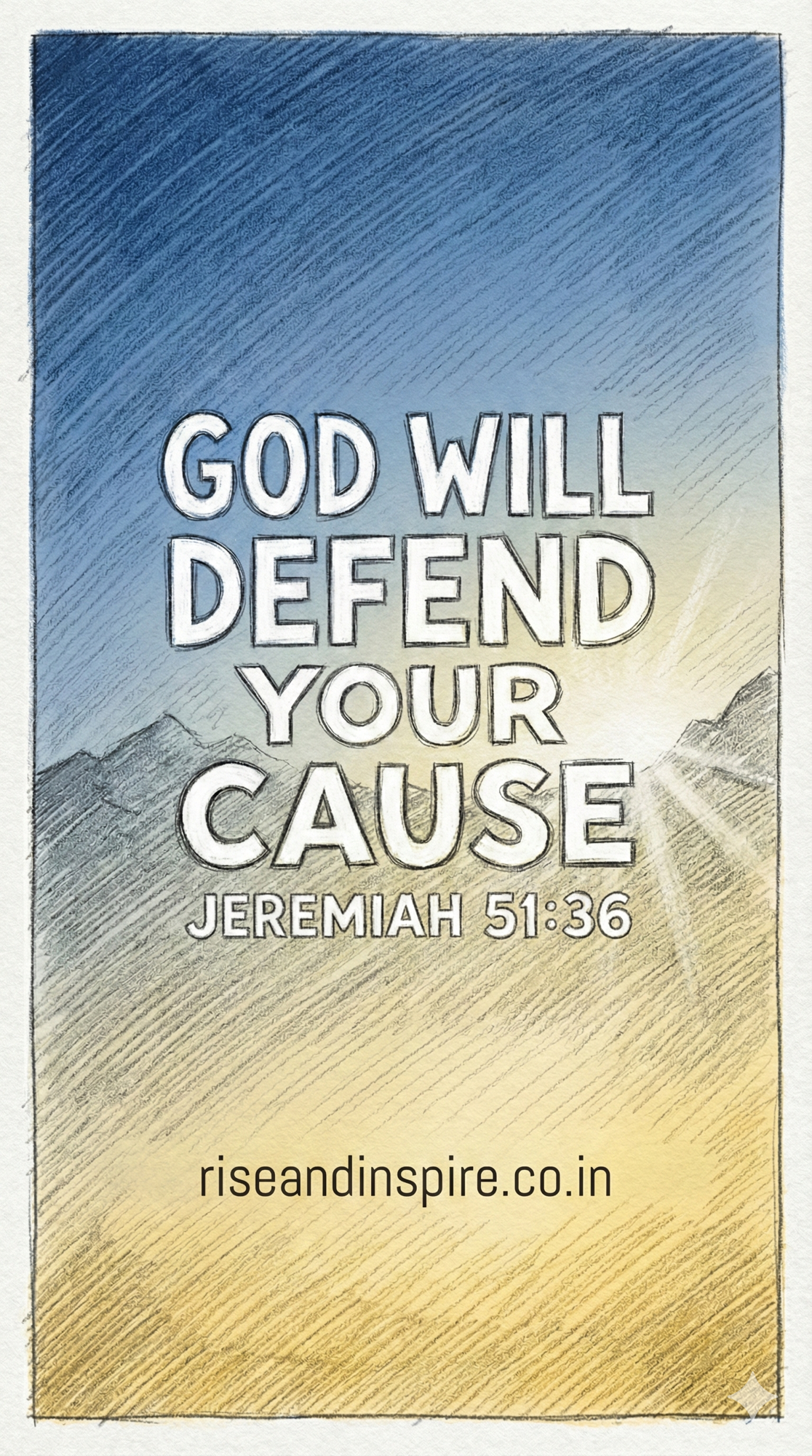
“Therefore thus says the Lord: I am going to defend your cause and take vengeance for you.”
Jeremiah 51:36
In the closing days of Advent, as we prepare our hearts for the coming of our Lord, this powerful declaration from the prophet Jeremiah offers us profound comfort and hope. These words, spoken to the exiled people of Judah, remind us that God is not a distant observer of our struggles but an active defender of His beloved children.
The context of this verse is significant. Jeremiah prophesies against Babylon, the mighty empire that had conquered Jerusalem and carried God’s people into exile. In their suffering and displacement, the Israelites might have wondered if God had forgotten them, if their oppressors would triumph forever. Into this darkness, God speaks words of assurance: I will defend your cause. I will take vengeance for you.
What does this mean for us today, centuries removed from ancient Babylon? It speaks to the deepest longing of the human heart—the desire to be seen, defended, and vindicated by the One who loves us most. Each of us carries burdens that feel too heavy to bear alone. We face injustices, betrayals, and wounds that leave us feeling powerless. We cry out, sometimes silently, wondering if anyone truly sees our pain.
God’s promise through Jeremiah is this: He sees. He knows. And He acts on behalf of His people.
Notice the intimacy of God’s language. He doesn’t merely promise justice in an abstract sense. He says, “I am going to defend your cause”—your specific situation, your particular pain, your unique story. God personalises His care. He doesn’t deal with us as a collective mass but as individual souls, each precious beyond measure.
The promise of divine vengeance may trouble our modern sensibilities. We’ve been taught, rightly, to forgive and to leave judgment to God. But this is precisely the point. God’s vengeance is not petty human revenge. It is the righteous restoration of justice by the One who sees all, knows all, and judges with perfect wisdom and mercy. When God says He will take vengeance, He is freeing us from the burden of carrying anger and bitterness. He is inviting us to release our need to settle scores, trusting that He will make all things right in His time and His way.
As we stand on the threshold of Christmas, this verse takes on even deeper meaning. The God who promised to defend His people’s cause did not send armies or earthly power. He sent His Son, born in a stable, wrapped in swaddling clothes. Jesus came to defend our ultimate cause—our separation from God, our bondage to sin and death. On the cross, divine justice and divine mercy met. There, God took vengeance not against us, but against the powers of darkness that held us captive. There, He defended our cause by becoming our substitute, our sacrifice, our Savior.
The infant we celebrate at Christmas is the same Lord who speaks through Jeremiah. He is our Defender, our Advocate, our Champion. In every moment of helplessness, He stands with us. In every experience of injustice, He sees and remembers. And one day, when He returns in glory, every wrong will be righted, every tear wiped away, every sorrow transformed into joy.
Until that day, we live in the tension of already and not yet. Already, Christ has won the victory. Already, He defends us before the throne of God. But not yet have we seen the full outworking of His justice. Not yet have all things been made new. In this waiting time, we’re called to trust—to believe that God’s promises are true even when circumstances suggest otherwise.
So what does this mean practically? It means we can lay down our anxiety about outcomes we cannot control. It means we can forgive those who wrong us, knowing that God will deal with them justly and mercifully. It means we can face opposition without fear, because our Defender is the Creator of heaven and earth. It means we can rest, even in the midst of struggle, because the battle is ultimately the Lord’s.
Today, whatever you’re facing, hear these words as spoken directly to you: “I am going to defend your cause and take vengeance for you.” Your situation is not hidden from God. Your pain is not dismissed. Your cry for justice is not unheard. The God who keeps His promises is at work, even now, on your behalf.
As we prepare to celebrate the birth of our Savior, let us remember that Christmas is God’s great defense of humanity. In sending Jesus, God declared His eternal commitment to fight for us, to stand with us, to redeem us. The stable in Bethlehem is where heaven’s Champion entered the battlefield of human history.
May this promise sustain you today and always: You are not alone. You are not forgotten. You are defended by the King of Kings and Lord of Lords.
Amen.
A Catholic catechetical reflection on Jeremiah 51
God Defends His People and Brings Down False Powers
Jeremiah 51 is a powerful reminder that God remains faithful even when His people are suffering. This chapter announces God’s judgment on Babylon, the empire that destroyed Jerusalem, desecrated the Temple, and carried God’s people into exile. For the exiles, Babylon seemed invincible. For God, it was temporary.
This chapter teaches us that no power that oppresses, deceives, or exalts itself against God will endure forever.
God Is Sovereign Over History
One of the central lessons of Jeremiah 51 is that God governs history. Babylon rose not by chance, and it did not fall by chance. God had permitted Babylon to act as an instrument of discipline against Judah, but Babylon’s arrogance, cruelty, and idolatry brought it under judgment.
For Catholics, this is an important spiritual truth:
God can use even painful events for purification, without approving the evil done. When suffering comes, it is not proof that God has abandoned His people.
God Is the Defender of the Oppressed
At the heart of this chapter is a word of comfort:
“I will defend your cause and avenge you” (Jer 51:36).
God presents Himself as a divine advocate, taking up the case of His wounded people. This is not revenge born of anger, but justice born of covenant love. God sees the suffering of His people, hears their cries, and acts in His time.
For those who feel powerless, unheard, or wronged, Jeremiah 51 assures us that God does not forget injustice. His justice may be delayed, but it is never denied.
The Emptiness of Idolatry
Jeremiah strongly contrasts false gods with the living Creator. Babylon trusted in idols, wealth, military strength, and false religion. God exposes these as powerless and destined to fall.
For Catholics today, this invites self-examination. Idolatry is not only about statues. Anything that claims ultimate trust—power, money, influence, technology, or ideology—can become a modern “Babylon.”
Jeremiah reminds us:
Only the Lord is Creator, Sustainer, and Saviour. Everything else passes.
“Come Out of Her” — A Call to Separation
The repeated call to flee Babylon is both historical and spiritual. The exiles were urged to leave before destruction came, but the deeper message is timeless: God’s people must not cling to systems that oppose Him.
This echoes throughout Scripture and reaches its fullness in the New Testament, where believers are warned not to conform to the spirit of the world.
As Catholics, we are called to live in the world but not of it—to resist cultural pressures that normalise injustice, deception, or exploitation.
Hope Beyond Judgment
Jeremiah 51 does not end in despair but in hope. Babylon sinks, but God’s plan for His people continues. The symbolic act of sinking the scroll into the Euphrates declares that evil has an end, while God’s word remains.
For believers, this strengthens hope:
Empires fall. Injustice collapses. God’s promises endure.
Living the Message Today
Jeremiah 51 invites us to trust God when:
• injustice appears to triumph,
• faithfulness feels costly,
• evil seems entrenched and permanent.
It calls us to patience, courage, and fidelity—confidence that God is both just and merciful, and that His kingdom outlasts every false power.
Reflection Questions (for Catechesis or Prayer)
1. Where do I see “Babylon” today—systems or values that oppose God’s truth?
2. How does trusting God’s justice change the way I respond to injustice?
3. What false securities might God be asking me to let go of?
4. How does this chapter strengthen my hope in God’s ultimate victory?
Closing Prayer
Lord God, Defender of the oppressed and Judge of all nations,
give us faith to trust Your justice, courage to resist false powers,
and hope that Your word will prevail.
Teach us to live faithfully in every season,
until Your kingdom comes in fullness. Amen.
Verse for Today (23 December 2025)
Daily scripture shared with blessings by His Excellency, Rt. Rev. Dr. Selvister Ponnumuthan, enriched with reflective insights by Johnbritto Kurusumuthu.
© 2025 Johnbritto Kurusumuthu | Rise & Inspire Devotional Series
Word count:1600