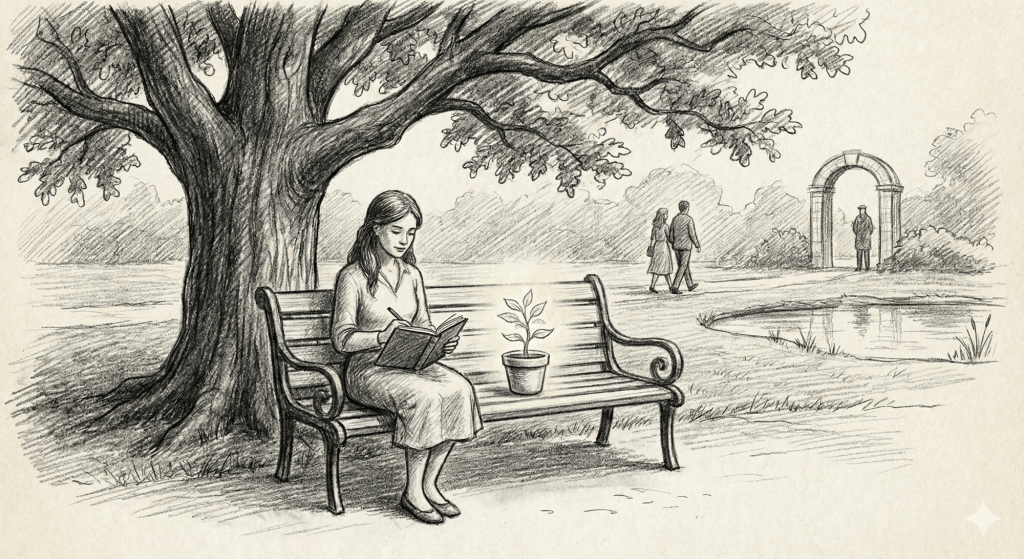
The greatest gift someone could give me is continuity—a faithful presence that cares not only in moments, but across seasons.
We scroll past a hundred messages, yet pause at one voice that says, “I’m here.”
That is the gift no store can sell—the quiet certainty that someone chooses you, not for what you do, but for who you are.
What Is the Greatest Gift Someone Could Give You?
(A 2026 Reflection)
A year ago, I wrote that the greatest gift isn’t something held in the hands—it’s something felt in the heart.
It is time freely given. Presence without distraction. Love and faith offered without expectation.
Two years ago, I reflected that, as a blogger, the greatest gift was being seen—truly seen—for my voice, my vulnerability, and my vision. Not measured by numbers or applause, but recognised as meaningful.
Today, in 2026, I would add this:
The greatest gift is continuity-the faithful presence that cares not only in moments, but across seasons.
It is the quiet consistency of someone choosing you again and again—through silence and noise, success and struggle. It is not a single moment of presence, but a steady rhythm of care that whispers, “You matter—today, tomorrow, and the day after.”
That kind of constancy is rare.
And sacred.
If you would like to revisit my earlier reflections on this evergreen question, you’ll find them here:
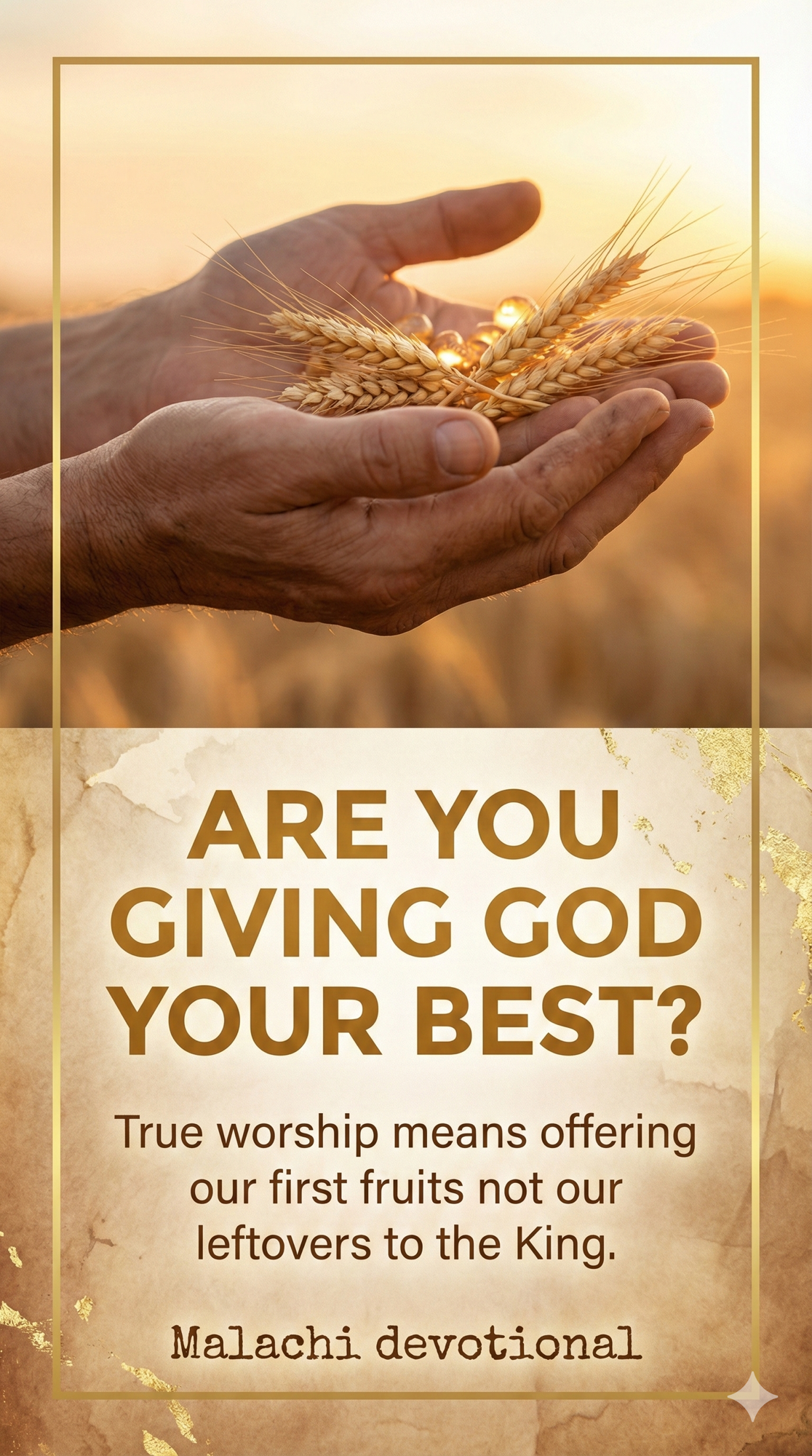
Religious routine is the enemy of authentic reverence. You can pray every day and still treat God casually. You can read Scripture regularly and still offer him your emotional leftovers. Malachi 1:14 shatters our comfortable spirituality with a reminder of who God actually is: not a cosmic therapist or divine ATM, but the great King whose name commands reverence across nations. Are you ready to let that truth reshape your faith?
Daily Biblical Reflection –
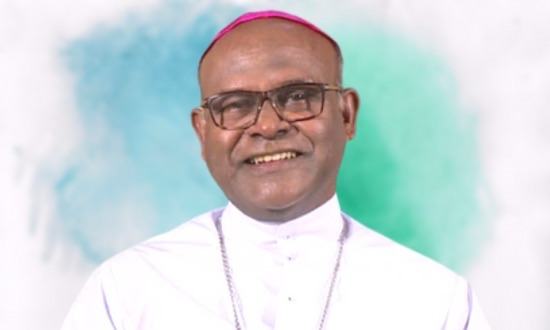
Verse for Today (4 January 2026) Received this morning from His Excellency, Rt. Rev. Dr. Selvister Ponnumuthan.
Reflections by Johnbritto Kurusumuthu.
“For I am a great King, says the Lord of hosts, and my name is reverenced among the nations.”
Malachi 1:14
Today the 4th day of 2026
This is the 4th reflection on Rise & Inspire under the category/series: Wake-up calls
Dear friends in Christ,
As we enter this fourth day of the new year, the prophet Malachi offers a powerful declaration that echoes across the centuries and speaks directly to our hearts today. These words are not merely a statement of fact but an invitation to examine how we approach the God who calls himself the great King.
The context of this verse is striking. Malachi was addressing a people who had grown complacent in their worship. They were going through the motions, offering God their leftovers rather than their best. They had forgotten the awesome majesty of the One they claimed to serve. Into this spiritual lethargy, God speaks with clarity and power: “I am a great King.”
This declaration carries within it both a rebuke and a reminder. God is not a celestial butler waiting to serve our whims, nor is he a distant concept we can shape according to our preferences. He is the King of kings, the Lord of hosts, the sovereign ruler of all creation. His greatness transcends our comprehension, yet he chooses to be in relationship with us.
What does it mean that his name is revered among the nations? It speaks to God’s universal reign and the recognition of his majesty that extends beyond any single culture or people. Even as the Israelites offered him half-hearted worship, God’s glory was acknowledged elsewhere. This should humble us and challenge us. Are we, who claim to know him intimately, treating him with the honour he deserves?
The question for us today is deeply personal: How do we reverence God’s name in our daily lives? Reverence is not merely about formal worship on Sundays or saying grace before meals. It is a posture of the heart that recognises God’s greatness in every moment. It is offering him our first fruits, not our leftovers. It is giving him our attention, not our distraction. It is surrendering our plans to his purposes.
When we truly grasp that we serve a great King, it transforms everything. Our problems, which loom so large in our eyes, are held in the hands of One for whom nothing is impossible. Our fears diminish in the light of his sovereignty. Our worship becomes genuine, flowing from hearts that have encountered his majesty rather than from mere obligation.
This verse also reminds us of our calling as ambassadors of this great King. If his name is to be revered among the nations, it must begin with us. The world is watching how we, who bear his name, live our lives. Do our actions, our words, our priorities reflect the greatness of the King we serve? Are we living in a way that makes others curious about the God we worship?
As we stand at the beginning of this year, let us make a commitment to reverence God’s name in all we do. Let us examine our worship and ask whether we are bringing God our best or merely what is convenient. Let us live with the consciousness that we serve a great King whose majesty deserves our wholehearted devotion.
May this new year be marked by a deeper reverence for God, a more authentic worship, and a life that reflects the greatness of the King we serve. In a world that has forgotten how to revere anything, let us be a people who demonstrate what it means to honour the name of the Lord of hosts.
Let us pray: Great King and Lord of all, we bow before your majesty today. Forgive us for the times we have approached you casually or offered you less than our best. Renew in us a heart of reverence and awe. Help us to live in a way that honours your name among the nations. May our lives be a testimony to your greatness, and may your name be reverenced through all we say and do. In Jesus’ name, Amen.
Rise and Inspire!
🌿 Rise&Inspire Devotional Card 🌿
A Concise Catholic Devotional Reflection on the Book of Malachi — Chapter 1
“I Have Loved You” — Trusting God’s Love
God opens with tender assurance:
“I have loved you” (Mal 1:2).
Israel doubts—“How?”—yet God points to His sovereign choice. Love is not proven by changing emotions but by faithful commitment. This invites us to trust that God’s love precedes our questions, feelings, and circumstances.
Reverence from the Heart
God rebukes half-hearted worship: blemished sacrifices offered with weary hearts (“What a weariness this is,” v.13). He asks not for leftovers, but for authentic honour—our best attention, humility, and love.
From Polluted to Pure Offering
A promise shines through the rebuke:
“From the rising of the sun to its setting… a pure offering” (v.11).
The Church sees this fulfilled in the Eucharist—Christ’s perfect sacrifice, offered across the world. Where human offerings fall short, Jesus gives Himself and invites us to unite our lives to His.
A Great King Deserving Awe
“I am a great King… and my name is to be revered” (v.14).
Holy fear is not terror—it is love that bows. Reverence grows when prayer is attentive, silence intentional, and worship filled with wonder before God.
Prayer
Lord, help me trust Your love, purify my worship, and offer You my best.
Make my life a pleasing sacrifice, revering Your name everywhere. Amen.
Quiet Takeaway
God desires sincere hearts over routine,
reverence over convenience,
because He is the great King who first loved us.
Reflect
✔️When do I quietly doubt God’s love?
✔️What “leftovers” am I offering Him?
✔️How can I deepen awe for the Eucharist this week?
Rise&Inspire — Faith that Reflects. Hope that Renews.
I attended formal colleges that shaped my early thinking, but my most meaningful education came later — through life, writing, faith, and lived experience.
We are often asked where we studied, what degrees we earned, and which institutions shaped us. But what if the most influential education came later—through life, responsibility, faith, and reflection? This post explores how learning quietly continues long after the classroom doors close.
What Colleges Have You Attended? My Answer Has Changed Over Time
There was a time when this question had a simple, confident answer.
I could list the colleges I attended, the courses I completed, the degrees that followed. Those years mattered. They gave me direction when life was still taking shape. I learned how to sit still with ideas, how to question, how to read deeply, and how to express myself with clarity and discipline. Classrooms trained my mind. Libraries stretched my curiosity. Examinations taught me endurance.
For a long while, that felt complete.
But as the years passed, I realised something quietly unsettling and strangely liberating: my most important learning began after I left college.
Life did not stop teaching when the certificates were framed.
Work became a classroom with no timetable. Responsibility became a demanding teacher. Mistakes were corrected not with red ink, but with consequences. I learned patience when outcomes were delayed, humility when certainty failed, and resilience when plans collapsed. These were lessons no syllabus prepared me for.
Writing entered my life not as a subject, but as a companion. Each blog post forced me to slow down, to reflect honestly, to revisit beliefs I once held too tightly. Readers became unseen classmates — some agreeing, some questioning, all teaching me something in return. Over time, the keyboard felt as formative as any desk I once sat at.
Faith, too, shaped my learning in ways no institution could measure. Scripture, silence, prayer, and lived conviction formed an interior education — one that continues quietly, without grades or applause, yet leaves deep marks on how I see the world and my place in it.
So today, when I am asked, “What colleges have you attended?” I still honour the institutions that shaped my early years. But I also know that my education did not end there.
I have attended the college of experience.
The university of reflection.
The lifelong course of becoming.
And I am still enrolled.
Earlier reflections on the same prompt (for context and continuity)
What if someone recorded every private moment of your life, every hidden thought, every secret action you believed was buried forever? Before panic sets in, consider this: what if that same record included every unnoticed kindness, every silent sacrifice, every tear of compassion you shed alone?
Ecclesiastes 12:14 pulls back the curtain on a reality both sobering and liberating. God will judge every deed, including every secret thing. But this is not the threat we imagine. It’s the invitation to freedom we’ve been searching for all along.
I’ve written a biblical reflection on Ecclesiastes 12:14 with pastoral warmth and spiritual depth. The reflection:
– Explores both the sobering reality of divine judgment and the comforting promise of justice
– Addresses the tension between accountability and grace
– Offers practical application for daily Christian living
– Balances challenge with encouragement
– Maintains a warm, pastoral tone throughout.
Daily Biblical Reflection
– Verse for Today (3rd January 2026)
Forwarded this morning by His Excellency, Rt. Rev. Dr. Selvister Ponnumuthan, upon whom Johnbritto Kurusumuthu wrote reflections.
“For God will bring every deed into judgment, including every secret thing, whether good or evil.”
Ecclesiastes 12:14
Today the 3rd day of 2026
This is the 3rd reflection on Rise&Inspire under the category/series: Wakeupcalls
Dear Friends in Christ,
As we stand at the threshold of this new year, the Teacher in Ecclesiastes leaves us with a profound truth that serves as both comfort and challenge: nothing escapes the eyes of God. Every deed, every secret thing, whether wrapped in the light of goodness or hidden in the shadows of wrongdoing, will one day stand before divine judgment.
This verse comes at the conclusion of Ecclesiastes, a book that has wrestled with life’s deepest questions about meaning, purpose, and the seeming injustices we witness daily. After exploring the vanity of human pursuits, the Teacher brings us to this bedrock reality: there is an accounting. Life is not a meaningless cycle. Our choices matter eternally.
At first reading, these words might stir fear in our hearts. The thought of every secret thing being brought to light can be unsettling. We all carry things we hope will remain hidden, words spoken in anger, thoughts entertained in darkness, opportunities for kindness we let slip away. But beloved, let us not read this verse only as a threat. It is also a promise of justice and vindication.
For those who suffer in silence, for those whose good works go unnoticed, for those who have been wronged and found no earthly justice, this verse whispers hope. God sees. He knows. The widow’s mite that no one celebrated, the quiet sacrifice made in the middle of the night, the kind word spoken when no one was watching, these too will be brought into judgment. Every act of love, every secret prayer, every tear shed in compassion, God has recorded them all.
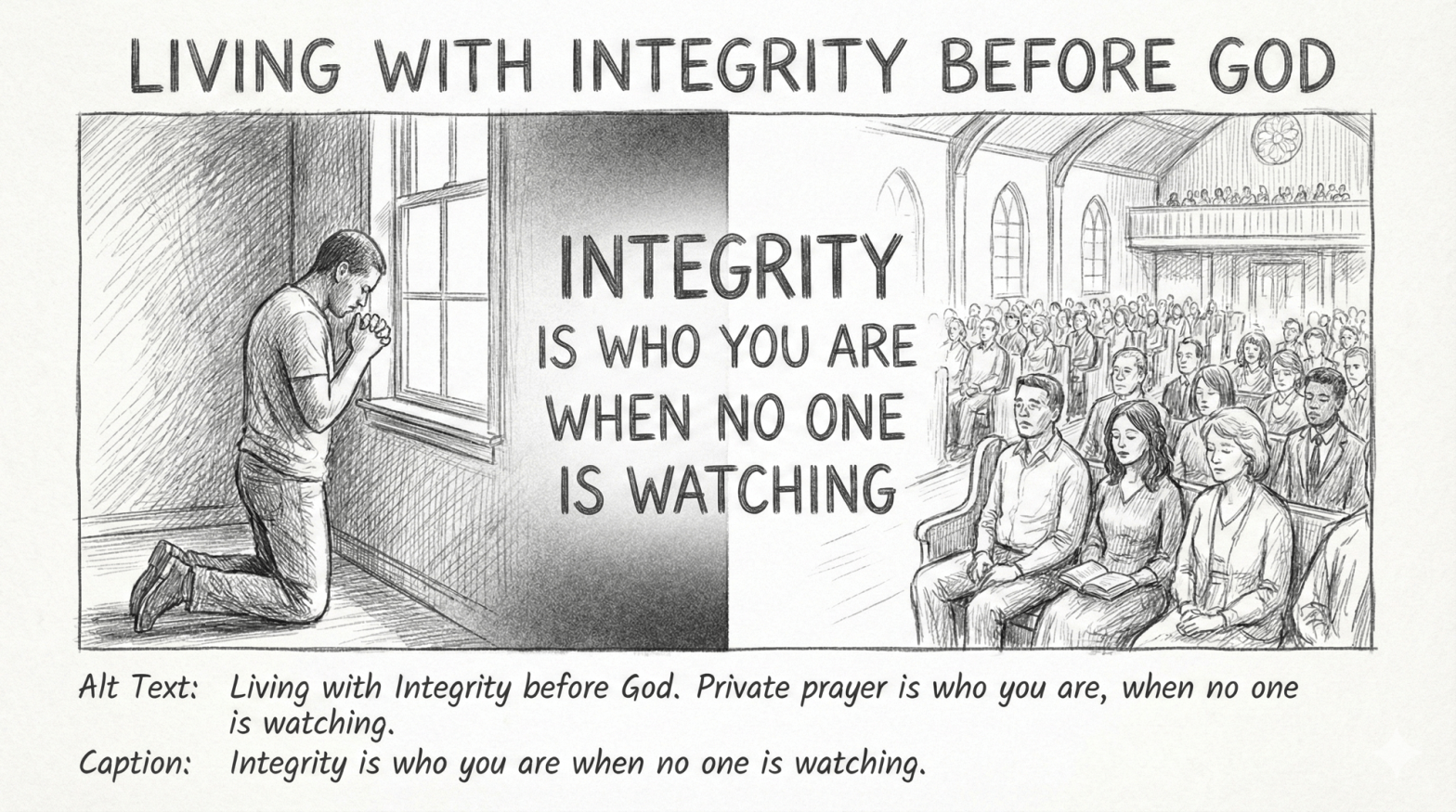
This reality should transform how we live. When we grasp that nothing is truly secret before God, we are invited into a life of integrity. Not the exhausting performance of righteousness for human eyes, but the authentic holiness that flows from knowing we live always in God’s presence. We are freed from the tyranny of reputation and the anxiety of keeping up appearances. Instead, we can focus on being truly good, not merely looking good.
As we continue these first days of 2026, let this wake-up call ring clear in our hearts. We are not making resolutions simply to improve ourselves or impress others. We are choosing to align our lives, both public and private, with the truth that we serve a God who sees all and judges all with perfect justice and mercy.
This verse also calls us to examine our secrets. What are we hiding? What would we be ashamed for others to know? These hidden places are precisely where God wants to bring His healing light. Confession, repentance, and transformation begin when we stop hiding from God and ourselves.
Yet even as we face this sobering truth, we must remember the gospel. Yes, judgment is real, but so is grace. Through Christ, our sins, even our secret sins, can be forgiven and forgotten, cast as far as the east is from the west. The judgment we face need not be one of condemnation but of commendation, as we hear those precious words, “Well done, good and faithful servant.”
Today, let us live with eternity in view. Let us choose integrity over image, substance over show, faithfulness in secret over applause in public. Let us remember that the God who will judge every deed is the same God who loved us enough to send His Son, not to condemn the world, but to save it.
May this reflection inspire you to live transparently before God, confidently in His grace, and purposefully toward His glory.
In Christ’s love,
Johnbritto Kurusumuthu
Rise&Inspire – Wakeupcalls Series
Frequently Asked Questions (FAQs)
Ecclesiastes — A Catholic Devotional Guide
1. Is the Book of Ecclesiastes pessimistic or contrary to Christian hope?
No. Ecclesiastes is realistic, not pessimistic. It honestly describes life “under the sun” while ultimately directing the reader toward hope rooted in God. Its conclusion—fearing God and keeping His commandments (Eccl 12:13–14)—affirms moral meaning, divine justice, and eternal accountability.
2. What does “vanity of vanities” really mean?
The phrase translates the Hebrew word hevel, meaning breath, vapour, or mist. It does not mean life is worthless, but that earthly things are fragile and temporary when treated as ultimate goals. Ecclesiastes invites us to seek lasting meaning beyond what quickly passes.
3. Why does Ecclesiastes say wisdom increases sorrow (Eccl 1:18)?
Wisdom exposes life’s limits, injustices, and uncertainties. Greater awareness can bring sorrow because it strips away comforting illusions. In Catholic spirituality, this sorrow is purifying—it leads to humility and deeper dependence on God rather than on human control.
4. Does Ecclesiastes deny rewards for good deeds?
No. Ecclesiastes challenges a simplistic belief that goodness always leads to immediate success. It teaches that full justice belongs to God and may not be visible in this life. This prepares the ground for Christian belief in final judgment and resurrection.
5. Why does Ecclesiastes encourage enjoyment of life if everything is “vanity”?
Because enjoyment itself is a gift from God (Eccl 2:24–26; 5:18–20). Food, work, companionship, and rest are good when received with gratitude. The problem is not enjoyment, but idolatry—treating these gifts as substitutes for God.
6. How does Ecclesiastes understand death?
Death is presented as the great equaliser—rich and poor, wise and foolish alike (Eccl 3:19–20). Rather than promoting despair, this truth encourages humility and urgency: live wisely now, knowing life is limited and accountable before God.
7. What does “fear of God” mean in Catholic teaching?
Fear of God is not terror, but reverent awe and loving obedience. It is one of the gifts of the Holy Spirit, leading believers to honour God’s holiness while trusting His mercy. Ecclesiastes presents this fear as the foundation of a meaningful life.
8. How is Ecclesiastes different from the Book of Job?
Job focuses on one righteous man’s intense suffering and God’s response through divine revelation. Ecclesiastes reflects broadly on the human condition. Job asks “Why do the innocent suffer?”; Ecclesiastes asks “What gives life meaning?” Both lead to humility before God’s mystery.
9. How does Ecclesiastes prepare us for the Gospel?
Ecclesiastes exposes the insufficiency of wealth, pleasure, and achievement—clearing the heart to receive Christ’s message. Its longing for lasting meaning finds fulfilment in Jesus, who offers eternal life beyond what is “under the sun.”
10. Why is divine judgment important in Ecclesiastes?
Ecclesiastes affirms that nothing is ultimately meaningless:
“God will bring every deed into judgment” (Eccl 12:14).
This is comforting for believers because it assures that hidden faithfulness, unrecognised goodness, and unjust suffering are known by God and will not be forgotten.
11. How should Catholics read Ecclesiastes today?
Catholics are invited to read Ecclesiastes prayerfully, not cynically. It is best approached as:
• A call to detach from false securities
• An invitation to gratitude for daily gifts
• A reminder to live in reverence and moral responsibility before God
12. What is the central spiritual message of Ecclesiastes?
Life finds meaning not in control, success, or permanence, but in faithful reverence for God. When living before Him, even ordinary and fleeting moments take on eternal significance.
Finding Meaning “Under the Sun” by Fearing God
A Catholic Devotional Reflection on Ecclesiastes
The Book of Ecclesiastes, spoken through Qoheleth (the Teacher), confronts life as it is actually lived—limited, fragile, and often confusing. It looks honestly at human experience “under the sun,” naming frustrations without disguise. Yet for Catholics, Ecclesiastes does not end in despair. It awakens us to release comforting illusions and to re-centre life on God, the only lasting source of meaning.
“Vanity of Vanities” (Eccl 1:2): When What Shines Cannot Save
“Vanity of vanities… all is vanity.”
The Hebrew word hevel means breath or vapour—something real, yet fleeting. Ecclesiastes reminds us that success, pleasure, and achievement cannot carry the weight of eternity. They promise fullness but fade quickly.
This wisdom echoes Christ’s piercing question: “What does it profit a man to gain the whole world and forfeit his soul?” (Mk 8:36). The Teacher’s honesty loosens our grip on what dazzles but does not endure.
Time, Limits, and the Wisdom of Mortality (Eccl 3)
“There is a time for everything.”
Birth and death, joy and sorrow, building and letting go—life unfolds in seasons beyond our control. Death humbles every human ambition and teaches us that we are not masters of time.
For the believer, this is not a morbid reflection but spiritual clarity. As the psalmist prays, “Teach us to number our days, that we may gain wisdom of heart” (Ps 90:12). Awareness of limits invites us to live the present moment with care, gratitude, and faith.
Gifts, Not Idols:
Receiving Life from God’s Hand
Ecclesiastes tests wisdom, pleasure, and work—and finds them insufficient when pursued as ultimate goals. Yet the Teacher does not reject them. Instead, he offers a gentler, deeper truth:
“There is nothing better than to enjoy one’s work… this is from the hand of God” (Eccl 2:24).
Food, labour, friendship, rest—these are not distractions from holiness but daily gifts. When received with gratitude, they become quiet signs of God’s generosity. When idolised, they lose their joy.
Injustice and Hope:
Trusting God’s Final Word
Ecclesiastes refuses to romanticise the world. The oppressed suffer, justice is delayed, and the righteous are not always rewarded (Eccl 4:1; 8:14). This realism resonates with every generation that has asked where God is amid unfairness.
Yet the book does not surrender to cynicism. It affirms a deeper hope: “God will judge the righteous and the wicked” (Eccl 3:17). Nothing lived in fidelity is forgotten. Hidden goodness will be revealed; wrongs will not have the last word.
The Final Word (Eccl 12:13):
Fear God and Live Fully
The Teacher gathers every tension into one clear conclusion:
“Fear God and keep his commandments.”
In the Catholic faith, the fear of God is not terror but reverent love—a humble awareness of God’s holiness joined with trust in His mercy. Life gains coherence when lived before Him. What seems fragmented “under the sun” finds unity in God’s presence, fulfilled in Christ’s commandment to love God and neighbour.
Ecclesiastes with Job:
Faith Without Easy Answers
Read alongside Job, Ecclesiastes teaches mature faith. Both books resist shallow explanations. Job cries out from personal suffering; Ecclesiastes reflects on life’s universal contradictions.Together, they teach us not certainty without struggle, but trust amid mystery.
A Closing Prayer
Lord God,
Teach us to receive life as a gift,
to release what fades,
and to live reverently before You.
When meaning feels fragile and answers are incomplete,
anchor our hearts in Your truth.
May all we do—seen and unseen—
give glory to You.
Amen.
For Rise&Inspire readers:
Ecclesiastes does not ask us to escape the world, but to live within it wisely—enjoying God’s gifts, accepting our limits, and anchoring every moment in reverent obedience. What is lived before God is never wasted.
Yes, I do play in my daily life—but not always through games.
Playtime, for me, begins when curiosity, creativity, or quiet presence replaces urgency and performance.
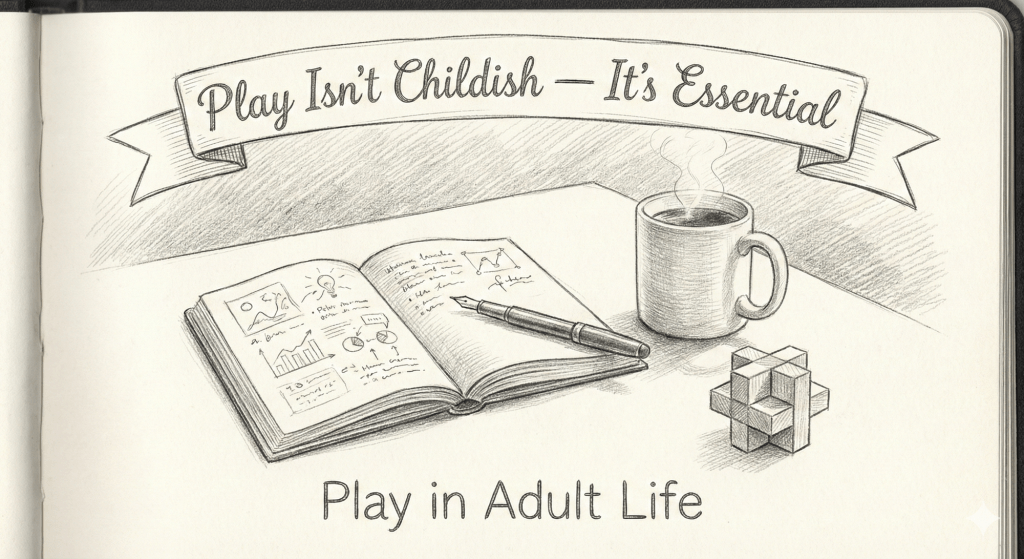
Play doesn’t vanish when childhood ends—it simply waits for permission. In adult life, play often disguises itself as curiosity, quiet joy, or moments without purpose. This reflection explores how play survives beyond games, and how recognising it can restore balance, creativity, and inner freedom.
Do I Play in My Daily Life? What does “Playtime” mean to Me Now?
I don’t always play the way I once did.
There are fewer games, fewer carefree hours, and far more responsibilities.
Yet, play has not disappeared from my life—it has changed its language.
Today, playtime is not an event on the calendar.
It is a permission I give myself.
Play as Curiosity
Play shows up when I allow myself to ask questions without needing immediate answers.
When I read without extracting value.
When I explore ideas simply because they intrigue me.
Curiosity, I’ve learned, is one of the most adult forms of play.
Play as Creative Freedom
Writing without worrying about metrics.
Rearranging words until they feel right, not strategic.
Letting thoughts wander before pulling them back into form.
When creation feels light again, I know I am playing.
Play as Presence
Sometimes playtime is silent.
A slow walk.
A pause between tasks where nothing productive happens—and nothing needs to.
Play, for me, now whispers: You don’t have to be useful every moment.
Play as Gentle Resistance
In a world that rewards urgency, play resists haste.
In a culture obsessed with outcomes, play values the process.
In days filled with obligation, play restores choice.
That is why it matters.
What Says “Playtime” to Me
Playtime begins the moment I stop performing and start being.
When laughter is unplanned.
When attention softens.
When joy doesn’t ask for justification.
I may not always notice it immediately—but when I do, I protect it.
Because play is not the opposite of work.
It is the renewal of the self who works.
🔗 My Previous Reflections on Play
Over the years, my understanding of play has evolved. What began in 2024 as a rediscovery of simple joy gradually revealed itself in 2025 as a source of renewal for the soul. In 2026, play now feels less like an activity and more like permission—permission to slow down, stay curious, and live with presence in a demanding world.
The psalmist cried out four times asking “How long, O Lord?” before something shifted. In one decisive moment, despair turned to trust, questions turned to confidence, and sorrow turned to joy. What happened between the lament and the rejoicing?
Today’s reflection on Psalm 13:5 uncovers the single word that changes everything when your faith feels fragile and your prayers seem unanswered.
Daily Biblical Reflection – Verse for Today (2nd January 2026)Forwarded this morning by His Excellency, Rt. Rev. Dr. Selvister Ponnumuthan, upon whom Johnbritto Kurusumuthu wrote reflections.
“But I trusted in your steadfast love; my heart shall rejoice in your salvation.”
Psalms 13:5
Reflection
As we step into the second day of this new year, the psalmist’s words call us to reflect and consider where we place our trust. Psalm 13 is a prayer born from deep anguish. David cries out to God, asking “How long, O Lord?” four times in the opening verses. He feels forgotten, abandoned, surrounded by enemies, and weighed down by sorrow. Yet in verse 5, there is a profound shift. Despite his circumstances, David chooses trust.
This is not a trust built on favorable conditions or immediate answers. It is trust rooted in God’s steadfast love, a love that does not waver with our emotions or circumstances. The Hebrew word used here, “chesed,” speaks of God’s covenant faithfulness, His unfailing mercy that endures forever. David anchors his hope not in what he sees around him, but in the unchanging character of God.
What makes this verse particularly powerful is the word “but.” It stands as a turning point, a declaration of faith in the midst of struggle. David does not deny his pain or pretend everything is fine. Instead, he moves from lament to confidence, from questioning to rejoicing. This is the journey of authentic faith: acknowledging our struggles while choosing to trust in God’s steadfast love.
As we navigate the early days of 2026, we too may carry questions, uncertainties, or burdens from the past year. We may wonder how long certain trials will last or when prayers will be answered. Yet today’s verse invites us to make the same choice David made: to trust in God’s steadfast love even when we cannot see the way forward.
Notice that David says “my heart shall rejoice.” This is not forced happiness or denial of reality. It is a deep, settled joy that comes from knowing we are held by a love that will never let us go. It is the joy of salvation, not just as a future promise, but as a present reality. We are saved, we are being saved, and we will be saved. In every moment, God’s love sustains us.
This second day of the year reminds us that our spiritual journey is not measured by the absence of struggle, but by where we place our trust in the midst of it. Like David, we can move from “How long?” to “I trust.” We can lift our hearts in rejoicing because we know whose we are.
May this day find you resting in God’s steadfast love. May your heart know the joy of His salvation. And may you carry this truth with you: no matter what lies ahead, you are held by a love that will never fail.
Psalm Structure and “How Long?”
— The psalmist asks “How long, O Lord?” four times in the opening verses (Psalm 13:1–2):
1. How long will you forget me forever?
2. How long will you hide your face from me?
3. How long shall I take counsel in my soul…?
4. How long will my enemy be exalted over me? This is widely noted in commentaries (e.g., Spurgeon calls it the “How Long Psalm”).
✔️ The Pivotal “But” — The word “but” (Hebrew waw adversative) in verse 5 marks the dramatic shift from lament (vv. 1–4) to trust and anticipated rejoicing (vv. 5–6). The reflection describes this as a turning point where David chooses trust despite unresolved pain.
✔️ “Steadfast Love” (Chesed) — The explanation of the Hebrew chesed as God’s covenant faithfulness, unfailing mercy, and enduring love is standard in biblical scholarship. It emphasises God’s unchanging character rather than circumstances.
A Catholic Devotional Reflection on Psalm 13
(From “How Long?” to “I Will Sing”)
Book of Psalms 13 gives voice to a prayer many believers whisper but hesitate to say aloud. It begins in anguish and ends in praise—without any visible change in circumstances. In this movement, the Church recognizes a school of prayer that is both honest and faithful.
“How long, O Lord?” — Praying Our Pain
David’s fourfold cry, “How long?”, echoes the experience of prolonged waiting: unanswered prayer, inner sorrow, and the fear that evil may prevail. Catholic tradition never treats such lament as lack of faith. On the contrary, the psalms teach us that bringing our distress to God is itself an act of trust.
When we pray Psalm 13, we are reminded that God does not ask us to mask our pain. He invites us to place it before Him—raw, unedited, and real.
“Light up my eyes” — Asking for Life
David’s petition is simple and urgent: “Consider and answer me… lest I sleep the sleep of death.”
This is more than fear of physical death; it is a plea against spiritual darkness, discouragement, and despair.
In Catholic prayer, this line resonates deeply with our longing for grace. We ask the Lord to rekindle hope, to restore clarity of vision, and to prevent the enemy—whether sin, fear, or despair—from claiming victory over our hearts.
“But I have trusted…” — The Act of Faith
The turning point comes suddenly: “But I have trusted in your steadfast love.”
Here, David does not deny his pain. Instead, he chooses remembrance—anchoring himself in God’s chesed, His covenant love.
This is the heart of Christian faith: not that suffering disappears, but that trust rises above it. Like David, we often move from lament to praise not because circumstances change, but because grace reminds us who God is.
“I will sing to the Lord” — Praise Before the Answer
The psalm ends with a vow of praise: “I will sing… because he has dealt bountifully with me.”
Not will deal, but has dealt.
For Catholics, this anticipatory praise mirrors the Eucharistic faith of the Church—giving thanks even while still waiting, confident that God’s mercy is already at work. Praise becomes an act of hope, a declaration that suffering does not have the final word.
A Prayer from Psalm 13
Lord, when Your face seems hidden and my heart is heavy with sorrow, teach me to cry out without fear. Light up my eyes with hope, strengthen my trust in Your steadfast love, and place a song in my heart even before deliverance comes. Amen.
Takeaway for the Faithful
Psalm 13 assures us that God welcomes honest prayer. Our “How long?” can coexist with “I trust.” In every season of waiting, the Church learns again that lament, trust, and praise belong together—turning sorrow, in God’s time, into song.
FAQs on Book of Psalms 13
1. Is it sinful to ask God “How long?”
No. Psalm 13 shows that honest lament is a biblical and faithful form of prayer. God invites us to bring our pain directly to Him rather than suppressing it or turning away.
2. Why does Psalm 13 change so suddenly from despair to trust?
The shift reflects an act of faith, not a change in circumstances. David remembers God’s steadfast love (chesed) and chooses trust even while suffering continues.
3. What does “light up my eyes” mean spiritually?
It is a plea for renewed life, hope, and clarity, especially in moments of despair, depression, or spiritual darkness. It asks God to restore inner vitality.
4. How is Psalm 13 relevant for Christians today?
It speaks directly to experiences of unanswered prayer, prolonged trials, emotional exhaustion, and waiting. It teaches believers how to pray honestly without losing faith.
5. Why does David praise God before his situation improves?
This anticipatory praise reflects deep trust. In Christian prayer, it parallels the Eucharistic attitude of thanksgiving—gratitude rooted in God’s character, not circumstances.
6. What is the significance of “steadfast love” in verse 5?
The Hebrew word chesed refers to God’s covenant faithfulness—His reliable, enduring mercy. David anchors his hope not in outcomes, but in who God is.
7. Can Psalm 13 be used in times of depression or spiritual dryness?
Yes. Psalm 13 gives language to emotional heaviness while gently guiding the soul toward trust and hope. It is often used in pastoral care and personal prayer during such seasons.
Discussion Questions (For Groups or Personal Reflection)
1. Which of David’s “How long?” questions resonates most with your current experience—and why?
2. How do you usually respond when God feels silent: withdrawal, distraction, or prayer?
3. What does it mean for you personally to ask God to “light up my eyes”?
4. Have you experienced moments where trust returned before circumstances changed?
5. What helps you remember God’s faithfulness when emotions suggest otherwise?
6. How can Psalm 13 shape the way we pray during prolonged waiting or unanswered prayer?
7. In what ways does anticipatory praise challenge or strengthen your faith?
8. How might praying Psalm 13 regularly transform your approach to suffering?
Closing Reflection
Psalm 13 invites us to bring our deepest questions into God’s presence—and to let trust slowly rise within prayer itself. Where might God be inviting you to move today from lament toward trust, even if answers are still delayed?
A Guided Prayer & Meditation on Psalm 13
(From Lament to Trust)
Book of Psalms 13
Preparing the Heart
Find a quiet place. Sit comfortably.
Take a slow breath in… and gently breathe out.
Place yourself in God’s presence, just as you are—without explanation or defense.
1. Lament — “How long, O Lord?”
Slowly pray the words in your heart:
How long, O Lord? Will You forget me forever?
How long will You hide Your face from me?
Hold the silence.
Name, silently, what feels unresolved or heavy.
Allow yourself to feel it—without rushing to fix it.
Reflection:
Lord, I bring You my waiting, my confusion, my unanswered prayers. I do not hide them from You.
(Brief silence)
2. Petition — “Light up my eyes”
Breathe in deeply.
Now pray:
Consider me and answer me, O Lord my God.
Light up my eyes, lest I sleep the sleep of death.
Ask God for what you most need right now—not solutions, but light.
Light for the mind.
Light for the heart.
Light for endurance.
Reflection:
Lord, where my hope feels dim, awaken me. Where my spirit feels tired, renew me.
(Brief silence)
3. Trust — “But I have trusted”
Gently shift your posture.
Pray slowly:
But I have trusted in Your steadfast love.
This is not denial of pain.
It is a choice.
Recall one moment—small or great—where God has been faithful in your life.
Reflection:
Lord, I place my trust not in outcomes, but in Your faithful love.
(Brief silence)
4. Praise — “I will sing to the Lord”
Now pray:
My heart shall rejoice in Your salvation.
I will sing to the Lord, because He has dealt bountifully with me.
Even if joy feels distant, let praise rise as an act of hope.
Let gratitude be offered ahead of answers.
Reflection:
Lord, I thank You—not because everything is resolved, but because You are present and faithful.
(Brief silence)
Closing Prayer
Lord God,
You welcome my questions and hear my cries.
Teach me to wait without fear,
to trust without certainty,
and to praise even before deliverance comes.
Turn my sorrow into song in Your time.
Amen.
Optional Practice
Pray Psalm 13 once each day for a week—slowly, honestly.
Notice how your prayer moves, not from despair to denial, but from lament to deeper trust.
Today: The 2nd day of 2026
This is the 2nd reflection on Rise & Inspire under the category/series: Wakeupcalls
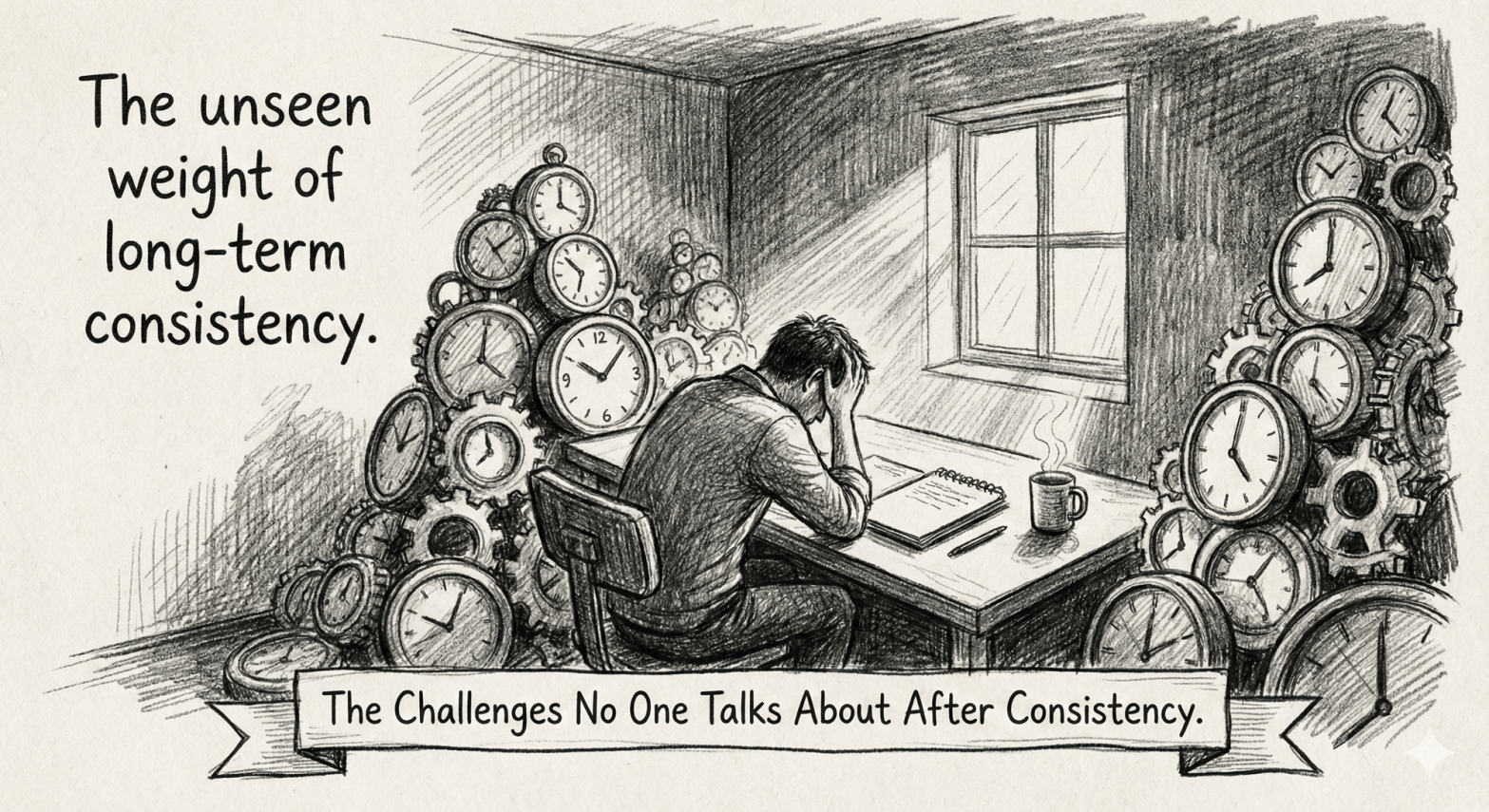
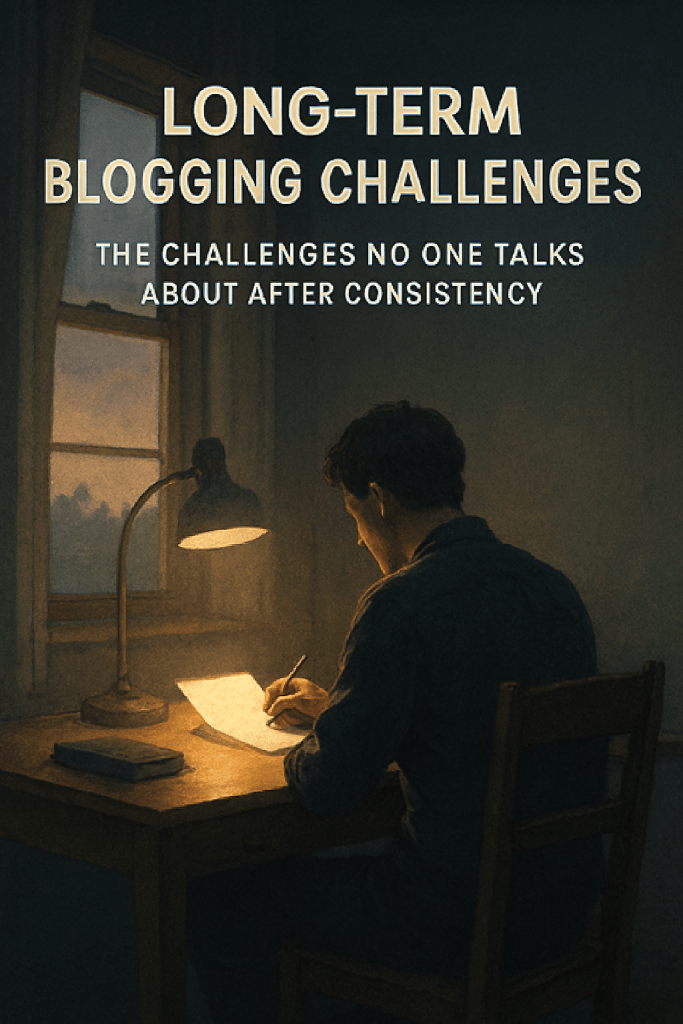
My biggest challenges are no longer about starting or staying consistent. They are about protecting meaning, staying authentic, and remaining grounded in purpose while continuing to write in a noisy, fast-moving digital world.
Consistency solves one problem—and quietly creates another.
After years of blogging, the challenge is no longer publishing regularly or finding motivation. It is staying honest, meaningful, and grounded while the world pushes for speed, sameness, and scale. This reflection explores the challenges that emerge only after you’ve stayed long enough to notice them.
What Are My Biggest Challenges? (2026 Reflection)
The biggest challenges don’t always announce themselves loudly.
Some arrive quietly—after the habit is formed, after consistency is proven, after the applause fades.
At this stage of my journey, the challenge is no longer starting.
It is staying intentional.
1. Sustaining Meaning Over Momentum
Publishing regularly is no longer difficult. Writing with intention is.
The challenge is resisting the temptation to write because I should, instead of writing because it needs to be said.
Meaning requires intention. Momentum demands speed. Balancing both is an ongoing struggle.
2. Growing Without Losing My Voice
As readership expands, expectations grow silently.
Trends suggest what works. Algorithms reward familiarity.
The challenge is choosing authentic depth over comfortable repetition, even when sameness feels safer.
3. Measuring Impact Beyond Numbers
Views increase. Engagement fluctuates. Silence follows some posts.
The hardest challenge is remembering that impact is not always visible.
Some words work quietly—long after they are read.
4. Protecting Inner Stillness in a Noisy Digital Space
The online world rewards urgency. Reflection moves slower.
My challenge is guarding inner stillness so that writing remains rooted, not reactive.
5. Accepting Seasons of Uncertainty
Not every year brings clarity.
Sometimes the challenge is learning to write honestly without fully knowing where the path leads—and trusting that clarity often follows obedience, not certainty.
Closing Reflection
My biggest challenges are no longer external.
They are internal negotiations between purpose and pressure, depth and speed, faith and visibility.
You woke up today in a brand new year. The calendar reset. The possibilities feel endless. But here is the question that matters most: are you running the race God has set before you, or are you still carrying weights that were never yours to bear? Hebrews 12 offers a vision so powerful it can reshape your entire 2026. You are not running alone. You are surrounded. You are called. And the finish line is closer than you think.
I’ve written a warm and encouraging biblical reflection for New Year’s Day 2026. The reflection:
– Opens with pastoral warmth, acknowledging the significance of this first day and first reflection of the year
– Unpacks the Hebrews passage with spiritual depth, exploring the “cloud of witnesses,” the call to lay aside weights and sin, and the central focus on Jesus
– Offers practical and encouraging application for readers facing the new year
– Maintains a tone that is both reverent and accessible
– Ends with a blessing and commissioning for the year ahead
Happy New Year, and may our Rise & Inspire ministry continue to bless many in 2026!
Daily Biblical Reflection –
Verse for Today (1st January 2026) is forwarded this morning by His Excellency, Rt. Rev. Dr. Selvister Ponnumuthan, upon whom Johnbritto Kurusumuthu wrote reflections.
“Therefore, since we are surrounded by so great a cloud of witnesses, let us also lay aside every weight and the sin that clings so closely, and let us run with perseverance the race that is set before us, looking to Jesus, the pioneer and perfecter of faith.”
Hebrews 12:1-2
HAPPY NEW YEAR, LAUDETUR JESUS CHRISTUS
Dear Brothers and Sisters in Christ,
As we stand at the threshold of 2026, the Word of God greets us not with empty wishes but with a powerful vision for the journey ahead. This is the first reflection of Rise and Inspire for this year, and what better way to begin than by lifting our eyes to the race set before us.
The opening of this new year is not merely the turning of a calendar page. It is an invitation from God himself to run with purpose, to live with intention, and to press forward with holy perseverance. The author of Hebrews paints for us a magnificent picture: we are not running alone. A great cloud of witnesses surrounds us, the saints who have gone before us, the faithful men and women whose lives testified to God’s grace and whose examples inspire us still.
Think for a moment about what this means. Abraham, who stepped out in faith not knowing where he was going. Moses, who led God’s people through the wilderness. Ruth, who chose loyalty and love over convenience. David, who danced before the Lord with all his might. Mary, who said yes to God’s impossible plan. The apostles, the martyrs, the missionaries, the humble servants whose names are known only to God. They are all cheering us on, reminding us that the race can be run, that faith can endure, that victory is possible through Christ.
But this new year also requires something of us. We must lay aside every weight and the sin that clings so closely. As we enter 2026, each of us knows what those weights are. Perhaps it is worry that has grown heavy on our shoulders. Perhaps it is bitterness we have carried too long. Perhaps it is habits that drain our spiritual strength or relationships that pull us away from God’s best for us. Perhaps it is simply the clutter of distractions that keeps us from what truly matters.
The new year is God’s gracious opportunity for us to lay these things down. Not through our own strength alone, but by looking to Jesus, the pioneer and perfecter of our faith. He has gone before us. He has blazed the trail. He knows every obstacle we will face because he faced them first. And he did not merely start the race; he perfected it, completing it all the way to the cross and beyond to the resurrection.
This is where our eyes must remain fixed in 2026: on Jesus. When the year brings uncertainties, we look to Jesus who is our certainty. When challenges arise, we look to Jesus who is our strength. When we grow weary, we look to Jesus who is our rest. When we lose direction, we look to Jesus who is the way, the truth, and the life.
To run with perseverance means we do not expect to sprint through this year and collapse at the finish line in exhaustion. Rather, we pace ourselves with wisdom, we remain steady in prayer, we draw strength from the sacraments, we encourage one another in community, and we keep our focus on the eternal prize that awaits us.
Dear friends, as you read this first reflection of Rise and Inspire for 2026, receive this as more than a meditation. Receive it as a commissioning. You have been called to run this year’s race. You have been surrounded by witnesses who prove it can be done. You have been permitted to lay down what weighs you down. And most importantly, you have been given Jesus, who will run with you every step of the way.
Let us run, then, not with fear but with faith. Not with hesitation but with hope. Not looking back at what was, but looking forward to what God will do. This is your year to rise. This is your year to be inspired. This is your year to run the race set before you with perseverance and joy.
May the Lord bless you and keep you. May his face shine upon you and be gracious to you. May he look upon you with favour and give you peace, now and throughout this blessed year of 2026.
In Christ’s love and service,
Johnbritto Kurusumuthu
(Reflections written in honour of His Excellency, Rt. Rev. Dr. Selvister Ponnumuthan)
Biography of Rt. Rev. Dr. Selvister Ponnumuthan
Most Rev. Dr. Selvister Ponnumuthan is the current Bishop of the Roman Catholic Diocese of Punalur in Kerala, India.
Born: August 10, 1956, in Uchakada village, Thiruvananthapuram district, Kerala, India. He was the fourth son of N. Ponnumuthan Nadar and Thankamma, a Catholic family with roots in the Nadar community.
Early Education and Vocation: After completing his schooling, he entered St. Vincent’s Minor Seminary in Thiruvananthapuram in 1972. He pursued higher studies, including college education at St. Xavier’s College, Thumba.
Priestly Ordination: Ordained a priest on December 19, 1981.
Advanced Studies: He earned a doctorate from the Pontifical Gregorian University in Rome.
Academic and Administrative Roles: Upon returning to India, he served as a faculty member at St. Joseph Pontifical Seminary in Aluva (also known as Carmelgiri Seminary in some contexts). He held positions including Animator, Dean of Theology, Vice Rector (from 1998), and Rector (from 2008).
Episcopal Appointment: Appointed as the third Bishop of Punalur on May 8, 2009, and consecrated/ordained on June 28, 2009, by Archbishop Maria Calistis Soosai Pakiam (with co-consecrators including Bishop Joseph Kariyil and Bishop Vincent Samuel).
Current Role and Contributions: As Bishop of Punalur (a diocese established in 1985, covering parts of Kollam and Pathanamthitta districts), he has been active in pastoral work, seminary formation, and evangelization. He serves as Chairman of the Commission for Basic Ecclesial Communities in the Conference of Catholic Bishops of India (CCBI). He is known for promoting methods like the “Seven Step Method of Gospel Sharing” and has appeared in devotional programs on channels like Goodness TV. He speaks Malayalam, English, and Tamil.
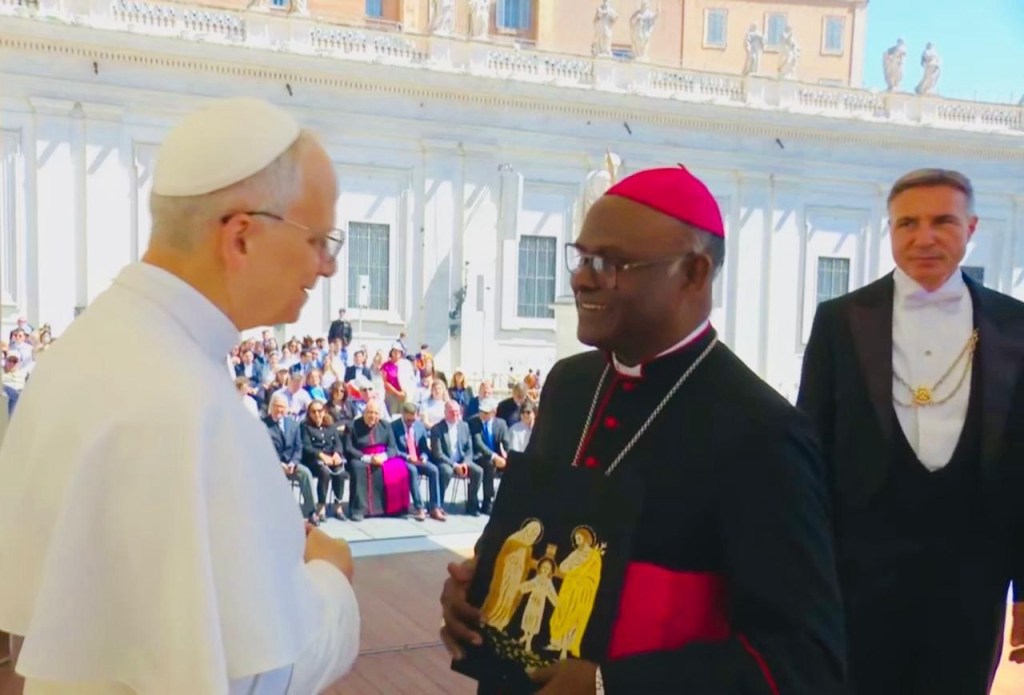
Other Notes: Bishop Ponnumuthan is also an author of spiritual books and continues to inspire through daily Scripture verses shared for reflections (as seen in ministries like Rise & Inspire). In 2025, he met Pope Francis during a general audience in Rome.
He resides at the Bishop’s House in Punalur, Kerala, and remains actively involved in the Kerala Catholic Bishops’ Council (KCBC) and broader Indian Catholic Church activities.
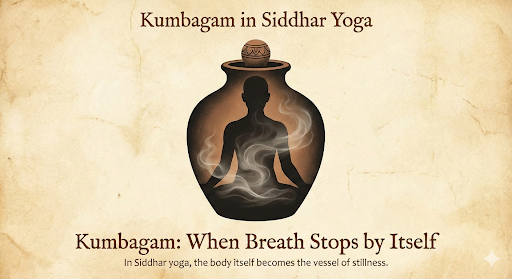
What Is Kumbagam According to Siddhars—and Why Is It Not Just Breath Holding?
What if the most advanced breath science in yoga was never meant to be practiced—but understood?
Tamil Siddhars warned that forcing silence destroys the very stillness seekers chase. Hidden inside Tirumantiram verses and strange metaphors lies a precise inner science of breath, body, and awareness—revealed only when effort ends.
Kumbagam, Kevala Kumbagam, and the Hidden Science of Siddhar Yoga
A Journey into Breath, Body, and Deathless Awareness
Introduction: Why Siddhars Spoke in Riddles
The Tamil Siddhars were not merely mystics or poets. They were scientists of life, explorers of breath, body, and consciousness. Their teachings—especially in texts like the Tirumantiram—are deliberately cryptic. Not because they wished to confuse, but because the knowledge they guarded could heal or harm, depending on the maturity of the seeker.
At the heart of Siddhar wisdom lies one subtle truth:
Who understands the breath, understands life.
This blog explores the Siddhar science of Pranayama, Kumbagam, Kevala Kumbagam, their relationship with Kundalini, Kayakalpa, and why Siddhars hid profound truths behind metaphors of madness.
1. Pranayama vs Kumbagam: Method vs Maturity
In modern yoga, breath practices are often grouped together. Siddhars made a clear distinction.
Pranayama (பிராணாயாமம்)
Regulation of breath
A practice
A preparatory discipline
Kumbagam (கும்பகம்)
Suspension of breath
A state
A sign of inner stillness
Pranayama is the road. Kumbagam is the destination.
Pranayama involves conscious effort. Kumbagam arises when effort dissolves.
2. Kevala Kumbagam: When Breath Stops by Itself
Kevala Kumbagam is the crown of Siddhar yoga. It is not practiced or forced.
The Natural Stages (Theory Only)
Breath Awareness Breath is observed, not controlled.
Breath Refinement Breath becomes subtle, silent, and slow.
Foundational Siddhar scripture detailing the science of breath (prāṇa), kumbagam, body–consciousness unity, liberation (moksha), and inner silence. Primary source for Siddhar understanding of natural breath suspension and non-forced yogic states.
Tirumantiram.
Thirumoolar. Thirumantiram.
Tamil text with English translation by Dr. B. Natarajan. Archive.org.
Classical exposition of prāṇāyāma and Kevala Kumbhaka, useful for comparative analysis between Siddhar natural stillness and method-based Haṭha systems.
Hatha Yoga Pradipika.
Svātmārāma. Haṭha Yoga Pradīpikā, Chapter on Prāṇāyāma.
Used for comparative purposes to highlight the contrast between Siddhar body–breath-centric yoga and Patanjali’s mind-discipline-oriented system.
Notes on Usage
✔️Primary reliance is placed on Tirumantiram and Bogar 7000 for Siddhar doctrine.
✔️Haṭha Yoga Pradīpikā is cited comparatively, not as a Siddhar authority.
✔️Wikipedia entries are used only for contextual framing, not doctrinal conclusions.
✔️All sources are open-access, reputable, and suitable for academic citation.
Concluding Scholarly Note
Together, these sources substantiate the article’s core claim that Siddhar Kumbagam is an emergent state of realised stillness, not a mechanical act of breath control. The bibliography deliberately prioritises primary Siddhar texts, employs classical yoga works only for contrast, and avoids speculative or practice-driven modern manuals—remaining faithful to the Siddhar warning:
Quiet year-end moments—early mornings, old drafts, familiar routines, and memories of people and paths that shaped who I’ve become.
As December comes to a close, nostalgia often appears quietly—through familiar routines, unexpected memories, and moments of stillness. This reflection explores why the year’s end makes us look back, and how nostalgia helps us understand the present more deeply.
What Makes You Feel Nostalgic?
Dear Friend,
As the year slowly comes to an end, you might notice nostalgia quietly finding its way to you.
It doesn’t rush in.
It doesn’t demand attention.
It simply sits beside you—often when the noise fades and the calendar is about to turn.
You begin to think about small things. Ordinary moments you never imagined would stay with you this long.
Early mornings when the world felt calm.
Old notes, drafts, or memories you stumble upon unexpectedly.
Times when doing something you loved felt lighter, simpler, and free of expectations.
You think about who you were back then.
What you worried about.
What you were hopeful for.
What you didn’t yet know would change.
Some plans worked out. Some quietly took a different path. And now, looking back, you realize that both were necessary.
Faces appear in your thoughts too.
People who stayed.
People who drifted away.
People who were part of a chapter, even if they weren’t meant to stay for the whole story.
Nostalgia doesn’t ask you to judge any of it. It only asks you to remember.
You slowly understand that nostalgia isn’t about wanting to go back. It’s about acknowledging where you’ve been. It’s about seeing your growth—especially the kind that happened quietly, without applause.
As this year closes, nostalgia doesn’t make you heavy. It grounds you. It reminds you to pause, to notice the present, to treat this moment gently—because one day, even this will become a memory.
So tonight, you let nostalgia stay for a while.
Not to pull you backward,
but to help you step forward with awareness, gratitude, and a softer heart.
With you, as the year turns.
As midnight arrives, you carry the past with gratitude and step into the new year with quiet hope.
You are standing at the edge of a new year, and the path ahead is unclear. The familiar is behind you. The future feels uncertain. In this exact moment, God has something to say to you, and it is not what you might expect. He does not offer you comfort. He offers you a command. Be strong and very courageous. But here is what makes this different from every other motivational message you will hear this week: He is not asking you to find courage within yourself. He is calling you to receive it from Him.
I’ve written a pastoral reflection on Joshua 1:7 the closing day of 2025. The reflection integratestogether:
– The context of Joshua’s moment of transition, mirroring readers’ own threshold into a new year
– Deep spiritual insights about courage rooted in obedience rather than self-confidence
– Practical wisdom about staying true to God’s Word amid life’s pressures
– Pastoral warmth and encouragement for facing the unknown future
– A hopeful, grace-filled welcome to the new year
Daily Biblical Reflection – Verse for Today (31 December 2025)
Forwarded by Rt. Rev. Dr. Selvister Ponnumuthan | Reflection by Johnbritto Kurusumuthu.
“Only be strong and very courageous, being careful to act in accordance with all the law that my servant Moses commanded you; do not turn from it to the right hand or to the left, so that you may be successful wherever you go.”
Joshua 1:7
Dear Brothers and Sisters in Christ,
As we stand on the threshold between years, at this sacred moment when one chapter closes and another awaits to be written, God speaks to us through the words He once spoke to Joshua. How fitting that on this final day of 2025, we receive not a gentle whisper but a clarion call to courage.
Joshua stood where you stand now, facing an unknown future. Moses, his mentor and guide, had died. The familiar was behind him; the unfamiliar stretched ahead. The Promised Land lay before him, not as a gift wrapped and ready, but as a journey requiring every ounce of faith he could muster. In that moment of transition, God did not say, “Take it easy, Joshua” or “Don’t worry, it will all work out.” Instead, He said, “Be strong and very courageous.”
Notice the emphasis: not just strong, but very courageous. God knew that what lay ahead would demand more than Joshua thought he had. And beloved, as you prepare to step into 2026, God knows what lies ahead for you too. He knows the challenges that will test your resolve, the decisions that will require wisdom beyond your own, the moments when you will want to turn aside, to compromise, to take the easier path.
But here is the beautiful truth woven into this command: God never calls us to courage without providing the strength to sustain it. The courage God asks of us is not a reckless bravado or a denial of our fears. It is a settled confidence that He who calls us will also equip us. It is the courage to obey when obedience is costly, to remain faithful when faithfulness feels foolish, to keep walking the narrow path when wider roads beckon.
“Being careful to act in accordance with all the law that my servant Moses commanded you” – this is not legalism but love. God was reminding Joshua that true success, lasting success, comes not from clever strategies or impressive strength, but from staying aligned with His Word. In a world that constantly offers us shortcuts and alternative paths, God’s instruction remains the same: do not turn from it to the right hand or to the left.
How easily we are tempted to veer off course. Sometimes it is a dramatic departure, but more often it is a subtle drift, a small compromise here, a little accommodation there. We tell ourselves we are being practical, realistic, and compassionate. But God knows that every degree we turn away from His truth eventually takes us to a destination we never intended to reach.
As this year draws to a close, take a moment to examine your path. Have you stayed true to God’s Word, or have you drifted? Have you allowed the pressures of the world, the opinions of others, or the desires of your own heart to pull you away from the course God set before you? There is no condemnation in this honest assessment, only the opportunity for course correction. The new year offers us a fresh start, but not a blank slate. We carry forward the lessons learned, the character forged, and the grace received.
The promise attached to this command is profound: “so that you may be successful wherever you go.” God defines success differently than the world does. His success is measured not in achievements that impress others, but in a life that honours Him. It is faithfulness in small things, integrity when no one is watching, love when it costs us something, joy despite circumstances, and peace that passes understanding. This is the success that lasts, the only success that matters when we stand before Him.
As you prepare to welcome 2026, let me offer you this pastoral encouragement: You do not step into this new year alone. The same God who commanded Joshua to be strong and courageous is with you. He has not brought you this far to abandon you now. Every fear you carry, every uncertainty that weighs on your heart, every challenge you anticipate – He knows them all, and He is sufficient for them all.
Make this your resolution: to stay close to His Word, to walk in obedience regardless of the cost, to be strong and very courageous even when you feel weak and afraid. The strength you need is not something you manufacture; it is something you receive as you remain in Him.
To all our dear readers of Rise and Inspire, we extend our warmest greetings for the new year. May 2026 be a year of deeper faith, greater courage, and unwavering commitment to following Christ wherever He leads. May you not turn to the right or to the left, but walk steadily in the path He has set before you. And may you discover that in His presence, you have everything you need to face whatever lies ahead.
The future is unknown to us, but it is not unknown to God. Step forward with confidence, not in yourself, but in the One who goes before you, who walks beside you, and who will never leave you nor forsake you.
Be strong and very courageous, beloved. Your God is with you wherever you go.
In Christ’s love and service,
Johnbritto Kurusumuthu
Rise and Inspire
December 31, 2025
Stepping Forward with God: A Catholic Devotional Reflection on Joshua 1
“Be strong and courageous… for the Lord your God is with you wherever you go.” (Joshua 1:9)
Transitions are holy ground.
The Book of Joshua opens at a moment of profound loss and uncertainty. Moses—the great lawgiver, intercessor, and shepherd of Israel—is gone. A generation shaped by wandering, testing, and waiting now stands at the edge of promise. Joshua 1 invites us into this sacred threshold, where grief meets hope, and where fear is gently but firmly met by God’s promise: “I will be with you.”
For Israel, the crossing of the Jordan is not merely geographical; it is spiritual. It marks the passage from promise remembered to promise fulfilled, from wandering to inheritance. In our own lives, we too stand at such Jordans—after loss, during change, or at moments when God asks us to step forward without full certainty.
God’s Faithfulness Does Not End with a Chapter
The death of Moses does not signal the end of God’s plan. Instead, it reveals a deeper truth: God’s covenant faithfulness transcends individual leaders. The same Lord who spoke from the burning bush now speaks to Joshua with reassurance and clarity.
In Catholic life, this continuity echoes through Sacred Tradition. God’s saving work unfolds across generations—through patriarchs and prophets, apostles and saints—yet always with the same fidelity. What God promises, He fulfils, though often through new servants and new seasons.
Joshua’s commissioning reminds us that God does not abandon His people between chapters. When one voice falls silent, another is raised—not by human ambition, but by divine calling.
Joshua succeeded Moses as leader:
Courage Rooted in Obedience, Not Self-Confidence
Four times in this chapter Joshua is told: “Be strong and courageous.” This repetition reveals that courage is not assumed; it is commanded and cultivated.
Notably, God does not ground Joshua’s courage in military skill or personal resolve. Instead, courage flows from obedience to the Law—from meditating on God’s Word “day and night.” Strength, in the biblical sense, is born from fidelity.
For Catholics, these points us toward a life anchored in Scripture, prayer, and the sacraments. True courage arises not when we trust ourselves more, but when we conform our lives to God’s Word, allowing it to shape our decisions, desires, and direction.
“I Will Be With You”: The Promise of Divine Presence
At the heart of Joshua 1 is a promise that reverberates throughout salvation history:
“As I was with Moses, so I will be with you.”
This assurance anticipates the fullness of Emmanuel—God with us—revealed in Christ and sacramentally present in the Eucharist. The same God who walked with Israel now walks with His Church, especially when the path ahead feels uncertain.
In moments of fear or discouragement, Joshua 1 teaches us to listen again to this promise. God does not merely send us forward; He goes with us.
Inheritance, Rest, and the Journey of Faith
The promised land represents rest after long wandering, yet Scripture reminds us that this rest is not final. As the Letter to the Hebrews later reflects, the true and lasting rest is found in God Himself.
Joshua’s journey becomes a signpost for our own pilgrimage. Each step of obedience draws us closer to the fullness of life God desires for us—a rest not defined by ease, but by communion with Him.
A Prayerful Invitation
Joshua 1 is not only a historical account; it is a living word addressed to every believer standing at the edge of change.
When we face transitions, may we hear God’s voice anew.
When we feel unworthy or afraid, may we remember that courage is a gift, not a requirement.
When the way forward feels unclear, may we trust the promise that never fails:
“Be strong and courageous… for the Lord your God is with you wherever you go.”
FAQs on Joshua Chapter 1 (Catholic Perspective)
1. Why is Joshua 1 important in salvation history?
Joshua 1 marks the transition from Moses to Joshua and from wilderness wandering to the fulfilment of God’s promise. It shows that God’s plan continues even when human leaders change, emphasising divine fidelity rather than human achievement.
2. Why does God repeatedly tell Joshua to “be strong and courageous”?
The command acknowledges Joshua’s fear and responsibility. In Scripture, courage is not self-confidence but trustful obedience rooted in God’s Word. God commands courage because He supplies the grace needed to live it.
3. What does “meditate on the Book of the Law day and night” mean for Catholics today?
It points to a life formed by Scripture, prayer, and obedience. For Catholics, this includes:
✔️ Reading Scripture regularly
✔️ Listening to the Word proclaimed in the liturgy
✔️ Allowing God’s Word to shape conscience and action
Meditation here is not passive reading but living attentiveness to God’s will.
4. How does Joshua 1 relate to Christ and the New Testament?
Joshua leads Israel into the Promised Land; Jesus leads humanity into eternal life. The Letter to the Hebrews teaches that the rest Joshua provided was partial, pointing toward the true rest found in Christ (Hebrews 4:8–9).
5. What does “the Promised Land” symbolise for Christians?
Beyond geography, it represents:
• God’s faithfulness
• Spiritual inheritance
• Growth in holiness
• The journey toward eternal communion with God
It reminds believers that faith involves movement, trust, and obedience.
6. Why are the tribes east of the Jordan mentioned?
Their obligation to help the other tribes highlights communal responsibility and fidelity to promises. In Catholic life, this reflects the Church’s teaching that faith is never lived in isolation—we journey together as one Body.
7. Is Joshua 1 about military conquest?
While historically involving conquest, the chapter’s theological focus is on God’s presence and obedience, not human violence. The Church reads this text spiritually, seeing it as a call to interior courage and faithfulness, not physical warfare.
8. How does Joshua 1 speak to moments of change or loss today?
Joshua 1 reassures believers that God remains present during transitions—after loss, leadership change, illness, or uncertainty. God’s promise, “I will be with you,” is stronger than fear.
9. What does this chapter teach about leadership?
Biblical leadership is grounded in:
• Obedience to God
• Humility
• Responsibility toward the community
Joshua is successful not because he replaces Moses, but because he walks faithfully with God.
10. What is the central spiritual message of Joshua 1?
God calls His people to move forward in faith, anchored in His Word, sustained by His presence, and strengthened by courage that comes from obedience—not fearlessness.
Discussion Questions for Groups or Personal Reflection
1. What “Jordan River” am I standing before right now in my life?
2. Where do I struggle most with fear when God invites me to move forward?
3. How do I currently “meditate” on God’s Word? What could deepen this practice?
4. In what ways do I rely more on my own strength than on God’s presence?
5. How does Joshua’s leadership challenge modern ideas of success and power?
6. What promises of God do I find hardest to trust during times of transition?
7. How does this chapter shape my understanding of obedience as a path to freedom?
8. Where is God asking me to be courageous—not aggressively, but faithfully?
9. How can my faith community support one another in “crossing the Jordan” together?
10. What would it mean for me to truly believe: “The Lord my God is with me wherever I go”?
Theological and Interpretive Soundness: This reflection faithfully captures the context of Joshua 1: God’s charge to Joshua after Moses’ death, emphasising courage rooted in obedience to God’s law rather than self-reliance. It draws appropriate parallels to transitioning into a new year, stresses faithfulness over worldly success, warns against subtle compromise, and ends with encouragement grounded in God’s presence. This faithfully reflects orthodox Christian interpretations of the passage.
Authorship and Source: Johnbritto Kurusumuthu is the author behind the “Rise & Inspire” devotional series (hosted at riseandinspire.co.in). His writings consistently feature daily biblical reflections inspired by verses shared (“forwarded”) by Rt. Rev. Dr. Selvister Ponnumuthan, Bishop of Punalur, Kerala.
The relationships that have the most positive impact on me are the steady, reliable ones where I feel genuinely seen without having to perform. They include people who lovingly encourage me to grow, who celebrate my small wins, and who hold me accountable to my own values. Most importantly, I’m learning that the foundation of all positive external relationships is the one I have with myself—marked by compassion, healthy boundaries, and self-acceptance. These connections aren’t always comfortable, but they help me evolve into my best self.
You can survive without many things, but you cannot thrive without a genuine connection. The question is not whether relationships matter. The question is which ones deserve your energy, your trust, and your time. Not every connection that feels good is actually good for you.
The Quiet Strength of Steady Relationships
When I encounter this prompt for the third year running—“What relationships have a positive impact on you?”—my mind doesn’t immediately rush to list names or categories. Instead, I find myself thinking about constancy.
The relationships that have the most positive impact on me aren’t always the loudest or most dramatic. They’re the ones marked by quiet reliability. The friend who checks in without needing a reason. The family member whose presence feels like coming home. The colleague who sees potential in me even when I doubt myself.
The Gift of Being Seen
What makes a relationship truly positive isn’t just support during a crisis—it’s being genuinely seen during the ordinary moments. It’s the person who notices when I’m off, even when I’m smiling. The one who celebrates my small wins as enthusiastically as the big ones. The relationship where I don’t have to perform or edit myself.
These connections create a mirror that reflects back not who I’m trying to be, but who I actually am—and somehow, that reflection is kind.
Growth Through Challenge
Interestingly, the most positive relationships aren’t always the most comfortable. Some of the people who’ve impacted me most are those who lovingly challenge me. They ask the questions I avoid. They hold me accountable to my own values when I’m tempted to compromise. They refuse to let me shrink or settle.
This kind of positive impact doesn’t always feel good in the moment, but it’s essential. These are the relationships that help me evolve rather than stagnate.
The Relationship with Myself
Three years into reflecting on this prompt, I’m increasingly aware that the foundation of all positive external relationships is the one I have with myself. When I treat myself with compassion, set healthy boundaries, and honour my own needs, I show up differently in every other relationship.
The way I speak to myself sets the tone for how I allow others to speak to me. The grace I extend to my own imperfections makes me more patient with others. Learning to enjoy my own company makes me less desperate for validation from others.
Relationships as Living Things
What strikes me most this year is that positive relationships aren’t static achievements—they’re living, evolving connections that require attention and intention. The relationship that sustained me last year might need different things this year. What I needed from my friendships in my twenties isn’t what I need now.
The most positive relationships are the ones where both people are willing to grow together, to have honest conversations about changing needs, to forgive misunderstandings, and to show up even when it’s inconvenient.
A Practice of Gratitude
Writing this today, I’m filled with gratitude for the web of relationships that holds me. The parent whose wisdom I’m only now beginning to fully appreciate. The friends who’ve witnessed my evolution and still choose me. The partner who sees my darkness and doesn’t flinch. The mentors who invested in me when I had nothing to offer in return.
And perhaps most surprisingly, I’m grateful for the relationship I’m slowly building with myself—one marked by increasing kindness, patience, and acceptance.
These relationships don’t just have a positive impact on me. They are the very fabric of a meaningful life.
This is my third time exploring this prompt. You can read my previous reflections here:
Some prayers try to impress God with eloquence. Others attempt to negotiate or bargain. But the prayer in Psalm 30:10 does neither. Instead, it cuts straight to the heart of what every soul truly needs, wrapped in a single verse that could change how you approach every challenge ahead.
Daily Biblical Reflection
December 30, 2025
Psalm 30:10
“Hear, O Lord, and be gracious to me! O Lord, be my helper!”
As we stand on the threshold of a new year, the psalmist’s cry echoes across the centuries with remarkable relevance to our own hearts. This verse captures one of the most honest and human postures we can take before God: the acknowledgment of our deep need for His presence, His grace, and His help.
The beauty of this prayer lies in its simplicity and vulnerability. The psalmist doesn’t approach God with elaborate arguments or self-justification. Instead, he comes with three essential requests that reveal the core of a living relationship with the Almighty.
First, “Hear, O Lord.” How often do we wonder if our prayers rise higher than the ceiling? The psalmist begins by asking for God’s attention, not because God is distant or distracted, but because we need the assurance that we are heard. In a world filled with noise and distraction, where human voices often drown each other out, what comfort it brings to know that the Creator of the universe inclines His ear to listen to us. Our prayers matter. Our concerns are never too small, our troubles never too insignificant for God’s attention.
Second, “be gracious to me.” Here the psalmist acknowledges something profound: we cannot stand before God on the basis of our merit alone. We need grace. Grace is God’s unmerited favour, His kindness poured out upon us not because we’ve earned it, but because of who He is. As we reflect on the year behind us, we can see countless moments where God’s grace sustained us through difficulties we didn’t think we could bear, provided for needs we couldn’t meet ourselves, and forgave us when we stumbled and fell.
Finally, “O Lord, be my helper.” This is the prayer of practical dependence. The psalmist doesn’t ask God to do everything for him, but to be his helper, his partner in facing life’s challenges. There’s a beautiful balance here between human responsibility and divine assistance. We’re called to act, to move forward, to engage with life, but never alone. God walks beside us as our helper, strengthening our hands for the work before us, steadying our steps on uncertain paths.
As we prepare to step into a new year, this verse offers us a perfect prayer template. We may not know what joys or trials await us in the coming days, but we can face them with confidence when we approach God with this threefold request: asking Him to hear us, to extend His grace to us, and to be our ever-present helper.
Let this be our prayer today and in the days ahead: Lord, hear our hearts. Pour out Your grace upon our lives. Be our helper in every moment, every challenge, every joy. We cannot do this alone, nor were we meant to. You are with us, and that makes all the difference.
May the Lord bless you and keep you as you journey forward in faith.
Psalm 30 — A Catholic Devotional Reflection
From Mourning to Dancing
Psalm 30 invites us into the sacred rhythm of the spiritual life: descent and deliverance, silence and song, night and morning. Prayed within the Church, this psalm becomes not only David’s testimony but our own confession of hope—that God does not abandon those who cry to Him.
“I will extol you, O Lord, for you have drawn me up.”
The psalm begins with gratitude, not explanation. David does not analyze his suffering; he praises the One who lifted him. In Catholic prayer, thanksgiving is itself an act of faith—an acknowledgment that grace precedes understanding. God’s saving work often becomes clearest after the rescue, when we look back and see how we were upheld.
“I cried to you for help, and you have healed me.”
Here the psalm touches the heart of Christian prayer: a cry born of trust. Healing in Scripture is never merely physical. It is restoration of communion—being gathered back from isolation, fear, or despair. When we pray this psalm, we bring before the Lord our wounds, believing that no cry offered in humility is wasted.
“For his anger is but for a moment, and his favor is for a lifetime.”
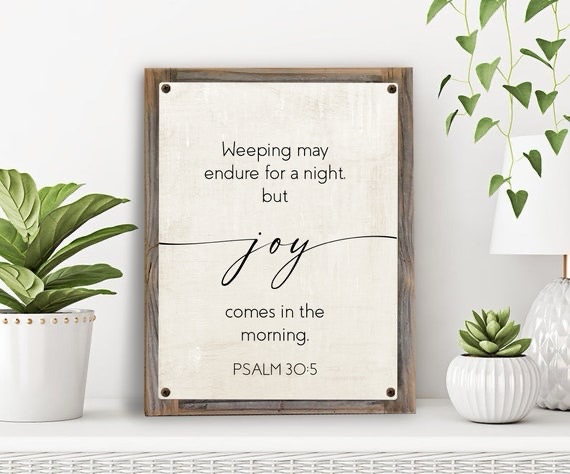
This line reassures the believer who fears God’s displeasure. The Church teaches us to understand divine discipline not as rejection, but as purifying love. God allows the night, but He does not abandon us to it. The promise remains firm: joy comes with the morning. This is the hope that sustains us through trials, Lent, and the long waits of faith.
“I said in my prosperity, ‘I shall never be moved.’”
David’s honesty is striking. Prosperity can quietly dull our dependence on God. Psalm 30 reminds us that confidence rooted in comfort is fragile. When God “hides His face,” it is not cruelty but mercy—calling us back to humility, to prayer, to the truth that our strength is always received, never earned.
“Hear, O Lord, and be gracious to me! O Lord, be my helper!”
At the center of the psalm stands this simple plea. Catholic spirituality treasures such prayers—short, sincere, and total in trust. This is the prayer of the poor in spirit, echoed in the Church’s liturgy and in the quiet of personal prayer. It teaches us that grace is not claimed but asked for.
“You have turned my mourning into dancing.”
God’s answer is transformation. Sackcloth becomes gladness; lament becomes praise. The Church hears in these words an echo of the Paschal Mystery: death is not the final word. In Christ, sorrow is not erased but redeemed. Our wounds become places where God’s glory is sung.
“O Lord my God, I will give thanks to you forever!”
The psalm ends with a vow—not of success or ease, but of permanent gratitude. To live is to praise. To be restored is to testify. The believer’s life becomes a living hymn, offered day by day, even when the memory of the night remains.
Illustrations of David praising God, capturing the psalm’s spirit of joyful thanksgiving.
Prayer
Lord our God,
You lift us when we fall,
heal us when we cry,
and turn our mourning into joy.
Teach us to trust You in the night
and to praise You in the morning.
May our lives never be silent,
but always proclaim Your mercy.
Amen.
Frequently Asked Questions (FAQs)
1. Is Psalm 30 a psalm of lament or praise?
Psalm 30 begins as a personal lament but concludes as a hymn of thanksgiving. It reflects the Catholic understanding that suffering, when entrusted to God, is transformed into praise.
2. What does “Sheol” or “the pit” mean in Catholic interpretation?
Sheol symbolizes death, separation, or profound distress. In Christian theology, it also points forward to Christ’s victory over death and the hope of resurrection.
3. How does Psalm 30 relate to the Paschal Mystery?
The movement from mourning to dancing mirrors Christ’s passage from death to resurrection. The Church often hears this psalm as an echo of Easter hope.
4. Why does the psalm speak of God’s anger?
God’s “anger” refers to divine discipline, not rejection. It is corrective and temporary, ordered toward restoration and deeper communion.
5. How can Psalm 30 be prayed today?
It is especially meaningful in times of illness, recovery, repentance, thanksgiving after hardship, and during transitions from suffering to healing.
Artistic representations of key verses, such as “joy comes in the morning” from Psalm 30:5, emphasise the theme of transformation from sorrow to gladness.
Catechism of the Catholic Church – Cross References
Prayer as a Cry of Trust
“In the battle of prayer, we must face in ourselves erroneous notions of prayer… humble trust perseveres.”
(CCC 2728) — echoed in Psalm 30:10, “Hear, O Lord, and be gracious to me!”
Thanksgiving as Essential Prayer
“Every event and need can become an offering of thanksgiving.”
(CCC 2638) — reflected in David’s vow: “I will give thanks to you forever.”
Suffering and Purification
“By His passion and death on the cross Christ has given a new meaning to suffering.”
(CCC 1505) — aligned with the psalm’s movement from distress to joy.
Life Ordered Toward Praise
“The glory of God is man fully alive.”
(CCC 294) — resonating with Psalm 30’s insistence that life exists so God may be praised.
Liturgical and Devotional Connections
Liturgy of the Hours
Psalm 30 appears in the Office of Readings and is frequently used as a canticle of thanksgiving in communal prayer.
Easter Vigil / Easter Season
Its themes of restoration and joy after darkness make it especially appropriate during Easter, when the Church proclaims victory over death.
Anointing of the Sick & Healing Services
The psalm’s language of crying out, healing, and restoration aligns closely with prayers for the sick and those recovering from illness.
Dedication of Churches & Altars
Because of its superscription (“dedication of the house”), Psalm 30 is traditionally associated with church dedications and renewal celebrations.
Concluding Insight
Psalm 30 teaches the believer not only how to suffer, but how to remember—to look back on the night and recognize the faithfulness of God who brings the morning. In the Church’s prayer, it becomes a testimony that every life rescued by grace is meant to become a song of praise.
Verse for Today (30 December 2025) Today’s scripture shared with blessings by His Excellency, Rt. Rev. Dr. Selvister Ponnumuthan, enriched with reflective insights by Johnbritto Kurusumuthu.
If I started a sports team, it would be called the Phoenix Collective with colours of deep crimson and burnished gold. The mascot would be a phoenix with wings spread wide in that moment just after takeoff, when effort becomes flight. These colours and symbols represent resilience, transformation, and the courage to rise together from challenges. The name “Collective” emphasises that we rise as a team, not as individuals, and that every season is a chance to begin again and burn brighter.
The colours you choose and the mascot you select for a sports team are never just aesthetic decisions. They are declarations of identity, statements of values, and promises about the kind of story you want to tell. When faced with this question for the third time, I discovered that my answer had completely transformed, reflecting not just changing tastes but a deeper shift in what I believe teams and symbols should represent. This is the story of the Phoenix Collective, and why the team you would build reveals more about you than you might think.
The Phoenix Rising:
My Sports Team’s Colours and Spirit
December 29, 2025
Another year, another chance to dream up the perfect sports team. WordPress has handed me this prompt for the third time now, and honestly, I’m glad. Each time I approach it, I discover something new about what draws me to sports, to symbols, to the stories we tell through colour and mascot.
This time, I’m going with a phoenix.
Not because it’s trendy or because I haven’t thought this through. But because after everything the world has experienced in recent years, after personal challenges and collective upheavals, the idea of rising from ashes feels more relevant than ever. A phoenix doesn’t just survive – it transforms. It takes what was broken and makes it beautiful again.
The colours would be deep crimson and burnished gold. Not the bright, cheerful red you see on so many teams, but something richer, darker – the colour of embers still glowing with heat. The gold wouldn’t be flashy yellow but the warm, ancient gold you find in old temples and treasured heirlooms. These colours would tell a story of resilience, of something precious earned through fire.
I imagine the logo: a phoenix with wings spread wide, not in aggression but in that moment just after takeoff, when effort becomes flight. The design would be clean, modern, with flowing lines that suggest both strength and grace. On jerseys, it would look elegant. On banners, it would be unmistakable.
The team name? The Phoenix Collective. Not “Flames” or “Fire” or any of the obvious choices. “Collective” because sports, at their best, remind us that we rise together. That individual talent means little without the team, without the support system, without the community that believes in you when you’re still smouldering in the ashes.
I’ve written about team colours and mascots before – you can see my earlier takes on this very prompt from past years. But perspectives change. What seemed perfect in 2023 or 2024 might not resonate the same way today. That’s the beauty of these returning prompts. They’re like revisiting an old friend and discovering new layers to the conversation.
So yes, my sports team would be called the Phoenix Collective, wearing crimson and gold, representing not just winning but the courage to begin again. Every season would be a rebirth. Every game, a chance to prove that what doesn’t break us makes our fire burn brighter.