Can One Bible Verse Really Give You the Courage to Speak Truth When Everyone Else Is Silent?

Every day you wake up, you face a choice between convenience and conviction. Between blending in and standing out. Between silence and speaking up. Most of us choose the easier path without realising we are choosing it. But tucked away in ancient scripture is a verse that disrupts our calculus of safety and redefines what it means to fight with heaven on your side.

You have probably felt it before. That moment when you know what is true, what is right, what needs to be said, but the words catch in your throat because the cost seems too high. What if I told you that the reason truth feels so heavy on your shoulders is because you were never meant to carry it alone? One verse changes everything about how we understand courage.

If you have ever felt your voice shake when speaking truth, if you have ever chosen silence because courage seemed impossible, if you have ever wondered whether standing firm is worth the price, then this reflection is for you. Because buried in an ancient text is a promise so audacious, so empowering, that it has the power to transform how you approach every moment of moral choice for the rest of your life.​​​​​​​​​​​​​​​​

Daily Biblical Reflection

Verse for Today (10th January 2026)

Today’s Scripture, prayerfully shared with blessings from His Excellency, Rt—Rev. Dr Selvister Ponnumuthan, and enriched with reflective insights by Johnbritto Kurusumuthu.

Fight to the death for truth, and the Lord God will fight for you.”

Ecclesiasticus 4:28

Today the 10th day of 2026

This is the 10th reflection on Rise&Inspire in 2026 under the category/series: Wake-up calls

Dear friends in Christ,

What a powerful invitation we receive today from the Book of Ecclesiasticus. In a world where truth is often negotiated, diluted, or abandoned for convenience, these ancient words ring out with urgent clarity: “Fight to the death for truth, and the Lord God will fight for you.”

Notice the remarkable promise embedded in this verse. We are not called to fight alone. The God who is Truth itself becomes our champion, our defender, our strength when we take our stand for what is right and true. This is not a call to human aggression or pride, but to holy courage rooted in divine partnership.

But what does it mean to “fight to the death” for truth? It means refusing to compromise our integrity when pressured by the crowd. It means speaking up when silence would be easier. It means living authentically according to God’s Word even when the cost is high. The martyrs throughout Christian history understood this call literally, but for most of us, it means a daily dying to self, a thousand small deaths to our comfort, reputation, and ease.

In our age of information overload, where facts are disputed and reality itself seems negotiable, this verse reminds us that truth is not relative. God’s truth stands firm. It demands our allegiance, our defence, our very lives. Yet how often do we remain silent when truth is attacked? How often do we bend with the cultural winds rather than stand firm on the solid rock of God’s eternal Word?

The beauty of this promise is that when we fight for truth, we discover we are not fighting in our own strength. The Lord God himself enters the battle on our behalf. What liberation this brings. We need not fear the outcome when the Almighty is our ally. We need not calculate the odds when the Creator of heaven and earth has pledged to fight alongside us.

This morning, as we begin this 10th day of the new year, let us examine our hearts. Where have we been silent when we should have spoken? Where have we compromised when we should have stood firm? Where have we chosen comfort over conviction?

The call today is clear: be people of truth. Live truthfully. Speak truthfully. Love truthfully. And when the cost of truth seems too high, remember the divine promise: the Lord God will fight for you.

May we have the courage to answer this wake-up call with renewed commitment to truth, knowing that we never stand alone in the battle.

In Christ’s truth and love,

Johnbritto Kurusumuthu
Catechism-Style Explainer: 

The Book of Sirach (Ecclesiasticus)

1. What is the Book of Sirach?

The Book of Sirach, also called Ecclesiasticus, is a book of biblical wisdom that teaches how to live a faithful, moral, and God-centered life. It belongs to the Deuterocanonical Scriptures, fully accepted by the Catholic and Orthodox Churches as inspired by the Holy Spirit.

2. Who wrote Sirach?

Sirach was written by Jesus ben Sira, a Jewish scribe and teacher living in Jerusalem in the early 2nd century BCE. Unlike most biblical authors, he names himself (Sirach 50:27), presenting his work as the fruit of prayer, study, and lived experience rooted in the Law of Moses.

3. When and where was it written?

Originally composed in Hebrew around 180–175 BCE

Written in Jerusalem, during the time of the Second Temple

Translated into Greek by the author’s grandson in Egypt around 132 BCE, so that Greek-speaking Jews could learn God’s wisdom

This Greek translation became part of the Septuagint, the Bible widely used by the early Church.

4. Why is Sirach included in the Catholic Bible?

The Church received Sirach as Sacred Scripture through:

Apostolic usage (it was read and cited in early Christian communities)

Church Fathers, who quoted it as authoritative

Ecclesial councils (Hippo, Carthage, Florence, Trent), which affirmed it as canonical

Because of this living Tradition, Sirach is proclaimed in the liturgy and used for teaching and spiritual formation.

5. What does Sirach teach about wisdom?

Sirach teaches that true wisdom comes from God and is lived out through:

✔️Fear of the Lord

✔️Obedience to the Law

✔️Humility and self-discipline

✔️Justice, charity, and care for the poor

Wisdom is not merely knowledge, but a way of life shaped by reverence for God.

6. How does Sirach guide moral living?

Sirach gives practical instruction on:

• Speech and silence

• Friendship and family life

• Wealth, poverty, and generosity

• Worship, prayer, and reverence for God

It shows that everyday choices—words spoken, actions taken, attitudes held—are acts of faith.

7. What does Sirach teach about courage and truth?

Sirach calls believers to moral courage, especially in times of pressure or fear.

A key verse states:

“Fight to the death for truth, and the Lord God will fight for you.” (Sirach 4:28)

This teaches that faithfulness to truth may demand sacrifice, but God stands with those who remain loyal to Him.

8. How does Sirach prepare for the New Testament?

Sirach serves as a bridge between the Old and New Testaments by:

Emphasizing humility, mercy, and almsgiving

Upholding interior righteousness, not mere outward observance

Shaping moral themes later echoed in the teachings of Jesus and the Apostles

It reflects a faith that trusts God’s justice and providence, even before the coming of Christ.

9. Why is Sirach important for Christians today?

For Catholics and Orthodox believers, Sirach:

Strengthens conscience in a morally complex world

Encourages fidelity amid cultural pressure

Forms character rooted in prayer, obedience, and trust in God

Its wisdom reminds the faithful that holiness is lived daily, through faithfulness in ordinary life.

10. What is the central message of Sirach?

Wisdom is friendship with God.

Those who fear the Lord, love truth, practice justice, and persevere in faith will find that God Himself becomes their defender and guide.

2025 Johnbritto Kurusumuthu | Rise & Inspire Devotional Series

Word count:1285

Can a Life Mission Stay Relevant as We Grow and Change?

Daily writing prompt
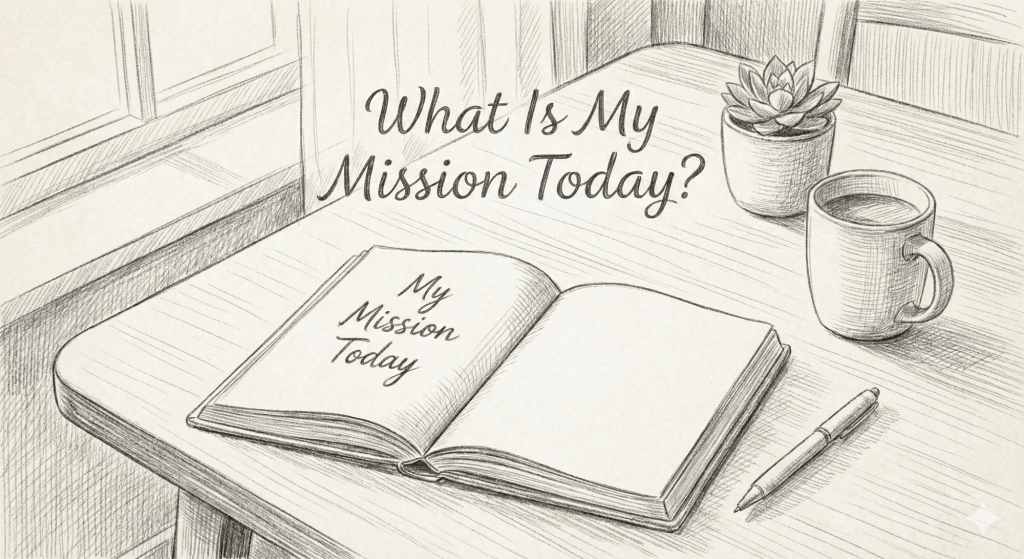
What is your mission?

My mission is to live and write with purpose—creating a calm, reflective space where values, faith, and thoughtful living quietly guide growth, clarity, and meaning.

This question has returned, but I have not remained the same. A mission is not a slogan we repeat; it is a responsibility we grow into. This reflection is not about defining purpose once more, but about recognising how it has quietly matured with time.

What Is My Mission—Today?

My mission has not changed in essence, but it has matured in clarity.

If you asked me this question years ago, I might have answered with enthusiasm.

If you asked me last year, I would have answered with conviction.

Today, I answer it with responsibility.

My mission is not merely to write, inspire, or motivate.

It is to create a space where reflection is possible, where hurried minds slow down, and where everyday life is gently brought back to meaning.

I exist online not to be loud, viral, or performative — but to be steady.

To remind people that:

growth is often quiet,

faith deepens through questioning,

positivity is strongest when it is honest,

and purpose unfolds through consistency, not applause.

Through Rise&Inspire, my mission is to:

encourage thoughtful living,

offer words that calm rather than provoke,

blend faith, reason, and lived experience,

and leave readers a little more grounded than when they arrived.

I do not claim to have all the answers.

But I am committed to asking better questions — and asking them with sincerity.

This mission also includes discipline:

✔️ showing up even when engagement is low,

✔️ writing even when certainty is absent,

✔️ and choosing depth over trend.

If this space helps even one reader look inward, reflect, or rediscover hope — then the mission is alive.

And perhaps that is the most honest definition of mission:

To serve faithfully, evolve humbly, and remain aligned with what truly matters — again and again.

Looking Back: 

Earlier Reflections on the Same Mission

A gentle closing note:

A repeated question is not an invitation to repeat an answer — but to notice how far we’ve come.

A mission statement written a year ago reflects:

🏄 who you were,

🏄‍♀️ what you believed then,

🏄‍♀️ and how you understood your purpose at that point in your journey.

A repeat prompt offers something rare:

👉 a built-in mirror across time.

On Rise&Inspire, our readers aren’t merely consuming content — they’re witnessing continuity, growth, and integrity. Writing again does not dilute the earlier posts; it completes them.

Think of this not as repetition, but as mission in motion.

© 2025 Rise&Inspire

Reflections that grow with time.

Website: Home | Blog | About Us | Contact| Resources

Word Count:474

Why Is Spiritual Readiness Essential for Modern Christians?

You set your alarm. You check your phone. You start your day. But when was the last time you truly prepared your mind for what matters most? Peter’s ancient words cut through our modern fog with startling clarity: spiritual life demands more than passive existence. It requires action, discipline, and a hope so radical it reorients everything. Are you ready to wake up?

There’s a difference between being religiously busy and being spiritually awake. One fills your calendar. The other transforms your soul. Today’s verse from 1 Peter isn’t about adding more tasks to your to-do list. It’s about clearing the clutter, sharpening your focus, and anchoring your entire existence in the one thing that will never fail you. The question is: are you listening?

Peter’s words in 1 Peter 1:13 aren’t a gentle suggestion—they’re a wake-up call for the drowsy soul. Prepare. Discipline. Hope. Three verbs that could transform your entire year.

Daily Biblical Reflection

9th January 2026

The Verse for Today (9th January 2026) was forwarded to me this morning by His Excellency, Rt. Rev. Dr. Selvister Ponnumuthan, and it inspired me to write these reflections.

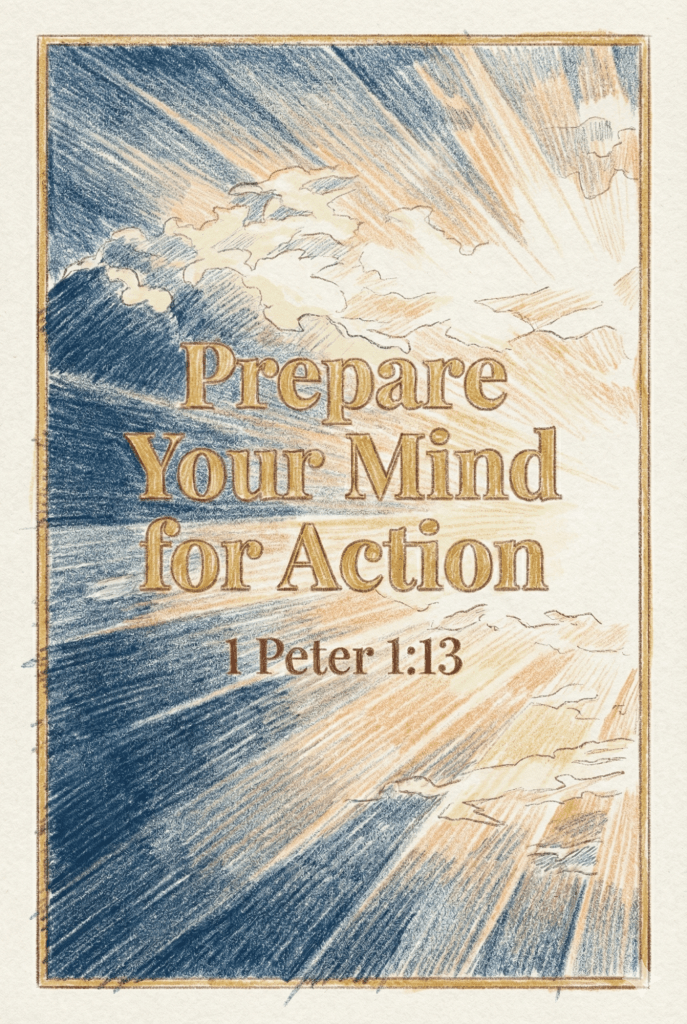
“Therefore prepare your minds for action; discipline yourselves; set all your hope on the grace that Jesus Christ will bring you when he is revealed.”

1 Peter 1:13

Today the 9th day of 2026

This is the 9th reflection on Rise&Inspire in 2026 under the category/series: Wake-up calls

Beloved in Christ,

As we stand at the threshold of this new day, Peter’s words ring out like a clarion call to the sleepy soul: prepare, discipline, hope. These are not passive virtues but active responses to the grace that pursues us relentlessly.

To prepare our minds for action is to refuse the lethargy that so easily settles over our spiritual lives. Think of a runner at the starting blocks, muscles tensed, eyes fixed on the finish line. This is the posture Peter invites us to adopt—not one of anxious striving, but of holy readiness. Our minds, so easily cluttered with trivialities and worries, must be cleared and focused on what truly matters: the coming revelation of Jesus Christ.

The call to discipline ourselves is not about harsh self-punishment or joyless restriction. Rather, it is the loving work of ordering our lives around what we treasure most. A gardener disciplines a vine not to harm it but to help it bear fruit. So too, we discipline our thoughts, habits, and desires so that we might grow toward the light of Christ. In an age of endless distraction and instant gratification, this discipline becomes a radical act of devotion.

But notice where Peter anchors all of this: in hope. Not in our own strength, not in our perfect performance, but in the grace that Jesus Christ will bring when he is revealed. This is the heartbeat of Christian living—we work, we prepare, we discipline ourselves, all while resting in the astonishing reality that our salvation is a gift, not an achievement. The grace is coming. The grace is already here. The grace will be fully revealed when Christ appears in glory.

What does this mean for us today, on this ninth day of a new year? It means we do not drift through our days as spiritual sleepwalkers. It means we intentionally create space for God—in prayer, in Scripture, in service, in silence. It means we examine our lives honestly: What habits need to be cultivated? What distractions need to be pruned away? Where have we placed our hope—in our own efforts or in Christ’s unfailing grace?

The Christian life is not a casual stroll but a purposeful journey. Peter reminds us that we are people of hope, people who live in the light of a future that is certain because it rests not on our faithfulness but on God’s. This hope should energise every aspect of our existence, giving us courage for today and confidence for tomorrow.

As you move through this day, carry this question in your heart: Am I living as one who is truly awake to the grace of Christ, or am I spiritually asleep? Let this verse be your wake-up call, your invitation to live with holy intentionality, sustained by the grace that is coming and the grace that is already yours.

May the Lord prepare your mind, strengthen your discipline, and anchor your hope firmly in his unfailing grace.

A Call to Holy Living

(1 Peter 1:14–17)

As obedient children, we are called to leave behind the desires shaped by former ignorance and to live differently. God, who has called us, is holy—and He invites us to reflect His holiness in every aspect of our lives.

We invoke God as Father, trusting in His love, yet we also remember that He judges impartially according to our deeds. This awareness does not lead to fear, but to reverent awe—a humble, loving respect that shapes our daily choices.

We are pilgrims and sojourners in this world. Our time here is brief, but our calling is clear: to live with integrity, obedience, and holiness as children of a loving and just Father.

Prayer:

Holy Father, guide my thoughts, words, and actions today. Help me to live as Your child—holy, reverent, and faithful—during my earthly journey. Amen.

In Christ’s love,

Johnbritto Kurusumuthu​​​​​​​​​​​​​​​​

2025 Johnbritto Kurusumuthu | Rise & Inspire Devotional Series

Word count:915

How Long Should Humans Actually Live: The Science and Philosophy Debate

Daily writing prompt
What are your thoughts on the concept of living a very long life?

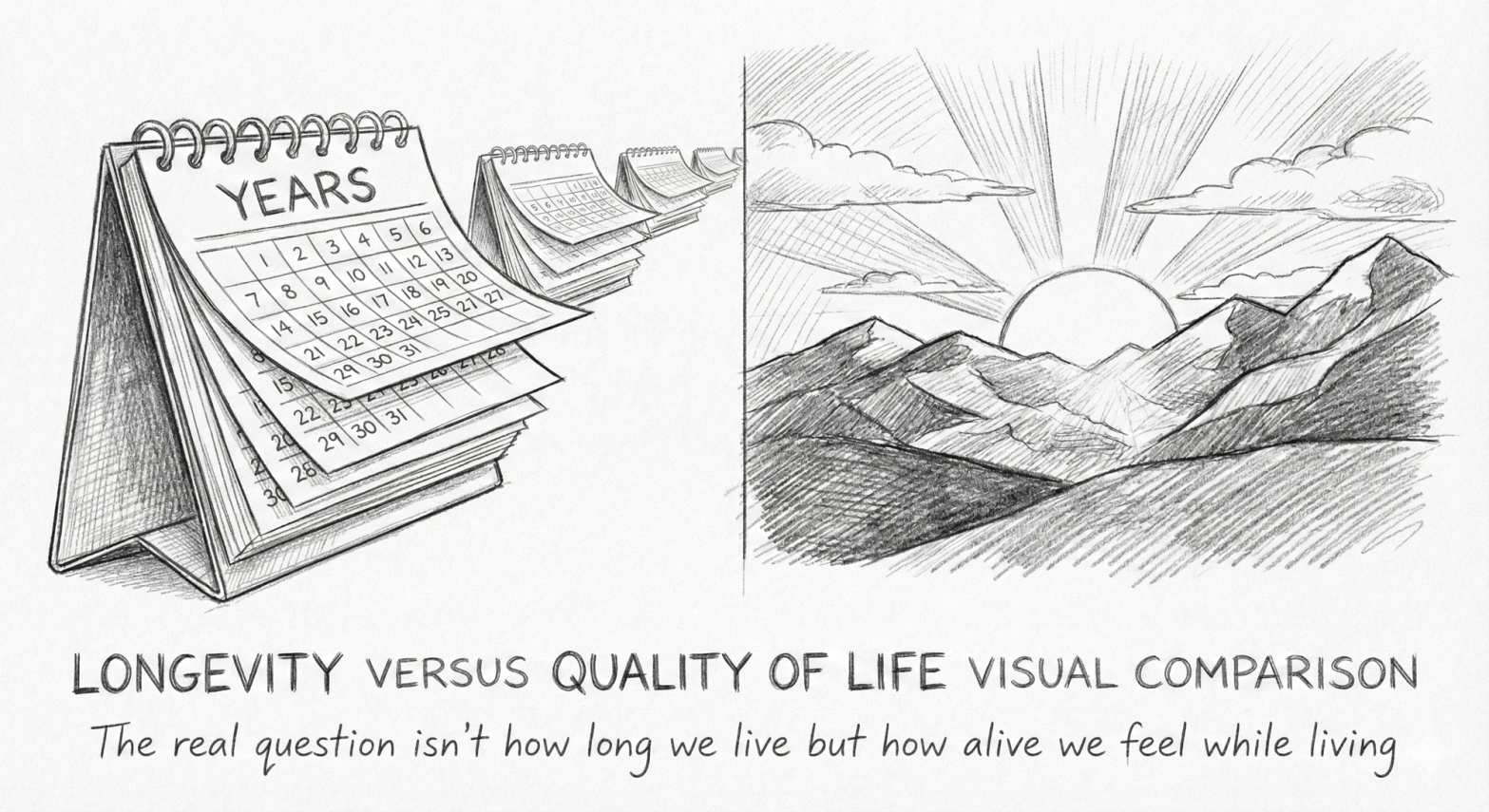
Living a very long life only matters if those years remain filled with purpose, connection, and the ability to stay present. Without meaning and engagement, longevity becomes mere survival—a catalog of empty days rather than a life fully lived. The value isn’t in the number of years accumulated, but in whether each one continues to feel alive and worth experiencing.​​​​​​​​​​​​​​​​

The anti-aging industry promises us decades of extra life, but nobody’s selling a guarantee that those years will feel like living. We’re so focused on not dying that we’ve forgotten to ask what we’re actually staying alive for. What if longevity without purpose is just existence in slow motion?

Imagine waking up at 140 years old. Your friends are gone. Your children are elderly. The world you knew has transformed beyond recognition. Still sound appealing? The longevity conversation has ignored its most uncomfortable truth: more time isn’t always more life.

We treat aging like a disease to be cured and death like a problem to be solved. But in our rush to extend the human lifespan, we’ve sidestepped a more fundamental question: what are all those extra years supposed to be for? Time without meaning is just waiting.

The first person to live to 200 has probably already been born, scientists say. Congratulations to them, I guess. But while we’re busy celebrating the how of extreme longevity, we’ve conveniently ignored the why. What changes when life stops having a natural endpoint?

Every culture throughout history has told stories about immortality, and in nearly all of them, living forever turns out to be a curse, not a blessing. Maybe our ancestors understood something we’ve forgotten in our modern obsession with adding years to the human lifespan at any cost.

You can extend your life by thirty years through perfect diet, exercise, and medical intervention. But if those thirty years feel like a waiting room with better lighting, what exactly have you gained? Longevity is meaningless without the one thing we rarely discuss: what makes time feel worth having.​​​​​​​​​​​​​​​​

When Questions Return: 

Revisiting What It Means to Live Long

WordPress has circled back to this question today, and perhaps that’s fitting. The concept of living a very long life isn’t one we answer once and set aside—it’s a question that evolves as we do.

I’ve explored this terrain before, twice on this exact date in previous years. Each time, the question revealed something different. In 2024, I wondered about the practical realities and cultural fascination with extreme longevity. In 2025, I examined the tension between quantity and quality, asking whether duration matters if the days lack depth.

Today, I find myself thinking less about the hypothetical and more about the immediate: how we inhabit the time we actually have. A long life loses its appeal if it becomes a catalog of moments we’re too distracted to notice or too numb to feel. Perhaps the real gift of longevity isn’t the extra years but the chance to continuously reinvent our relationship with time itself—to remain curious, to stay open, to keep finding new ways to be present.

Revisiting Earlier Reflections on the Same

Prompt

For readers who’d like to explore how my thinking has evolved over time, here are my earlier responses to this very same WordPress prompt:

The question returns, and so do we, slightly changed each time we meet it.

This approach honours my previous work, acknowledges the repeat gracefully, and offers a fresh but brief meditation that connects my evolving thoughts across three years. 

© 2025 Rise&Inspire

Reflections that grow with time.

Website: Home | Blog | About Us | Contact| Resources

Word Count:631

Are Your Plans Really Yours, Or Does God Have the Final Say?

You stayed up late perfecting your presentation. You rehearsed every word, anticipated every question, mapped out every possible response. Then the moment arrived, and something unexpected happened. Different words came. Better words. Words that carried a weight and wisdom beyond your preparation. If you’ve experienced this, you’ve lived the truth of Proverbs 16:1. Today, we explore the sacred partnership between the plans we make and the answers God provides.

Daily Biblical Reflection

Verse for Today (8th January 2026)

Forwarded this morning by His Excellency, Rt. Rev. Dr. Selvister Ponnumuthan, upon whom Johnbritto Kurusumuthu wrote reflections.

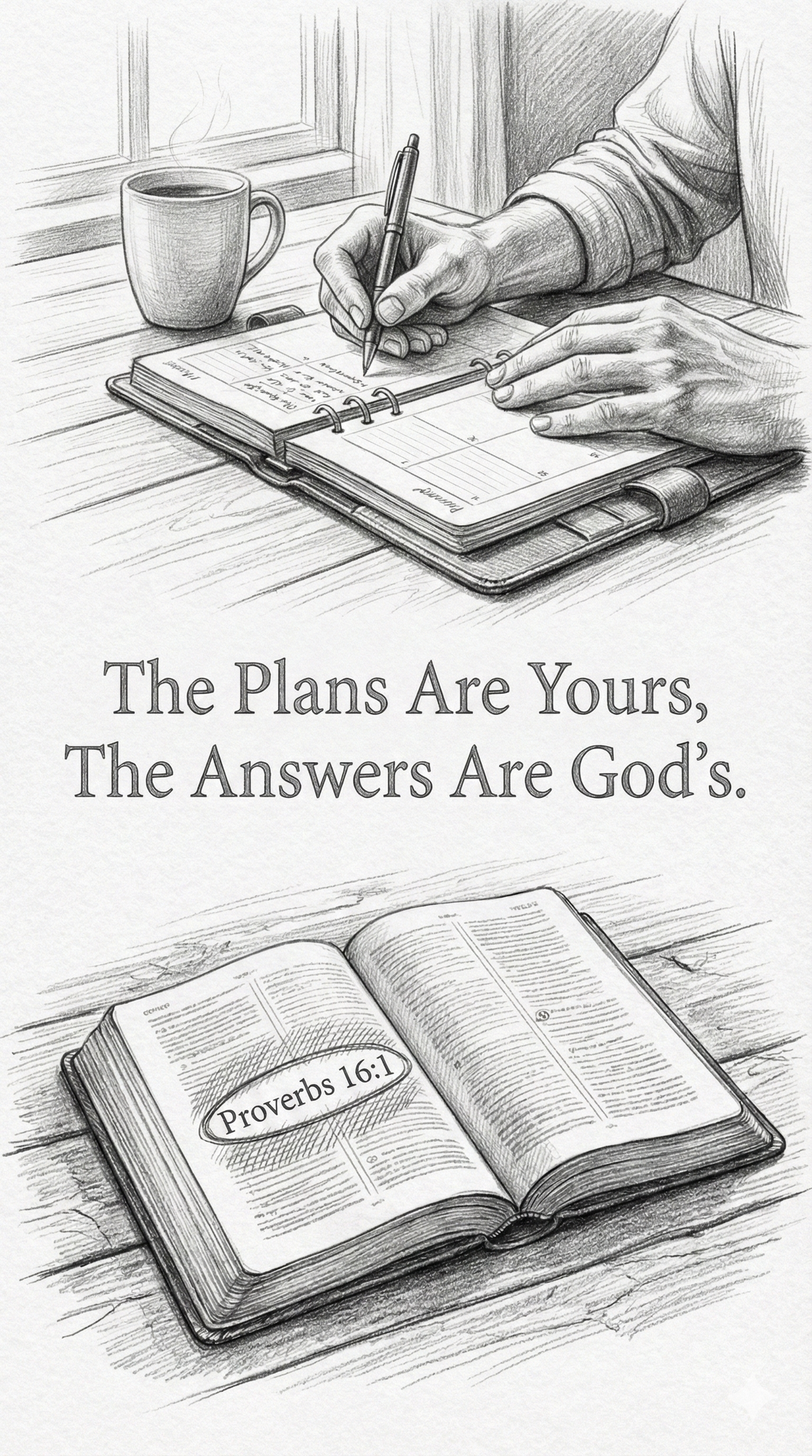
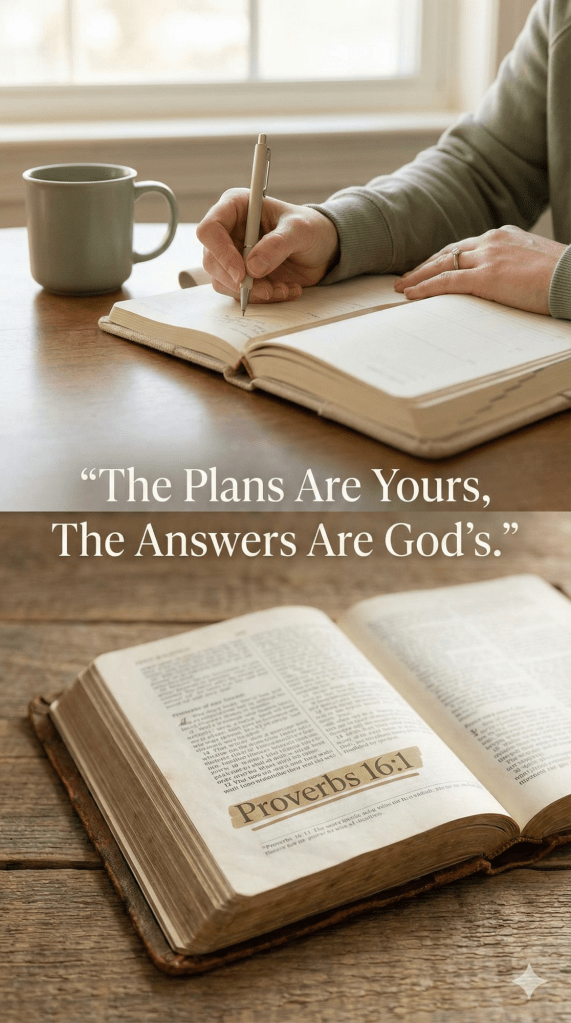
“The plans of the mind belong to man, but the answer of the tongue is from the LORD.”

Proverbs 16:1

Today, the 8th day of 2026

This is the 8th reflection on Rise & Inspire in 2026 under the category/series: Wake-up calls

THE DIVINE PARTNERSHIP: PLANNING AND PROVIDENCE

Dear friends in Christ,

As we step into the eighth day of the new year, the ancient wisdom of Proverbs offers a timeless truth that shapes how we approach our daily lives. “The plans of the mind belong to man, but the answer of the tongue is from the LORD.” This verse invites us into a beautiful mystery: the sacred partnership between human initiative and divine guidance.

We are planners by nature. Our minds are constantly at work, mapping out our days, strategising our futures, organising our priorities. This capacity to plan is itself a gift from God, reflecting the divine image in which we are created. The verse acknowledges this reality without apology. Yes, the plans of the mind belong to us. We are called to be responsible stewards of our lives, to think ahead, to prepare, to envision possibilities.

But here comes the gentle correction, the divine whisper that keeps us humble: “the answer of the tongue is from the LORD.” We may craft our plans with meticulous care, but the words we ultimately speak, the responses that flow from our lips in the moment of truth, these come from a source beyond ourselves. There is a sovereignty at work in our speech that transcends our careful preparations.

Think about those moments when you were called upon to speak, perhaps in a difficult situation, a pastoral conversation, a moment of crisis or opportunity. You may have rehearsed what you would say and carefully planned your words. But when the moment arrived, something else emerged. Words came that you had not prepared, wisdom flowed that surprised even you, comfort was offered that exceeded your natural capacity. In those moments, you experienced the truth of this proverb. The Lord was speaking through you.

This is not a call to abandon planning or to embrace spiritual laziness. Rather, it is an invitation to hold our plans with open hands, to remain flexible before God’s higher wisdom, to trust that even when our carefully laid plans meet unexpected responses, God is at work. Our planning becomes not an exercise in controlling outcomes, but an act of faithful preparation, a readiness to be used by God in ways we cannot fully anticipate.

There is great freedom in this understanding. It relieves us of the crushing burden of thinking that everything depends on the perfection of our plans. It opens us to the surprising ways God can work through our imperfect preparations. It teaches us to listen even as we speak, to remain attentive to the Spirit’s promptings even in the midst of our most carefully prepared presentations.

James reminds us in his epistle, “Come now, you who say, ‘Today or tomorrow we will go into such and such a town and spend a year there and trade and make a profit,’ yet you do not know what tomorrow will bring. Instead, you ought to say, ‘If the Lord wills, we will live and do this or that.’” This is the spirit of Proverbs 16:1. Plan, yes. But plan with the humble recognition that the ultimate outcome rests with God.

As you move through this eighth day of 2026, embrace both parts of this divine partnership. Make your plans. Use the mind God has given you. Think carefully, prepare wisely, and organise thoughtfully. But do so with a heart that remains open, with a spirit that stays flexible, with faith that trusts God’s sovereignty even when the answers that come differ from what you expected.

The plans are yours to make. The answers belong to the Lord. In this sacred tension, we discover the path of faithful living.

May your planning today be diligent, and may your speaking be anointed. May you know the joy of partnering with God in all things, great and small.

In Christ’s love,

Johnbritto Kurusumuthu

Applying Proverbs to Modern Life: 

Timeless Wisdom in a Fast-Paced World

Rise&Inspire | Wisdom • Faith • Daily Life

In our digital age of constant notifications, career pressures, financial uncertainties, and complex relationships, the Book of Proverbs—written thousands of years ago—remains strikingly relevant. Its short, practical sayings address the core of human experience: decision-making, speech, work, money, family, emotions, and character. Rooted in the “fear of the Lord” (reverence for God), Proverbs offers guidance that transcends time, helping us navigate modern challenges with wisdom, integrity, and peace. 

1. Wise Speech in a World of Social Media and Quick Reactions

Proverbs repeatedly warns about the power of words: “The tongue has the power of life and death” (Prov 18:21). In today’s era of tweets, comments, and online debates, impulsive posts can damage relationships or reputations instantly.

Modern Application: Before hitting “send,” pause and ask: Does this build up or tear down? Proverbs 15:1 says, “A gentle answer turns away wrath.” Practising this online fosters healthier discussions and reduces regret. 

2. Work Ethic and Integrity in Professional Life

Proverbs praises diligence: “Lazy hands make for poverty, but diligent hands bring wealth” (Prov 10:4), and condemns dishonesty: “Dishonest money dwindles away” (Prov 13:11).

Modern Application: In remote work, gig economies, or corporate ladders, this means showing up consistently, avoiding shortcuts like plagiarism or inflated reports, and viewing work as stewardship. Ethical decisions at the office—resisting gossip or unfair competition—build long-term success and inner peace. 

3. Handling Money and Finances Wisely

With credit cards, investments, and consumerism, Proverbs’ advice on wealth is vital: “The borrower is slave to the lender” (Prov 22:7), and “Wealth gained hastily will dwindle” (Prov 13:11).

Modern Application: Budget thoughtfully, avoid debt traps, save diligently, and give generously. In family discussions about finances, Proverbs encourages planning with humility, trusting God’s provision over get-rich-quick schemes. 

4. Relationships, Family, and the Virtuous Life

Proverbs 31’s portrait of the noble woman—“She is clothed with strength and dignity” (Prov 31:25)—and instructions on friendship, marriage, and parenting remain empowering.

Modern Application: For women (and men), it inspires balancing career, home, and community with grace and skill. In relationships, “Do not withhold good from those to whom it is due” (Prov 3:27) encourages kindness and loyalty amid busy schedules. 

5. Controlling Anger and Pride in a Stressful World

“Pride goes before destruction” (Prov 16:18) and “Fools show their annoyance at once” (Prov 12:16).

Modern Application: In traffic, workplaces, or family tensions, choose humility and patience. Practices like mindfulness rooted in Proverbs—guarding the heart (Prov 4:23)—help manage stress and build resilience.

Rise&Inspire Reflection

Proverbs isn’t a rulebook but a mentor, inviting us to align daily choices with God’s wisdom. In 2026’s whirlwind, starting each day with a proverb can transform routine decisions into acts of faith. As Proverbs 3:5-6 urges: “Trust in the LORD with all your heart… and he will make your paths straight.”

Let this ancient wisdom guide your modern journey—plan diligently, speak kindly, work honestly, and live reverently.

In Christ’s love, Johnbritto Kurusumuthu

2026 Rise & Inspire Devotional Series

Key Takeaways

Applying Proverbs to Modern Life

  1. Wisdom begins with reverence for the “fear of the Lord” is not fearfulness but humble awe that shapes every decision, from speech to spending.
  2. Words carry lasting powerIn a digital-first world, Proverbs reminds us that thoughtful, gentle speech brings life, while impulsive words cause harm.
  3. Integrity matters more than speed or successDiligence, honesty, and faithfulness at work lead to lasting fruit, even when shortcuts seem tempting.
  4. Money is a tool, not a masterProverbs encourages wise planning, restraint, generosity, and trust in God over debt-driven or quick-profit lifestyles.
  5. Character defines true successStrength, dignity, humility, and self-control are marks of wisdom that sustain relationships and inner peace.
  6. Ancient wisdom is deeply practical. The teachings of the Book of Proverbs remain relevant for navigating modern stress, relationships, and choices with clarity and faith.

Reflection Questions

Use these for personal journaling, family discussion, or group study:

Speech and Communication

  1. Before speaking or posting online, do I pause to consider whether my words build up or tear down?
  2. Which proverb about speech do I most need to practise right now?
  3. Work and Integrity
    1. In my professional life, where am I tempted to take shortcuts instead of practising diligence and honesty?
    2. How can I view my work as stewardship rather than just obligation or ambition?
  4. Money and Trust
    1. What does my handling of money reveal about my trust in God?
    2. Are there areas where I need more discipline, planning, or generosity?
  5. Relationships and Character
    1. How do Proverbs’ teachings challenge the way I relate to family, friends, and colleagues?
    2. In what ways can I grow in kindness, patience, and loyalty?
  6. Inner Life and Growth
    1. What situations most test my pride or anger?
    2. How can “guarding my heart” (Prov 4:23) become a daily spiritual practice?

Closing Thought

Proverbs invites us not merely to admire wisdom but to live it—one choice, one word, and one act of faith at a time. In a fast-paced world, these ancient truths remain a steady guide for a grounded, God-centred life.

Frequently Asked Questions (FAQs)

1. Is the Book of Proverbs meant to be read as strict rules or promises?

No. Proverbs presents wisdom principles, not absolute guarantees. It offers guidance on how life generally works when we live with reverence for God and moral integrity.

2. How can Proverbs help in modern decision-making?

By shaping character rather than offering step-by-step instructions. Proverbs trains us to think wisely, speak carefully, and choose integrity in complex situations.

3. Can Proverbs be applied by people facing modern pressures like digital overload and stress?

Yes. Its teachings on self-control, measured speech, diligence, humility, and guarding the heart are especially relevant in today’s fast-paced, digitally driven world.

4. Is Proverbs only for religious or spiritual settings?

While rooted in faith, the wisdom of the Book of Proverbs applies to everyday life—workplaces, families, finances, and relationships—making it practical for all areas of living.

5. How should Proverbs be read devotionally?

Slowly and reflectively. Reading even one proverb a day, pausing to pray and apply it, can shape daily habits and long-term character.

A Short Prayer for Daily Wisdom

Lord,

Teach me to walk in Your wisdom today.

Guard my words, guide my choices,

and shape my heart with humility and grace.

Help me trust You in every decision

and live with integrity in all I do.

Amen.

2025 Johnbritto Kurusumuthu | Rise & Inspire Devotional Series

Word count:1895

Are Life’s Greatest Gifts Too Familiar to Be Valued?

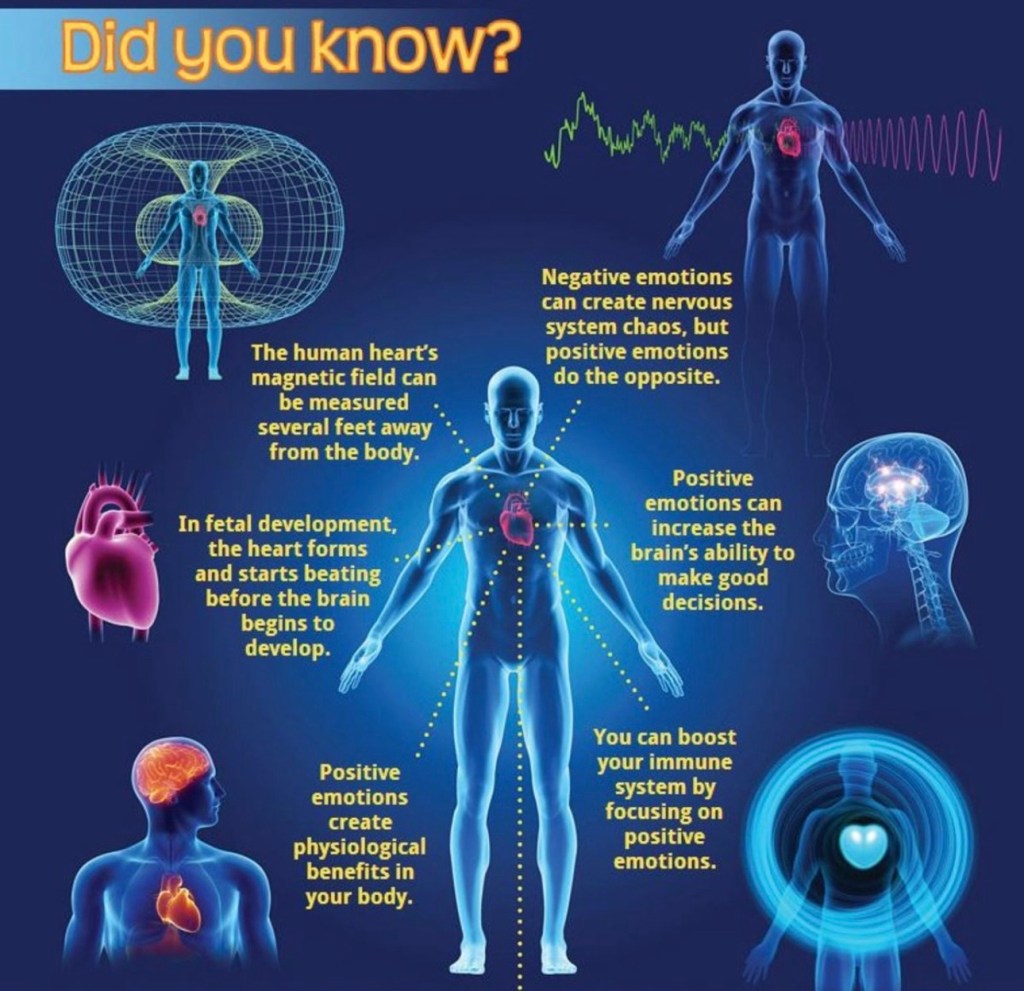
We marvel at technology, worship efficiency, and chase breakthroughs—yet overlook the most extraordinary system we’ll ever live inside. Before the first complaint today, take a moment and consider this: your body has been performing silent miracles for you since birth, without ever asking for recognition.

When Did You Last Thank Your Body for Simply Keeping You Alive?

Reflections on the Quiet Miracles We Live With Every Day

We often rush through life focused on what is missing—what aches, what fails, what could be better. Yet, beneath every ordinary moment lies a quiet miracle we rarely notice: our own existence.

Consider this for a moment.

When we drive a vehicle, its tyres wear out with use. But even after a lifetime of walking—through joy, struggle, heat, rain, and time—the soles of our feet continue to carry us forward, adapting and renewing themselves in silence.

Our body is made up of nearly 75% water. It contains millions of pores, yet not a single drop leaks out. What greater lesson in balance and design could there be?

Nothing in this world can stand without support. Buildings need pillars. Machines need frames. Yet the human body maintains its balance on its own—adjusting, correcting, and steadying itself every second, without conscious effort.

No battery works without recharging, but the heart never asks for a power source. From the moment we are born until our final breath, it keeps beating—faithful, tireless, and unseen.

No mechanical pump can function endlessly. Still, blood flows through our entire body day and night, carrying life to every cell, never resting, never complaining.

The world boasts cameras worth millions, yet even they have limits. Our eyes, however, capture colours, depth, motion, and emotion with a clarity no lens can fully replicate.

No laboratory can test every taste known to humankind. Yet the tongue—without instruments, screens, or software—can identify thousands of flavours, instantly and effortlessly.

The most advanced sensors struggle with precision, but the skin can feel the gentlest touch, the slightest change in temperature, the faintest signal of pain or comfort.

No instrument can create every sound imaginable. Still, the human throat produces thousands of tones and frequencies—laughter, prayer, song, whispers, cries, and words that can heal or hurt.

And while no device can perfectly decode every sound, our ears listen, understand, interpret, and respond—turning vibrations into meaning, memory, and connection.

A Gentle Wake-Up Call

These are not dramatic miracles that shake the earth. They are everyday wonders, so constant that we forget how extraordinary they are.

Perhaps gratitude is not about denying hardship or pain. Perhaps it is about remembering that even in difficulty, we are already entrusted with immeasurable gifts.

When we take a moment and truly reflect, complaints begin to lose their grip. Not because life is perfect—but because we realise how deeply supported we already are.

Today, take a moment to honour the quiet miracles within you.

Breathe. Walk. Listen. Taste. Feel.

And be grateful—for you are far more wonderfully made than you often remember.

Rise&Inspire Editorial Positioning

Core Message:

Before questioning life, learn to notice life.

Rise&Inspire Editorial Signature Line 

Rise not by complaint. Inspire by awareness.

Brand Lens:

Quiet reflection • inner awakening • everyday wisdom • gratitude rooted in awareness

Not motivational hype — transformational insight

Explore more at the Rise & Inspire archive | 

Motivational Blogs 

© 2025 Rise&Inspire

Reflections that grow with time.

Website: Home | Blog | About Us | Contact| Resources

Word Count:587

What Could You Do Differently Without Trying to Change Everything?

Daily writing prompt
What could you do differently?

I could live more intentionally—slowing down before reacting, choosing awareness over habit, and making small, conscious changes that reflect my values in my daily actions.

Change doesn’t always announce itself with bold decisions. Sometimes it whispers—through a moment of reflection before reacting, a kinder inner voice, or the choice to stay present a little longer. What could you do differently? Not to become someone new, but to live more faithfully as who you already are.

What Could I Do Differently—Starting Today?

The most honest answers to this question are rarely dramatic.

They don’t demand a reinvention of life—only a gentler awareness of how we live it.

When I ask myself “What could I do differently?”, I’m no longer searching for bold resolutions. I’m listening for quieter corrections.

I could respond more intentionally instead of reacting.

Not every moment needs an immediate response.

Sometimes the most meaningful change is allowing space between stimulus and reply—choosing clarity over speed, understanding over defensiveness.

I could listen without preparing my answer

Too often, listening becomes a waiting room for our own thoughts.

Doing differently might mean hearing someone fully—without interruption, correction, or comparison.

I could honour my energy, not just my time

Productivity is often measured in hours, not in awareness.

What if “doing differently” meant recognising when rest is not laziness but wisdom?

I could be kinder in private

Public kindness is visible. Private kindness is transformative.

The way we speak to ourselves—especially in silence—shapes every outward action.

I could choose progress over perfection

Growth doesn’t require flawlessness.

It asks only for consistency, humility, and the courage to try again without self-contempt.

I could stay engaged longer.

Not rushing to the next task.

Not living mentally ahead or behind.

Just staying—with this breath, this conversation, this moment.

Doing differently is rarely about doing more.

It’s about doing with intention—choosing awareness where habit once ruled.

Perhaps the real power of this question lies not in answering it once a year, but in returning to it gently, again and again, allowing life itself to refine the response.

From the Rise&Inspire Archives (Earlier Reflections on This Prompt)

© 2025 Rise&Inspire

Reflections that grow with time.

Website: Home | Blog | About Us | Contact| Resources

Word Count:405

Is God Really Listening When You Pray? The Deuteronomy Promise That Proves He Is

What makes your faith different? Not your theology, your denomination, or your worship style. The real distinction lies in a single, stunning reality that Deuteronomy captures in one provocative question. It is a reality so profound that it should fundamentally alter how you approach every single day. Yet most believers live as though it were not true. They pray as though God were far away. They struggle as though they were alone. They carry burdens as though no one were listening. This reflection is your invitation to stop.

The biblical reflection on Deuteronomy 4:7 explores the deep truth of God’s nearness. The reflection connects the ancient context with our contemporary spiritual lives, offering both theological insight and practical application.

The reflection emphasises three key themes:

1. The revolutionary nature of divine accessibility in contrast to ancient pagan deities

2. The personal, relational dimension of God’s nearness through Christ

3. A call to awaken to and live in constant awareness of God’s presence

Daily Biblical Reflection

Verse for Today (7th January 2026)

This morning, His Excellency, Rt. Rev. Dr. Selvister Ponnumuthan forwarded this Verse for Today (7th January 2026), which inspired me to write these reflections.

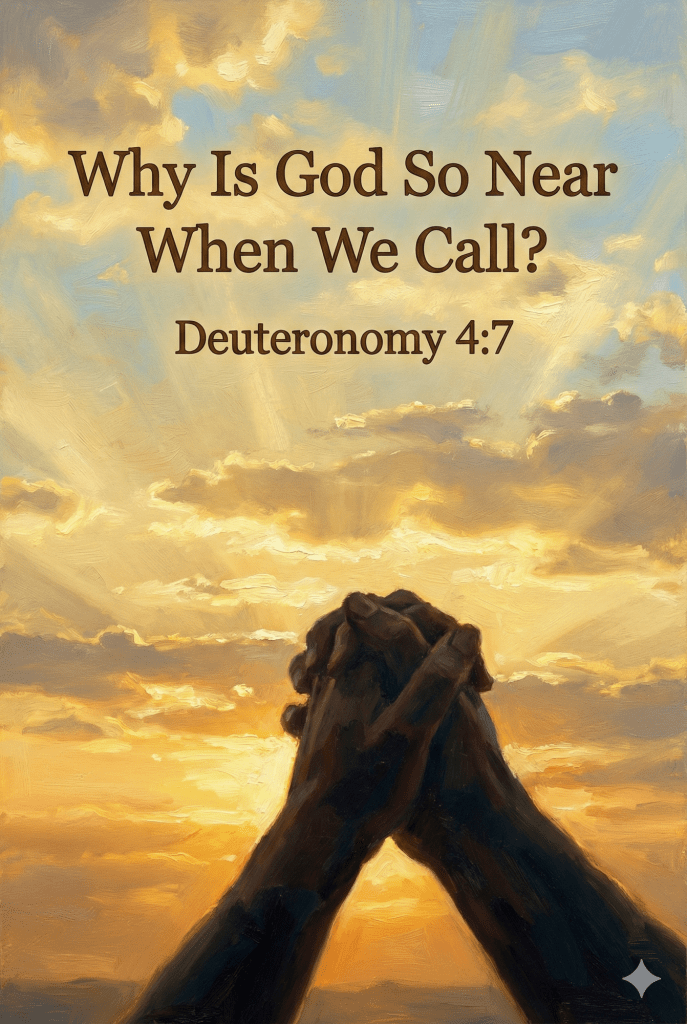
For what other great nation has a god so near to it as the Lord our God is whenever we call to him?”

Deuteronomy 4:7

Today the 7th day of 2026

This is the 7th reflection on Rise&Inspire in 2026 under the category/series: Wake-up calls

The Gift of Divine Nearness

In the ancient world, gods were distant, unpredictable, dwelling on remote mountaintops or hidden in temples accessible only to the privileged few. The nations surrounding Israel imagined their deities as capricious powers who required elaborate rituals, costly sacrifices, and the mediation of countless intermediaries to gain their attention. Against this backdrop, Moses poses a revolutionary question to the people of Israel: What other nation can claim such intimacy with the Divine?

This question is not merely rhetorical. It is an invitation to awakening, a wake-up call that resonates across millennia to reach us today, on this 7th day of the new year. The God of Israel, the God we serve, is not distant or disinterested. He is near. Remarkably, wonderfully, intimately near.

The Hebrew word for “near” used here is qarov, which speaks not just of physical proximity but of relational closeness, of being at hand, accessible, ready to respond. Our God does not need to be summoned through complex ceremonies or appeased through fearful offerings. He is already present, already listening, already leaning toward us with compassionate attention whenever we call.

This divine accessibility is the beating heart of our faith. It transforms prayer from a religious duty into a living conversation. It changes worship from performance into encounter. It converts our spiritual life from striving to reach a distant deity into recognising the One who has already drawn near to us.

Consider the profound implication: the Creator of galaxies, the Author of existence itself, makes Himself available to you. Not occasionally. Not conditionally. But whenever you call. In your morning confusion, in your midnight fears, in your moments of joy and seasons of sorrow, He is near. The God who shaped mountains listens to your whispered prayer. The One who commands the stars bends His ear to your heart’s cry.

This nearness is not earned through our righteousness or merited by our spiritual achievements. It is the gracious nature of God Himself. He chose to be Emmanuel, God-with-us. In Jesus Christ, this divine nearness took on flesh and walked among us, demonstrating in the most tangible way possible that our God is not remote but radically present.

Yet how often do we live as though God were far away? How frequently do we carry our burdens alone, wrestle our questions in isolation, or face our challenges as though we were orphaned in the universe? This reflection is indeed a wake-up call, urging us to recognise and respond to the extraordinary privilege we possess: direct access to the throne of grace.

The invitation embedded in this verse is clear: Call to Him. Not someday when you feel more worthy. Not after you have sorted out your life or cleaned up your act. Now. Today. In whatever state you find yourself. He is already near, already attentive, already ready to respond with wisdom, comfort, strength, and love.

As we journey through these early days of 2026, let us awaken to this reality. Let us cultivate an awareness of God’s presence that transforms ordinary moments into opportunities for communion. Let us develop the habit of turning to Him throughout the day, not just in crisis but in celebration, not only in desperation but in gratitude.

What makes our faith distinctive is not simply what we believe about God, but the relational reality we experience with God. We are not followers of a distant philosophy or adherents to an abstract principle. We are children in conversation with our Father, friends in fellowship with our Lord, beloved in communion with Love Himself.

This is your inheritance as a believer: a God who is near. This is your privilege today: to call upon Him and find Him responsive. This is your invitation for 2026: to live in the constant awareness of divine presence, allowing that nearness to reshape how you pray, how you decide, how you love, and how you serve.

May this wake-up call rouse us from spiritual slumber. May we cease living as practical atheists who believe in God’s existence but not His presence. May we instead walk through our days aware that we are never alone, never unheard, never beyond the reach of the One who has made Himself wonderfully, graciously, eternally near.

The question Moses asked Israel echoes to us today: What other great nation has such a God? Indeed, what other people have been granted such access, such intimacy, such assurance? Let us not take this extraordinary gift for granted. Let us call upon Him, and in calling, discover again that He is already there, already listening, already near.

Wake up to this reality. Your God is not far off. He is here, now, waiting for your voice. Call to Him today.

The focus of this reflection is the nearness of God and His readiness to listen whenever we pray, as revealed in Deuteronomy 4:7.

At its heart, the reflection is a wake-up call inviting believers to:

✔️ Recognise the unique privilege of divine accessibility—a God who is not distant but near

✔️ Understand prayer as a living, relational conversation, not a ritual or performance

✔️ Awaken to a daily, moment-by-moment awareness of God’s presence, especially through Christ

In short, the reflection calls readers to stop living as though they are alone and to begin living consciously in the reality that God is already near, already listening, whenever they call.

The “wake-up call” motif is woven seamlessly throughout this reflection and finds concrete expression in the accompanying YouTube video—a brief, prayerful audio reading of Deuteronomy 4:7 set to music, titled “Wake-up Call – 07 January 2026.” The reflection also draws its spiritual impetus from the verse shared that morning by His Excellency, Rt. Rev. Dr. Selvister Ponnumuthan, grounding the meditation in a lived, pastoral context rather than abstract theology.

2025 Johnbritto Kurusumuthu | Rise & Inspire Devotional Series

Word count:1241

What Would Your Billboard Say If Thousands Saw It Every Day?

Daily writing prompt
If you had a freeway billboard, what would it say?

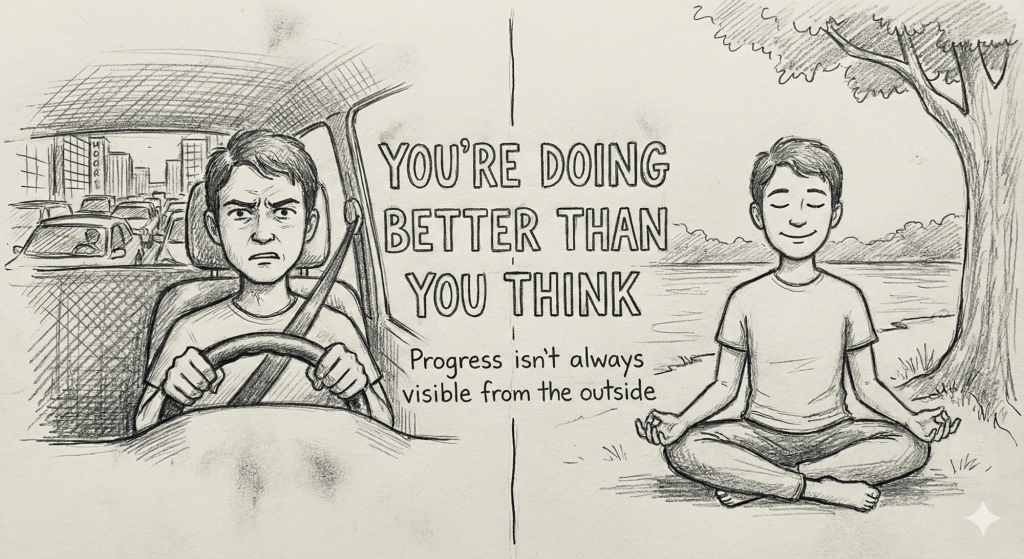
You’re doing better than you think you are.

We measure ourselves against timelines, curated success stories, and impossible standards. But the truth is, progress isn’t always visible. The small victories count. Showing up despite anxiety, setting a boundary, choosing kindness over anger, simply trying again—these ordinary efforts are more extraordinary than we realise. Sometimes the most powerful message isn’t a call to do more. It’s permission to recognise that what you’re already doing is enough.

You have three seconds. Maybe four if traffic is slow. A driver glances up, reads your message, and it’s gone. No context, no follow-up, just one line that has to land before the next exit. What do you say? The answer isn’t about clever marketing or catchy phrases. It’s about what you believe matters most when you strip away everything else.

What Would Your Billboard Say? A Message for Strangers in Motion

There’s something humbling about the idea of a freeway billboard. Thousands of eyes glancing up for three seconds, maybe four—drivers rushing to work, travelers heading home, strangers with entire universes of thoughts you’ll never know. And you get one message. One line. What would you say?

This WordPress prompt has come around again, and I find myself answering differently than I did before. In 2024, I wrote about being a voice rather than an echo, about igniting your own spark instead of mimicking others’ flames. A year later, I reflected on the journey itself mattering more than the destination we’re racing toward.

👇

👇

Both messages still resonate. But today, standing at the beginning of 2026, my billboard would say something simpler:

You’re doing better than you think you are.

We live in a world that constantly asks us to measure ourselves—against timelines, against others, against the idealized versions of ourselves we imagined at twenty, at thirty, at any age when we thought we had it figured out. We scroll through curated success stories and wonder why our own progress feels so slow, so ordinary, so insufficient.

But here’s the truth that doesn’t fit neatly into social media posts or inspirational quotes: growth is rarely linear. Healing isn’t photogenic. Progress often looks like nothing at all from the outside.

The driver who sees my imaginary billboard might be someone who showed up to work despite crushing anxiety. Someone who chose not to send that angry text. Someone who made dinner for their family even though they were exhausted. Someone who’s been sober for three days, or three years. Someone who finally set a boundary. Someone who’s just trying to be a little kinder to themselves today than they were yesterday.

These aren’t the achievements that make headlines, but they’re the ones that change lives.

I think about all the moments I’ve felt like I was failing—at work, in relationships, at the basic project of being a functional adult—only to look back years later and realize I was actually holding things together remarkably well given the circumstances. I was learning. I was adapting. I was surviving and, occasionally, even thriving in ways I couldn’t recognize at the time.

So that’s what I’d want those passing drivers to know, even if just for those few seconds their eyes catch my billboard: You’re doing better than you think you are. The fact that you’re still trying matters. The small victories count. Your ordinary efforts are more extraordinary than you realize.

Because sometimes, the most powerful message isn’t a call to be different or do more. Sometimes it’s permission to recognise that what you’re already doing is enough.

What would your billboard say?

© 2025 Rise&Inspire

Reflections that grow with time.

Website: Home | Blog | About Us | Contact| Resources

Word Count:645

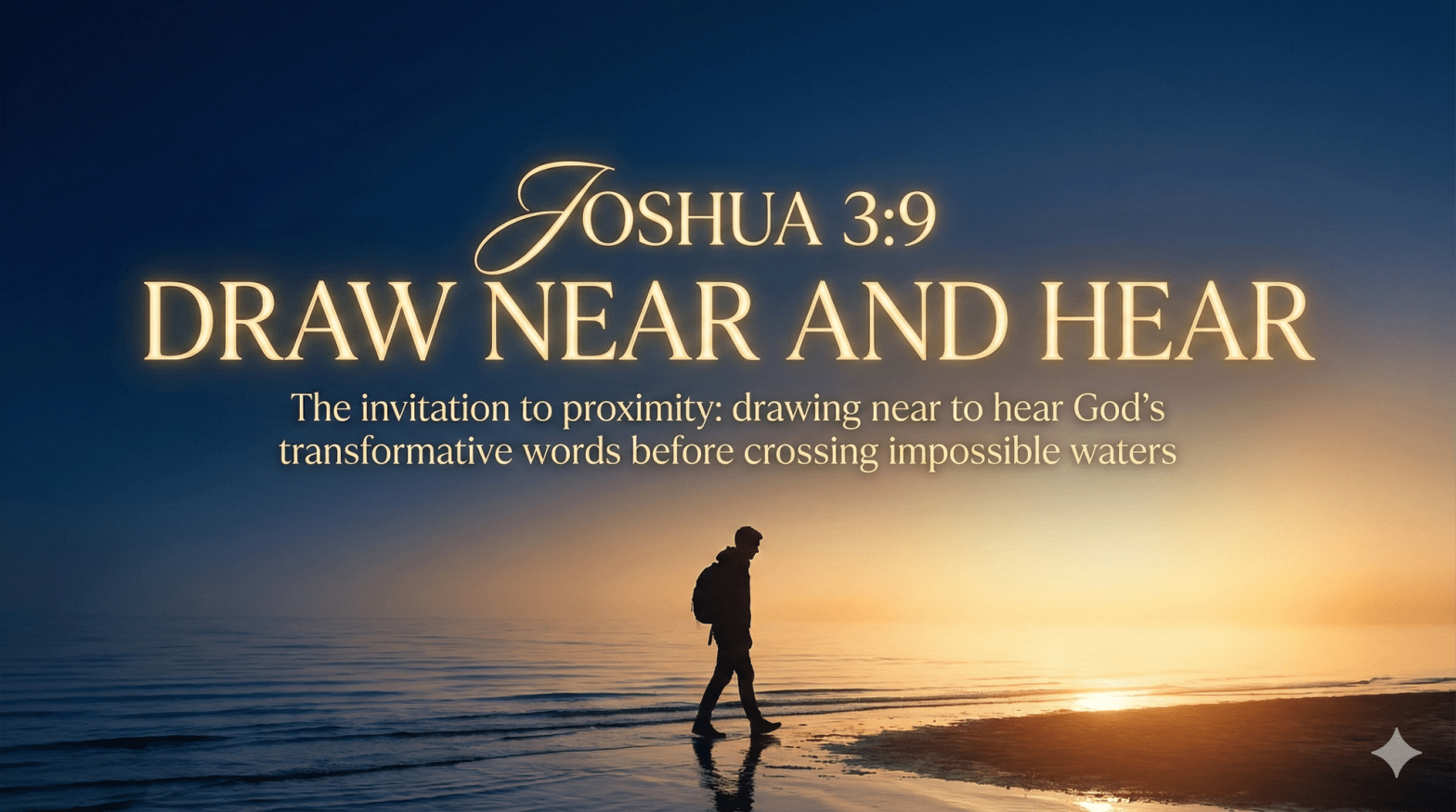
Are You Managing God from a Distance or Drawing Near to Hear Him?

We’ve mastered the art of managing God from a distance. Prayer on the run. Scripture between emails. Worship while multitasking. But Joshua 3:9 disrupts our efficient spirituality with an ancient invitation that still carries the power to part waters: draw near and hear. Not eventually. Not when it’s convenient. Now.

Stop trying to cross your Jordan from where you’re standing. The Israelites learned something at the river’s edge that transforms how we face every impossible situation: God doesn’t shout instructions from heaven. He invites us close enough to hear His voice. Close enough that His words become more real than the raging waters before us.

This reflection explores themes of divine proximity, intentional listening, and God’s invitation to draw near before we face life’s impossible situations.

This reflection connects the ancient moment at the Jordan River with contemporary struggles, emphasising how drawing near to God precedes breakthrough and transformation. It acts as a meaningful wake-up call for the sixth day of 2026.​​​​​​​​​​​​​​​​

Daily Biblical Reflection

The Verse for Today (6th January 2026) was forwarded to me this morning by His Excellency, Rt. Rev. Dr. Selvister Ponnumuthan, and it inspired me to write my reflections.

“Draw near and hear the words of the Lord your God.”

Joshua 3:9

Today the 6th day of 2026

This is the 6th reflection on Rise&Inspire in 2026 under the category/series: Wake-up calls

There is something deeply intimate about an invitation to draw near. In Joshua 3:9, we find ourselves standing with the Israelites at the edge of the Jordan River, at a threshold moment between wandering and promise. Joshua does not shout instructions from a distance. He does not issue commands to be obeyed from afar. Instead, he extends an invitation that echoes through the centuries to our own hearts today: “Draw near and hear the words of the Lord your God.”

This is a wake-up call for those of us who have grown comfortable keeping God at arm’s length. We live in a world of noise, where countless voices compete for our attention. We scroll, we rush, we multitask our way through days that blur into weeks. And somewhere in all of that motion, we can forget that the God of the universe invites us not to efficiency, but to proximity. Not to performance, but to presence.

Drawing near requires intention. The Israelites had to stop their preparations, cease their anxious calculations about how they would cross the flooding river, and simply come close enough to hear. How often do we forfeit the words God longs to speak to us because we refuse to be still? How many divine whispers go unheard because we will not draw near?

But notice what Joshua says: “Draw near and hear the words of the Lord your God.” This is not about hearing secondhand reports or theological abstractions. This is about encountering the living God who speaks, who reveals, who guides. The God who parted the Red Sea now stands ready to part the Jordan. But first, His people must draw near.

What walls of water are you facing today? What impossible situations have you been circling in your mind, trying to engineer solutions with your own limited resources? God’s invitation remains the same: draw near first. Hear His voice before you strategize. Listen before you act.

There is transforming power in proximity to God. When we draw near to Him, we discover that He has already drawn near to us. When we lean in to hear His words, we find that His words are not burdensome commands but life-giving promises. When we stop trying to manage everything from a distance and instead enter into His presence, we experience what the Israelites experienced: dry ground in the midst of impossibility, a pathway through what seemed impassable.

This sixth day of the new year calls us to establish a pattern that will shape all the days to come. Let us be people who draw near. Let us cultivate hearts that hunger to hear the words of the Lord our God. Let us remember that before any miracle, before any victory, before any crossing into new territory, there must be this: nearness, listening, presence.

The Jordan still waits to be crossed. The promises still wait to be inherited. But it all begins with this sacred movement toward the One who is already moving toward us, the One whose words carry the power to transform wilderness into homeland, fear into faith, impossibility into testimony.

Draw near today. Be still enough, present enough, hungry enough to hear. The Lord your God is speaking still.

Rise&Inspire Devotional Card

The Memorial Stones:

Remember What the Lord Has Done

(Based on Joshua 4)

Scripture Focus

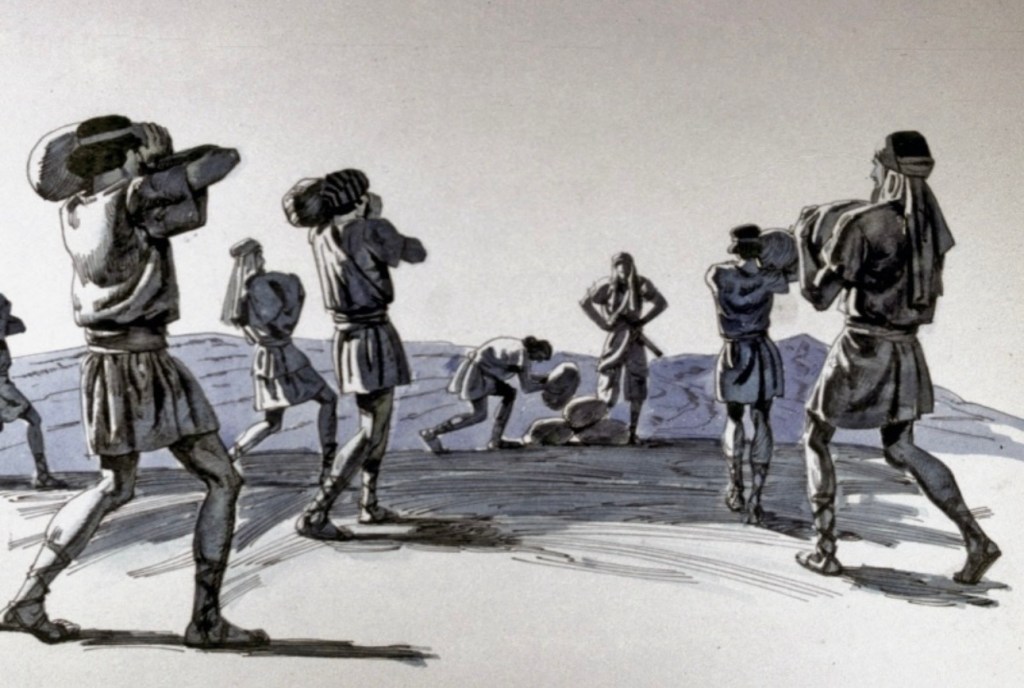
These stones are to be a memorial to the people of Israel forever.

— Joshua 4:7

Today’s Word

After crossing the Jordan on dry ground, God instructed Joshua to raise twelve stones—one for each tribe—as a visible reminder of His mighty hand. These stones were not meant to impress; they were meant to teachtestify, and anchor memory. When children asked, “What do these stones mean?” the story of God’s faithfulness would be told again.

In a world that moves quickly and forgets easily, God calls His people to remember intentionally. Faith grows when memory is nurtured. Gratitude deepens when testimony is shared.

Joshua even placed stones in the river itself—hidden from view, yet known to God. Some victories are celebrated publicly; others remain quietly held in the depths of our hearts. Both matter. God sees them all.

Reflection

✔️What “memorial stones” mark God’s faithfulness in your life?

✔️Are you intentionally passing those stories on to the next generation?

✔️What unseen victories has God carried you through?

Prayer

Lord, help me remember Your mighty works.

Keep my heart from forgetting Your faithfulness.

Teach me to tell Your story—through words, through life, and through gratitude.

Amen.

Key Takeaway

Remembering God’s past faithfulness strengthens present faith and prepares future generations.

— Inspired by Book of Joshua 4

Rise&Inspire | Faith that remembers. Hope that endures.

2025 Johnbritto Kurusumuthu | Rise & Inspire Devotional Series

Word count:1040

Where Do Your Thoughts Live: Yesterday, Tomorrow, or Today?

Daily writing prompt
Do you spend more time thinking about the future or the past? Why?

I spend enough time with the past to learn from it, and enough time with the future to hope—but I choose to live attentively in the present, where real growth happens.

We often ask whether we belong more to the past or the future—but rarely turn inward to ask what that says about us. This reflection is not about choosing a time direction, but about discovering where wisdom, peace, and responsibility truly meet.

Do You Spend More Time Thinking About the Future or the Past? Why?

There was a time when I believed this question demanded a clear choice.

Past or future. Memory or hope. Reflection or ambition.

Today, my answer is quieter—and perhaps truer.

I spend less time thinking about the past or the future, and more time listening to what they are teaching me in the present.

The past no longer calls me to linger there. It asks only one thing: Have you learned what you needed to learn? When the lesson is clear, the memory loosens its grip. I don’t revisit old moments to relive them, but to understand how they shaped my values, my faith, and my patience with life.

The future, too, has changed its voice. It no longer demands constant planning or restless anticipation. Instead, it invites trust. I still prepare. I still hope. But I’ve learned that anxiety dressed up as foresight is not wisdom.

What has grown stronger over the years is my relationship with the present moment—the narrow bridge where the past offers insight and the future offers direction, but neither is allowed to dominate.

Thinking too much about the past can anchor us to regret. Thinking too much about the future can pull us into fear. The present, however, is where responsibility lives. It is where choices are made, prayers are whispered, and small acts of faith quietly shape tomorrow.

So if I must answer the question honestly:

I think about the past just enough to stay wise, and about the future just enough to stay hopeful.

But I live—intentionally—in the now.

And perhaps that is what time was always trying to teach me.

Editor’s Note (2026)

This prompt returns every year, but I do not. Revisiting this question in 2026 felt necessary—not to repeat an answer, but to recognise how time itself has reshaped the way I listen to the past and imagine the future. What once felt like a choice between memory and hope has become a quieter practice of discernment. This reflection is less about where my thoughts travel, and more about where my life now chooses to dwell.

© 2025 Rise&Inspire

Reflections that grow with time.

Website: Home | Blog | About Us | Contact| Resources

Word Count:484

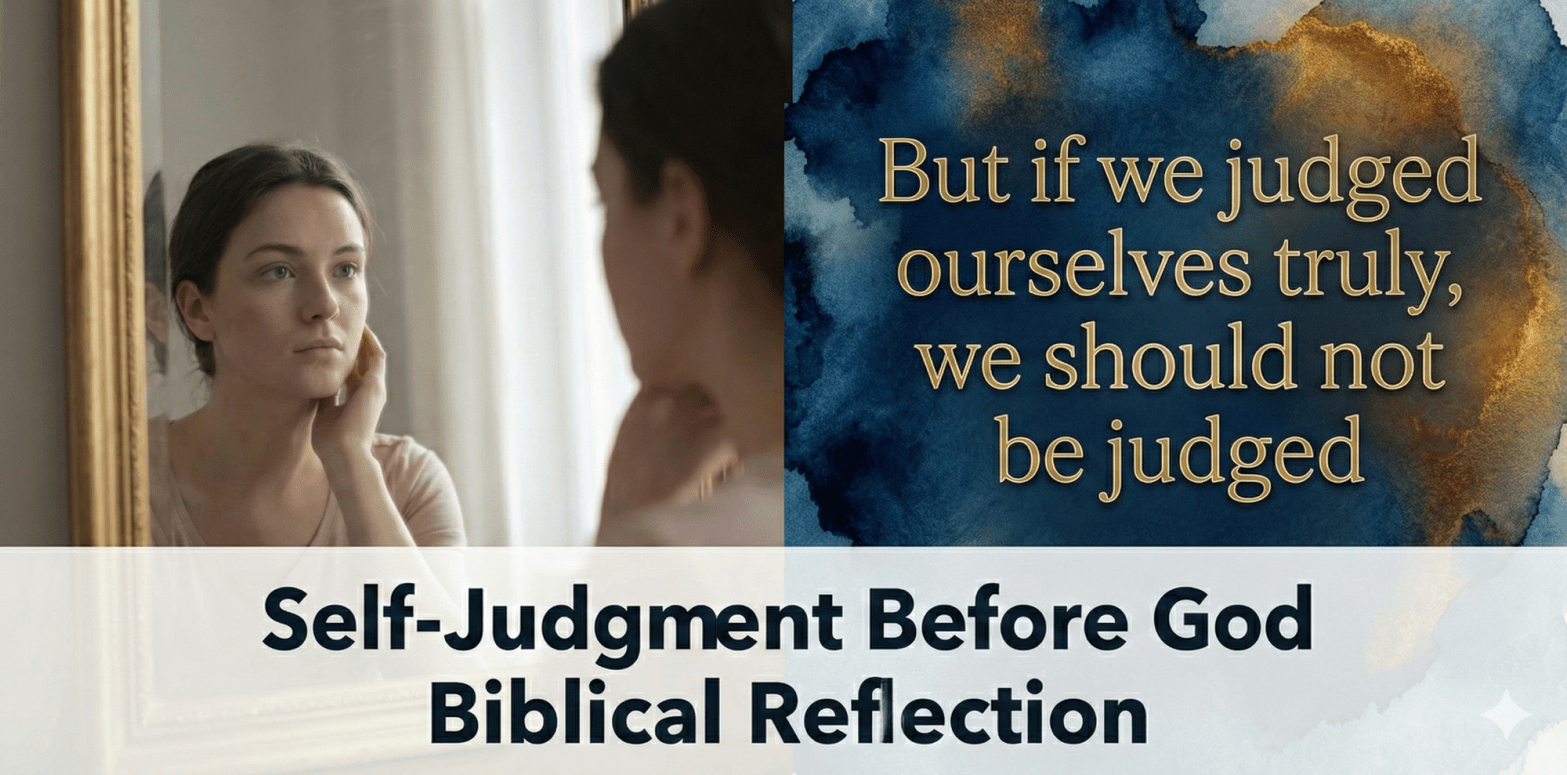
Are You Judging Yourself Before God Judges You? What 1 Corinthians 11:31 Really Means

Five days into a new year, and already the gap between who we want to be and who we actually are is starting to show. The resolutions are wobbling. The old patterns are creeping back. Before you spiral into shame or give up entirely, consider this: what if the path forward starts with simply being honest about where you are right now? Not to condemn yourself, but to finally stop pretending.

This reflection explores the call to honest self-examination with pastoral warmth and spiritual depth, drawing on the metaphor of a gardener and emphasising that true self-judgment is rooted in God’s love rather than harsh condemnation.

Today the 5th day of 2026

This is the 5th reflection on Rise&Inspire in 2026 under the category/series: Wake-up calls

Daily Biblical Reflection

The Verse for Today (5th January 2026) has been forwarded to me this morning by His Excellency, Rt. Rev. Dr. Selvister Ponnumuthan, and it inspired me to write my reflections.

But if we judged ourselves truly, we should not be judged.”

1 Corinthians 11:31

The Mirror of Self-Examination

As we begin this new year, St. Paul offers us a powerful invitation: to become honest judges of our own hearts. This verse, nestled within his teachings on the Lord’s Supper, carries a wisdom that extends far beyond that sacred moment into every corner of our lives.

What does it mean to judge ourselves truly? It means to stand before the mirror of God’s Word with unflinching honesty. Not to condemn ourselves mercilessly, nor to excuse ourselves easily, but to see ourselves as we truly are: beloved children of God who are still growing, still learning, still being shaped by grace.

There is a deep mercy hidden in this verse. When we practice honest self-examination, when we acknowledge our weaknesses, our patterns of sin, our need for transformation, we open ourselves to God’s healing work. We become teachable. We position ourselves to receive the correction that comes from love rather than the judgment that comes from neglect.

Think of a gardener who examines his plants daily. He notices the early signs of disease, the slight wilting of leaves, and the presence of pests. Because he judges truly what he sees, he can intervene early with care and attention. But the gardener who refuses to look closely, who pretends all is well when it is not, will eventually face a garden overwhelmed by problems that could have been prevented.

So it is with our spiritual lives. The person who regularly examines their conscience, who brings their struggles honestly to prayer, who confesses their sins and seeks amendment of life, this person is practising the art of judging themselves truly. They are not waiting for life’s harsh consequences or God’s corrective discipline to reveal what they could have addressed in the quiet of prayer.

But let us be clear: this self-judgment is not about self-loathing or paralysing guilt. It is about self-awareness rooted in God’s love. We examine ourselves not as harsh prosecutors but as beloved children who desire to please our Father. We acknowledge our faults not to wallow in them but to bring them into the light where healing can occur.

There is also real freedom here. When we are honest about our weaknesses with God and with ourselves, we are freed from the exhausting work of pretence. We no longer need to maintain a false image or hide behind masks. We can rest in the truth that God knows us completely and loves us still.

As we move through this fifth day of the new year, let us embrace this wake-up call. Let us cultivate the practice of gentle, honest self-examination. At the end of each day, we might ask ourselves: Where did I see Christ today? Where did I miss him? How did I love well? Where did I fall short? What patterns in my life do I notice that need attention?

This is not a practice of self-obsession but of self-awareness in the light of God’s love. It is the practice of those who desire to grow, to become more like Christ, to live with integrity between who they say they are and who they actually are.

When we judge ourselves truly, with both honesty and mercy, we make space for God’s grace to do its transforming work. We become partners with the Holy Spirit in our own sanctification. We learn to discern, to choose wisely, to turn away from what harms and toward what heals.

May this day be one of holy honesty. May we have the courage to look truthfully at our lives, the wisdom to see what needs to change, and the trust to believe that God’s grace is sufficient for every weakness we discover. For in judging ourselves truly, we open the door to the abundant mercy that is always ready to meet us.

Lord, grant us the grace of honest self-knowledge, tempered always by your unfailing love. Help us to see ourselves as you see us: precious, beloved, and called to holiness. Where we have strayed, call us back. Where we are weak, make us strong. Where we are blind, open our eyes. And in all things, teach us to walk in your truth. Amen.

This reflection invites believers to practice loving self-examination as a path to mercy, freedom, and spiritual growth. Rooted in God’s grace rather than guilt, honest self-awareness makes us teachable and opens our lives to healing and transformation.

Rise&Inspire Devotional Card

Examine Yourselves: Christ Lives in You

Scripture

“Examine yourselves to see whether you are in the faith; test yourselves. Do you not realise that Christ Jesus is in you—unless, of course, you fail the test?”

— 2 Corinthians 13:5

Today’s Reflection

St. Paul speaks these words not to unsettle believers, but to awaken them. When the Corinthian community questioned his authority, Paul gently redirected their gaze inward. If Christ truly dwelt within them, their very lives were the proof.

Self-examination is not about fear or suspicion. It is about honesty before God. To be “in the faith” means more than belief—it means a living relationship where Christ shapes our thoughts, choices, and love. When Christ is in us, His presence leaves traces: repentance, humility, perseverance, and growth in holiness.

This call is especially timely at moments of transition—new seasons, new years, new beginnings. Faith matures when we pause, reflect, and realign our lives with the One who lives within us.

A Question to Carry Today

If Christ truly lives in me, where is His presence most visible in my life right now?

A Gentle Reminder

Self-examination is not meant to condemn us, but to correct us. God invites us to judge ourselves honestly so that we may be healed, renewed, and strengthened by grace.

Prayer

Lord, give me the courage to examine my heart with truth and humility.

Help me recognise Your living presence within me.

Where I have resisted Your grace, lead me to repentance.

Where You are at work, help me cooperate fully.

May my life reflect the reality that Christ lives in me.

Amen.

Rise&Inspire Takeaway

This verse is not a warning meant to frighten, but a light meant to guide—calling us to live authentically as people in whom Christ truly dwells.

2025 Johnbritto Kurusumuthu | Rise & Inspire Devotional Series

Word count:1244

What Gift Builds Trust and Deepens Relationships Instantly?

Daily writing prompt
What is the greatest gift someone could give you?

The greatest gift someone could give me is continuity—a faithful presence that cares not only in moments, but across seasons.

We scroll past a hundred messages, yet pause at one voice that says, “I’m here.”

That is the gift no store can sell—the quiet certainty that someone chooses you, not for what you do, but for who you are.

What Is the Greatest Gift Someone Could Give You?

(A 2026 Reflection)

A year ago, I wrote that the greatest gift isn’t something held in the hands—it’s something felt in the heart.

It is time freely given. Presence without distraction. Love and faith offered without expectation.

Two years ago, I reflected that, as a blogger, the greatest gift was being seen—truly seen—for my voice, my vulnerability, and my vision. Not measured by numbers or applause, but recognised as meaningful.

Today, in 2026, I would add this:

The greatest gift is continuity-the faithful presence that cares not only in moments, but across seasons.

It is the quiet consistency of someone choosing you again and again—through silence and noise, success and struggle. It is not a single moment of presence, but a steady rhythm of care that whispers, “You matter—today, tomorrow, and the day after.”

That kind of constancy is rare.

And sacred.

If you would like to revisit my earlier reflections on this evergreen question, you’ll find them here:

© 2025 Rise&Inspire

Reflections that grow with time.

Website: Home | Blog | About Us | Contact| Resources

Word Count:275

Have You Forgotten Who You’re Actually Talking to When You Pray?

Religious routine is the enemy of authentic reverence. You can pray every day and still treat God casually. You can read Scripture regularly and still offer him your emotional leftovers. Malachi 1:14 shatters our comfortable spirituality with a reminder of who God actually is: not a cosmic therapist or divine ATM, but the great King whose name commands reverence across nations. Are you ready to let that truth reshape your faith?

Daily Biblical Reflection – 

Verse for Today (4 January 2026) Received this morning from His Excellency, Rt. Rev. Dr. Selvister Ponnumuthan.

Reflections by Johnbritto Kurusumuthu.

For I am a great King, says the Lord of hosts, and my name is reverenced among the nations.”

Malachi 1:14

Today the 4th day of 2026

This is the 4th reflection on Rise & Inspire under the category/series: Wake-up calls

Dear friends in Christ,

As we enter this fourth day of the new year, the prophet Malachi offers a powerful declaration that echoes across the centuries and speaks directly to our hearts today. These words are not merely a statement of fact but an invitation to examine how we approach the God who calls himself the great King.

The context of this verse is striking. Malachi was addressing a people who had grown complacent in their worship. They were going through the motions, offering God their leftovers rather than their best. They had forgotten the awesome majesty of the One they claimed to serve. Into this spiritual lethargy, God speaks with clarity and power: “I am a great King.”

This declaration carries within it both a rebuke and a reminder. God is not a celestial butler waiting to serve our whims, nor is he a distant concept we can shape according to our preferences. He is the King of kings, the Lord of hosts, the sovereign ruler of all creation. His greatness transcends our comprehension, yet he chooses to be in relationship with us.

What does it mean that his name is revered among the nations? It speaks to God’s universal reign and the recognition of his majesty that extends beyond any single culture or people. Even as the Israelites offered him half-hearted worship, God’s glory was acknowledged elsewhere. This should humble us and challenge us. Are we, who claim to know him intimately, treating him with the honour he deserves?

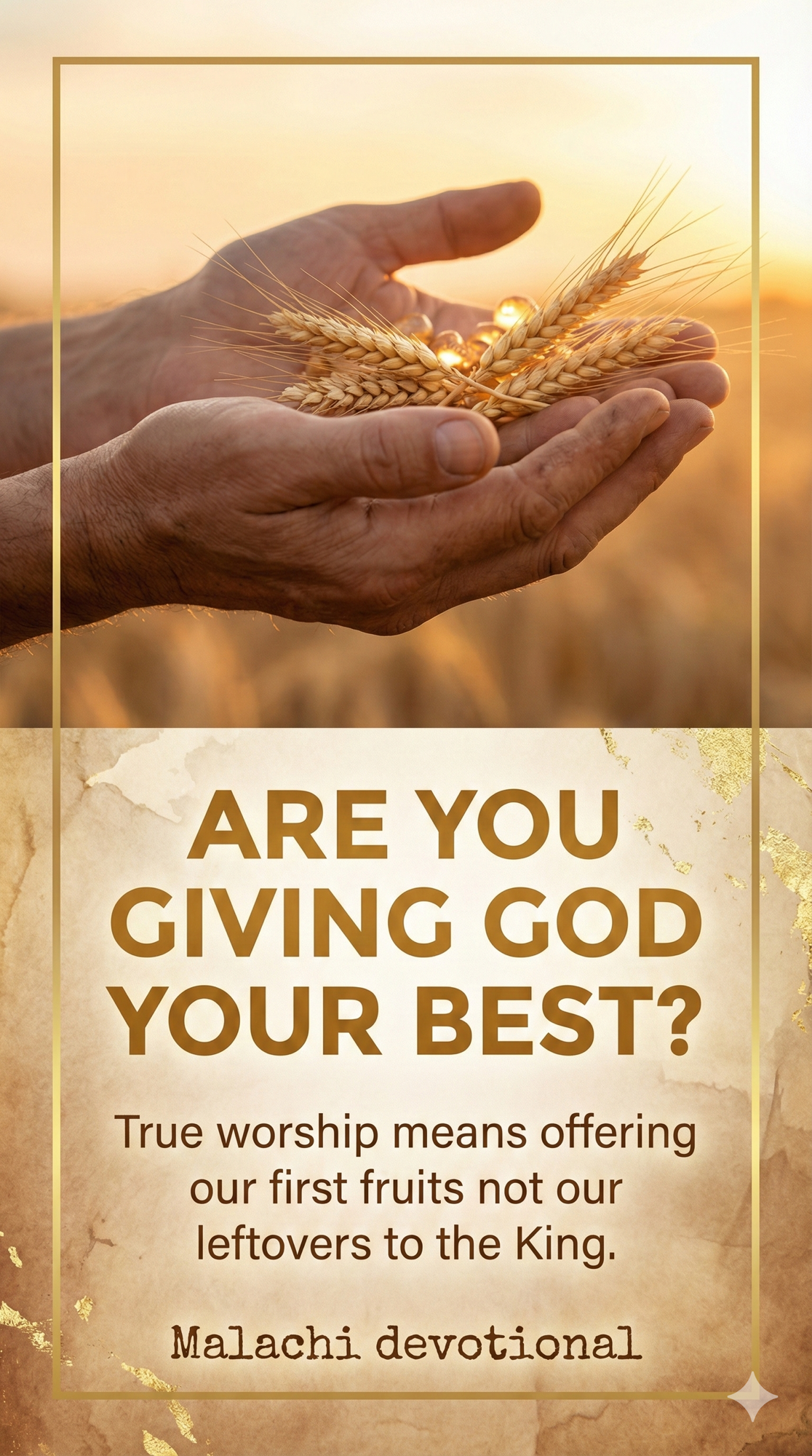
The question for us today is deeply personal: How do we reverence God’s name in our daily lives? Reverence is not merely about formal worship on Sundays or saying grace before meals. It is a posture of the heart that recognises God’s greatness in every moment. It is offering him our first fruits, not our leftovers. It is giving him our attention, not our distraction. It is surrendering our plans to his purposes.

When we truly grasp that we serve a great King, it transforms everything. Our problems, which loom so large in our eyes, are held in the hands of One for whom nothing is impossible. Our fears diminish in the light of his sovereignty. Our worship becomes genuine, flowing from hearts that have encountered his majesty rather than from mere obligation.

This verse also reminds us of our calling as ambassadors of this great King. If his name is to be revered among the nations, it must begin with us. The world is watching how we, who bear his name, live our lives. Do our actions, our words, our priorities reflect the greatness of the King we serve? Are we living in a way that makes others curious about the God we worship?

As we stand at the beginning of this year, let us make a commitment to reverence God’s name in all we do. Let us examine our worship and ask whether we are bringing God our best or merely what is convenient. Let us live with the consciousness that we serve a great King whose majesty deserves our wholehearted devotion.

May this new year be marked by a deeper reverence for God, a more authentic worship, and a life that reflects the greatness of the King we serve. In a world that has forgotten how to revere anything, let us be a people who demonstrate what it means to honour the name of the Lord of hosts.

Let us pray: Great King and Lord of all, we bow before your majesty today. Forgive us for the times we have approached you casually or offered you less than our best. Renew in us a heart of reverence and awe. Help us to live in a way that honours your name among the nations. May our lives be a testimony to your greatness, and may your name be reverenced through all we say and do. In Jesus’ name, Amen.

Rise and Inspire!​​​​​​​​​​​​​​​​

🌿 Rise&Inspire Devotional Card 🌿

A Concise Catholic Devotional Reflection on the Book of Malachi — Chapter 1

“I Have Loved You” — Trusting God’s Love

God opens with tender assurance:

“I have loved you” (Mal 1:2).

Israel doubts—“How?”—yet God points to His sovereign choice. Love is not proven by changing emotions but by faithful commitment. This invites us to trust that God’s love precedes our questions, feelings, and circumstances.

Reverence from the Heart

God rebukes half-hearted worship: blemished sacrifices offered with weary hearts (“What a weariness this is,” v.13). He asks not for leftovers, but for authentic honour—our best attention, humility, and love.

From Polluted to Pure Offering

A promise shines through the rebuke:

“From the rising of the sun to its setting… a pure offering” (v.11).

The Church sees this fulfilled in the Eucharist—Christ’s perfect sacrifice, offered across the world. Where human offerings fall short, Jesus gives Himself and invites us to unite our lives to His.

A Great King Deserving Awe

“I am a great King… and my name is to be revered” (v.14).

Holy fear is not terror—it is love that bows. Reverence grows when prayer is attentive, silence intentional, and worship filled with wonder before God.

Prayer

Lord, help me trust Your love, purify my worship, and offer You my best.

Make my life a pleasing sacrifice, revering Your name everywhere. Amen.

Quiet Takeaway

God desires sincere hearts over routine,

reverence over convenience,

because He is the great King who first loved us.

Reflect

✔️When do I quietly doubt God’s love?

✔️What “leftovers” am I offering Him?

✔️How can I deepen awe for the Eucharist this week?

Rise&Inspire — Faith that Reflects. Hope that Renews.

2025 Johnbritto Kurusumuthu | Rise & Inspire Devotional Series

Word count:1107

Do Degrees Define Us — Or Does Life Do the Teaching?

Daily writing prompt
What colleges have you attended?

I attended formal colleges that shaped my early thinking, but my most meaningful education came later — through life, writing, faith, and lived experience.

We are often asked where we studied, what degrees we earned, and which institutions shaped us. But what if the most influential education came later—through life, responsibility, faith, and reflection? This post explores how learning quietly continues long after the classroom doors close.

What Colleges Have You Attended? My Answer Has Changed Over Time

There was a time when this question had a simple, confident answer.

I could list the colleges I attended, the courses I completed, the degrees that followed. Those years mattered. They gave me direction when life was still taking shape. I learned how to sit still with ideas, how to question, how to read deeply, and how to express myself with clarity and discipline. Classrooms trained my mind. Libraries stretched my curiosity. Examinations taught me endurance.

For a long while, that felt complete.

But as the years passed, I realised something quietly unsettling and strangely liberating: my most important learning began after I left college.

Life did not stop teaching when the certificates were framed.

Work became a classroom with no timetable. Responsibility became a demanding teacher. Mistakes were corrected not with red ink, but with consequences. I learned patience when outcomes were delayed, humility when certainty failed, and resilience when plans collapsed. These were lessons no syllabus prepared me for.

Writing entered my life not as a subject, but as a companion. Each blog post forced me to slow down, to reflect honestly, to revisit beliefs I once held too tightly. Readers became unseen classmates — some agreeing, some questioning, all teaching me something in return. Over time, the keyboard felt as formative as any desk I once sat at.

Faith, too, shaped my learning in ways no institution could measure. Scripture, silence, prayer, and lived conviction formed an interior education — one that continues quietly, without grades or applause, yet leaves deep marks on how I see the world and my place in it.

So today, when I am asked, “What colleges have you attended?” I still honour the institutions that shaped my early years. But I also know that my education did not end there.

I have attended the college of experience.

The university of reflection.

The lifelong course of becoming.

And I am still enrolled.

Earlier reflections on the same prompt (for context and continuity)

© 2025 Rise&Inspire

Reflections that grow with time.

Website: Home | Blog | About Us | Contact| Resources

Word Count:448